
Finance & Career


The holidays continue to be a time of year when scams are running rampant, and scammers are becoming more creative. Protect yourself this holiday season by being aware of five different scams that can be common during the holidays and know what to do if you are scammed.
5 Holiday Scams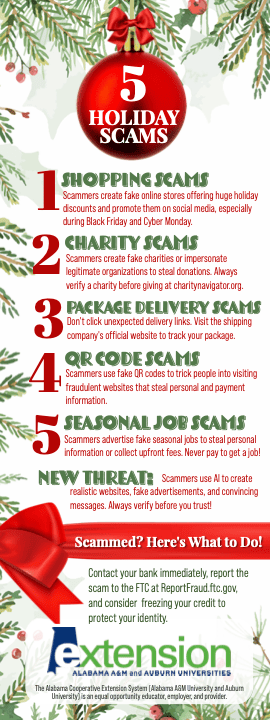
1. Shopping Scams
Scammers create fake online stores offering huge holiday discounts and promote them on social media, especially during Black Friday and Cyber Monday. Be aware of the websites you purchase from and try to verify if they are a real seller.
2. Charity Scams
Scammers create fake charities or impersonate legitimate organizations to steal donations. Always verify a charity before giving at charitynavigator.org.
3. Package Delivery Scams
Don’t click unexpected delivery links. Visit the shipping company’s official website to track your package.
4. QR Code Scams
Scammers use fake QR codes to trick people into visiting fraudulent websites that steal personal and payment information. Do not scan a QR code if you do not know where it goes to.
5. Seasonal Job Scams
Scammers advertise fake seasonal jobs to steal personal information or collect upfront fees. Never pay to get a job.
New Threat
Scammers use AI to create realistic websites, fake advertisements, and convincing messages. Always verify before you trust.
Scammed? Here’s What to Do
Contact your bank immediately, report the scam to the Federal Trade Commission at ReportFraud.ftc.gov, and consider freezing your credit to protect your identity. Contact your local Extension agent with any questions.
The Alabama Cooperative Extension System (Alabama A&M University and Auburn University) is an equal opportunity educator, employer, and provider.