Farming

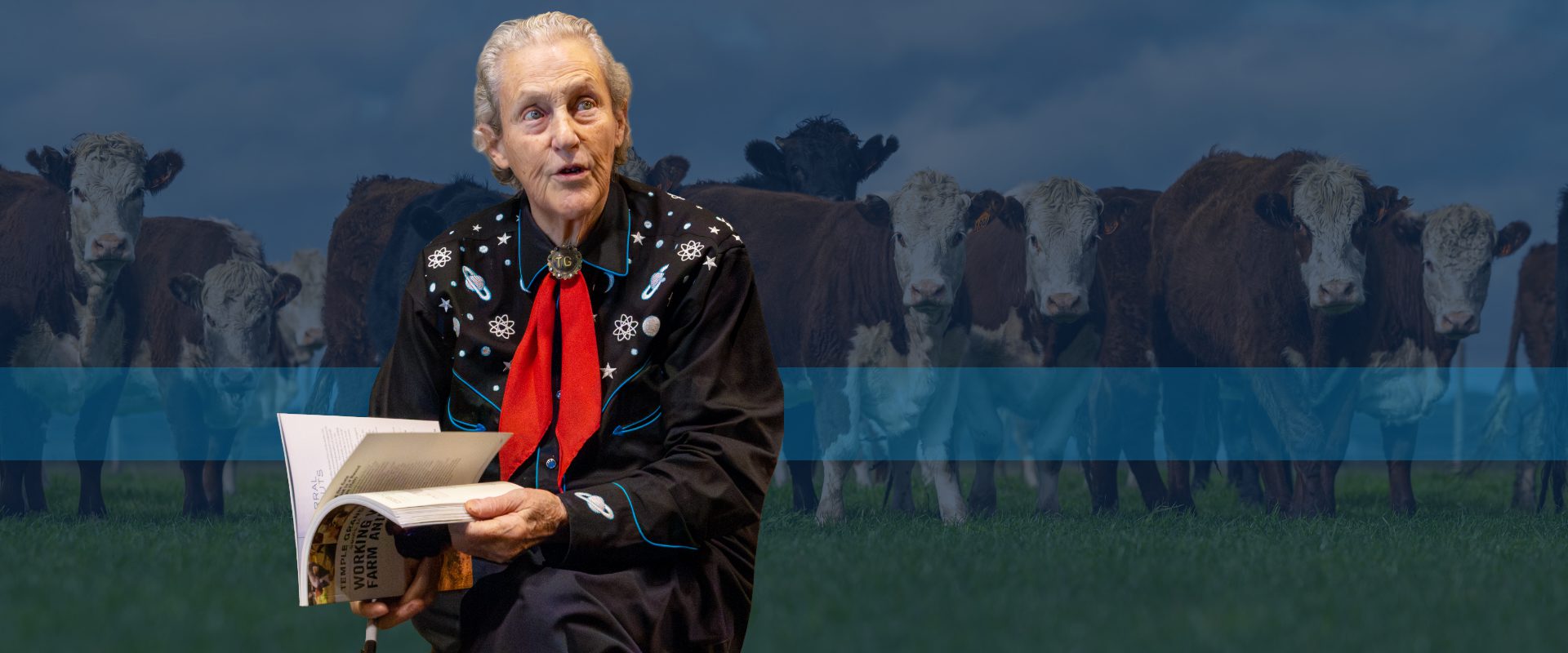
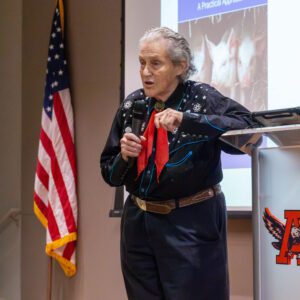
AUBURN UNIVERSITY, Ala. — The room was filled with awe and excitement as Temple Grandin — a pioneer in the worlds of animal welfare and autism advocacy — took the stage Oct. 9 in Huntsville.
Hosted by the Alabama Cooperative Extension System and Madison County Cattlemen’s Association, the event was a special opportunity for people to see highlights from some of Grandin’s most important research and discoveries while working in the livestock industry.
Grandin was born in 1947, a time when autism diagnosis was in its infancy and few knew what it meant. Famous for thinking in pictures rather than words, Grandin’s autism gives her a view of the world that is different than most. This view is what propelled her to make some of the livestock industry’s most meaningful and revolutionary improvements in the areas of animal behavior and welfare.
Ali Gotcher, an Alabama Extension animal science and forages agent and organizer of the event, said Grandin’s expertise in the field has been a big influence on her life, both as a cattle producer and an Extension agent.
“It was just wonderful to have Dr. Grandin come to Alabama and speak to farmers and the community,” Gotcher said. “Her ability to think differently about our industry and make positive changes is just something that you can’t get anywhere else.”
Advancing the Industry
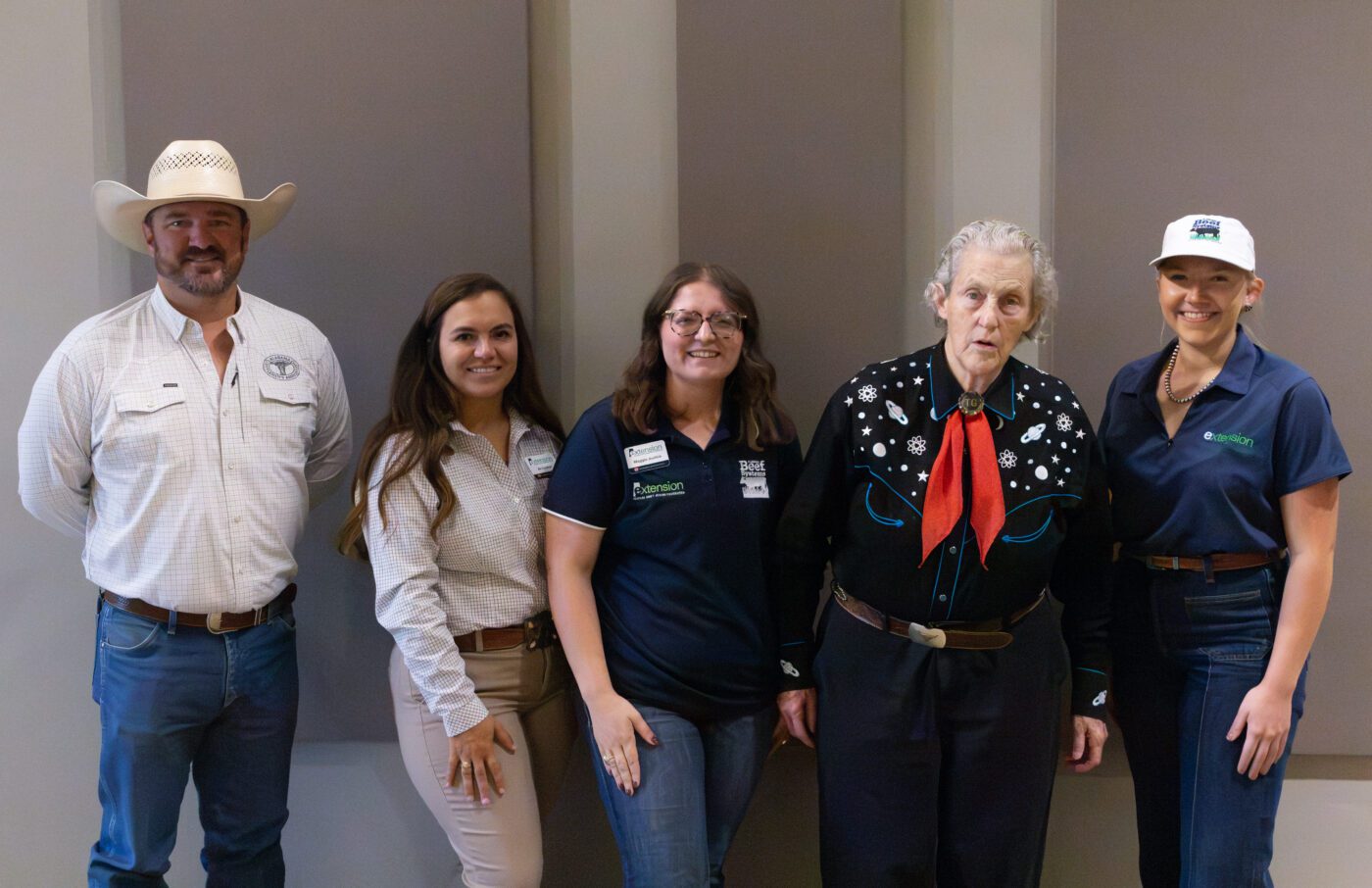
From left: Alabama Cattlemen’s Association Industry Outreach Manager Michael Smith, Extension Agent Ali Gotcher, Extension Specialist Maggie Justice, Temple Grandin and Extension Agent Jenna Schmidt.
Grandin’s career spans more than 50 years. One of the most prominent areas of Grandin’s research is her work with the design of livestock handling facilities. Used in systems across the world, her introduction of elements like curved chutes has improved efficiencies and greatly reduced the stress caused on livestock. In North America alone, almost half of the cattle are handled in a system that she designed for processing plants. However, facilities alone cannot fix every issue. That is why Grandin has also spent her career researching the people side of handling livestock.
“When I first started, I thought I could fix everything if I could make the perfect handling facility, but that’s only half of the equation,” Grandin said. “The other half of the equation is the management and the handling that goes along with it. You need to have both.”
Grandin’s research over the years has created new industry standards. Because of Grandin, farmers, researchers, processors and countless others approach livestock management and handling completely differently. Maggie Justice, an Alabama Extension beef systems specialist at Auburn University, said this is apparent in the industry’s use of things like curved alleys and solid-sided chutes. Grandin’s impact is also found in the use of simple practices, such as reducing visual distractions and better understanding an animal’s flight zone and point of balance.
“These elements are so common now that we almost take them for granted, but Dr. Grandin’s work played a huge role in getting us there,” Justice said. “She also helped move us toward actually measuring animal welfare. We can look at things like slipping, falling, vocalization and how cattle move through a facility rather than just arbitrarily saying that we handled those cattle well.”
Doing Real Things
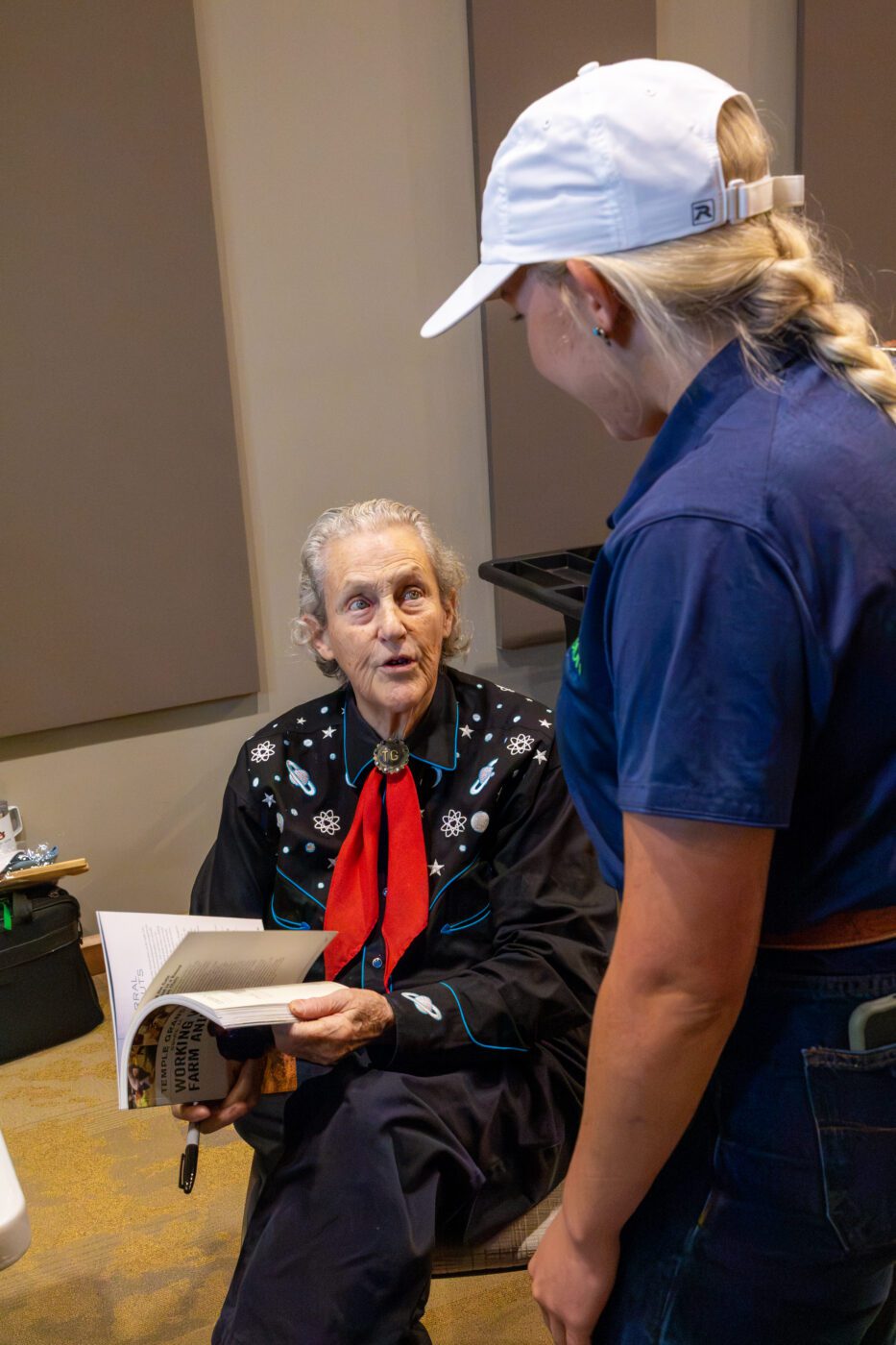
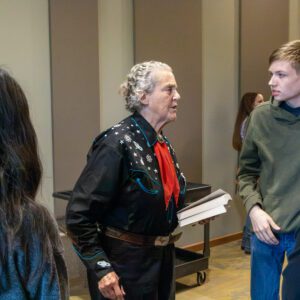
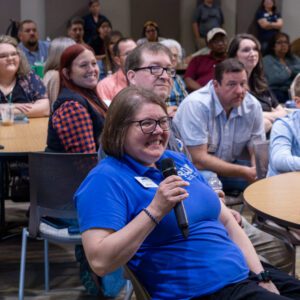
At the event, Temple Grandin had a book signing and gave participants the opportunity to ask questions about her research and career.
Grandin’s approach to learning is about as practical as they come.
“We have got to get kids out there doing real things,” Grandin said. “You can’t just do everything online. I think it is wonderful that I can go to the library on this thing in my pocket, but you also need to get out to see and do real things.”
This sentiment is why having groups and organizations like Alabama Extension make all the difference. Powered with research from Auburn and Alabama A&M universities, Extension experts go out into their communities to create opportunities for people to do these real things that improve their lives. For youth in particular, Alabama Extension has programs like 4-H that empower them to become the next generation of leaders.
“I think it (Cooperative Extension) is super important,” Grandin said. “I was in 4-H horses. It’s one of the few places I had friends. We need to be keeping Extension’s 4-H programs; we need to make sure to keep our FFA programs. They also teach public speaking along with trades. FFA is a great thing. 4-H is a great thing.”
For 4-H Extension Agent Allyson Evans, Grandin’s example inspired her to work with youth and be a positive influence in their lives. Evans said she most admires Grandin’s passion, perseverance and commitment to making a difference.
“I will always advocate for 4-H and agricultural education programs because they expose students to opportunities and industries that they may not otherwise have experienced,” Evans said. “In many ways, Dr. Grandin’s work reflects the same goal: helping people better understand and improve agriculture for the future. Just like the motto of 4-H, Dr. Grandin’s work assists with making the best better.”
More To Do
Grandin will be the first to say that the job of understanding animal welfare and behavior is never done. That is why she has dedicated her life to researching and teaching others. Grandin has written countless books and scientific papers to share her findings with the world. Her latest book, “The Grandin Papers,” is a collection of some of her most important findings. It primarily focuses on Grandin’s work with facility design, animal welfare auditing programs and behavior of cattle and horses. More information on Grandin’s books and resources is available at templegrandin.com and grandin.com.