
Farming

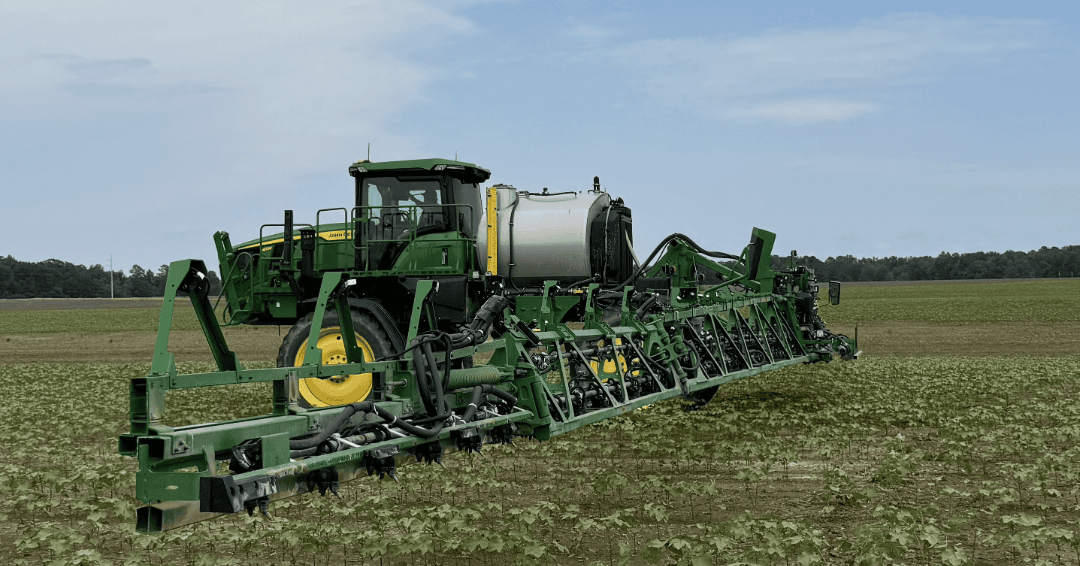
AUBURN UNIVERSITY, Ala. — As agriculture evolves, farmers look for ways to increase yields and reduce input costs. By using precision agricultural practices, growers leverage tools and science to maximize efficiency and produce more for a growing population. Simer Virk, an Alabama Extension specialist at Auburn University, helps growers take their precision agriculture practices to the next level. According to Virk, one of the ways that growers can optimize efficiency and save some money during spraying operations is through proper sprayer calibration. This is the process of measuring the individual flow rate of nozzles on a boom sprayer. Without calibration, farmers easily under or overapply pesticides, wasting time and driving up costs.
“It seems like such a small, menial task,” Virk said. “But we are talking about thousands of dollars that growers can save just by effectively calibrating their sprayers properly.”
Effective Outputs Save Money
In row crops, sprayer calibration is like tuning a guitar: it must be done occasionally to ensure that the sprayer output is on target. Spray nozzles wear and tear over time, causing inconsistencies in application and overapplied product.
Virk is also an associate professor in the Auburn College of Agriculture’s Department of Biosystems Engineering and a researcher for the Alabama Agricultural Experiment Station. He encourages growers to calibrate their sprayer before their first pesticide applications and as needed during the season.
“During the season, we are likely putting out different chemicals at different rates, so you definitely need to recalibrate for accurate applications,” Virk said. “Whenever you are changing your operational parameters, then I definitely recommend recalibrating.”
Operational parameters like application rate, nozzle type and sprayer speeds all contribute to the performance of the spray system. When calibrated, broadcast spray booms provide uniform coverage while minimizing application gaps and streaking.
The traditional method of sprayer calibration is as simple as grabbing a measuring jar and a stopwatch. While this process is time-consuming, it helps ensure that the correct target rates are being sprayed — measured in gallons per acre. This shows the farmer exactly how much chemical is distributed per acre based on operating conditions.
During calibration, a common mistake growers make is not checking the flow rate of enough nozzles on the boom. This is important because general wear and tear might not be the same from one nozzle to another, and there are pressure losses across the boom.
Virk suggests strategically checking at least three to five nozzles on each boom section during calibration. This provides a more realistic picture of the spray output.
Tools That Make Calibration Easier
“Our typical field sprayer booms can run anywhere from 60 to 100 feet and have roughly 40 to 70 nozzles,” Virk said. “Catching flow rates from multiple nozzles can be time consuming, but there are tools like the SpotOn meter that make this task easier than the traditional method.”
According to Virk, flow-measurement tools, including products such as the SpotOn meter, can help streamline sprayer calibration. While many growers rely on the in-cab display or monitor, Virk said physical spray calibration is still important to verify.
“I know it’s easier to trust the monitor alone in the cab,” Virk said. “That may not be telling you the whole story, though, as it is not accounting for worn‑out tips or plugs and sensors still go out of calibration sometimes.”
At the E.V. Smith Research Center and Wiregrass Research and Extension Center — two outlying units of the Alabama Agricultural Experiment Station — Virk and his team conduct various sprayer tests. These include nozzle types and using SpotOn meters for uniform applications. They also examined the precision that growers can expect from traditional rate control and advanced technologies.
According to the team, checking pressure on individual nozzles is valuable, and growers can incorporate tools like pressure testers during calibration for precise applications. Checking spray pressure at the nozzles also helps in identifying any losses occurring across the boom, which is a common problem on sprayers because of large boom lengths.
Nozzle Upgrades and Improved Technology
Even with proper calibration, spray nozzles do not last forever. So, when it is time to replace them, Virk suggests that growers stay up to date with the latest nozzle types that are available from different manufacturers.
“Most nozzle manufacturers, such as Greenleaf Technologies and TeeJet Technologies, offer online tools like smartphone apps where growers can input their spray parameters,” Virk said. “The app then recommends the best nozzles based on the growers’ operating conditions with just a few clicks on a smartphone.”
With the rising cost of chemicals, more growers are also adopting advanced sprayer technology to improve efficiency and avoid misapplications. As growers invest in equipment, some newer sprayers are equipped with pulse‑width modulation technology that provides individual nozzle control capabilities. This system maintains the desired rate and droplet size by keeping spray pressure constant and consistent for more precise applications. While this technology is a major up-front cost, growers can save money in the long run, especially in large operations.
More Information
For more information about tools and tips for proper sprayer calibration, read “Sprayer Calibration Tools,” available at precisionag.auburn.edu. More information on sprayer-related apps is available in “Mobile Apps for Spray Nozzle Selection” on the Extension website, aces.edu.
Trade and brand names used in this publication are given for information purposes only. No guarantee, endorsement, or discrimination among comparable products is intended or implied by the Alabama Cooperative Extension System.