
Fish & Water

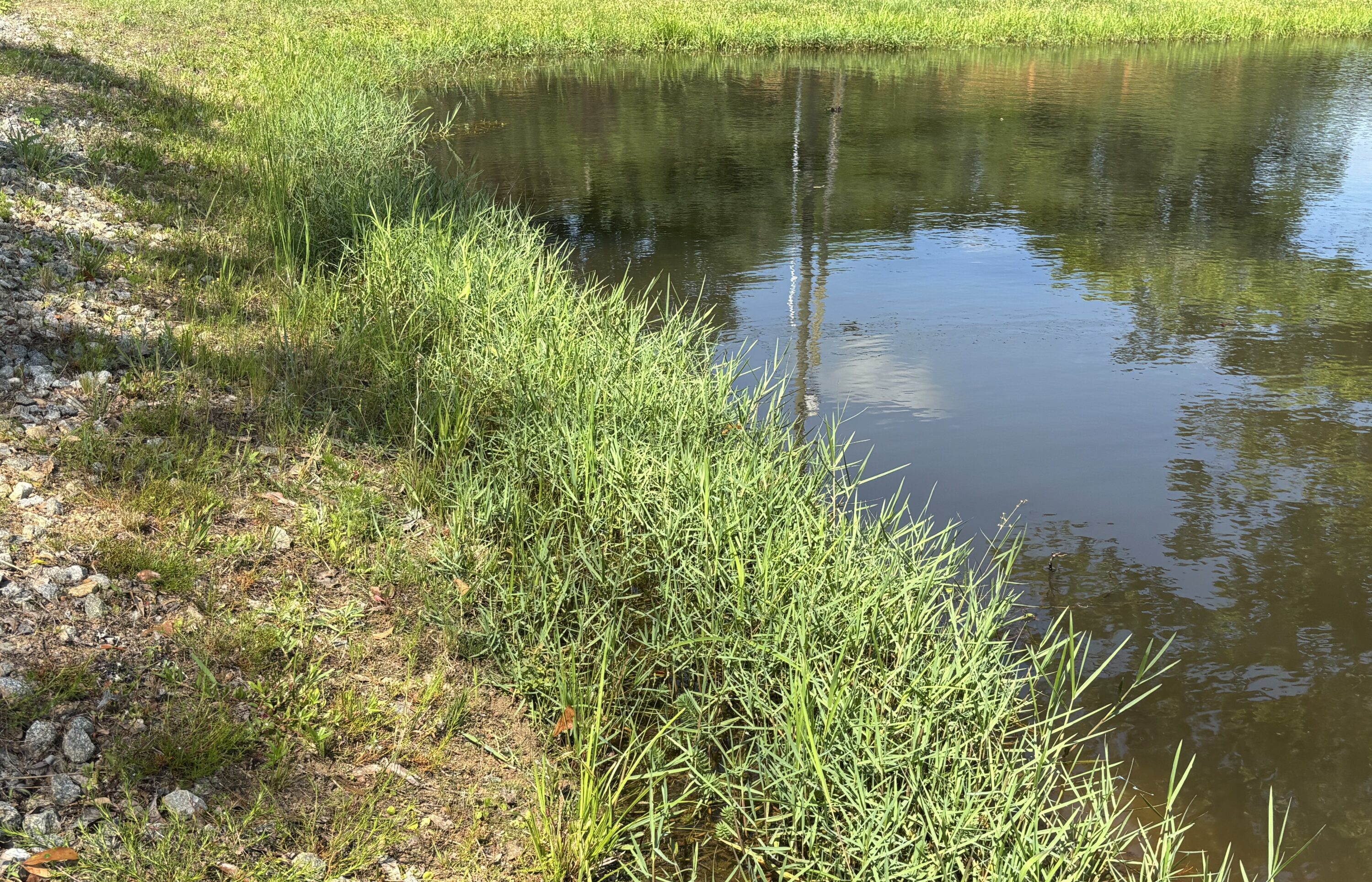
AUBURN UNIVERSITY, Ala. — Across southern Alabama, the invasive species known as torpedograss is wreaking havoc everywhere from upland sites to lakes and marshes. This fast-moving weed spreads in both fresh and brackish water as its fragments take root and it establishes growth.
As torpedograss expands its reach northward, Alabama Extension agent at Auburn University Levi Blackmon said that early detection is the best way to control this perennial grass.
“This weed is a never-ending issue because it spreads so easily,” Blackmon said. “It spreads through the underground root system — known as rhizomes — and above ground stolons.”
Torpedograss Identification and Range
This grass is identified by its silvery-green and sharply pointed leaves. Sometimes mistaken for St. Augustine grass or maidencane grass, torpedograss’s distinguishing characteristics include more upward growth and sharp, torpedo-like, root-tipped leaves.
Native to subtropical Africa and Asia, torpedograss has made its way around the world, being reported in the U.S. as early as the 1870s. Given nicknames like bullet grass or creeping panic grass, it is well-known for being a nuisance wherever it goes.
According to the U.S. Department of Agriculture’s Early Detection and Distribution Maps, torpedograss is present in 75% of Florida’s counties. This makes it one of Florida’s most detrimental grasses. In a neighboring state with a similar climate in the southern region, Alabama Extension specialists watch Florida’s situation closely.
While there is no active tracking of torpedograss for each Alabama county, Blackmon said it is well-established in several of the southernmost counties. He emphasized that development and soil disturbance are areas of major concern.
“It’s no secret that the coastal parts of the state are seeing a ton of development, like Baldwin and Mobile counties,” Blackmon said. “Construction makes it very easy for torpedograss to move through waterways and spread by uncleaned equipment.”
Increasing Awareness
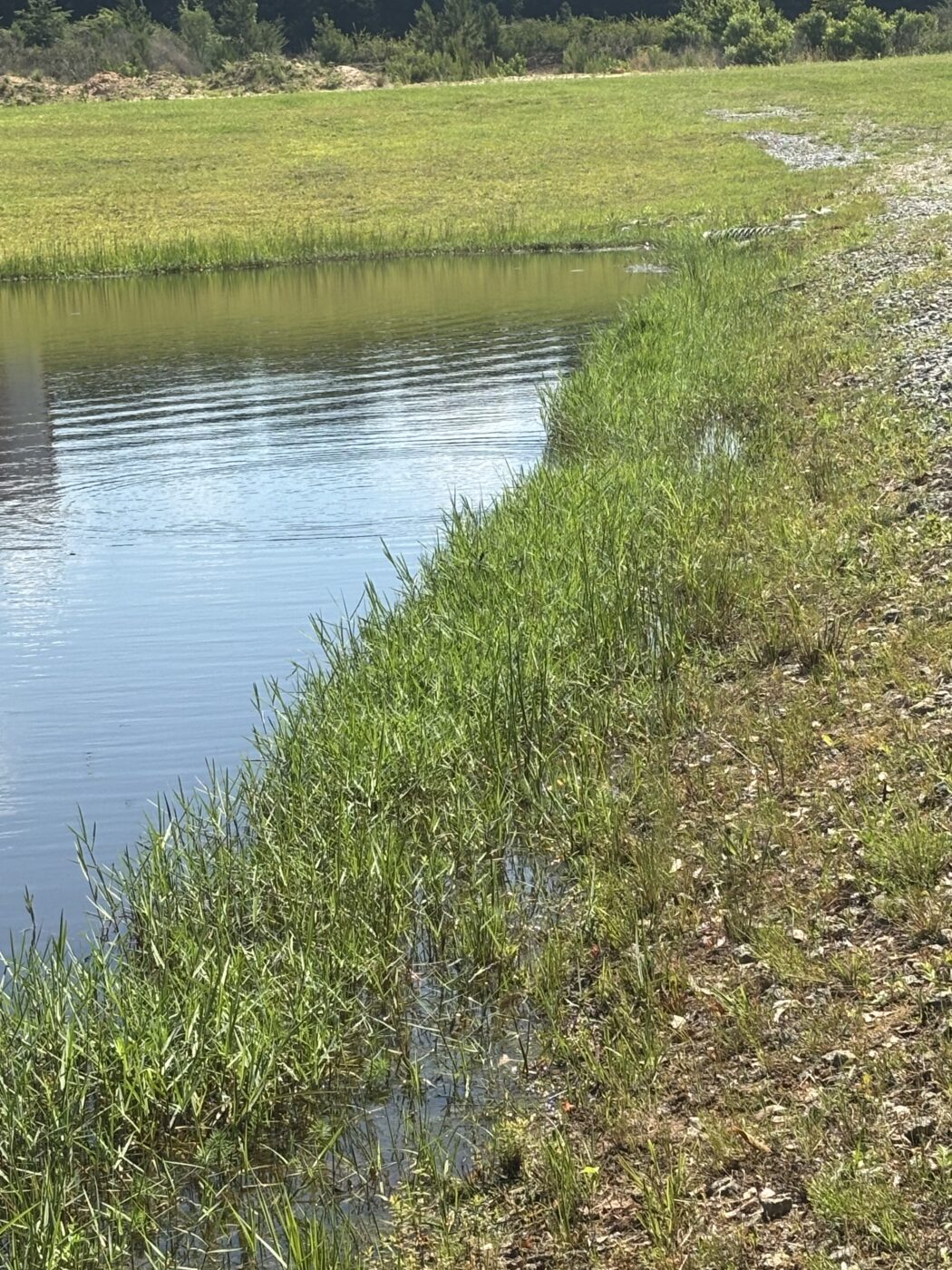 Currently, torpedograss is on the state’s noxious weed list, which is compiled by the Alabama Department of Agriculture and Industries (ADAI). This list identifies plant species considered harmful to agriculture, natural ecosystems, public health or property. It also allows ADAI to take legal action to regulate the movement of invasive species.
ADAI State Plant Regulatory Official Brittaney Allen said public awareness of the invasive species on the noxious weed list helps slow the spread.
“Coordination between state entities like ADAI and Alabama Extension helps us increase awareness of invasives while promoting more thoughtful human activity,” Allen said. “Reducing accidental spread helps to protect not only our bodies of water but our ornamental industry as well.”
Methods of Control
With any easily spread invasive, specialists recommend people thoroughly clean watercrafts and check for aquatic plants along the shoreline. Additionally, Blackmon advised development, construction and landscaping companies to take extra care when working around wetland areas.
While the spread is cause for concern, Alabama Extension agents and specialists have recommendations to control torpedograss if it is present. Blackmon said control is difficult, and early detection is key for effective management.
“Ecologically, it is a bully. It changes the ecology of the understory, overcomes all other wet aquatic vegetation and competes with them,” Blackmon said. “A lot of the aquatic work we do uses glyphosate with imazapyr if no trees are around, and out in the water we apply it at a 1-percent rate.”
At present, there is not a single control method that can completely eradicate torpedograss in one growing season. Even so, there are treatment methods using multiple applications of herbicide to tackle it based on the site management.
For aquatic sites, Blackmon recommends foliar applications of glyphosate and imazapyr with a surfactant and checking back every six to eight weeks. In turf and landscapes, the best approach is multiple spot treatments with glyphosate. For agricultural sites, forests and pastures, location-specific herbicides are needed for surrounding vegetation.
Learning More
As Alabama Extension agents and specialists learn more about controlling torpedograss, they share updated information with the public. These efforts help limit the spread of this aggressive invasive grass and protect surrounding environments.
For more details, read the Alabama Extension publication, “Torpedograss: Identification & Control.” Search for additional information at aces.edu.