
Farming

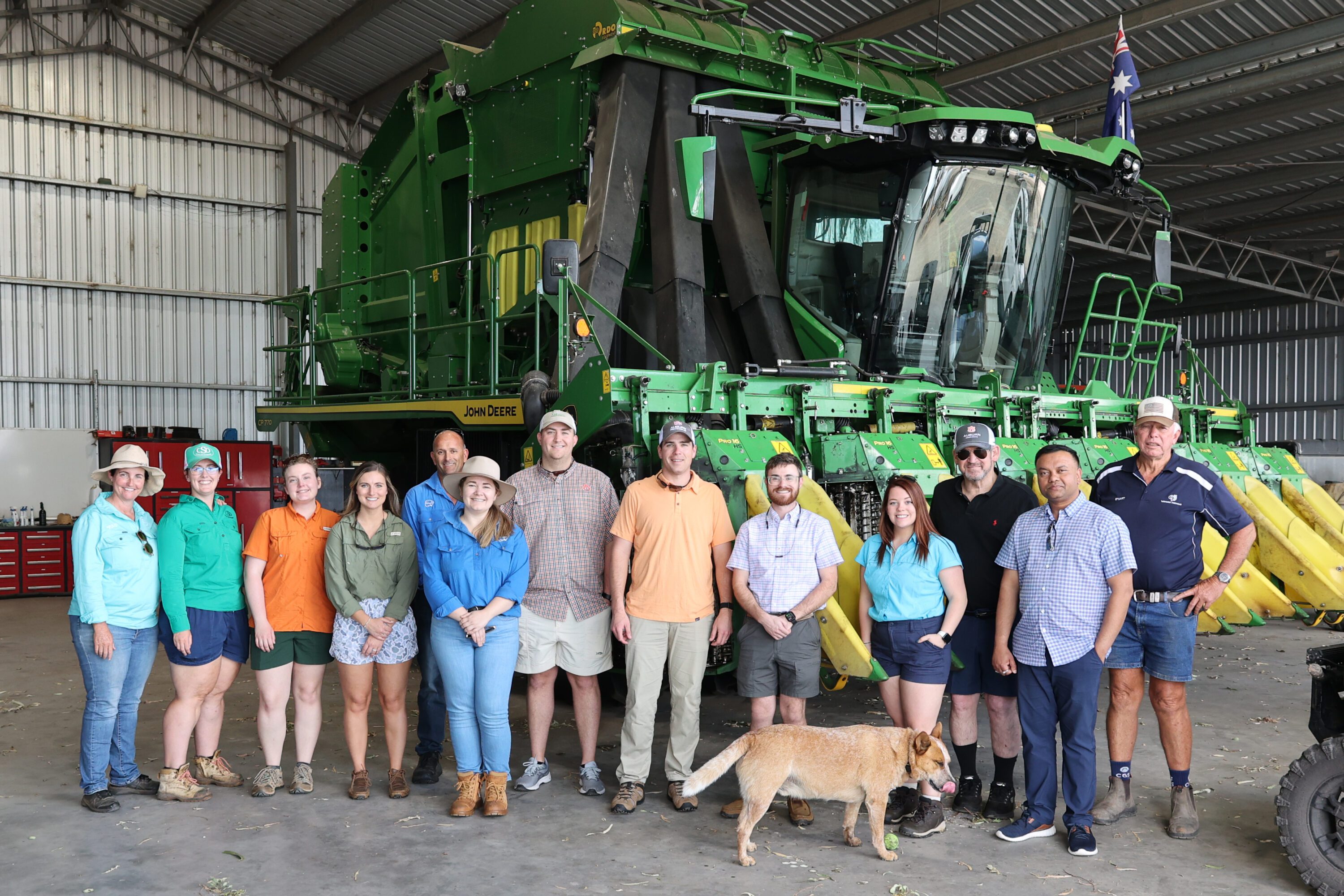
AUBURN UNIVERSITY, Ala.—Half a world away in Queensland, Australia, a group of Alabama Cooperative Extension System specialists and agents this spring toured the Bundaburg region in search of fresh ideas they could bring home to Alabama farmers. In visiting a dozen farms and research sites, the team found familiar challenges — water scarcity, rising production costs and the constant pressure to produce more with fewer resources.
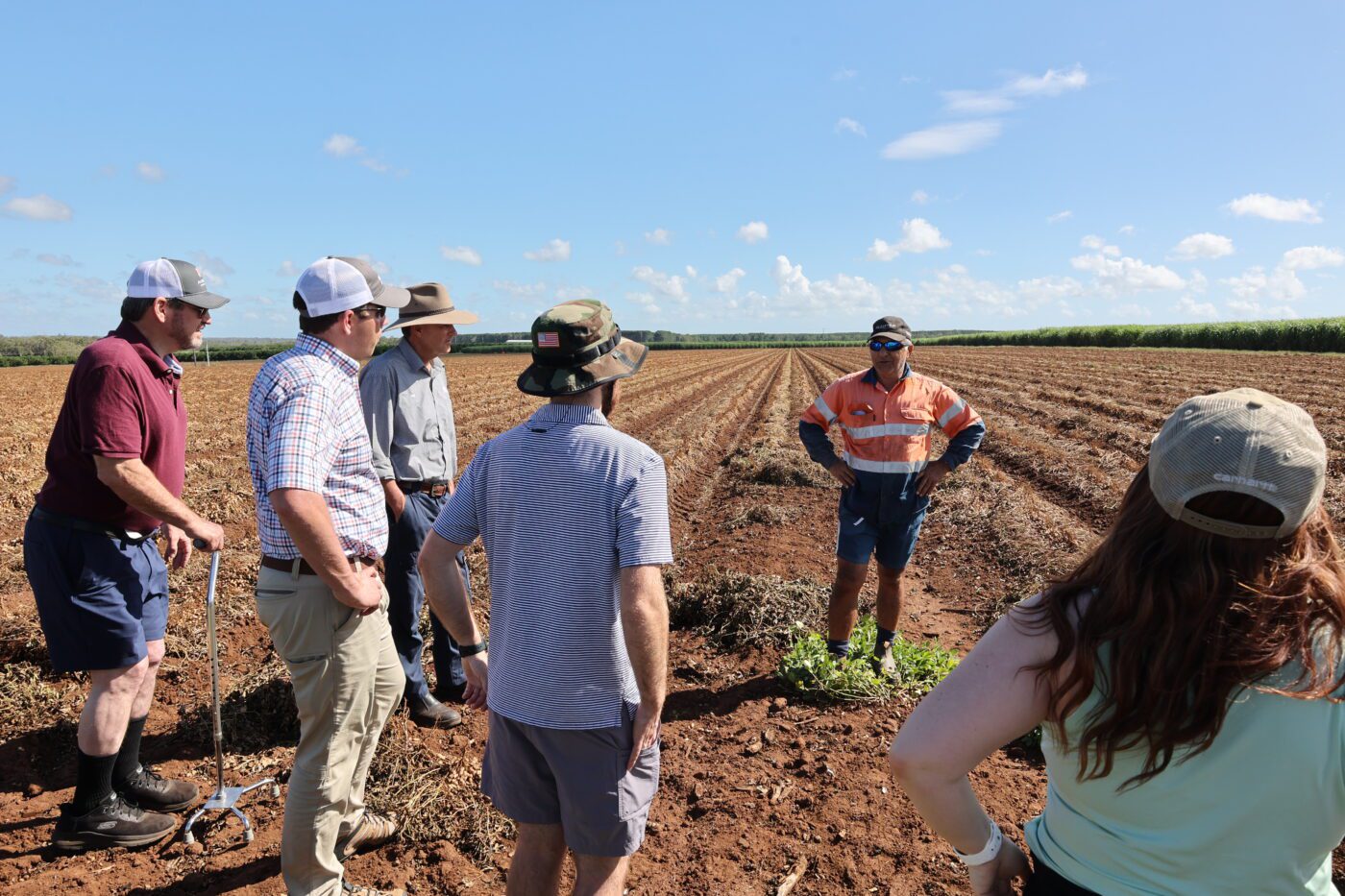
Queensland Farmer Peter Russo shares with the Auburn team how a rotation of peanuts and sugar cane has increased yields and improved soil nutrition.
Led by Extension Agent Eddie McGriff, the Alabama Extension agronomic crops team met with Australian farmers, researchers and industry leaders, discussing solutions for crop production, water management, precision agriculture and agricultural innovation.
For McGriff, the purpose of the trip was simple: learn from farmers who operate under some of the toughest agricultural conditions in the world.
“Agriculture is a global industry, and it’s all interconnected,” McGriff said. “We can learn a lot from seeing how producers in other countries approach the same challenges we face at home.”
The visit took the team across Queensland, where agriculture stretches across vast landscapes with a wide range of crops, including cotton, sugarcane, peanuts, macadamias and avocados.
The tour was designed as a working exchange, allowing Extension professionals to meet directly with producers and researchers in the field.
“You can look at pictures and read about farming practices online,” McGriff said. “But when you’re standing in the field talking to the grower, seeing the crop and asking questions about why they do things the way they do, that’s when the real learning happens.”
Learning From Agricultural Diversity
One of the biggest takeaways for the Alabama team was the diversity of agriculture in the region.
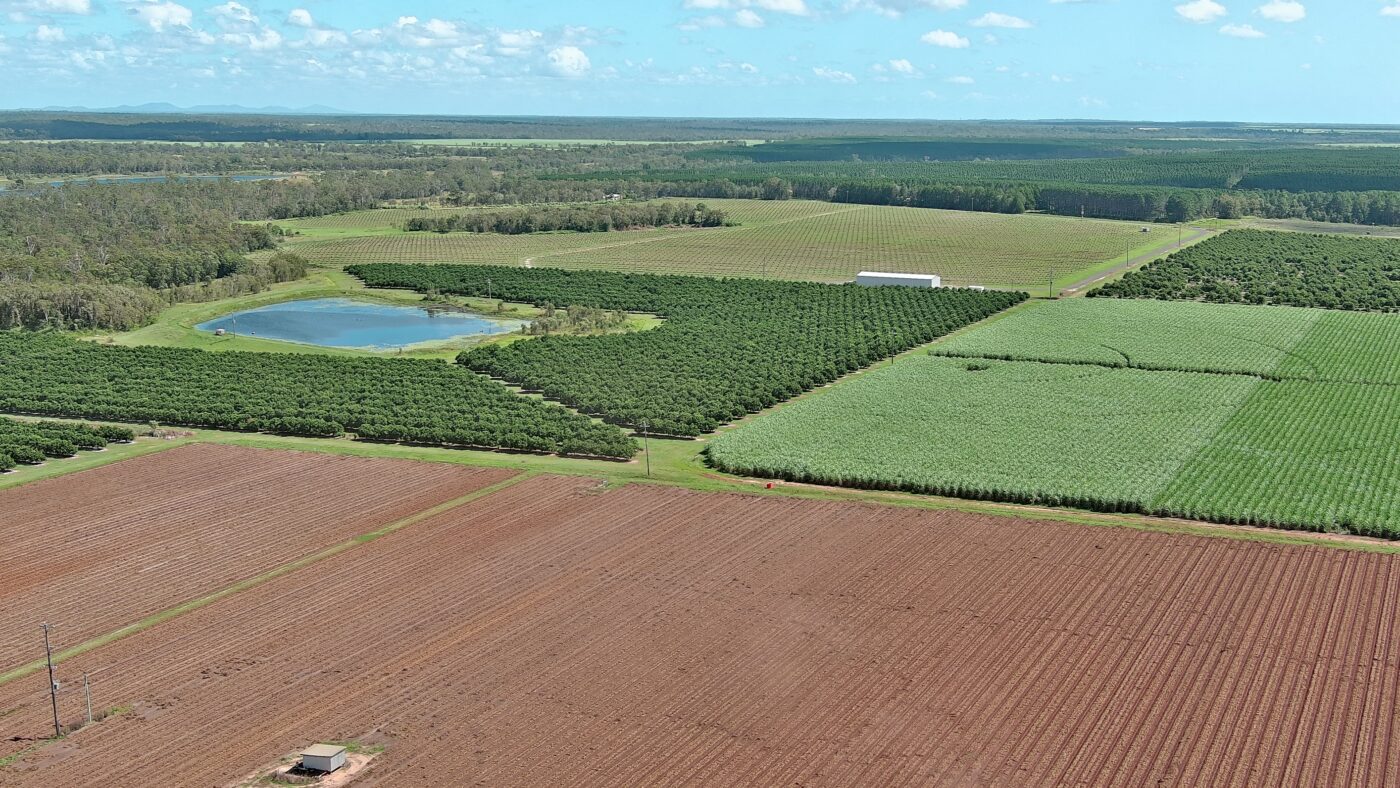
Queensland and Alabama share similar climates and similar soils. The Auburn team saw first-hand how the Australians use it for different crops, such as macadamia nuts and avocados.
While Alabama farmers commonly rotate crops, many Australian producers manage a greater mix of commodities to adapt to economic and environmental pressures.
Extension Nutrient Management Specialist Rishi Prasad said that variety stood out immediately.
“There are a lot of things we’re seeing here that can spark ideas back home,” Prasad said. “The diversification piece is really interesting. In Alabama, we do crop rotations like cotton, peanuts, corn and soybeans, but here they’ve integrated a wide range of crops to spread risk and make the most of their land.”
Farmers in Queensland often grow high-value specialty crops alongside traditional row crops, a strategy that helps buffer farms against unpredictable weather and shifting market conditions.
Water availability also drives many management decisions.
Australia is the driest inhabited continent on Earth, and farmers have developed innovative ways to collect and store water for irrigation. During the trip, the team observed massive water storage reservoirs known as ring tanks, which capture rainfall and runoff to use during dry periods.
“It’s impressive to see how carefully they manage water,” McGriff said. “When rain does come, they capture it and store it so they can use it later. That kind of planning and efficiency is something farmers everywhere can appreciate.”
Cotton Connects Two Continents
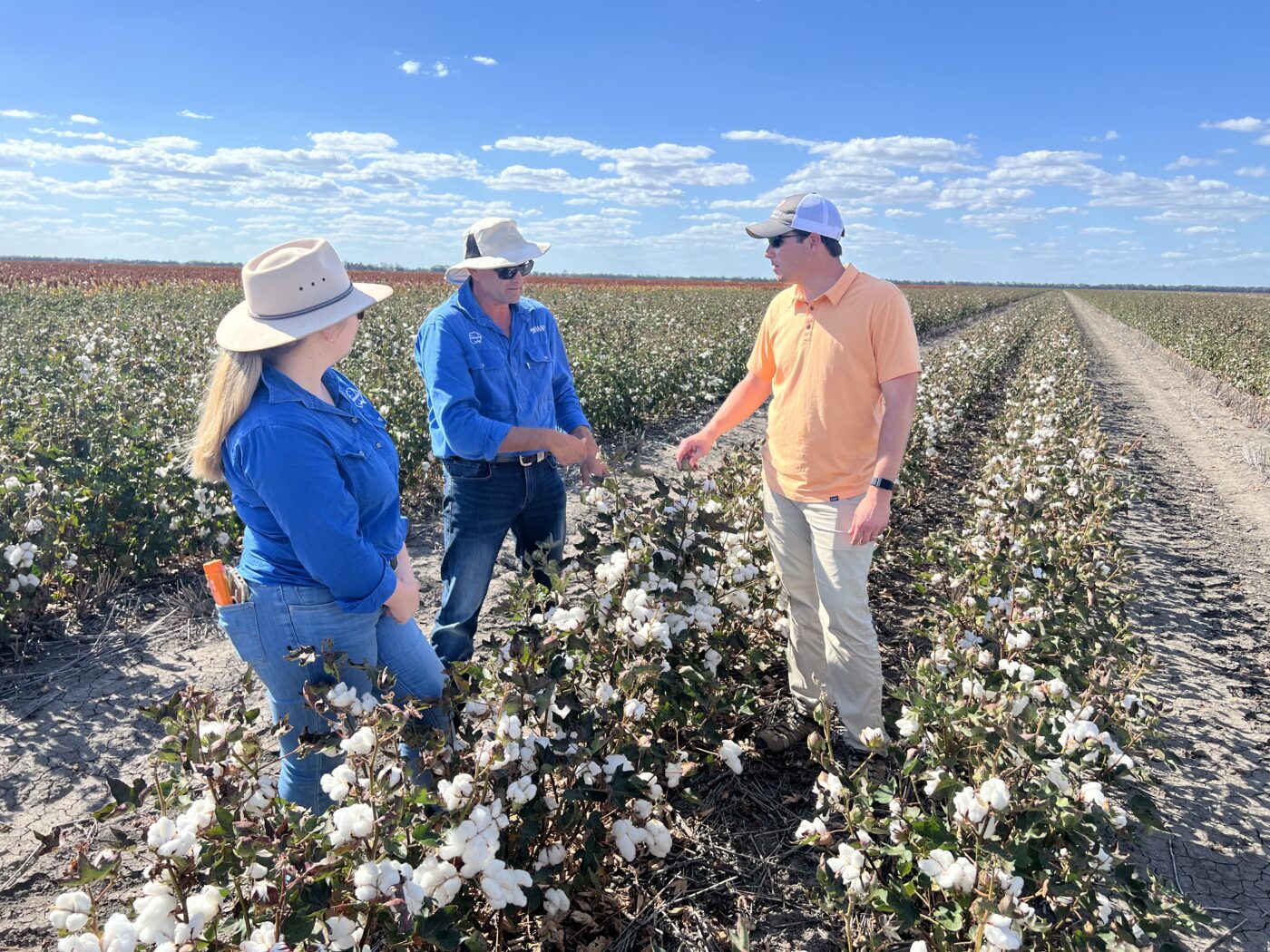
Extension Entomologist Scott Graham, right, and Paul Grundy of the Queensland Department of Primary Industries discuss Australian cotton pest management practices.
Cotton production was a central focus of the visit, as both Alabama and Queensland are major cotton-growing regions.
The team toured several farms and research sites to observe how Australian producers manage irrigation, soil fertility and pest control.
Extension Cotton Specialist Josh Lee said precision management plays a major role in the region’s success.
“One of the things that really stands out here is how focused growers are on site-specific management,” Lee said. “They understand that every field is different, and they tailor their management practices to get the most out of each acre.”
Alabama Extension Entomologist Scott Graham said he was particularly interested in differences in pest pressure between the two regions.
“Seeing the yields they’re achieving is incredible,” Graham said. “They have a lot of sunlight and different growing conditions, and insect pressure is much lower than what we see in Alabama. It really gives you perspective on how production systems vary around the world.”
Despite those differences, Graham said the similarities among producers are just as striking.
“Farmers everywhere are trying to do the same thing,” he said. “They’re trying to manage risk, protect their crops and make their operations more efficient.”
Innovation in Action
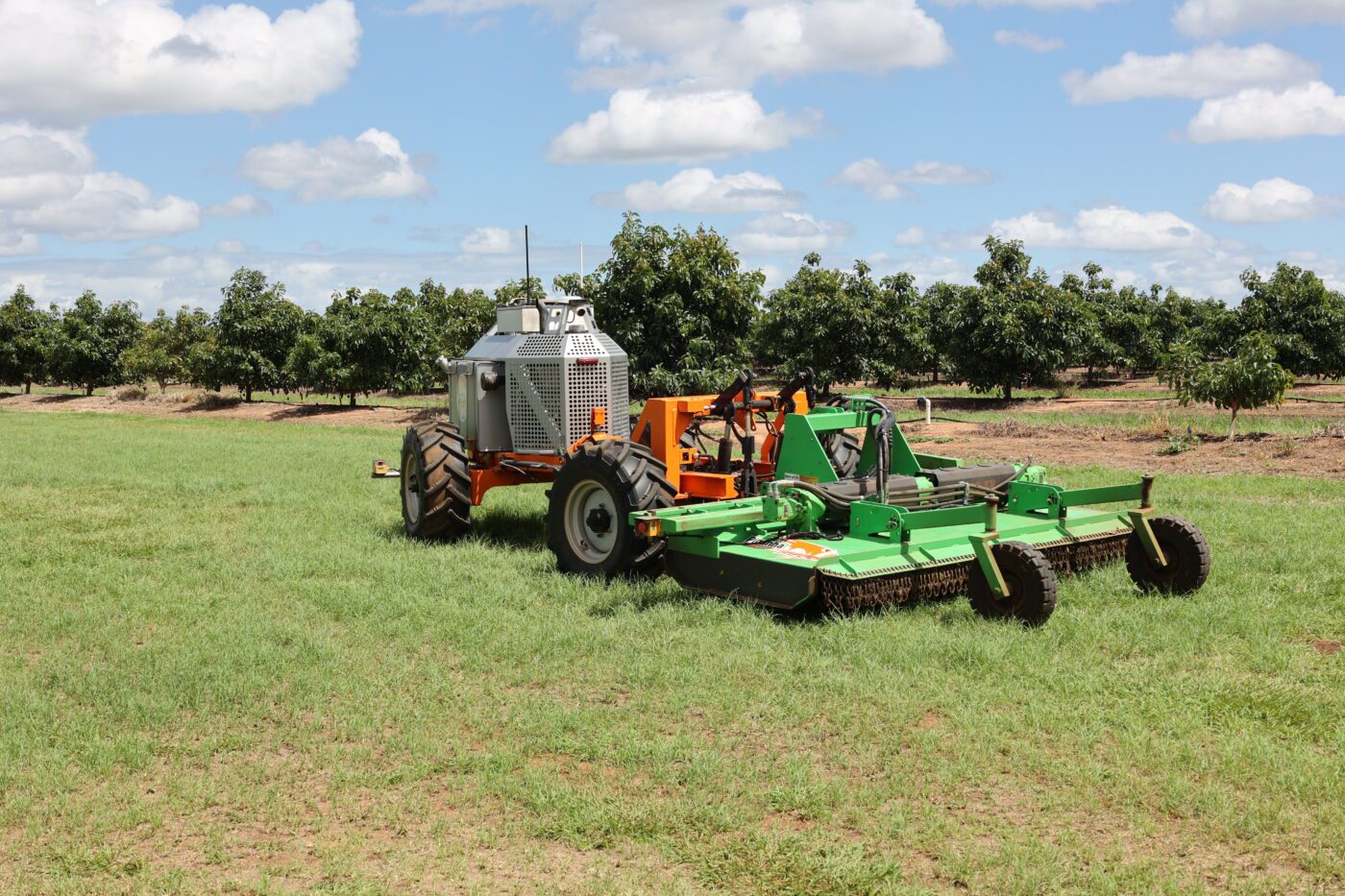
Automated tractors, like this one at Dorrian Farm, are one illustration of Australia’s agricultural innovation.
Throughout the trip, the Extension team observed innovative technologies designed to help farmers operate more efficiently.
These included precision irrigation systems, advanced nutrient management strategies and even autonomous equipment used in specialty crop orchards.
McGriff said these types of technologies demonstrate how new ideas often grow out of necessity.
“When you farm in a place with limited rainfall and challenging conditions, you have to find new ways to be efficient,” he said. “That kind of innovation can inspire ideas that farmers back home might be able to adapt.”
Bringing Lessons Home
While the trip highlighted differences in climate and production systems, McGriff said the experience reinforced a common theme: farmers around the world are constantly adapting.
And those lessons can benefit growers in Alabama.
“Sometimes when you go on agricultural tours, it’s more of a tourist experience,” McGriff said. “This was different. We were meeting with growers, walking their fields, talking with researchers and Extension specialists, and really learning how their systems work.”
McGriff said those conversations are already shaping ideas that Alabama Extension specialists and agents will bring back to the state.
“We’ve learned a lot on this trip,” he said. “More importantly, we’ve learned things that we can take home and share with Alabama growers.”
For the Alabama Extension team, the journey underscored an important reality: in modern agriculture, innovation knows no borders.
“As farmers everywhere face changing conditions and new challenges,” McGriff said, “learning from each other becomes more important than ever.”