
Food Safety

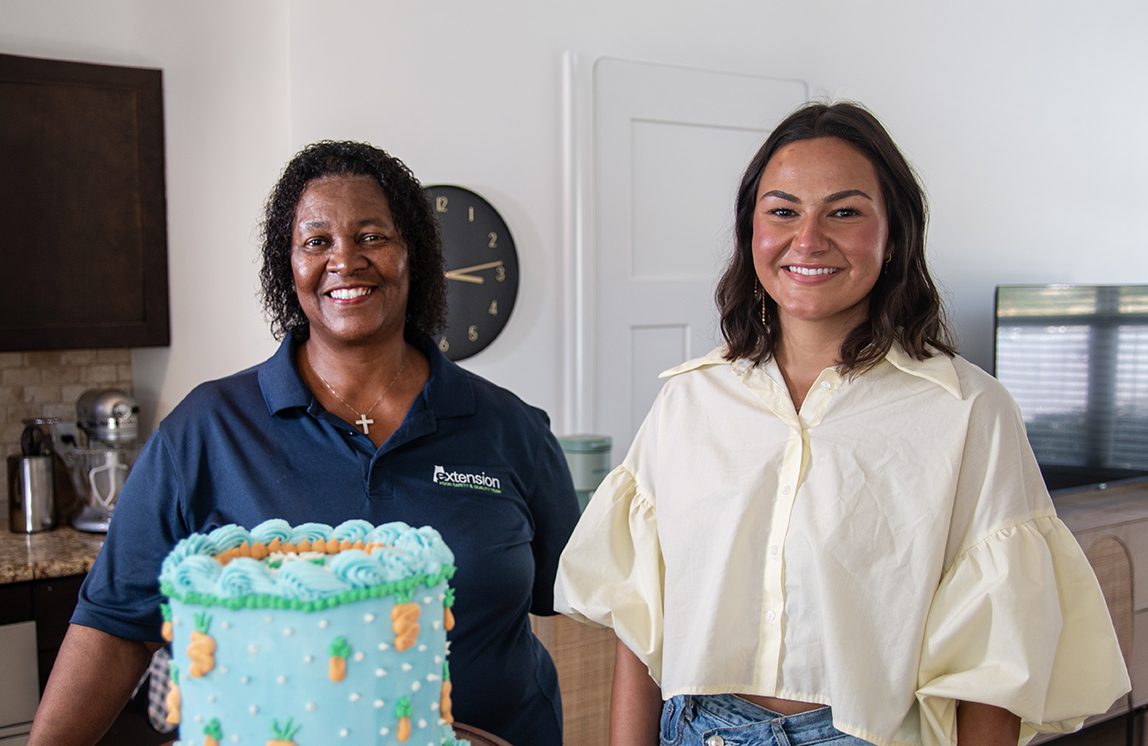
AUBURN UNIVERSITY, Ala. — Baking has been a lifelong passion for Elizabeth Belcher.
“Growing up, we did Saturday morning breakfasts with my grandpa, and he always baked his own bread,” Belcher said. “I think I baked my first cake when I was 7 years old. My parents had to taste test a few mistakes, like when I used granulated sugar instead of powdered sugar for icing, but I’ve always loved to bake for people. It honestly feels like my love language is to bake for others.”
Now a sophomore at Auburn University studying business administration and marketing, Belcher thought a desk job was her likely future until she started baking sourdough. The loaves were a hit with friends who wanted to place orders. That interest made Belcher reconsider her career goals.
“A while back, someone asked me what I saw myself doing with a business administration degree, and I said that I wanted to own a bakery,” Belcher said. “I had never said that out loud before, and I was kind of freaked out because it felt insane. Recently, though, I have felt like maybe it’s something I can do.”
Starting with Certification
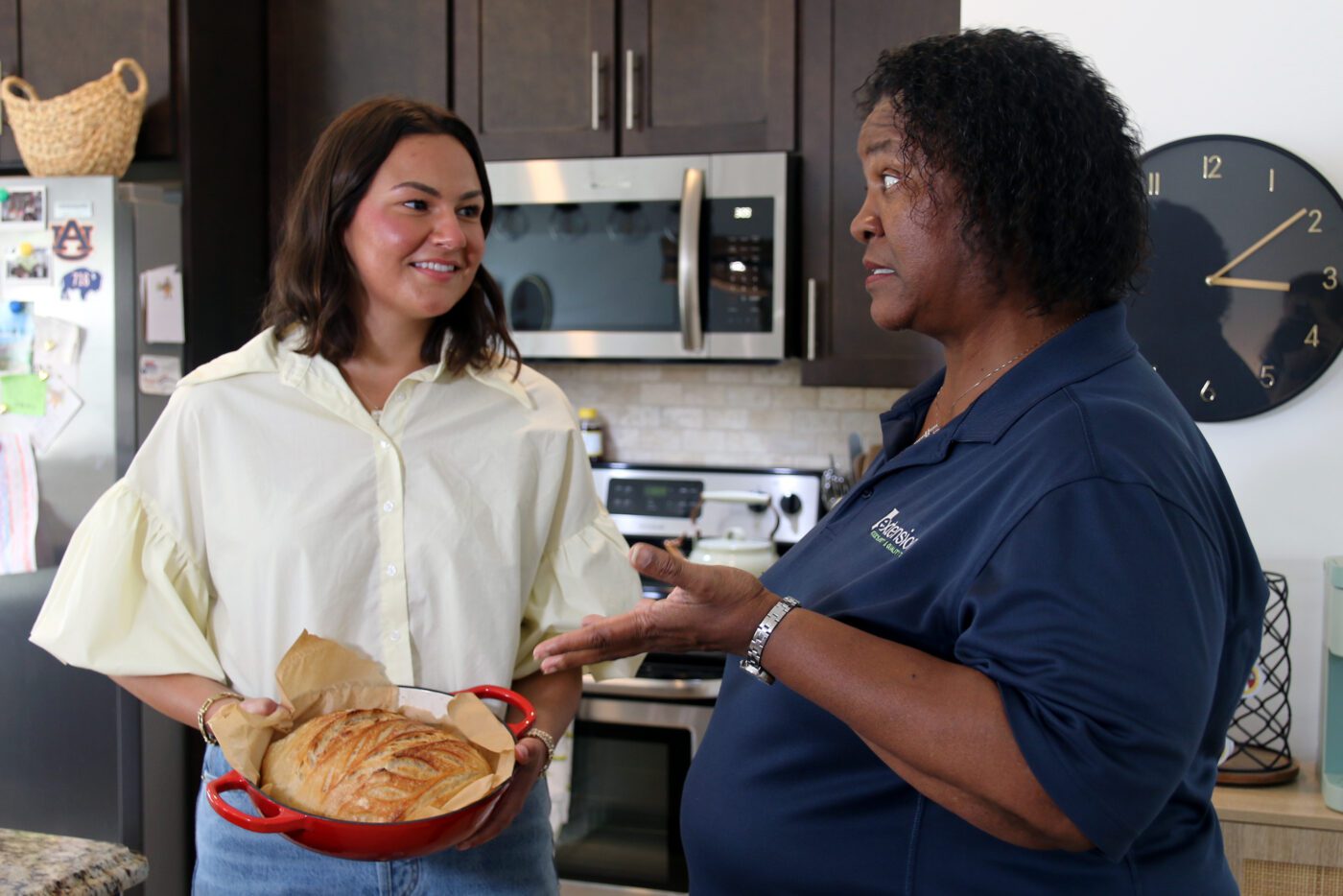
Elizabeth Belcher, left, took a Cottage Food Law course with Janet Johnson, a food safety and quality agent with Alabama Extension at Auburn University. With her certification complete, Belcher has created her own cottage food business.
Along with being her first taste tester, Belcher’s mom gave her guidance. Before starting a business, she encouraged Belcher to pursue a Cottage Food Law certification through Alabama Extension. The certification allows people to produce and sell certain nonhazardous food items made in their home kitchens.
The mother-daughter duo attended a class with Janet Johnson, a food safety and quality agent with Alabama Extension at Auburn University.
“The Alabama Department of Public Health became the regulator of the Cottage Food Law when the legislation was originally passed in 2014,” Johnson said. “At that time, Alabama Extension created a training program to explain regulations and safety requirements. There’s also a test to become certified. Without that certification, you can’t really start a cottage food business. So, we help people understand what they can and can’t do in their home kitchens to make sure they’re doing the right thing.”
After the class, Belcher took and passed her certification exam. Then, she started selling items through her new business, Eats by Elizabeth.
“Janet was great and so funny,” Belcher said. “She made the experience fun. She told us to remember that we’re selling to people, so our kitchens should be a place that someone would want to eat out of. I also learned you couldn’t put meat inside your sourdough. I had thought about offering something like a bacon-cheddar loaf, but that’s not legal under the Cottage Food Law. Being certified has definitely been a confidence booster.”
Building a Business
Eats by Elizabeth offers a variety of baked goods, from signature sourdough loaves and bagels to cakes and cookies. With sales, Belcher is saving and reinvesting in her business.
“I found out that people in college don’t always have a bread knife,” Belcher said. “So, I bought a bread slicer, and I charge $1 more on a sourdough loaf if a customer wants it sliced.”
Johnson said the ability to slowly build a business is one of the benefits of the Cottage Food Law certification.
“You can start this in your home without all the overhead costs,” Johnson said. “Plus, you can see whether or not your product is going to sell. You can get your feet wet and see if this is something you really want to do without putting in a lot of money. Sometimes, people start small and grow into a big company. Other times, people decide they want to take a step back and keep their business small, just making a little money to cover minor expenses or a vacation.”
For Belcher, her unspoken dream of running her own bakery now feels more achievable.
“I’ve heard it said that your career should be something you enjoy doing so much that you’d be fine not getting paid for it,” Belcher said. “For me, that’s baking. I bake whenever I’m stressed, not stressed, excited, sad — anything. I will always bake, and I always have. I’ve never gone more than four weeks without making something. My main goal now is a storefront. Literally, six months ago, I would have never thought of that. Now, I see this is something people want, and I could definitely succeed.”
-
- Sourdough bread started Elizabeth Belcher on a path to creating her won cottage food business.
-

- Cupcakes are among the items available from Eats by Elizabeth.
-
- Elizabeth Belcher said she enjoys testing various cookie recipes.
Cottage Food Law Training Options
In recent months, Alabama Extension’s food safety and quality team has expanded its Cottage Food Law training to include on-demand options in English and Spanish.
“We still offer the face-to-face option, which I like best because I try to make it fun,” Johnson said. “However, if you don’t have time for an in-person training or the schedule doesn’t fit your availability, you now have more choices. We can help a lot of people who want to be entrepreneurs and work from their homes.”
To find out more, visit aces.edu/go/CottageFoodBusiness.
This story is one of five articles published to celebrate Alabama Extension Week, April 12-18. To learn more about Alabama Extension Week, visit aces.edu/go/ALExtensionWeek.