
Home

Drain flies are a common nuisance in and around homes and outdoor septic tanks. While generally harmless, they can potentially transmit diseases to humans from surfaces where they land. The key to control is regular maintenance, thorough inspections, and proper cleaning of known breeding sites.
Drain flies (Psychodidae spp. Diptera: Psychodidae) are small insects up to ⅛ inch (3 to 5 millimeters) long (figure 1). They are light gray in color and densely covered with fine hair on the body and wings (figure 2). Their mothlike appearance gains them the name “moth flies.” They also are called “sink flies” because they are typically found near sinks. Their forewings appear large and oval-shaped, and all veins run parallel to each other. Drain flies are weak flyers and exhibit an erratic flight pattern and sluggish movement, making them easily distinguishable from other small fly species. Drain fly larvae are legless, about 3/8 inch (8 to 10 millimeters) long, wormlike, and gray with darker coloration at the ends (figure 3). They have a siphon (breathing tube) on one end. The name “drain fly” comes from their favorite habitats: inside slime-filled drainpipes.
-
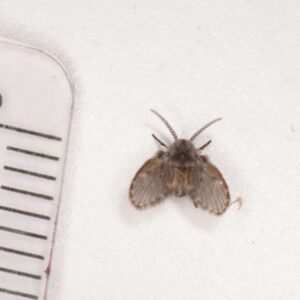
- Figure 1. Adult drain fly. (Photo credit: Paul Duff)
-
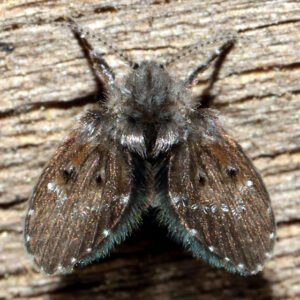
- Figure 2. Adult drain fly. (Photo credit: Ken Childs)
Life Cycle
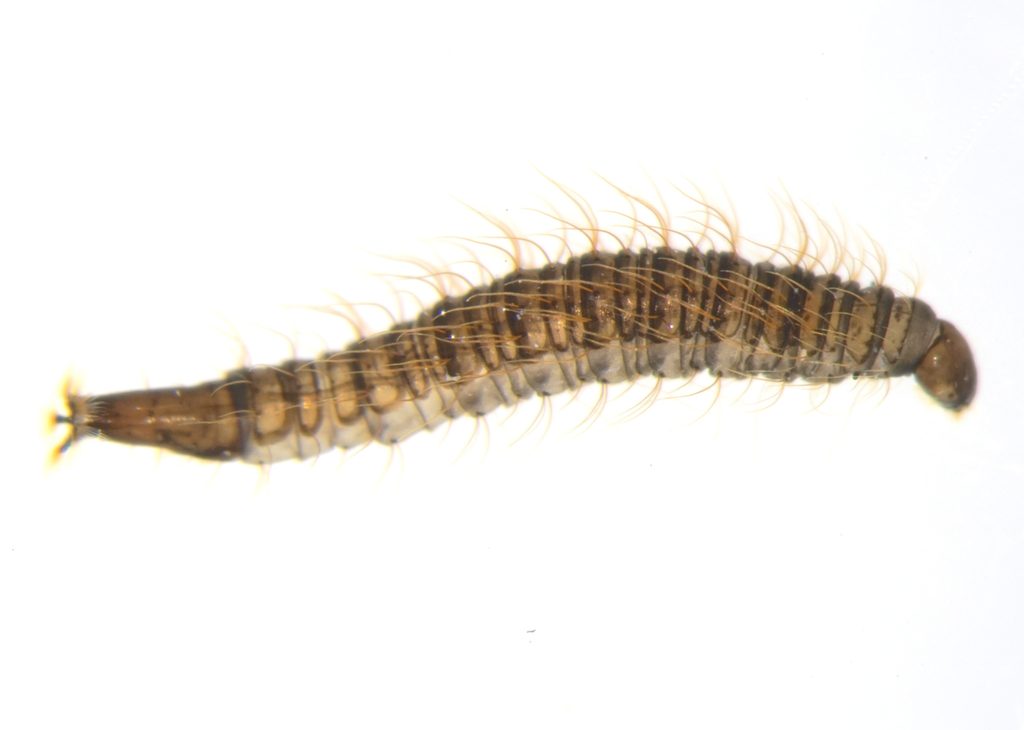
Figure 3. Drain fly larva. (Photo credit: Camiflex iNaturalist.org)
Like all fly species, drain flies have a complete life cycle consisting of four developing stages: egg, larva, pupa, and adult (figure 4). The life cycle ranges from 8 to 24 days, depending on temperatures and humidity.
- Eggs are laid on the surface of moist to nearly saturated organic matter, such as the slimy biofilm and sludge coating the sides of drains and pipes. Eggs typically hatch within 2 days.
- Larva is the feeding and growing phase. Larvae feed on decaying organic matter, bacteria and fungi, other microorganisms, grease in the slime, and microscopic plants and animals found in filters around sewage plants and septic systems. Larvae breathe by extending their breathing tubes through the biofilm. Larvae go through four instars (three molts) before pupating. The larval stage lasts from 8 to 15 days.
- Pupa is the transformation stage from larva into adult. Pupae stay where larvae develop. They are nonfeeding and mostly motionless. The papal stage lasts only 1 to 2 days before the adult emerges.
- Adult is the reproductive stage. Adult flies emerge sexually mature so that they mate and lay eggs within hours under favorable habitat conditions. Drain flies are nocturnal and often spotted resting on walls and other surfaces near the breeding site during the day. Adult flies become active after dark, making short and erratic flights to different locations. They live by sipping fluids. They can survive 3 to 4 days without fluids and about 2 weeks with fluids. A female fly lays between 30 and 100 eggs, often in irregular masses. The number of eggs can be higher under optimal breeding conditions.
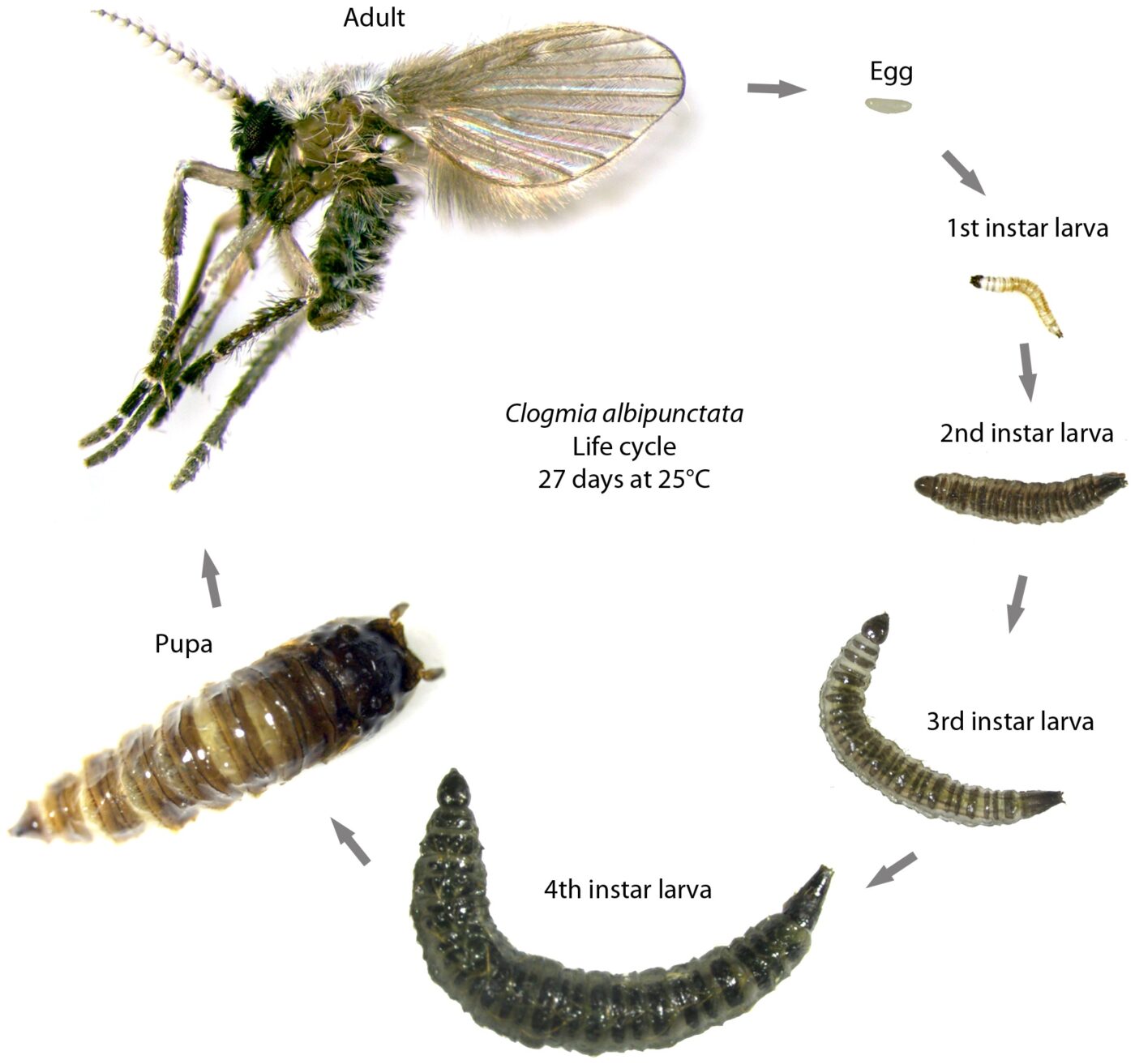
Figure 4. Drain fly life cycle (Photo credit: Jimenez-Guri et al, PloS One)
Breeding Habitats
Drain flies breed in polluted, moist, organically rich habitats where larvae can feed and develop. They can reproduce indoors and outdoors.
Drain fly adults are attracted to light and enter homes through drains, small cracks, or open windows and doors. Drawn to the odors associated with moist and decaying organic matter, they often lay eggs at drain openings, inside drainpipes, under toilet bowl rims, and even under toilet seats. Outdoors they lay eggs on sewage filter beds, septic tank field lines, or the ground under a leaking pipe or garbage container. Larvae live in the slimy biofilm on the sides of continuously wet drainpipes and almost anywhere decomposing organic materials are found.
Following are the most common breeding sites in homes:
- Bathroom, kitchen, and laundry room sink drains and traps. This occurs especially if there is bio slime, muck, or sludge buildup.
- Overflow holes and pipes. These hidden channels of sinks, bathtubs, and showers often trap moisture and organic matter.
- Bathtub and shower drains. Moisture and scum create ideal conditions.
- Toilet base or tank. This occurs especially if there is leakage or poor sanitation.
- Leaking pipes behind a wall or under a concrete slab. The resulting wet organic debris can harbor larvae.
- Ground soil under a leaking pipe (figure 5)
- Damp spots. These include wet mop heads, dirty garbage containers, condensation drip pans or appliances, and clogged gutters.
Following are the most common breeding sites outdoors:
- Sewage filtration tanks
- Septic tanks (figure 6)
- Moist compost
- Wastewater treatment plants
- Sewage systems
- The ground under leaking garbage containers, rain barrels, and where water collects and algae grows
- Saucers underneath potted plants
-
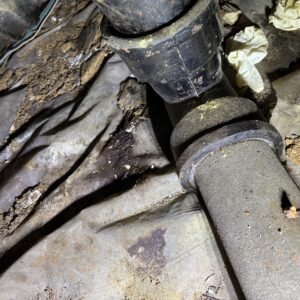
- Figure 5. Leaking pipe.
-
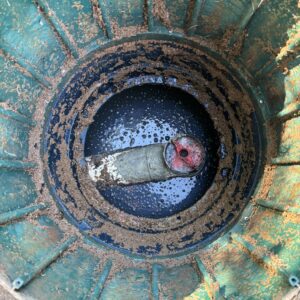
- Figure 6. Septic tank.
Health Risk
Drain flies are generally considered more of a nuisance than a health threat. They do not bite or sting and are not linked to the spread of diseases. However, the flies can potentially carry microbial pathogens from filthy breeding sites to contaminate surfaces they land on, leading to foodborne illnesses if proper hygiene is not maintained. In some cases, drain flies may trigger allergic reactions in sensitive individuals.
Drain Fly Management
The most effective method for eliminating a drain fly infestation is to remove all actual breeding sources and eradicate all potential ones. Finding these breeding sources is challenging; removing larval breeding sources is the key.
Inspection
Inspection starts with looking for the presence of adult flies that are often near their development site. Following are ways to check for the presence of adult flies:
- Visually check for adult flies on surfaces where they usually rest near breeding and light sources.
- Place clear tape over the drain opening (sticky side down), leaving a small section exposed for airflow. Check for captured flies in the days that follow. Alternatively, cover the drain opening with a glass jar internally coated with jelly, and check for fly captures in the days that follow.
- Install UV fly light traps in bathrooms and kitchens. Flies are attracted to the light and get caught on the internally installed glue board.
When adult flies are found in a home, inspect further for larval breeding sites. The most common sites include the following:
- Sink drains
- Drain traps
- Sink basin inner wall
- Along the pivot rods
- Under the stoppers
- Behind the overflow holes
- Overflow pipes
- Base of the toilet tank
- Bathtub/shower drains
- Under the drain cover
- Leaky drainpipes
Slow drainage, bubbling, and foul odors from drains are signs of possible breeding sites. Check drains by removing the drain plate, sink parts, and trap, and scraping the slimy biofilm from the inside of the drainpipe using a knife and stiff brush. Examine the collected slime for live larvae.
Larvae may develop in organic matter much deeper within the pipe, so a flashlight may be needed to look inside drains for slime or larvae. Sometimes you may also need to drill a hole into the wall behind the shower, the area under the shower pan or bathtub, or the slab where the drainpipe leaks.
If a fly source cannot be found inside the house, the flies may be coming from outdoors on or near the property. The most likely breeding sites are on-site septic tanks and drain fields, areas that tend to collect rainwater or AC condensate water, the ground beneath moist compost, garbage containers, and potted plants, and areas soaked with backup from a broken in-ground sewage pipe.
Nonchemical Control
Physical removal of larval breeding sources is the most effective method for eliminating (or preventing) drain fly infestation. Physical control methods vary depending on where the flies have originated.
The appearance of adult drain flies in the home usually indicates a slow or clogged drain that needs to be cleaned. A thorough mechanical cleaning will remove the organic buildup that attracts and feeds drain flies. The most effective method is to scrub the drain opening with a stiff brush and drain cleaner to remove all the slime and sludge. An enzymatic drain cleaner or foaming drain treatment can be used to reach deep into drainpipes. It is best to remove the sink pivot, stopper, shower cover, and drain trap and clean them with a biodegradable cleaner or clean water before putting them back on. In the case of a clogged drain, use a drain snake (drain auger or toilet jack) or call a plumbing router service. If the fly breeding sites are inaccessible (e.g., within a wall void) or the breeding source is at an off-site septic tank and sewage system, it is best to call a professional plumbing service.
Drain flies are very resilient to liquid treatment. Larvae live in the protective slime on the side of the drainpipe, which is a sticky layer that is extremely difficult to wash away. Adult flies rarely get washed away because of their super ability to cope with water threats and the super hydrophobicity of their hair cover. Therefore, pouring baking soda, bleach, vinegar, or boiling water down the drain is ineffective and may damage the drainpipe. In addition, ammonia and bleach should never be used together (their chemical reaction releases hazardous gas) and insecticides never poured down a drain to control drain flies.
Once breeding sources have been removed, adult flies can be easily killed by swatting them or vacuuming them up. Sticky traps and UV light traps can provide some relief from adults but will not eliminate a drain fly infestation. In cases of outside breeding sources, consider changing outdoor lighting to sodium vapor lamps and using good exclusion practices, such as sealing cracks around doors and windows and screening vent openings, to prevent adult flies from entering.
Maintaining a home as an unfavorable environment for drain flies is important. The best practices include the following:
- Keep drains, sink parts, and shower parts clean.
- Run water in unused drains weekly.
- Fix leaking pipes and faucets.
- Unclog drainpipes.
- Use a dehumidifier to improve ventilation and reduce moisture levels.
Chemical Control
Chemical control inside homes is generally unnecessary and discouraged. Pesticide sprays can only temporarily reduce adult numbers and do not address the root cause of the infestation. Chemical control should be considered only as a last resort.
If physical removal of indoor larval breeding sites is impractical, insect growth regulators (IGR), such as hydroprene or methoprene, may be applied directly to larval habitats to disrupt development. IGRs are lowtoxicity products and require thorough coating of the pipe sides and reapplication (generally every 2 to 4 weeks) for continued effectiveness.
If drain flies are coming from an outdoor source, exterior applications of any common residual insecticide can be made around windows and vents for temporary relief to kill flies trying to enter the structure. Always read the label and follow directions and safety guidelines of any pesticide product.
 Xing Ping Hu, Extension Specialist, Professor, Entomology and Plant Pathology, and Jacob Turner, Extension Agent, Home Horticulture, both with Auburn University
New March 2026, Drain Flies in the Home Identification & Management, ANR-3235