
Forestry

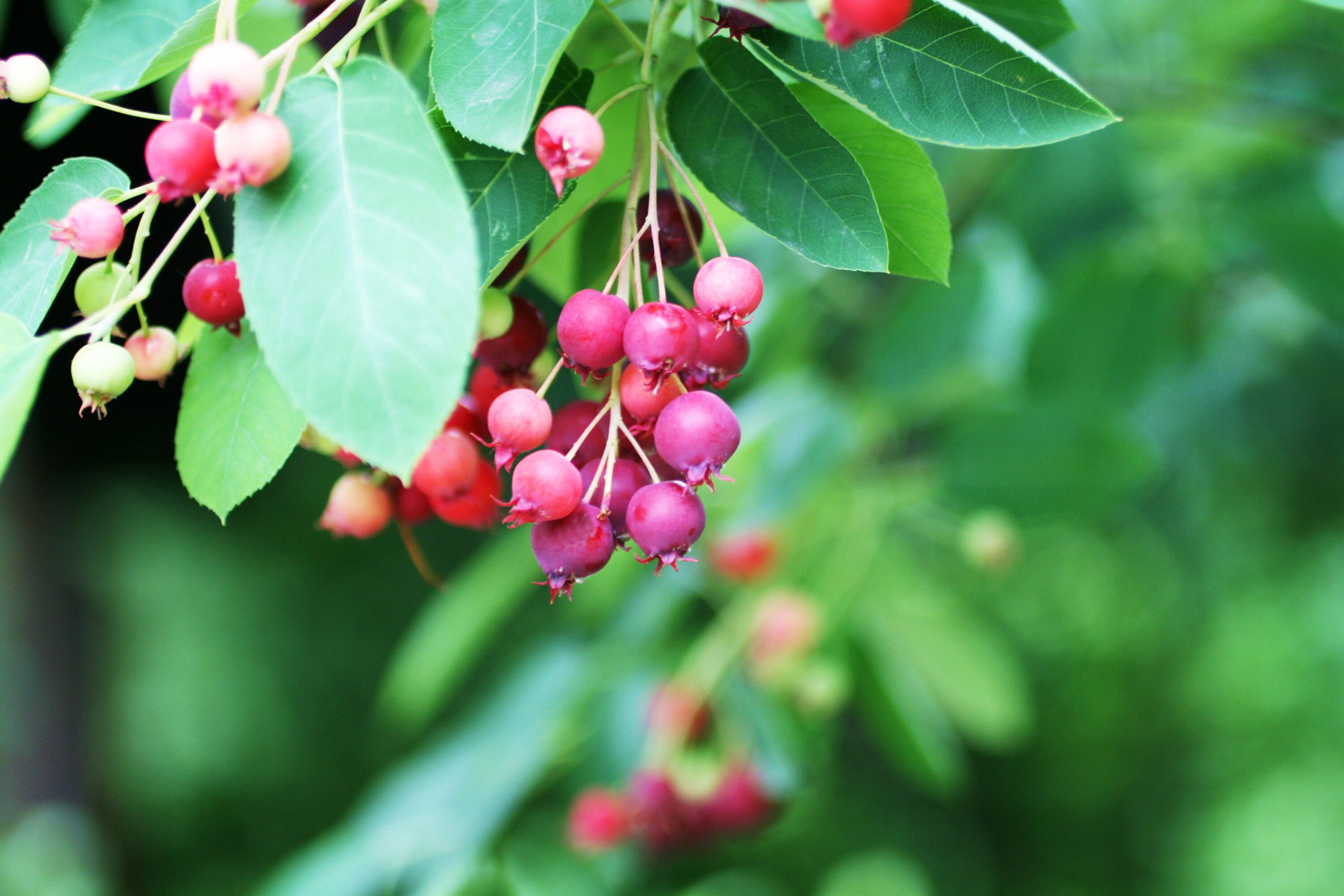
Serviceberry—also known as shadbush, saskatoon, or juneberry—is a widespread genus (Amelanchier spp.) of fruiting trees with four species present in Alabama. Serviceberry has been utilized by both Native Americans and later settlers for hundreds or even thousands of years.
Description
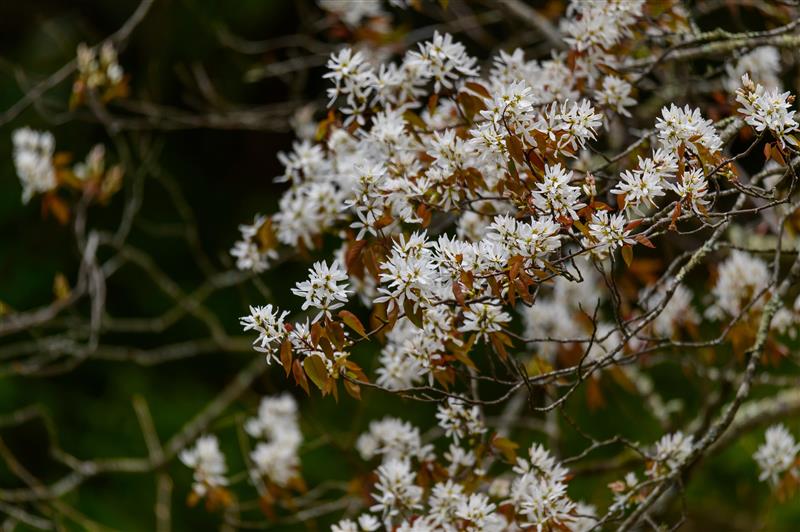
Flowering serviceberry
The most significant of the four species in Alabama is the downy serviceberry (A. arborea). Found throughout the eastern United States and much of Alabama, the downy serviceberry is a large shrub or small tree. It generally grows between 15 and 40 feet tall, but can rarely up to 60 feet tall in ideal conditions. The bark is pale grey and smooth, and its leaves are simple with serrated edges. The downy serviceberry produces abundant five-petaled white flowers, sometimes pink tinted, in the early spring either before or alongside the leaves. Its fruit is a small purple-red pome that generally ripens by or during June. In the fall, the leaves turn orange, yellow, or red.
Availability
Downy serviceberry and many other species within the genus are widely available from both online sources and native-plant nurseries. Cultivars are available with various growth habitats, heights, and fall colors—such as ‘Autumn Brilliance’, ‘Autumn Sunset’, and ‘Princess Diana’. Make sure to select species that are found within Alabama.
Uses for Humans
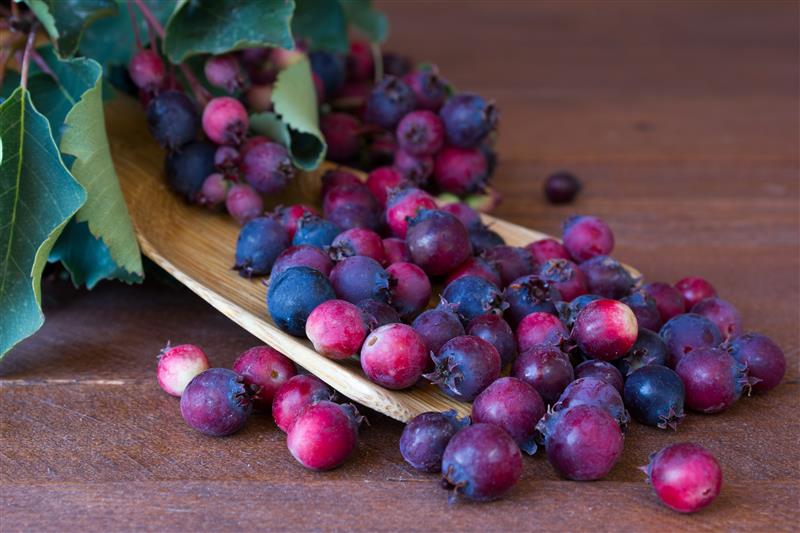
Serviceberry fruit
Serviceberry fruit is highly palatable both raw and when cooked for a variety of uses, such as preserves, jams, and cobblers. The tree’s moderate size, white blooms in the spring, and attractive foliage in the fall make it an excellent ornamental option that is capable of surviving on many different sites.
Uses for Wildlife
Many animal species use the serviceberry where available. It is most popular among fruit-eating birds, but many mammals—including squirrels, deer, and bears—also consume the fruit. Where grown in abundance, it can provide an early spring flow of nectar and pollen for insects such as honey bees and bumble bees. More than 100 species of caterpillar can use the serviceberry tree as a host.
Cultivation
Wide-ranging and adaptable, downy serviceberry will grow in many sites across the state. It is tolerant of dry habitats and soils once established but will also thrive in riparian zones and wetter areas. People can grow it from seed or stem cuttings, but propagation is most reliable through root suckers. It can be trained into a larger, single-trunked tree for ornamental purposes or be grown as a low, multistemmed shrub to provide a visual barrier and easier access to the fruit. While tolerant of shade, it will grow best in full sun along with light feeding and occasional watering during dry periods. Serviceberries are self-pollinating.
Consider planting serviceberry trees to naturalize along woodland edges as a deciduous screen or as an understory tree. If some root suckering can be tolerated, serviceberry can work as a specimen tree in a residential lawn or replacement for the invasive callery pear (‘Braford’). Serviceberry can be susceptible to rusts, fire blight, and other diseases that affect rose (Rosaceae) family plants, such as apples and pears.
References
- Dickert, G. 2010. Serviceberry. HGIC 1026. Clemson Cooperative Extension. https://hgic.clemson.edu/factsheet/serviceberry/
- Mellichamp, L. 2014. Native plants of the southeast. Portland, Oregon: Timber Press.
- Weakley, A.S., and Southeastern Flora Team. 2025. Flora of the southeastern United States Web App. University of North Carolina Herbarium, North Carolina Botanical Garden, Chapel Hill, U.S.A. https://fsus.ncbg.unc.edu/main.php?pg=show-taxon-detail.php&lsid=urn:lsid:ncbg.unc.edu:taxon:{0CADF0D8-9ED7-4ADF-86B8-580676E8791D}. Accessed Jul 7, 2025.