
Forestry & Wildlife

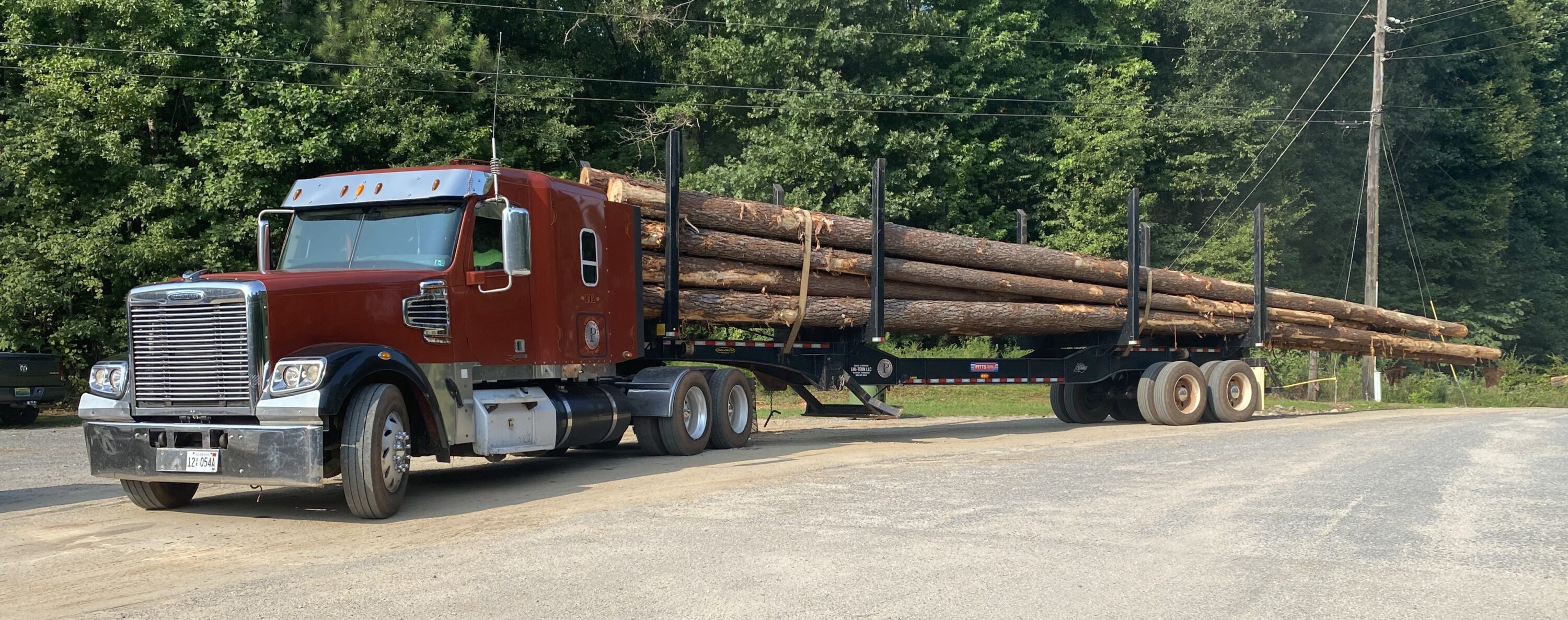
Forest operations involve the harvesting and transportation of timber (trees) from the forest to the processing facilities, where the timber is refined into various wood products. Log trucks play a critical role in this supply chain, ensuring a steady flow of raw materials.
Given the significant economic contributions of the forest industry at both local and regional levels, efficient and reliable log truck transportation is
the backbone of this economic activity. However, despite its importance, numerous challenges affect the productivity, safety, and cost-effectiveness of transporting timber. Addressing these challenges with strategic solutions is crucial for maintaining a sustainable and effective timber supply chain.
Forestry in Alabama
Alabama is one of the richest states in the United States in terms of forest resources, with approximately 23 million acres of timberland, ranking third nationally. Of this, 93.4 percent is privately owned, and southern yellow pine dominates the majority of the harvested timber. The forest products industry contributes approximately $12.5 billion annually to Alabama’s economy, highlighting a significant contribution to the state’s economy. More than 110 wood processing facilities (mills) across the state need log trucks to deliver timber to their facility. Log trucking plays a critical role in this supply chain, transporting unprocessed logs from harvest sites to wood processing facilities. However, despite its essential role, the transportation of timber faces numerous challenges. Today, this vital sector is struggling, threatening the stability of the entire forest-based economic cycle, and it is not only an issue in Alabama but also across the United States.
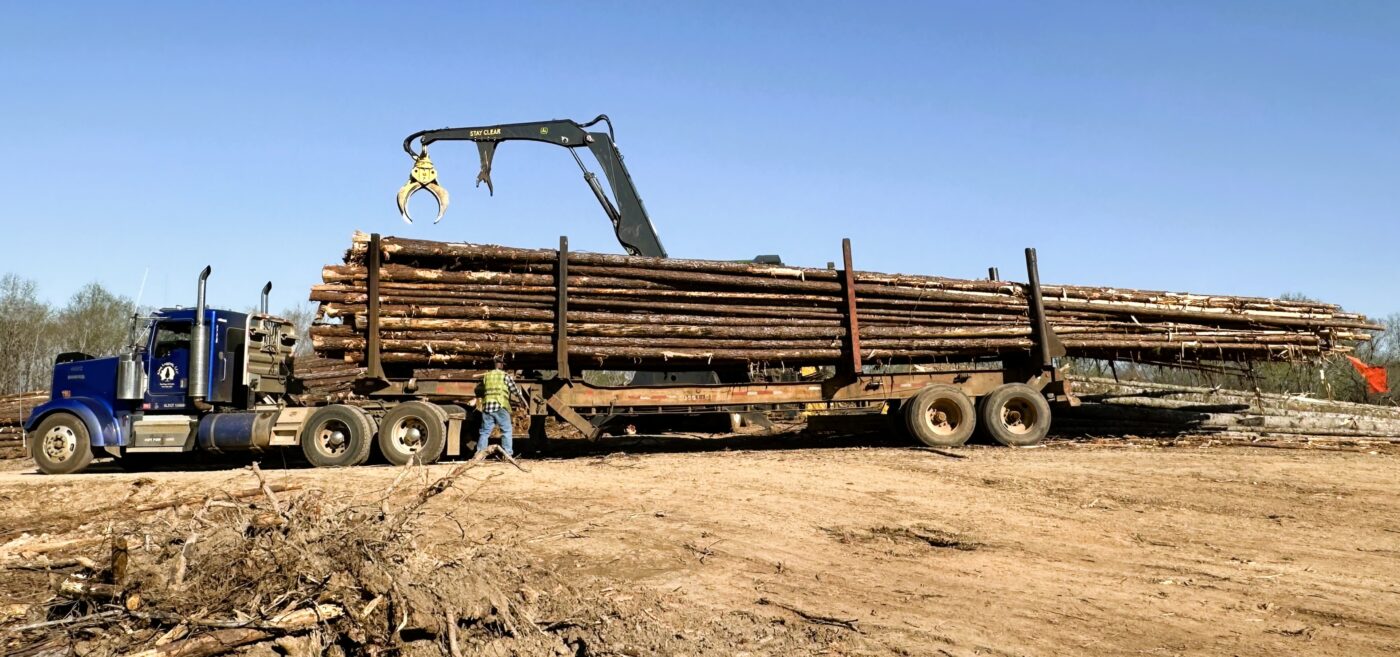
Figure 1. Log truck driver binding a load to get it ready for travel to the mill. This process secures logs with chains, wire ropes, or straps to prevent them from shifting, tipping, or falling off the trailer during transport.
Challenges in Log Trucking
Rising Operational Costs
Fuel prices, insurance premiums, and maintenance expenses are steadily increasing, making log trucking one of the expensive parts of the supply chain. Fuel alone accounts for a significant portion of the total operating cost, and fluctuating diesel prices create financial uncertainty for loggers that use their own trucks and trucking companies (contract trucking). Additionally, insurance premiums for log trucks have risen due to costly lawsuits after log truck accidents and the limited number of insurance companies that insure log trucks. Expensive lawsuits following log truck accidents exceed the value of premiums paid by log truck owners, forcing insurance companies to leave the market. Further, log trucks typically operate 10 hours a day, 5 days a week, hauling an average of three loads per day. A significant portion of travel occurs on gravel or poorly maintained roads and rural county back roads, which accelerate wear on tires, brakes, and suspension, creating a considerable demand for repair and maintenance. Given these circumstances, it is difficult for log trucking to remain profitable, and many small operators are being pushed out of the market, making the ongoing log trucking situation worse.
Driver Shortages & Workforce Issues
A shortage of skilled and experienced truck drivers is a growing concern in this industry. Approximately 30 percent of log truck drivers are over 55 years old. The aging workforce exacerbates the issue, as many experienced drivers are retiring without sufficient replacements. Further, hiring young drivers is challenging. The problem is not having enough applicants but finding qualified drivers. For example, drivers are required to be at least 25 years old and have at least 2 years of experience driving a log truck, making it difficult to expand the pool of existing log truck drivers.
Weight Restrictions
Log trucks can legally weigh up to 80,000 pounds on interstate highways, while state and county roadways in Alabama allow a 10 percent allowance, totaling 88,000 pounds. This weight includes the truck, trailer, and payload. As a result, to maximize their payload, log trucks typically use state and county roadways. These routes are often longer, require more fuel, and consequently, result in more carbon emissions. They typically also have lower design standards and thinner pavement, making them more susceptible to wear and tear due to heavy vehicle traffic. On the other hand, using interstate highways with reduced payload presents financial challenges for an industry already burdened by rising operational costs, such as increasing insurance premiums and fuel prices. There are also safety concerns with consistent travel on state and county roadways.
Infrastructure Limitations
Numerous bridges on state and county roadways are either aging or were not designed to support the gross vehicle weight (GVW) of a fully loaded (80,000 plus pound) log truck. Weight limitations (restrictions) on these bridges create logistical hurdles, which lead to the need to find alternate routes, which then leads to increased haul distances and fuel consumption, and also increases safety risks due to longer time on the road. Longer haul distances to mills can also negatively affect stumpage prices for landowners.
Safety & Accident Risks
Log truck transportation can pose safety risks due to the majority of travel being on state and county roadways. These routes often pass through busy urban areas and have numerous stop signs, lights, and intersections. The turn radius on these roadways can be limited, increasing the likelihood of accidents (i.e., turnovers, hitting other vehicles, etc.) and creating a safety risk for both the public and log truck drivers. As noted above, log truck drivers tend to avoid interstates due to the lower weight limit. To limit incidents, log truck drivers conduct safety checks of their trucks, trailers, and loads before traveling on public roads.
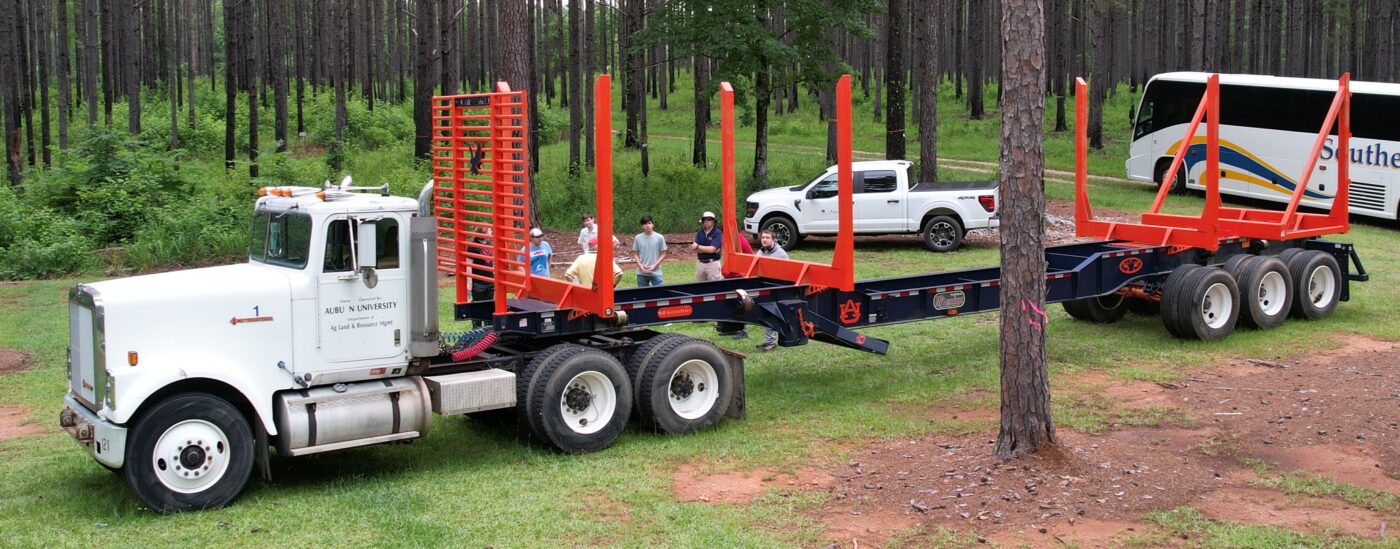
Figure 2. Auburn University log truck and trailer demonstration on transportation challenges and safety in Alabama. Weight and safety inspections, fuel costs, limited turn radius and maneuverability, braking distances, and axle weight and gross vehicle weight limits are some of the challenges.
Conclusion
Alabama has abundant forest resources and is home to more than 110 wood processing facilities. These facilities contribute significantly to the state’s economy, and log trucking plays a vital role in supplying them with timber. However, log trucking has been facing significant challenges with axle and gross vehicle weight limits, higher insurance premiums, higher fuel costs, labor shortages, and many others.
Additional Information
- Alabama Forestry Commission (AFC). 2023. Forest Resource Report.
- Alabama Department of Commerce.
- Cole, N. B., Barrett, S. M., Bolding, M. C., & Aust, W.
- M. (2019). An analysis of fatal log truck crashes in the United States from 2011 through 2015. International Journal of Forest Engineering, 30(2), 121–131.
- Conrad IV, J. L. (2018). Costs and challenges of log truck transportation in Georgia, USA. Forests, 9(10), 650.
- Conrad IV, J. L. (2023). Log truck insurance premiums, claims, and safety practices among logging businesses in the US South. International journal of forest engineering, 34(2), 204–215.
- Federal Highway Administration (FHWAA). (2015). Compilation of existing state truck size and weight limit laws: report to congress. Appendix A: Truck size and weight limits. US Department of Transportation.
- Greene, W. D., Baker, S. A., & Lowrimore, T. (2007). Analysis of log hauling vehicle accidents in the state of Georgia, USA, 1988–2004. International Journal of Forest Engineering, 18(2), 52–57.
- Knight, C. R., Bolding, M. C., Conrad, J. L., & Barrett, S. M. (2024). Log truck transportation challenges and innovative solutions: evaluating the perspectives of truck drivers, logging business owners, and foresters. International Journal of Forest Engineering, 35(1), 113-121.
-
Murphy, G. (2003). Reducing trucks on the road through optimal route scheduling and shared log transport services. Southern Journal of Applied Forestry, 27(3),198- 205.

Puspa Joshi, Graduate Research Assistant, and Richard Cristan, Extension Specialist, Associate Professor, both in Forestry, Wildlife, and Environment, Auburn University
New March 2026, Forest Industry Transportation Challenges: Log Trucking, FOR-2191