
Lawn & Garden

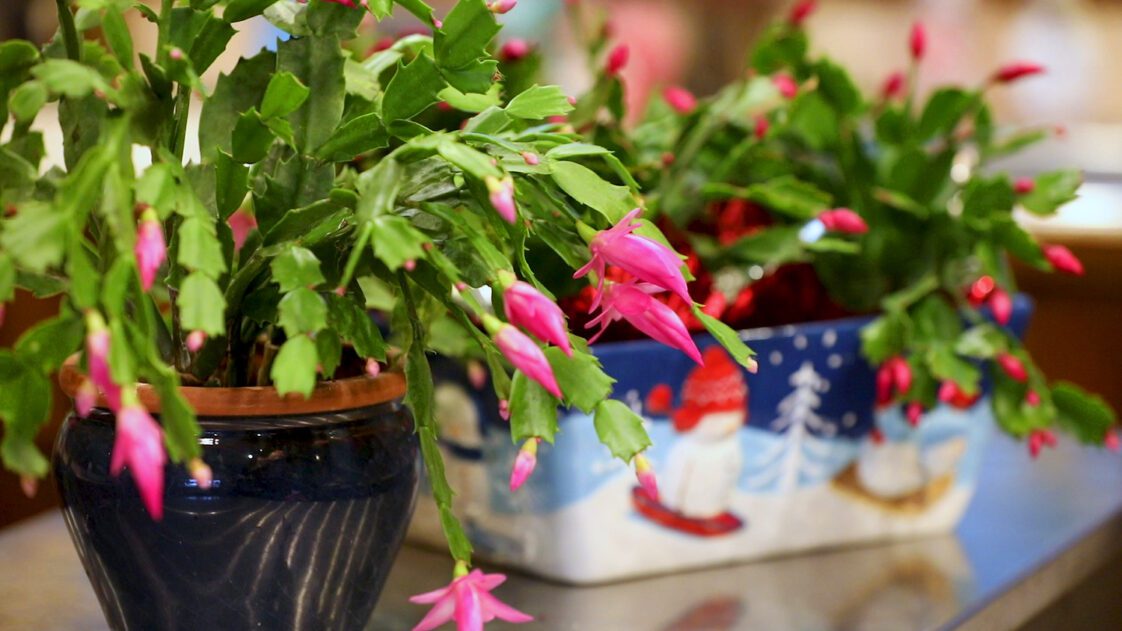
AUBURN UNIVERSITY, Ala. — In many households, no holiday décor would be complete without the bright-blooming colors of a Christmas cactus. The same goes for the other holiday cacti seen blooming at Thanksgiving and Easter. As one of the easiest indoor plants to care for, it is no wonder that many holiday cacti are passed down from generation to generation. Whether caring for the family cactus or getting started with a new one, people can easily help their cactus thrive this holiday season.
Holiday Cacti Trio
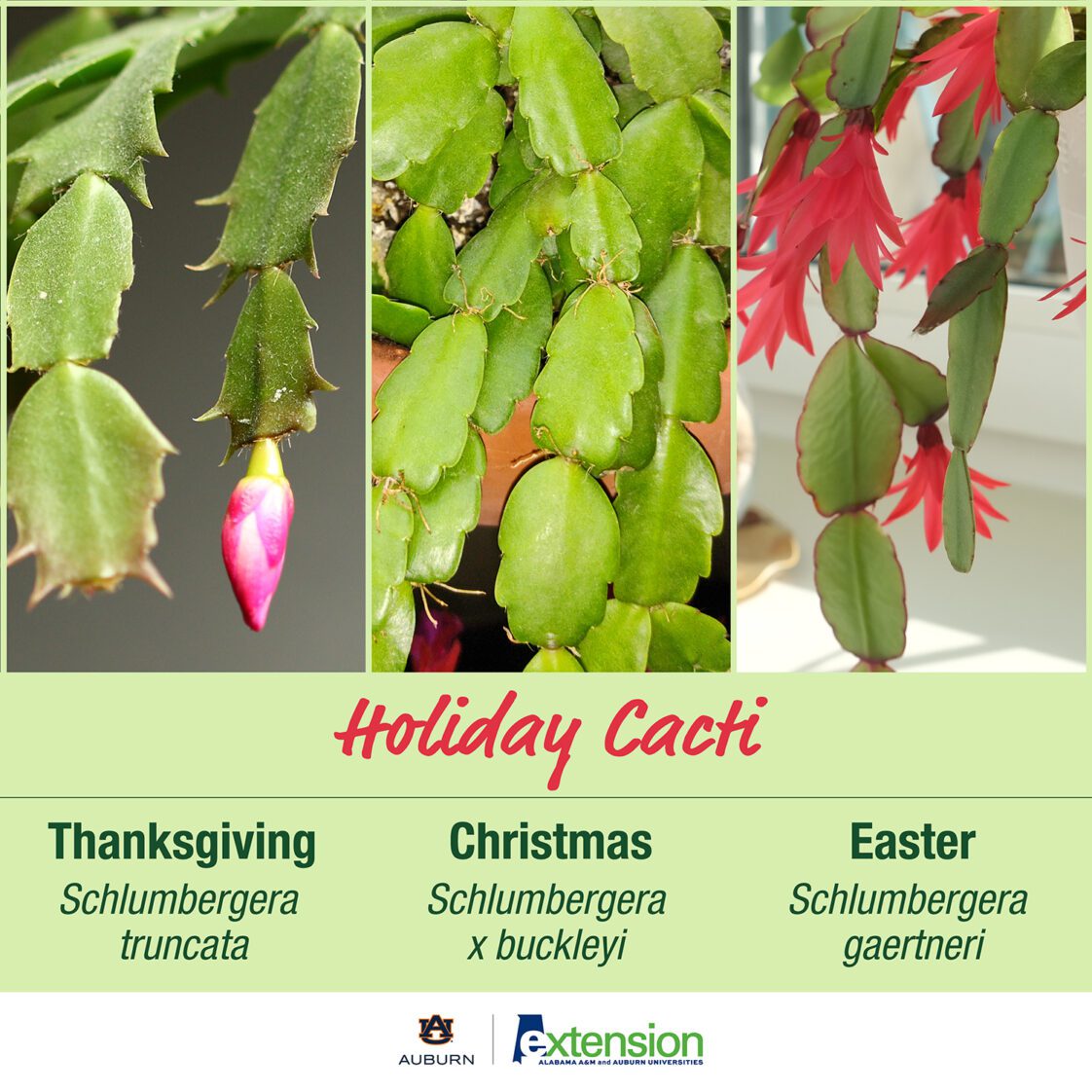 The trio of holiday cacti — Christmas, Thanksgiving and Easter — are so named because those holidays coincide with their bloom times. All three cacti can have a wide range of bloom colors. Shades of red are the most common, but the blooms can also be white, orange or yellow. With a lot of shared similarities, telling the difference between the three can be difficult.
Brian Brown, an Alabama Extension home horticulture agent at Auburn University, said looking at the plant’s segments is the best way to identify the cactus species.
“A Thanksgiving cactus has pointy stem segments, whereas a Christmas cactus has more scallop-shaped projections on its segments,” Brown said. “The Easter cactus, sometimes called a spring cactus, has even more rounded stem segments than the others.”
Care and Maintenance
Fitting their reputation as an easily grown houseplant, the care and maintenance for all three species is the same. Brown said holiday cacti grow best in temperatures between 70 and 80 degrees Fahrenheit, making most houses suitable environments.
“Holiday cacti also prefer a high-humidity environment,” Brown said. “If your home is dry, you can increase the humidity around your plant by putting small pebbles in the plastic plant saucer that holds your plant and adding water just below the rocks.”
People can choose to fertilize their cacti either monthly or yearly. When fertilizing monthly, Brown recommends using a complete liquid fertilizer, such as a 10-10-10, and following the directions on the label. For yearly applications, use 1 tablespoon of a complete, slow-release fertilizer once in the spring.
When it comes to watering, the timing depends on several factors, such as the time of year, light exposure, soil conditions and cactus size. However, it doesn’t take specialized equipment to figure out when to water. Brown said one of the best and simplest ways to tell if a cactus needs water is to put a finger down into the soil to see if it is dry.
“If the soil is dry, add more water; it’s that simple,” Brown said. “These plants are tough and can take some neglect, even to the point of almost being completely wilted. In fact, one of the most common problems with these cacti is overwatering.”
Cacti thrive in moist but well-drained soils. To prevent overwatering troubles, only add water when the soil is dry, and make sure the container has drainage holes.
Bloom Troubles
If a cactus suddenly drops its blooms, the mostly likely culprits are underwatering or a change in either temperature or light exposure. If a cactus is not blooming at all, there is a way for people to trick it into blooming. Place the cactus in a dark room, such as a closet, or cover with a box for a minimum of 12 hours each day. This darkness stresses the plant and encourages it to bloom.
“After about four weeks of these daily periods of uninterrupted darkness, your cactus should begin to bloom,” Brown said.
More Information
For more information on caring for holiday cacti, people can contact the home horticulture Extension agent who serves their area. Contact information is available at aces.edu.