
Food Safety

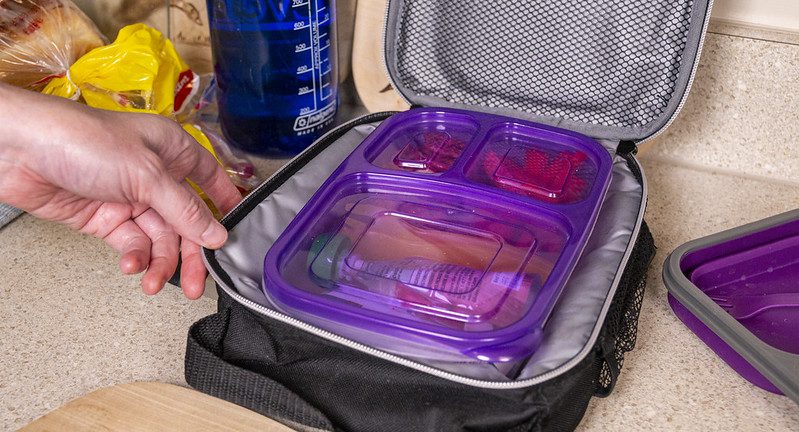
With new supplies, schedules, and routines, the back-to-school season can feel overwhelming. However, packing lunch doesn’t have to be. With a little planning, you can pack lunch boxes that are nutritious, affordable, and food-safe all year long.
Packing a Balanced Lunch
A healthy lunch includes all three macronutrients: carbs, protein, and healthy fats. The following are recommendations from the US Department of Agriculture’s MyPlate for packing a balanced lunch:
- Fill half of your lunch with fruits and vegetables. They are full of healthy carbs and nutrients.
- One quarter of your lunch should be grains—such as whole-wheat bread, crackers, or rice—which are great energy boosters.
- Include protein as one quarter of your lunch, which helps build muscles. This could include items such as deli meat, eggs, nut butter, or yogurt.
- Don’t forget one serving of dairy product like cheese or milk.
- Add some healthy fats—found in items like nuts, seeds, avocados, and fish—for long-lasting energy.
Budget-Friendly Lunch Ideas
For convenience, it is tempting to grab prepacked lunches at the grocery store. While they are quick, they are often low in nutrients and filled with preservatives. Also, the cost for these prepacked lunches can start to add up. At home, you can build healthier versions of these lunches for less:
- Grapes, bananas, strawberries, or apples.
- Carrots, cucumbers, broccoli, or roasted potatoes. If you have picky eaters, try pairing vegetables with hummus or ranch in moderation.
- Whole-wheat bread, wraps, crackers, rice, or bagels.
- Boiled eggs, peanut butter, grilled chicken, turkey, or yogurt.
- Dairy/Fats. Cheese sticks, milk boxes, or trail mix with seeds or nuts.
Visit MyPlate.gov for more lunch ideas. Also, check out Sweet Grown Alabama’s website, sweetgrownalabama.org, to see what produce is in season, which can potentially save you money.
Keeping Lunch Boxes Safe
Lunches should not sit out for more than 2 hours at room temperature (or 1 hour if temperatures are higher than 90 degrees F.
For cold foods, use an insulated lunch box with two cold sources, such as frozen water bottles or gel packs.
For hot foods, use a thermos and preheat it with boiling water before adding food.
For more information on keeping lunches, see the publications, “What’s in Your Lunch Box?” and “Amber & Zac: Lunch Box Food Safety.”