
About Us

 Ever wondered why Auburn University has a farm in Fairhope? Dig In and Discover the answer in 2025!
Auburn University and the Alabama Cooperative Extension System invites you to the Gulf Coast Research and Extension Center to discover how this farm serves as a site for learning and innovation. At these events, the team will guide you through hands-on demonstrations, showcasing the different crops grown and the cutting-edge agricultural research happening at the center. You will walk away with a deeper appreciation for the center’s rich history and a better understanding of how it continues to support farmers, businesses, and families in Baldwin County and beyond.
When: Select months throughout 2025
Where: Gulf Coast Research and Extension Center, 8300 State Highway 104, Fairhope, Alabama 36532
Why Attend?
- Get an inside look at what goes on at the Gulf Coast Research and Extension Center.
- Engage in interactive exhibits and family-friendly activities.
- Experience hands-on demonstrations and cutting-edge technology.
- Meet Alabama Extension agents and explore their available resources.


Dig In & Discover Dates
Each month, the team will explore a key agricultural topic with expert presenters, hands-on demonstrations, and an enjoyable farm experience.
September 9—Forestry
Learn about sustainable forestry, land management, and conservation strategies for long-term success. The group may get lucky and get to spot one of the many gopher tortoise outside their burrows.
- Who: Andrea Robards, Forestry, Wildlife and Natural Resources Extension Agent, and Beau Brodbeck, Assistant Director for Field Operations
- Time: 5:00 to 6:30 p.m.
- Registration: www.aces.edu/event/dig-in-and-discover-forestry/
October 14—Harvesting
Discover advanced harvesting techniques and equipment designed to maximize efficiency and crop quality. Tour the farm during harvest and learn how research and equipment help improve crop quality and supports local farmers and communities.
- Who: Jarrod Jones, South Region Alabama Research Director, and Christy Hicks, Agronomic Crops Extension Agent
- Time: 5:00 to 6:30 p.m.
- Registration: www.aces.edu/event/dig-in-and-discover-harvest/
November 11—Pecans
Gain insights into pecan production, pest management, and market trends for a thriving orchard.
- Who: Joel Potter, Forestry, Wildlife and Natural Resources Urban Regional Extension Agent
- Time: TBA
- Registration: TBA
About the Center
Established in 1930, the Gulf Coast Research and Extension Center is one of the five original outlying agricultural experiment stations of the main Alabama Agricultural Experiment Station at Auburn University. The center’s original 725 acres were donated by local agencies, and the center was established as a part of the 1927 Act by the Alabama Legislature. At the time the center was established, agriculture research consisted primarily of satsuma oranges, small vegetables operations, free-range cattle and chickens, and a significant Irish potato industry.
- The primary crops at the time were vegetables and satsuma oranges. While research demonstrated some production practices to increase both citrus and vegetable production, Mother Nature ensured that satsumas would not be a viable crop. A series of harsh winters essentially eliminated the once booming citrus industry in Mobile and Baldwin Counties, and in recent years through research and new technologies the citrus industry has been reestablished on a much smaller scale.
- Early research centered around the development of the cattle industry along the gulf coast. Research indicated crimson clover and ryegrass were well suited for cool-season grazing in the area. However, the biggest technological advances came in the development of fertility programs for pastureland.
- Area potato growers suffered from poor seed-piece quality at the time the center was established. Subsequent work demonstrated that larger seed pieces resulted in higher quality potatoes. Additionally, fertility work established standards that led to a viable Irish potato in the gulf coast region for many years.


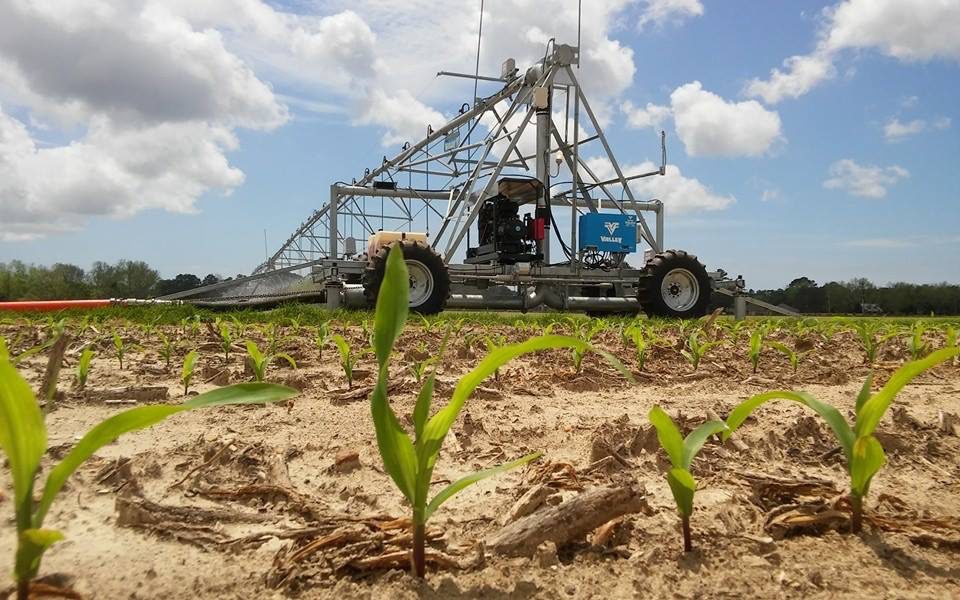
Agriculture in Baldwin County has changed significantly during the time of the Gulf Coast Research and Extension Center and continues to change today. Once dominated by citrus and vegetable crops, the county has grown into more diversified agriculture. While citrus, potatoes, and pecans have declined in popularity, cotton, corn, peanuts, soybean, turf, and ornamental production are the staple crops today. Research today at the center primarily focuses on variety testing, integrated pest management, fertility, irrigation, and precision agriculture.