
Fish & Water

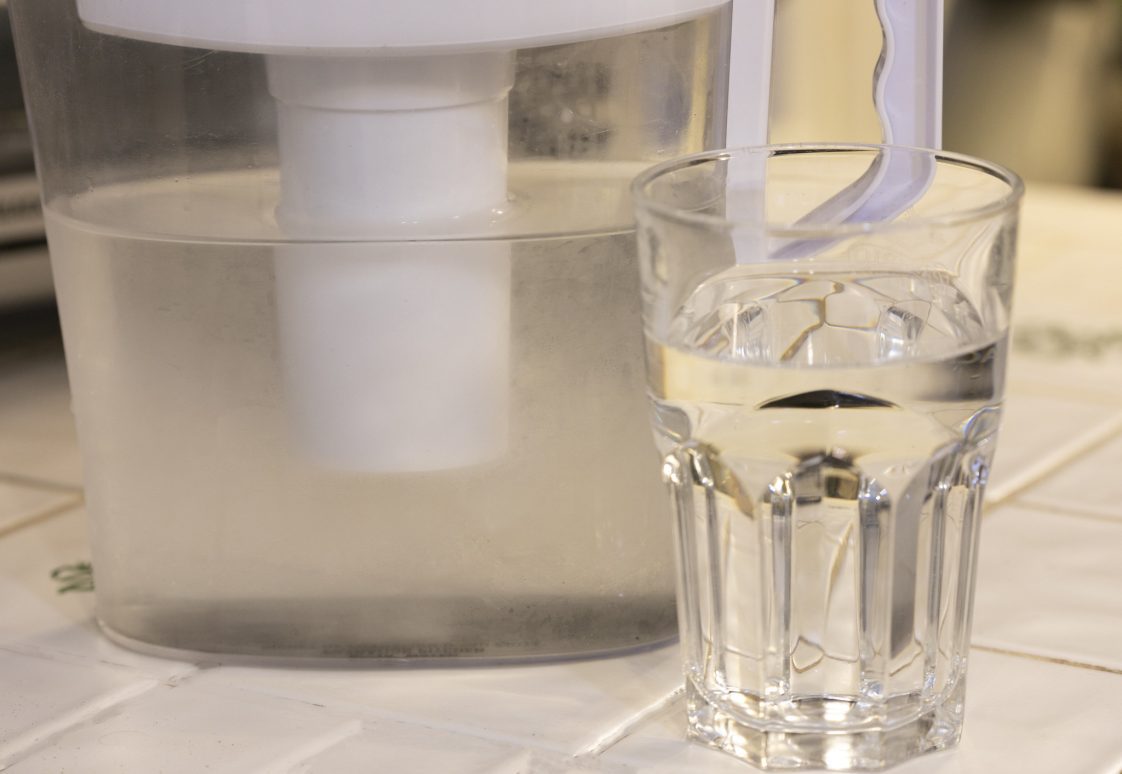
A simple and inexpensive way to improve your health is to drink enough water. Water is an essential nutrient, just like those found in food. While your body requires water to survive, it cannot produce enough on its own to meet daily needs. Therefore, you must consume water daily through beverages and foods high in water content like fruits and vegetables.
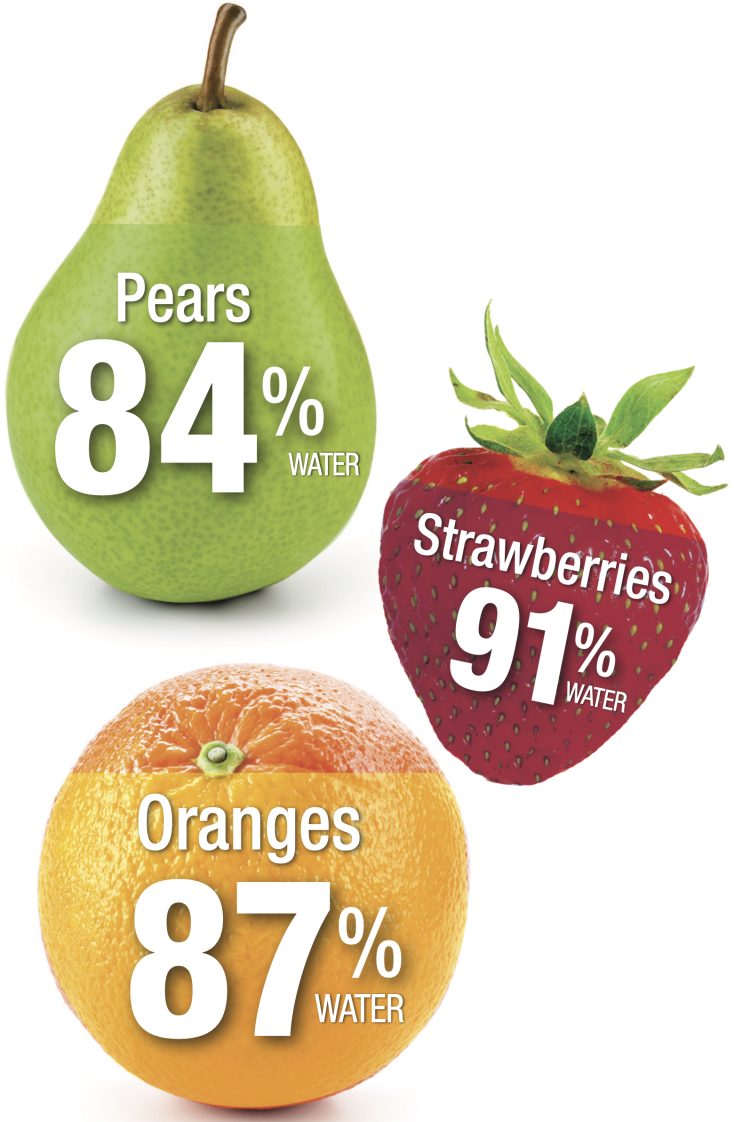
Pears are 84% water, strawberries are 91% water, and oranges are 87% water.
Concerns about water safety and quality, exposure to excess heat, high physical activity levels, and personal preferences can make drinking enough water challenging for some individuals. You can reduce these concerns by finding reliable information on your body’s water needs and the safety and quality of drinking water. Once you know the basics, you can find many creative ways to alter the taste or experience of drinking water, making it easier to meet your daily water needs.
Benefits of Drinking Water
Your body requires water for many essential functions. You may have learned that your body is primarily water. Water is stored and used by every part of your body and makes up 50 percent to 70 percent of your body weight. Not drinking enough water can cause dehydration, a condition in which your body cannot perform normal functions due to a lack of water. Symptoms of mild dehydration often resolve quickly upon drinking water or other fluids. However, if dehydration is severe or prolonged, it can cause serious kidney or heart problems or even death.
Your body needs water to aid the following:
- Lubricate joints for comfortable, safe movement.
- Protect sensitive tissues like the spinal cord and brain.
- Maintain proper moisture levels in blood and bones.
- Eliminate waste (sweat glands, urine, digestive system).
- Form saliva that helps in digestion.
- Regulate body temperature.
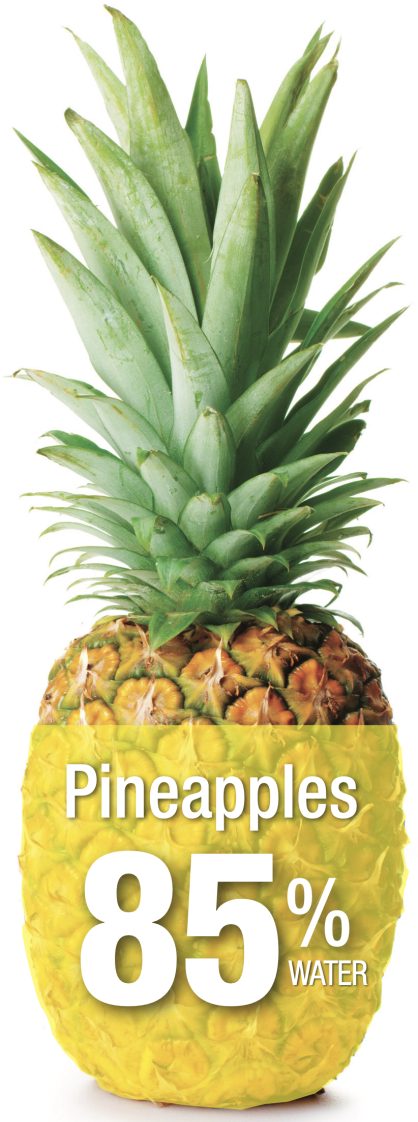
Pineapples are 85% water.
Signs You May Be Dehydrated
- Thirst
- Constipation
- Dark-colored urine
- Poor concentration
- Lack of energy
How Much Water Should I Drink? What Is the Recommended Amount?
According to the Centers for Disease Control and Prevention, US children and adults drink far less water on average. While “8 cups a day” is easy to remember, total fluid needs are higher at 11.5 cups for women and 15.5 cups for men per day. Because the average person consumes about 20 percent of this requirement through foods, a good general goal for drinking fluids is 9 cups for women and 13 cups for men. Daily water needs also vary due to individual factors and can change throughout one’s life. For example, more water is needed during pregnancy, breastfeeding, vigorous physical activity,
and for people who are elderly, live in high altitudes, or have certain acute or chronic health conditions. People on dialysis often need less water. Consult a doctor or registered dietitian with questions related to individual fluid needs.
According to Food Data Central, many foods are high in water.
Fruits: melons 90% to 92%, strawberries 91%, pineapples 85%, grapes 78%, oranges 87%, and pears 84%
Vegetables: lettuces 94% to 96%, celery 95%, bell peppers 92% to 94%, squash and carrots 89%
Dairy products: milk 90%, yogurt 85%, cottage cheese 81%
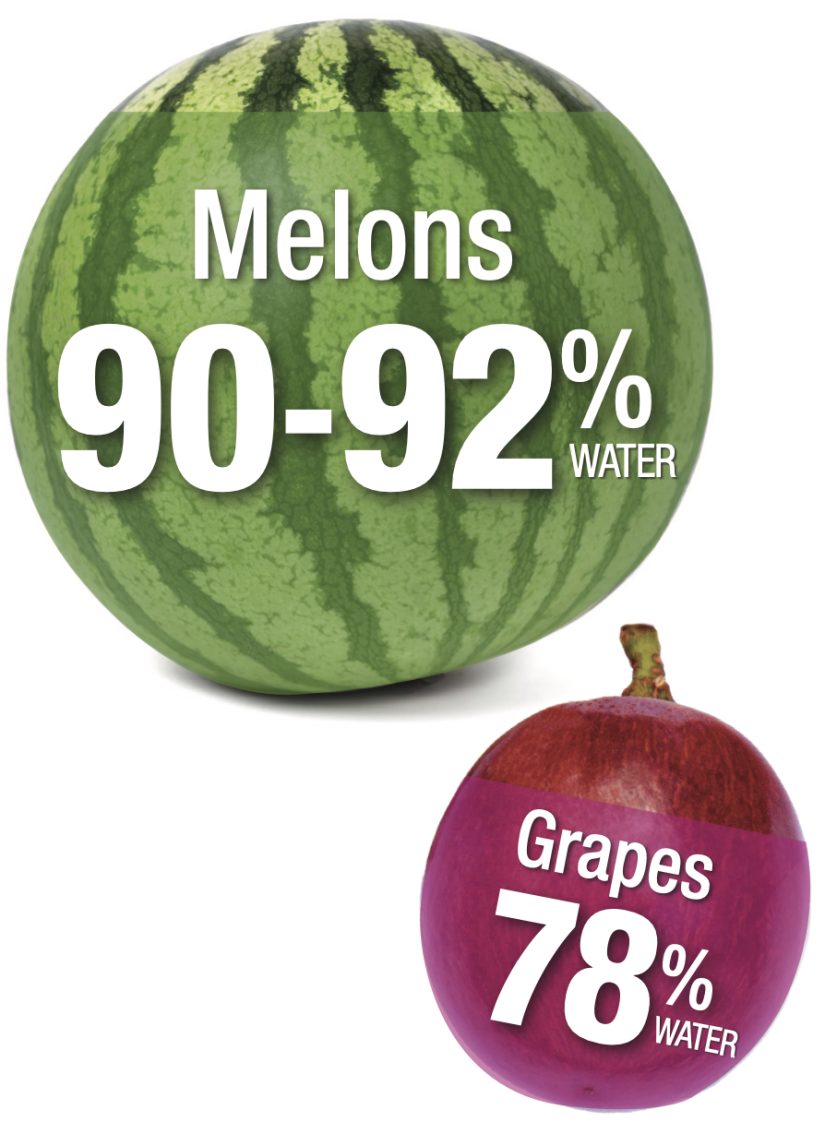
Melons are 90 to 92% water, and grapes are 78% water.
Where Does My Household Water Come From?
The journey to reach your tap can vary depending on the source of your water; for instance, private well users get water from underground aquifers, whereas households on public water supplies may receive surface water from nearby lakes, streams, and reservoirs or may withdraw it from aquifers. Water that comes from below ground may have a different water chemistry than water from a surface source. These differences can be due to the geology of the area, which can influence the types of minerals and rocks that are interacting with the water below ground.
Aquifers are rarely underground lakes or rivers. Instead, groundwater is found between pores and spaces of rocks, soils, and sediment.
How Do I Know if I Am on a Public Water Supply?
One way to know is if you pay a monthly water bill. A public water system is a system that provides water for at least 15 service connections and serves at least 25 people for at least 60 days (about 2 months) a year. These systems can include municipal water utilities, rural water authorities, and other entities that provide drinking water to the public.
Is My Household Water Safe to Drink?
In 1974, the Safe Drinking Water Act was passed to protect public health and the nation’s public drinking water supplies. This act established drinking water quality standards for more than 90 different contaminants that the Environmental Protection Agency and state agencies now enforce. The Alabama Department of Environmental Management enforces this policy in Alabama. Private well users are responsible for the testing, treatment, and maintenance of their systems, as no federal policy exists to mandate this.
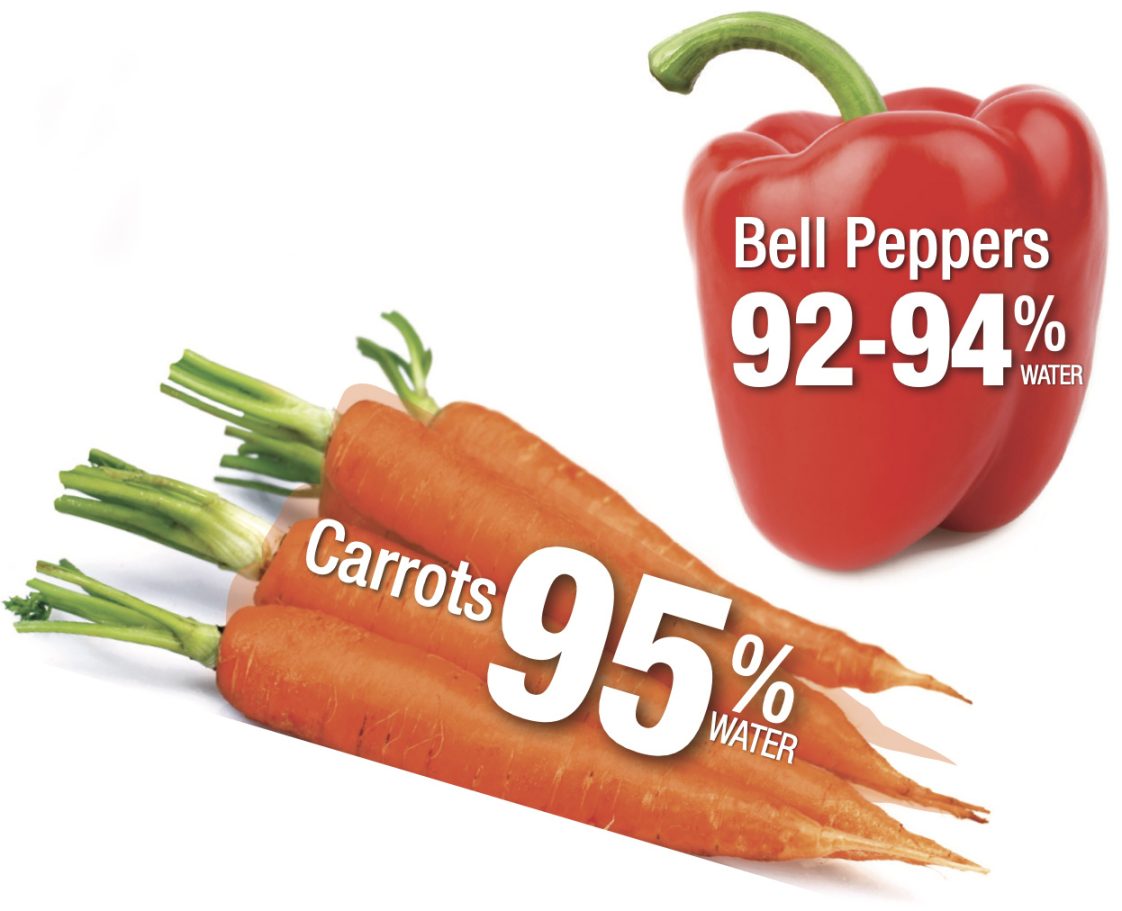
Carrots are 95% water, and bell peppers are 92 to 94% water.
How Do I Find Out if My Water Is Safe? Who Protects My Water?
If you are on a public water system, your water provider tests water quality for contaminants. The process of treating water is extensive. Details are available on the Centers for Disease Control and Prevention website. Despite frequent testing, special problems may arise due to the aging of the distribution system, household plumbing, or even natural events such as flooding or drought. Water utilities must notify every consumer of water quality concerns within a specific time frame. This Public Notification Rule ensures that consumers know of any issues with their drinking water. Notices are sent to consumers for the following reasons:
- If the water does not meet drinking water standards set by the Safe Drinking Water Act.
- If the water system fails to test its water.
- If the water system has been granted a variance (use of less costly technology).
- If the water system has been granted an exemption (more time to comply with new regulations).
If you are experiencing problems with your water, immediately notify your water utility.
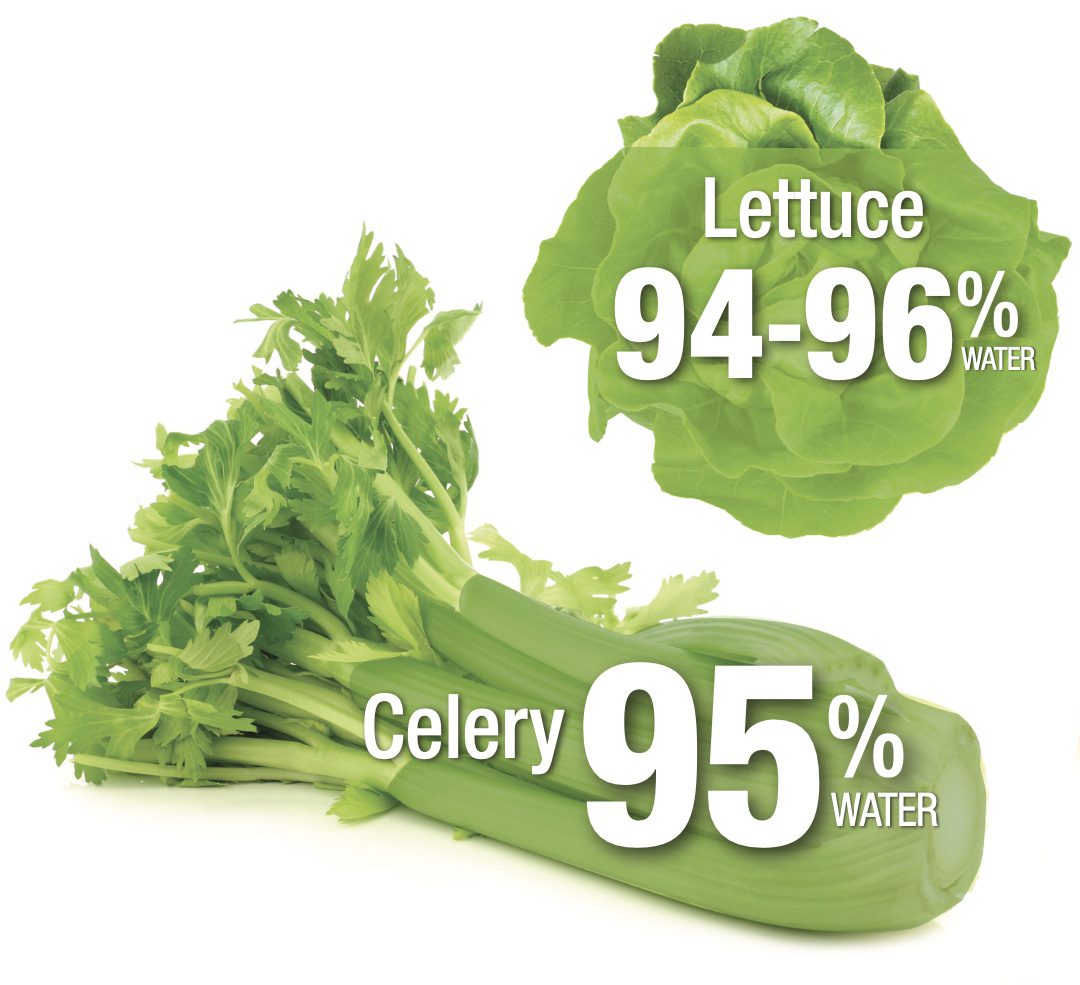
Celery is 95% water, and lettuce is 94 to 96% water.
The annual Consumer Confidence Report (CCR) released by your water supplier will also provide information about your water quality for the calendar year. Not all CCRs look the same, but all must include the date, water source (lake, municipal well, etc.), potential health effects from consuming contaminated water, a list of regulated contaminants, and instructions for public participation. If you are a renter, contact your building manager or search online for your CCR.
Tap Water Is Economical
Purchasing bottled water can be costly in the long run. An efficient way to enhance your water’s safety and flavor is to use an activated carbon filter in your home (often in the form of a water pitcher). These filters are generally low cost and can improve the overall taste of water from your faucet. Water filters are also environmentally friendly, can replace repeated purchases of plastic water bottles, and help reduce the expense and waste of drinking water.
Tips for Drinking More Water
Safe drinking water is needed for the overall health and function of the body. Following are tips for drinking more water.
- Try a new cup or water bottle and take it everywhere you go.
- Set a timer and a daily intake goal. Stick with it.
- Keep a pitcher of water in the refrigerator.
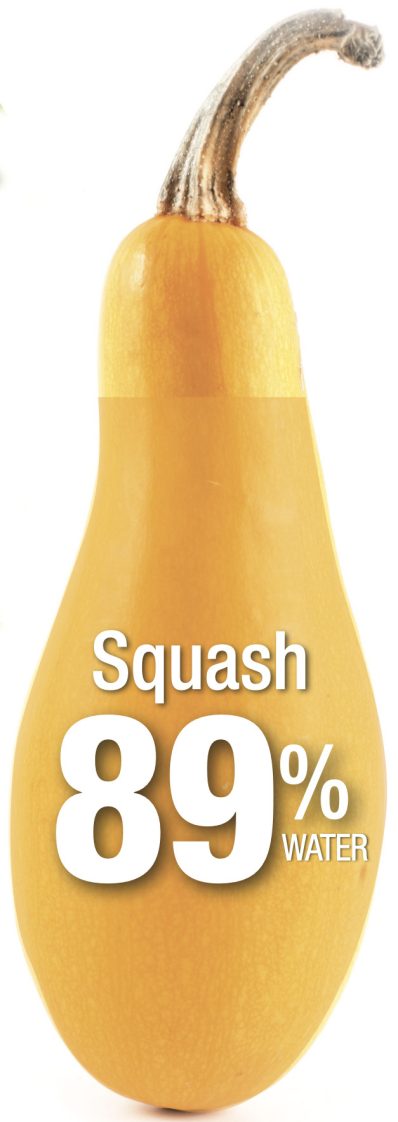
Squash is 89% water.
Tips for Making Water Taste Better
Even if your CCR shows that the water quality is in regulation, some consumers may still find the water’s taste, smell, or appearance unappealing. Some common experiences include the following:
Pink slime around sink fixtures may be a product of Serratia marcescens, an airborne bacterium. While not considered a drinking water issue, symptoms can be remedied by cleaning fixtures with a chlorine-based cleaner.
Cloudy or milky water may be due to air in the water. To check, fill up a glass with water and let it sit. If the appearance clears up, it is likely air. Common causes may be line breaks, maintenance in the water system, or a faulty faucet aerator.
Fun Ways to Help Kids Drink More Water
- On your next shopping adventure, allow kids to pick out their own new cup or water bottle. Make sure they know it is a special place only for water.
- Consider finding water bottles that outline water levels to help them keep track of their water intake throughout the day.
- Let children decorate a water bottle with stickers and their names.
- Buy colorful straws for a fun way to add a twist to seeing water change colors before their eyes.
- Try reusable plastic ice cubes in fun, colorful shapes.
- Create a science project to demonstrate changing a liquid to a solid by making homemade ice cubes with colorful fruit inside that will be released when the ice melts.
- Infuse water with colorful fruits and herbs, such as oranges, strawberries, mint, and cucumber. Wash the produce before use.
- Create a reward system for drinking water for your child and others in the family. Set a goal for a certain number of cups per day and keep a chart with stickers or markings for each family member. Cheer one another on and make a prize available for the winner each day, week, or month. End the contest with an outdoor water balloon, squirt gun, or sprinkler party.
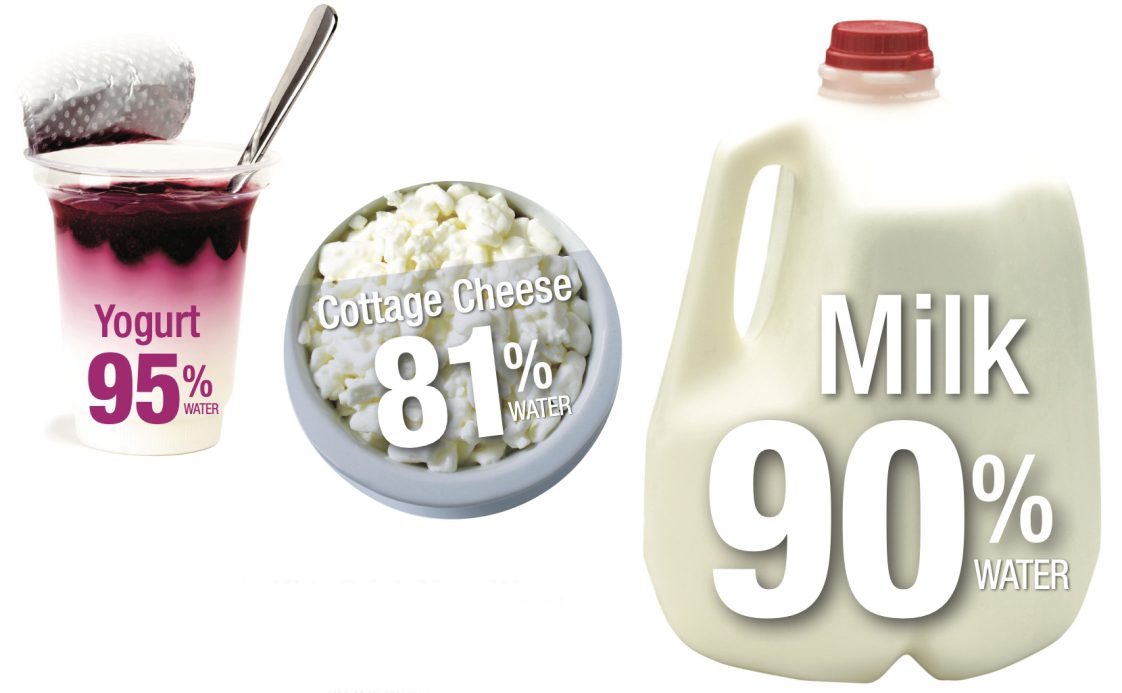
Yogurt is 95% water, cottage cheese is 81% water, and milk is 90% water.
Websites for More Information
- FoodData Central–USDA
- Academy of Nutrition and Dietetics
- Centers for Disease Control and Prevention
 Jessica Curl, Extension Administrator, Instructional Outreach Programs, Crop, Soil, and Environmental Sciences; Eve Brantley, Associate Director, Extension Administration; Katie Funderburk, Assistant Director, Federal Nutrition Programs; and Janice Hall, Extension Specialist, Federal Nutrition Programs, all with Auburn University
New September 2024, Clean Water & Healthy Habits, ANR-3099