
Lawn & Garden

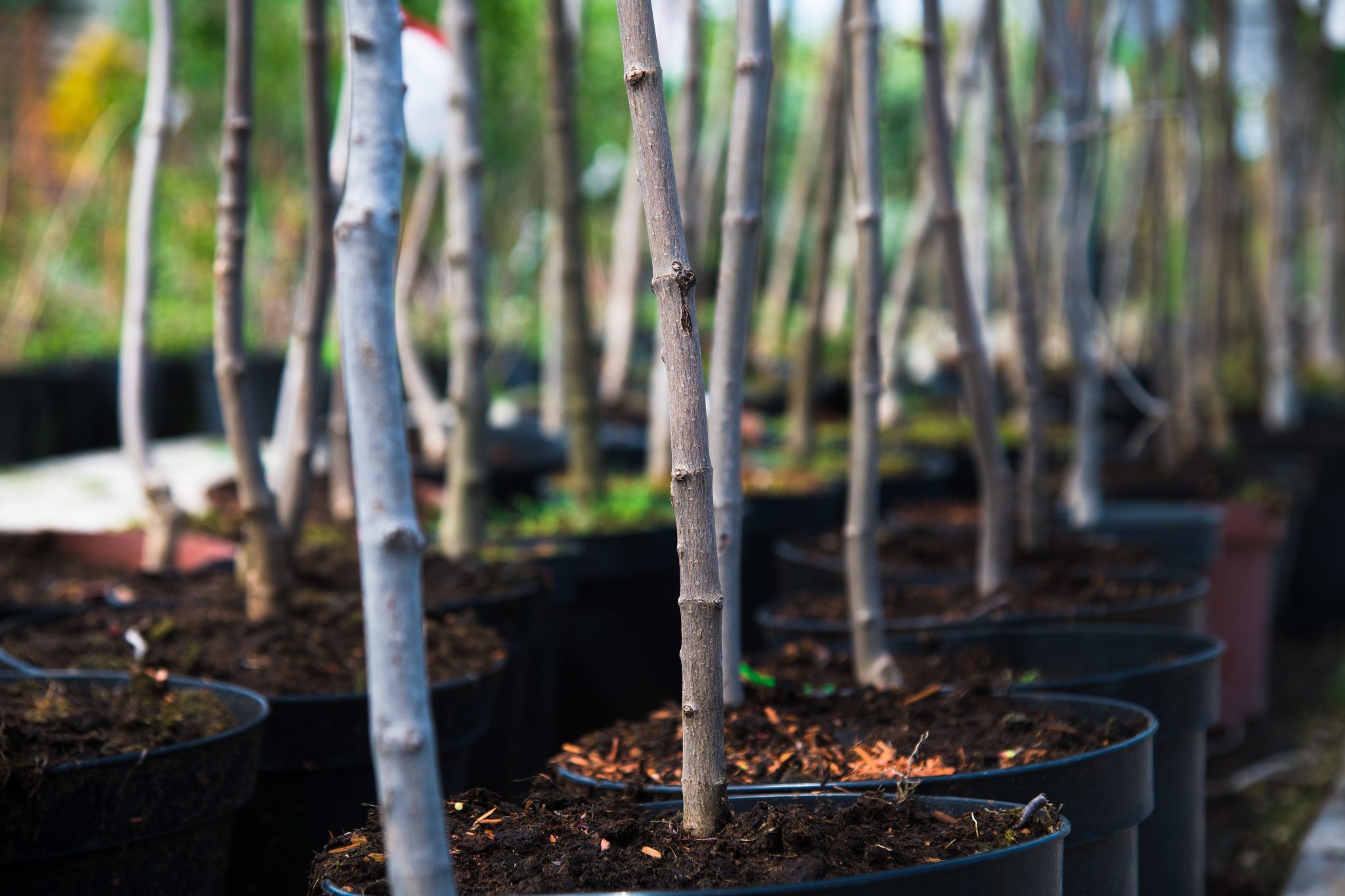
Trees can add beauty and value to a landscape. However, planting the right tree in the right location is important. Before selecting and planting, think about the tree’s mature height and how much space it will require. The following best practices and tips for proper tree planting will ensure overall better growth for your tree.
Choosing a Location
It may be best to keep trees 50 feet or more from things like a swimming pool, septic tank, field lines, vegetable garden, and flower beds. If there are any above-ground or below-ground utilities in the area, it may be best to choose another location. If trees are planted in an area with heavy shade, they will probably grow slowly and possibly not grow as straight as one would like. However, early morning and late-afternoon shade can be an advantage for species with thin bark, such as maples.
Proper Planting Procedures
Heeling In
When purchasing bare-root plants from an Arbor Day event or a store, the trees should be heeled in if they cannot be planted immediately. The term heel in means to bury the roots in compost or soil to prevent them from drying out until time or conditions are favorable for proper planting. This could be as simple as placing several trees in the same hole or lying them down and covering the roots with soil or compost. This is a temporary procedure to keep the tree roots from freezing or drying out for up to a couple of weeks.
Planting Depth
When you are ready to plant, dig a hole that is at least twice the diameter of, but no deeper than, the root ball. It may even be best to dig the planting hole 2 to 4 inches shallower than the root ball. This is important with all trees but is extremely important when planting balled and burlapped trees.
After digging a correct-sized hole, check for glazed sidewalls. In a clay soil, it is common to create glazed or slick sidewalls while digging. These sidewalls interfere with the roots’ ability to grow past the planting hole and into the undisturbed soil. If the hole has glazed sidewalls, simply scar up the slick places with a shovel and continue with the planting procedure.
Beware Sinking Plants
Balled and burlapped plants are dug and sold with native soil around the root ball and can be extremely heavy. Even if initially planted at the correct depth, it is not uncommon for the root ball to sink several inches after being planted, burying the trunk and roots too deep. When plantings balled and burlapped plants, they should rest on the firm, undisturbed soil at the bottom of the planting hole. Keep in mind that this type of sinking can also happen in other plants, such as large, container-grown trees. Even bare-root or smaller, container-grown plants can settle in the planting hole, so pay close attention and plant at the correct depth.
Planting Bare-Root Trees
For bare-root trees, spread the roots out broadly over a small mound created in the bottom of the planting hole. The top roots for bare-root plants should be at the soil surface or even slightly above. If you have a bare-root plant with a long root that will not fit the planting hole, either dig the hole larger to accommodate the root in an outwardly growing direction or prune the root at the edge of the planting hole. Do not wrap the root around the inside of the planting hole. This will encourage the root to circle and possibly girdle the tree from underground later in the tree’s life.
Planting Container-Grown Trees
If possible, you may pull the circling roots loose with your fingers or cut shallow slits in the root ball to encourage the roots to grow outward instead of continuing to grow in the circular pattern. For large, container-grown plants, remove the outer layer of potting mix (this is mostly pine bark) to expose lateral roots. Wash away as much of the potting material as possible and plant as described for a bare-root plant.
The top of the root ball should be at the soil surface or even slightly above. If possible, you may pull the circling roots loose with your fingers or cut shallow slits in the root ball to encourage the roots to grow outward instead of continuing to grow in the circular pattern. For large, container-grown plants, remove the outer layer of potting mix (this is mostly pine bark) to expose lateral roots. Wash away as much of the potting material as possible and plant as described above for a bare-root plant.
Planting Balled and Burlapped Trees
When planting balled and burlapped trees, the burlap needs to be pulled away from the trunk, cut, and removed from the top of the root ball. It may be hard to remove all the burlap, especially on a tree placed in a wire basket. The goal in removing some of the burlap is to make sure that no burlap is exposed above the top of the root ball. Any exposed burlap above the soil line can act as a wick and will allow moisture to be pulled from the soil. Also, if the fabric is a synthetic product instead of burlap, it will not rot, and the roots will have a difficult time growing through it.
If the tree is in a wire basket, removing the entire wire basket is not recommended. However, the wire—especially the top row—can eventually girdle the tree roots later in life. For this reason, it is a good idea to remove the upper portion of the wire basket after the tree is placed in the planting hole but before all the soil has been added around the root ball.
Filling the Hole
Refill the hole with the soil that was removed when digging the hole. It is not a good practice to amend the backfill soil with organic matter unless the entire planting bed or area is amended. Partially fill the planting hole with the native soil around the root system while keeping the tree as straight as possible. Use a shovel to break up clods, and spread the soil around the roots while trying to eliminate any air pockets. Adding water can get messy but does a great job in eliminating air pockets. Do not try to eliminate air pockets by stepping on the backfill soil, as this can cause compaction. Repeat this procedure until the soil is even with the top of the root ball or even with the top root for bare-root plants.
Caring for the Planted Tree
Water
Water the tree deeply the day it is planted. Keep in mind that soil can be saturated on top but still dry just a few inches below the surface. The best time to plant trees is during the dormant season, because they will require much less watering. However, it is possible, especially with container-grown trees, to plant during warmer times of year.
If a tree is planted during the growing season, it is important to water at planting and anytime additional water is needed. This usually means watering every couple of days for a few weeks and continuing to provide some supplemental watering throughout the first summer and fall. Depending on the size of the tree, it may take 10 to 20 gallons of water to sufficiently water the tree at planting. A good rule of thumb is to use 2 gallons of water for every 1 inch of trunk diameter (near ground level). For example, a 5-inch diameter tree would need 10 gallons every couple of days, decreasing frequency and increasing volume over time.
Mulch
Mulch is important to keep the soil cool, conserve moisture, and will aid in weed management. Materials such as pine straw or pine bark make excellent mulches, but other materials can be used as well. The mulch should be spread about four times the diameter of the root ball. For large trees, this can be 6 to 8 feet from the tree. For young trees, a 4-foot mulch diameter should be a minimum. The mulch layer should be no more than 1 inch deep over the root ball, but 2 to 3 inches from the edge of the root ball and beyond. At the trunk, the mulch layer should be thin and should never be piled up against the trunk, as this can cause various diseases. Managing weeds and mulching around the tree will greatly increase the growth of the tree and eliminate the need for mowing or string trimming around the tree trunk. Do not use a string trimmer around the trunk of the tree.
Staking
Most of the time, container-grown and balled and burlapped trees do not need staking. However, pay attention to the trees. If tree stability is a problem, then staking is encouraged. Do not drive a stake on top of the root system or even into the freshly dug planting hole. Drive a stake or stakes into the harder ground outside of the planting hole. Feed string or wire through a piece of old garden hose to protect the tree from being girdled from the staking materials. Leave the tree staked for no more than one growing season. It is also a good idea to check the tree periodically to make sure the staked tree is growing properly and the stakes or staking materials are not causing any problems.
Other Maintenance
Fertilizing is not recommended the first year, but weed control, mulching, and irrigation are recommended. Unless there are damaged limbs, wait until the second year to do any corrective pruning. Leaves make roots, so remove as few leaves as possible. A soil test will identify necessary nutrients, so a fertility program could begin at the start of the second growing season. To keep the trunk straight, make sure the lateral branches stay subordinate to the central leader. The lateral branches should be smaller in diameter and height to the central leader. If a lateral branch competes for the central leader position, a fork will develop. This will be a weak place in the tree and subject to splitting during a storm.
For more information, contact your county Extension office.