
Lawn & Garden

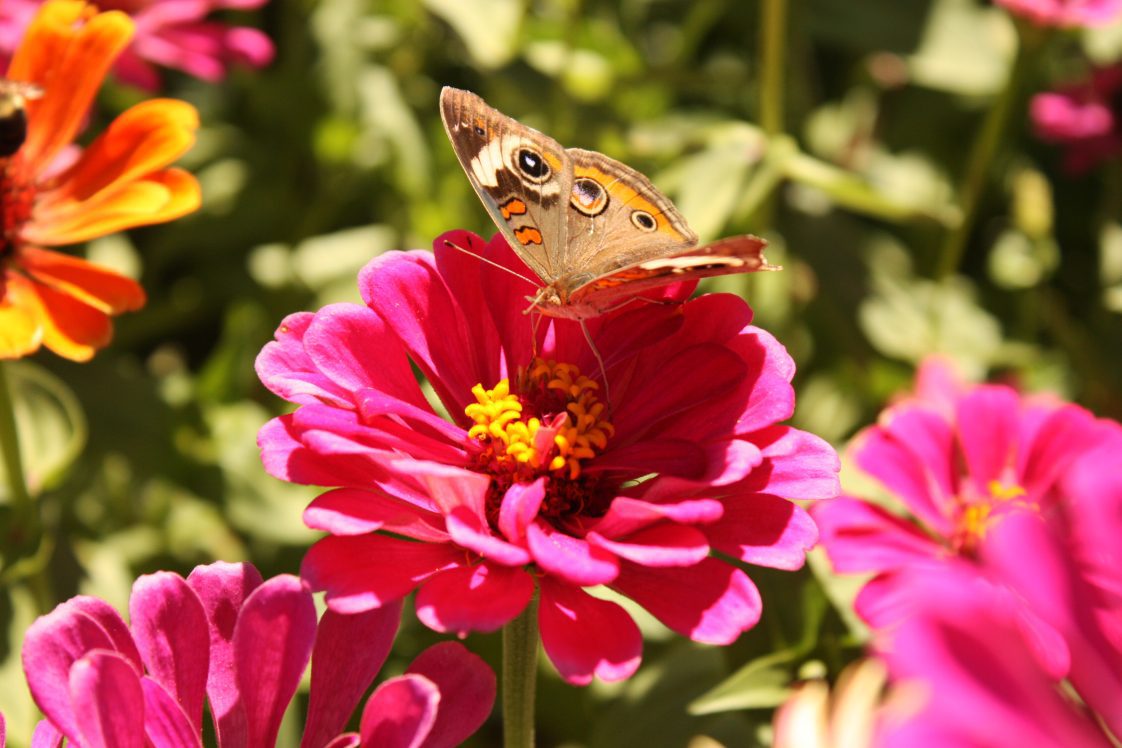
AUBURN UNIVERSITY, Ala. — They flutter by and buzz around doing important work, pollinating flowers and crops. During the Great Southeast Pollinator Census Aug. 22 and 23, it’s time for them to land and be counted.
People in Alabama and four other Southeastern states can collect and input data for the census. Bethany O’Rear, a home horticulture agent with Alabama Extension at Auburn University, serves as the Alabama census coordinator.
“From bees and butterflies to wasps and moths, learning more about the total population of pollinators is important,” O’Rear said. “Anyone in Alabama can make the census happen. It only requires 15 minutes of your time to count pollinators. You can participate at your home or farm or head out to a park, botanical garden, school garden or any place that has pollinator-friendly plants.”
How To Participate
 Before the census begins, those wishing to participate should pay attention to plants pollinators prefer. Select one such plant to observe for 15 minutes on Aug. 22 or 23. Also, visit gsepc.org to review an insect identification guide and print counting sheets.
During the observation, use the counting sheet to tally the number of times a pollinator lands on the plant. If the same insect lights more than once, count each landing as an observation. Divide data into eight categories: butterflies or moths, bumble bees, honeybees, small bees, carpenter bees, wasps, flies and other insects. Finally, submit the data to the Great Southeastern Pollinator Census online at gsepc.org.
“This is such a quick and easy way to be a citizen scientist, and it’s a really fun activity for families or students in a classroom,” O’Rear said. “We encourage everyone to take some time out of their day and enjoy being surrounded by nature during the census.”
History of the Census
The program started in 2019 at the University of Georgia as the Great Georgia Pollinator Census. After changing names, it expanded to include observations from citizen scientists in Florida, North Carolina and South Carolina. This is the first year Alabamians will participate.
O’Rear said data collected through the census has proved invaluable to researchers, and she’s happy Alabama is now included.
“Insect pollinators are responsible for helping grow about 35 percent of food crops worldwide, which correlates to every third bite of our food,” O’Rear said. “They’re extremely important creatures, but they’re also fragile. We owe it to them to do what we can to protect their populations, which in turn ensures we have plentiful food and beautiful flowering plants.”
More Information
The Great Southeast Pollinator Census and Alabama Extension offer numerous educational resources. To find those resources, visit gsepc.org or go to aces.edu and search for the Great Southeast Pollinator Census.