Lawn & Garden

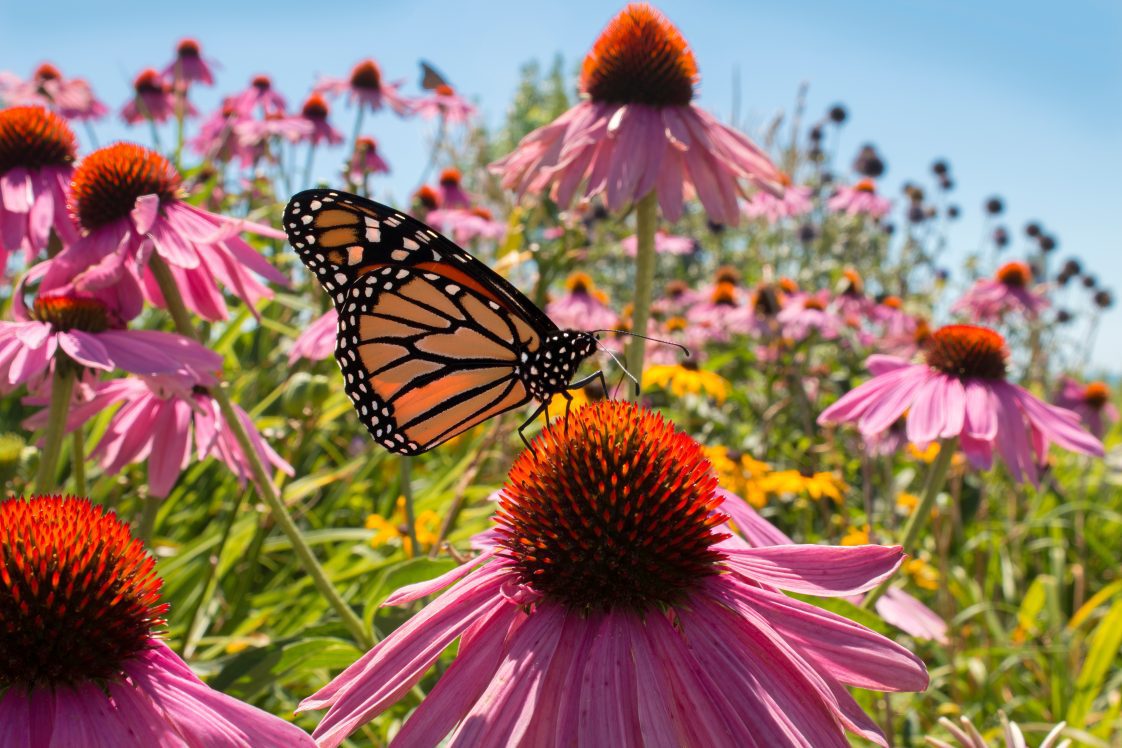
The Alabama Cooperative Extension System, University of Alabama in Huntsville Department of Biological Sciences, and Wild Ones North Alabama invite you to the second annual North Alabama Native Plant Symposium. This weekend-long event focuses on the integration of native plants into landscapes and invites horticultural professionals, conservationists, and home gardeners to envision cultivating beauty while sustaining ecology.
When: Saturday, May 30 and Sunday, May 31
Where: Saturday—University of Alabama in Huntsville’s Shelby Center for Science and Technology, 301 Sparkman Dr. NW, Huntsville, AL 35899. Sunday—Various locations.
Thank you to the Alabama’s Mountains, Rivers, and Valleys RC&D Council, Feral Foraging, Izel Native Plants, Limestone County Master Gardeners, Redstone Federal Credit Union, Tennessee Valley Authority, and Quinn Wildlife Rehabilitation Center for sponsoring the 2026 North Alabama Native Plant Symposium!
Registration
The standard registration cost is $30, which includes Saturday classes, lunch, and your choice of Sunday’s outing.
There is also the option to register as a Symposium Supporter for $100. This option is for those who would like to give additional financial support to the North Alabama Native Plant Symposium beyond the standard registration rate. This support will help continue the quality and growth of this event. When registering as a Symposium Supporter, select Sponsor from the drop-down menu as your registration type. Thank you in advance for becoming a Symposium Supporter!
Agenda & Topics
Agenda & Topics
The symposium will primarily focus on conservation within horticultural landscapes, while taking inspiration from wild spaces and incorporating larger-scale land management research. The event will feature two keynote speakers as well as session presentations given by botanists, ecologists, and landscape professionals. All topics will relate to Alabama’s native plants and ecological landscaping. On Sunday, there will be nine botanical excursion options for participants to choose from.
Saturday, May 30
9:00 a.m.—Keynote: Tools for Learning the Diverse Alabama Flora
Alan Weakley, Director, University of North Carolina at Chapel Hill Herbarium at the North Carolina Botanical Garden
10:15 a.m.—Session 1
Option A: North Alabama Butterflies
Allyson Shabel, Urban Regional Agent, Home Horticulture, Alabama Extension at Alabama A&M University
Come learn some of the common butterfly species of north Alabama, their host plants, and ways to support pollinator populations. We will also cover each butterfly’s life cycle and the seasonality of various species.
Option B: Bringing Research from the Field to Your Garden: Native Flowers with Proven Performance
Bodie Pennisi, Vincent J. Dooley Professorship in Horticulture, University of Georgia
Selecting the right native flowers is key to long-term success in gardens and landscapes. This talk highlights native plants with strong growth habits, reliable flowering, and adaptability based on current research and field trials. We will look at species that consistently perform well under real-world conditions—including drought tolerance, bloom duration, and pollinator value—helping growers and gardeners choose native plants that truly thrive.
11:30 a.m.—Session 2
Option A: Horticulture of Alabama Milkweed Species
Carmen Flammini, Extension Agent, Home Horticulture, Alabama Extension at Auburn University
This presentation highlights the diversity of native Alabama milkweed species and their critical role in supporting monarch butterfly migration and a variety of pollinators. Attendees will learn to identify key characteristics of these plants and understand their ecological importance across Alabama landscapes. Research-based guidance on propagation and care will provide practical tools for successful establishment and long-term growth.
Option B: Safeguarding Native Trees: Pests and Diseases That Shape Landscape and Nursery Success
Annakay Newell, Assistant Professor and Extension Specialist, Forest Health, Alabama Extension at Auburn University
Insects and pathogens play a significant role in the success or failure of native trees in both landscape and nursery settings. This session will explore key pests and diseases that affect commonly planted native species, with an emphasis on symptom recognition and seasonal risk. Management strategies and prevention approaches will also be discussed.
Option C: Rivercane Restoration Panel Discussion
Patience Knight, Wildlife Biology, and Lynne Weninegar, Botany Research Field Assistant, both with Alabama A&M University; and Members of the Community-Oriented Nature-based Science for Ecosystem Restoration and Versatile Engineering (CONSERVE) Research Group, Alabama Water Institute
Taking on the spirit of a round-table discussion, experienced professionals will share their past and upcoming work with native cane species (Arundinaria spp.), including the CONSERVE project to advance rivercane conservation in the Southeast. They will also discuss the vital importance of the ecology of these species and their efforts toward cane propagation and restoration, allowing time for questions and conversation with the audience.
12:15 p.m.—Lunch
1:30 p.m.—Session 3
Option A: Why Foraging is One of the Greatest Drivers of Plant Conservation
Jesse Akozbek, Creator, Feral Foraging
On the face of it, foraging and plant conservation may seem at odds with each other. After all, foraging involves gathering plants from the land, which feels quite the opposite of conserving or protecting them. Despite this, in this talk, we will explore why foraging for local plants actually results in a huge net positive for both native plants and ecosystems.
Option B: Native Seed Collection and Processing
Gus Rasich, Native Seed Program Collections Manager, Southeastern Grasslands Institute
This presentation will cover the genetic, ethical, and logistic considerations that go into native-seed-based restoration. We will talk about seed-collection methods for relevant species, accessible seed-cleaning approaches, and seed storage. This presentation will also cover the Southeastern Grasslands Institute’s previous work with state and federal seed-collection efforts, as well as their future projects—including collaboration with Alabama conservation partners.
2:45 p.m.—Keynote: Alabama Biodiversity: From Natural Areas to Your Backyard
Wayne Barger, Biology Instructor, Southern Union State Community College; Former Alabama State Botanist
Sunday, May 31
Prior to the symposium, attendees will receive logistical information regarding their chosen excursion (exact time, where to meet, etc.). Most excursions will begin in the early afternoon unless otherwise noted below.
Option A: Monte Sano Botanical Hike
Wayne Barger, Biology Instructor, Southern Union State Community College; Former Alabama State Botanist
Hike along the Sinks Trail (moderate difficulty) in Monte Sano State Park. The hiking group will depart at 8:30 a.m. and return about Noon. Participants need to pay the $5 state park entry fee upon arrival. Wear appropriate footwear and clothing and bring your own snacks and water.
Option B: Native Gardens in Public Spaces
Aaron Stiles, Landscape Designer, Foraging Ahead
Head to the Huntsville Midtown roundabout to learn about the process of making a native garden in public spaces. Foraging Ahead is a natural landscape design company that creates beautifully unique green spaces. They have a passion for utilizing plants that are native to north Alabama, from beautyberry to black tupelo. Designing a landscape with native plants allows for both biodiversity and stunning visual results that are sure to inspire your neighbors.
Option C: Devil’s Racetrack Botanical Hike
Sara Johnson, Conservation Biologist, North American Land Trust
Experience the flora and fauna of a limestone cedar glade at the Devil’s Racetrack trail. This roughly 2.5-hour hike will begin with a gradual ascent through a mature hardwood forest that is lined with pawpaw groves. Then, we will climb along a trail surrounded by boulder fields and rock ledges that are covered in mosses and ferns, as we eventually transition into a cedar-dominated forest. An open barren full of wildflowers and endemic native species awaits us at the summit, which includes native grasses, an endemic beardtongue, blooming cacti, multiple milkweed species, and other unique grassland plants. We will peruse the flora of the power line right-of-way before descending back through the trail. Note: This is a sensitive habitat. Participants must remain on the trails at all times.
Option D: Native Garden Design
Denise Woodring, Landscape Designer, Green Thumb Design
Even houses in a subdivision with a homeowners’ association can be garden paradises. Don’t believe it? Just ask Denise Woodring. As a landscape designer, Woodring navigated the potential restrictions and designed her garden to be a pollinator and bird habitat. Join Woodring on a tour of her garden and learn about the design and installation process. The garden was installed 6 years ago and is planted with 80 native perennial and 16 native shrub and tree species. Her garden is also a certified native habitat and monarch way station.
Option E: Native Grassland Restoration and Invasive Species Management
Norm Haley, Extension Agent, Forestry, Wildlife, and Natural Resources, Alabama Extension at Auburn University
This 2-hour excursion at the Alabama Extension Graham Farm and Nature Center in Jackson County will highlight several projects focused on native-plant selection and invasive-plant control. Visit a converted, native-warm-season grass pasture, an old field restoration site for wildlife and pollinators, two bottomland hardwood restorations, and learn about control options for invasive grasses, Chinese privet, and tree of heaven trees. This visit will take place entirely outdoors and require moderate hiking while providing opportunity for hands-on experience with cutting and spraying equipment. Participants must wear long sleeves, long pants, and closed-toe shoes in order to participate in the hands-on work, so plan and dress accordingly.
Option F: Botanical Stroll at Hays Farm
Helen Czech, Research Assistant, Alabama A&M University
Starting at 11:00 a.m., enjoy a 1-hour, botanical stroll at the Hays Farm, a 500-acre park in the heart of south Huntsville. This park boasts more than 10 miles of trails that wind through a diverse wetland ecosystem. Participants will have an opportunity to learn about an uncommon community—a bottomland wet oak savanna and vernal pool complex—and about the management of this fire-adapted community within city limits. The tour is wheelchair accessible and will cover approximately 0.5 miles of the level and paved Elgie’s Walk Greenway. Wear footwear that is appropriate for trail walking. Participants can also bring rubber boots if they want to step off the trail and binoculars for long-distance viewing.
Option G: Paint Rock Forest Dynamics Plot
Patience Knight, Wildlife Biology, Alabama A&M University
The Paint Rock Forest Dynamics Plot in Jackson County is a collaborative effort led by Alabama A&M University with support from The Nature Conservancy and the Paint Rock Forest Research Center. This 20-hectare tree census plot is affiliated with the Smithsonian Institute’s Forest Global Earth Observatory (ForestGEO). It is one of the most biodiverse temperate plots in the ForestGEO network, hosting more than 70 tree and shrub species. This excursion will be off-trail and physically demanding with significant topographic variation, large boulders, and rock faces to navigate. Ticks, chiggers, mosquitos, and venomous snakes are likely to be encountered.
Option H: Riparian Zone Hike on Flint River and Mountain Fork Creek
Lynne Weninegar, Botany Research Field Assistant, Alabama A&M University
Take a stroll along the riparian zone of the Flint River and Mountain Fork Creek. The Bloucher Ford Nature Preserve—located at the meeting of the river and creek—is the site of one of the oldest gristmills in Madison County. On this 2-hour excursion, you can experience firsthand the impact of urbanization on Alabama’s valuable waterways.
Option I: Huntsville Botanical Garden Conservation Program and Native Nursery Tour
Vania Pereira, Curator of Living Collections, Huntsville Botanical Garden
From 9:30 a.m. to Noon, enjoy a guided walk through the Huntsville Botanical Garden and gain insight into their role in conservation, education, and habitat stewardship. On this tour, participants will get to explore nursery areas to see how native species are grown and managed. They will also see demonstrations on sustainable horticulture practices and get to visit key garden spaces where native plantings play a central role in the Huntsville Botanical Garden’s living collections. This tour will include walking 1 mile on paved and graveled pathways.
Sponsorship
Sponsorship
The North Alabama Native Plant Symposium would not be possible without the support its sponsors. By becoming a sponsor, you are supporting the symposium’s goal to grow and support the network of native plant professionals and enthusiasts in Alabama. The following table outlines the sponsorship levels available and their benefits. To sponsor the symposium or learn more about sponsorship levels, contact Holt Akers-Campbell at hza0093@auburn.edu.
2026 North Alabama Native Plant Symposium Sponsorship
| Sponsorship Level | Sponsor Benefits |
|---|---|
| Level I. Spring Ephemeral—$200 |
|
| Level II. Native Pollinator—$400 |
|
| Level III. Fungal Associate—$600 |
|
| Level IV. Host Species—$1,000 |
|
| Level V. Keystone Species—$2,000 |
|
Exhibitors & Vendors
Exhibitors & Vendors
If you or your organization is interested in being an exhibitor or vendor at the symposium, contact Holt Akers-Campbell at hza0093@auburn.edu. Spots are limited. Native plant nurseries and organizations that are engaged in relevant work are encouraged to consider being an exhibitor or vendor.