
Lawn & Garden

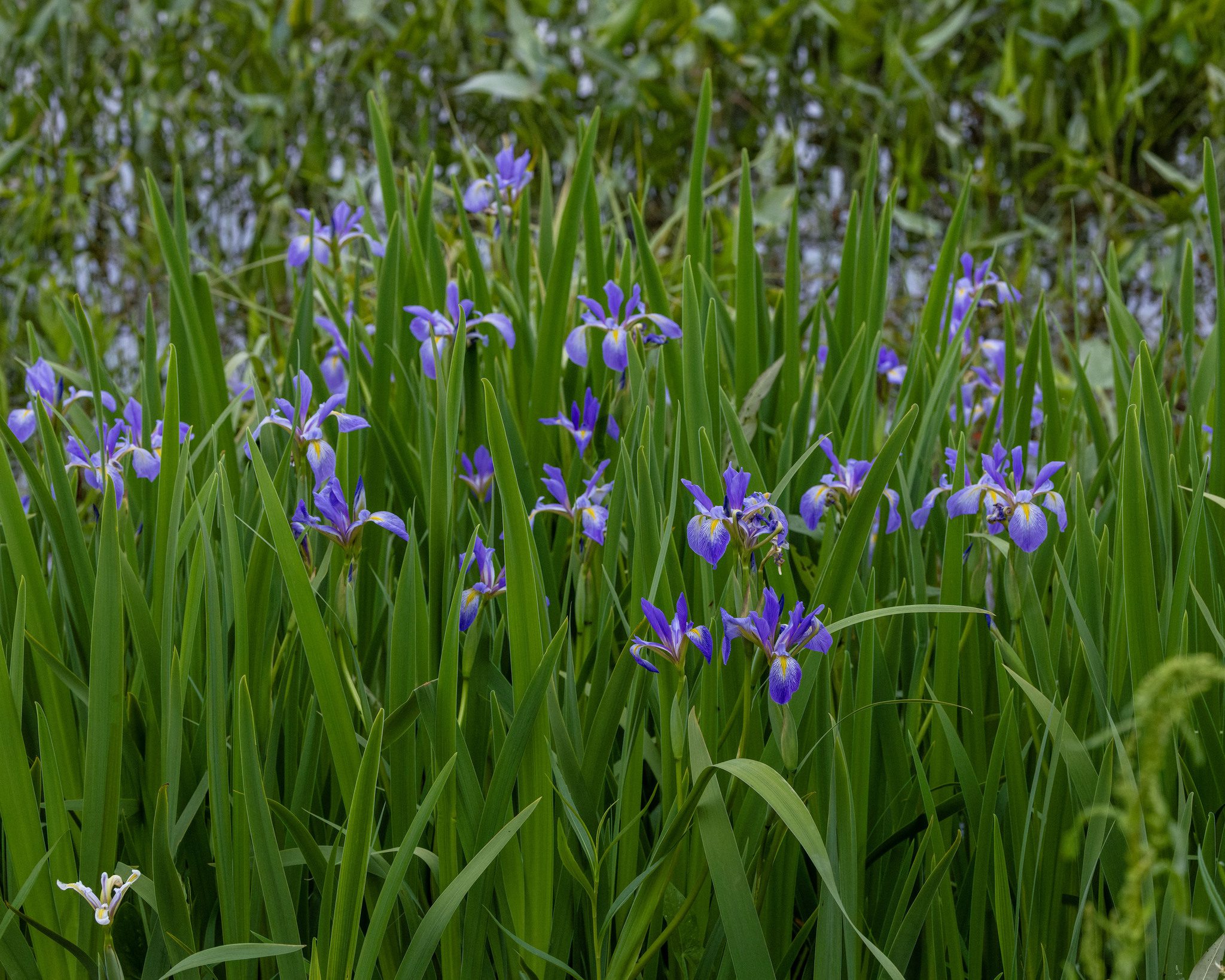
Using native plants in the landscape helps create habitat, prevents the addition and spread of invasive species, and can contribute to mitigating insect and bird decline. The plants featured here are all native to north Alabama. They are suitable for both formal and informal landscapes and are generally available through commercial seed suppliers or nurseries.
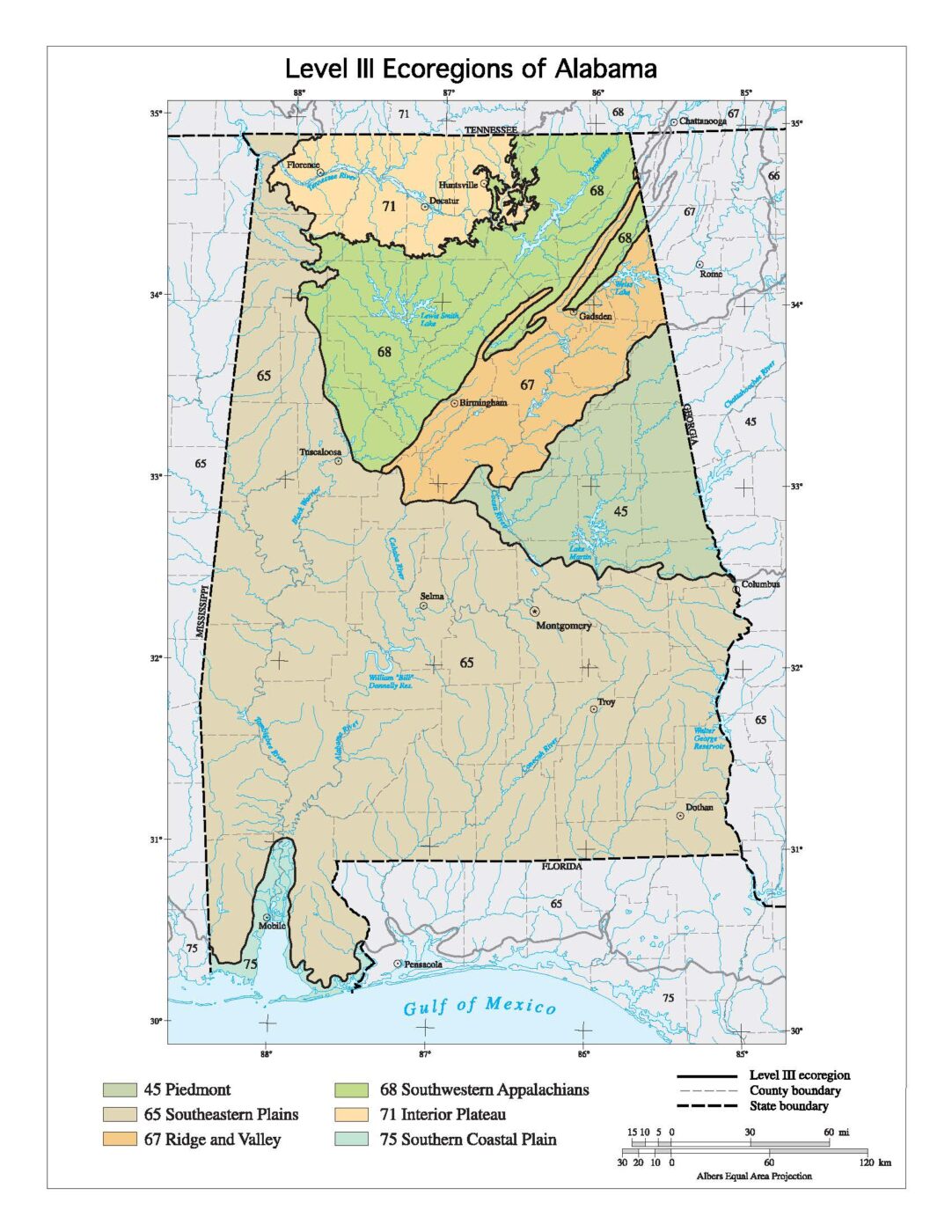
Figure 1. EPA level III ecoregions
Native plants and local fauna have specialized relationships formed through thousands of years of shared habitat. As such, most herbivorous insects prefer to eat a single plant family or single species of plant. Landscapes composed of diverse, primarily native plants support the largest numbers of insect herbivores and insectivorous birds. While there are many beneficial non-native pollinator plants, native specialist pollinators rely on specific native plants. For example, approximately 25 percent of native bees in the eastern United States are pollen specialists, using pollen from only one genus or species. The plant species featured here are considered native to north Alabama because they occur naturally in at least one of its major ecoregions: the Interior Plateau (Tennessee River Valley), Southwestern Appalachians (Cumberland Plateau), Ridge and Valley, or the northernmost extent of the Southeastern Plains (figure 1).
Choosing Native Landscape Plants
Although native plants are adapted to regional conditions, they are not universally suited to every landscape setting. Each species has specific preferences for soil type, moisture, and light exposure. Additionally, native plants that may be suitable for a particular site may struggle once the area is altered through construction activity and other disturbances that compact soil, alter soil microorganism communities, and deplete organic matter.
Successful native plant landscaping requires site analysis and preparation, appropriate species selection for site conditions, and planning for maintenance. Populations of wild plants should never be removed from natural habitats unless permitted and done using responsible propagation techniques.
Ornamental Qualities
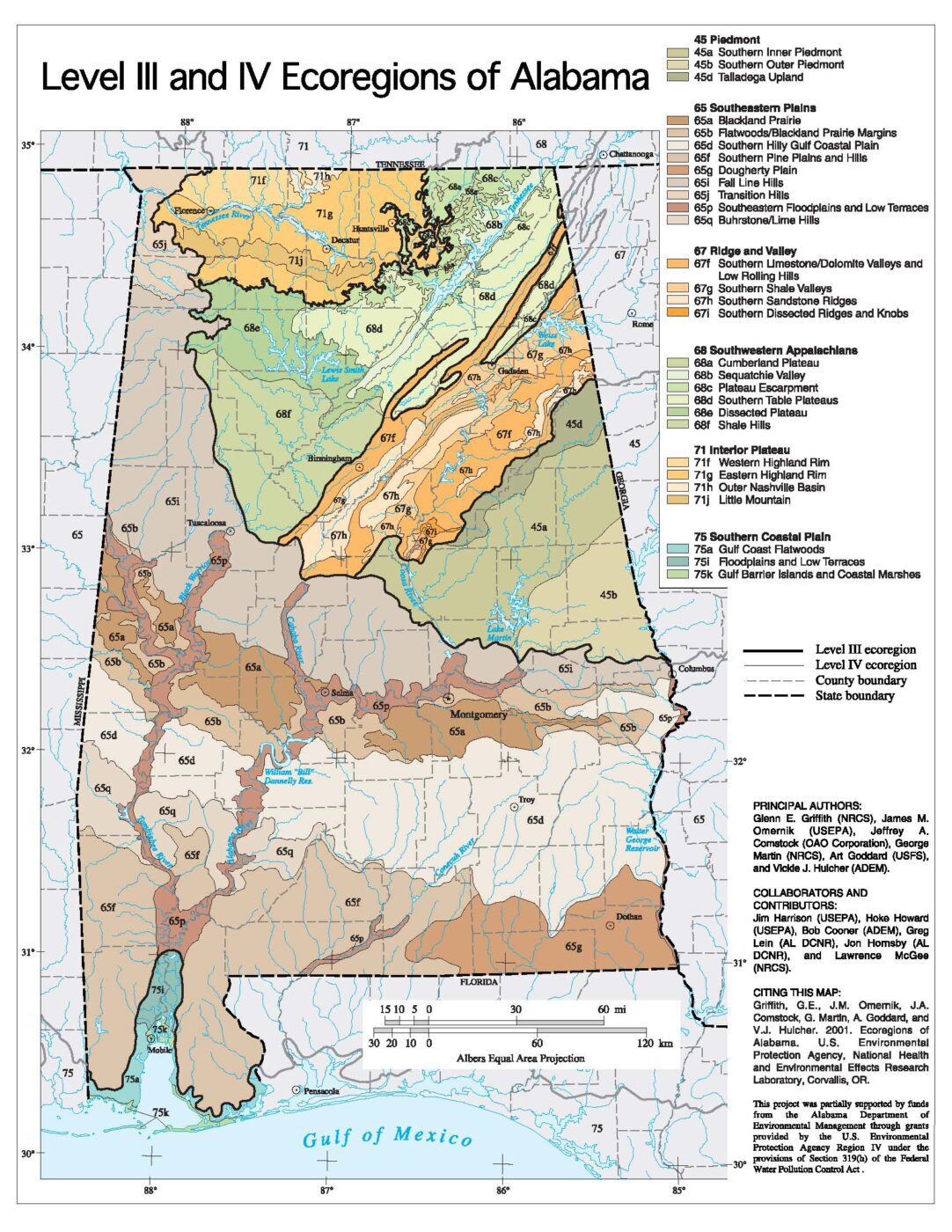
Figure 2. EPA level IV ecoregions
Some of the species listed may exhibit more aggressive growth habits than homeowners are accustomed to with purchased ornamental plants. Other plants may be perceived to have a spindly, “weedy” appearance. Appropriate species selection for the site and good design mitigate these challenges. This includes planting in masses, matching plants based on their rate of movement through the landscape, and employing elements of traditional landscape design.
Design and Maintenance
As you begin planning, first identify your ecoregion and the existing plant communities at the site. Design the landscape around pre-existing beneficial plants.
Native plant gardens can be formal, with plants arranged in relatively static locations based on design characteristics of line, form, color, texture, and visual weight. They also can be arranged in a grid or matrix style. This involves planting with a base layer of native grasses or sedges punctuated by repeated masses of flowers that are allowed to move over time.
Whatever garden style you choose, here are some tips for selecting and placing plants:
- Choose species that provide overlapping bloom times throughout the growing season.
- Choose plants that spread through the landscape at similar rates so they can co-exist over many years.
- Arrange plants appropriately by height, with taller plants in the back of the landscape and along wood lines or other edges.
- Plant in masses, especially with species that are thinly textured. Repeating patterns and colors communicates intentional design.
- Create a defined border that separates native plant landscaping from a lawn or pathway.
Landscaping with native plants tends to require dynamic maintenance, selectively adding and subtracting plants based on observation. Pocket prairies and grid style plantings of native grasses and flowers need annual or biennial mowing, with more frequent removal of invasive or other undesired plants.
Cultivars
Many native plants with desirable ornamental qualities have named cultivars (selected or bred for ornamental characteristics), which can provide striking color and long-lasting blooms in formal gardens. While some cultivars are preferred by pollinators, most are less preferred or may have sterile flowers. Cultivars also can have altered leaf color or morphology, impacting their relationship with insect herbivores.
Using wild ecotype plants (no cultivar name) is the most reliable way to add ecological value to the landscape. Native plant cultivars can be particularly useful in small and highly disturbed locations. These cultivars may have longer-lasting and more numerous blooms that are well accepted in conventional settings. Selections with the least altered flower and leaf color and shape are the most likely to be ecologically useful.
Urban Soil Management
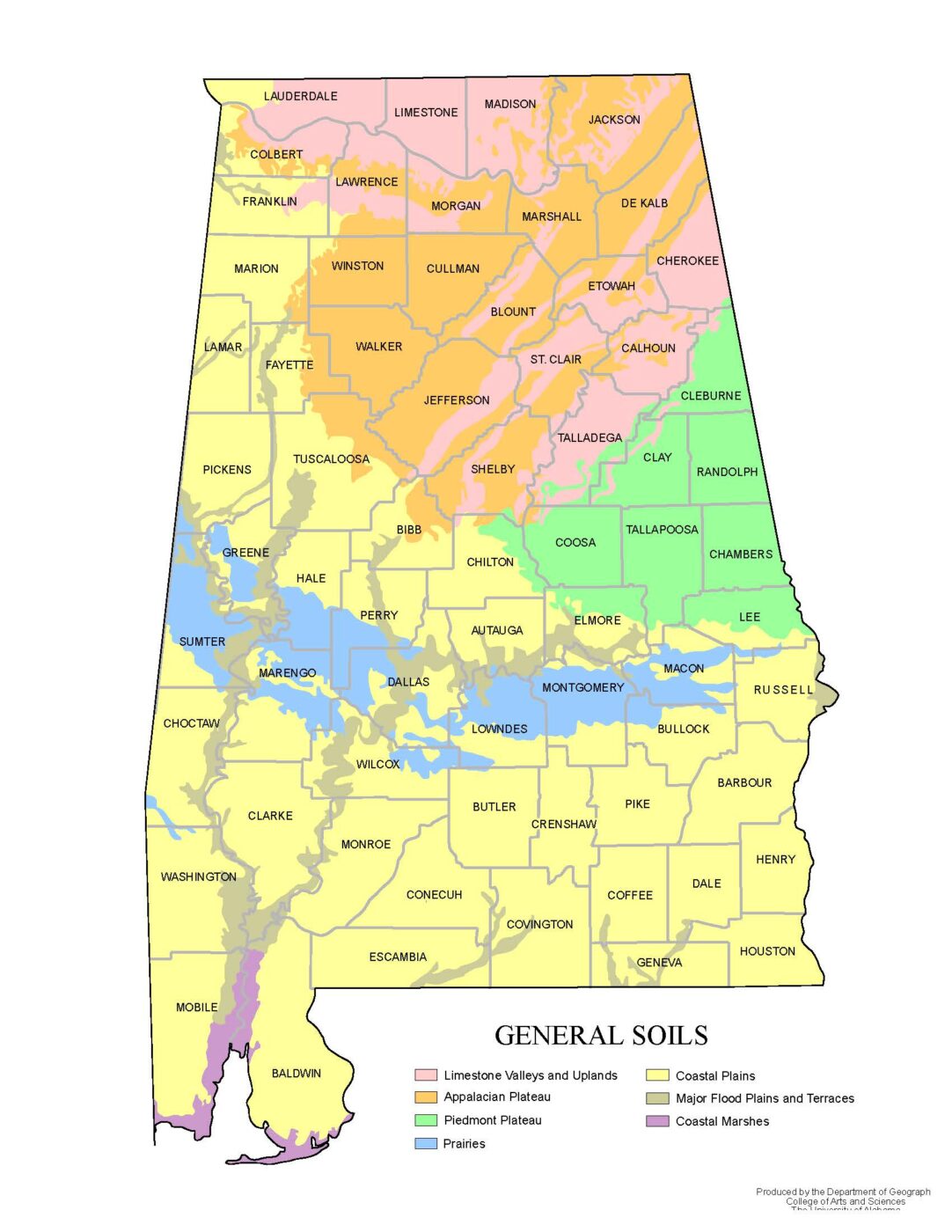
Figure 3. Soil areas of Alabama (Credit: Department of Geography, University of Alabama)
Urban soils and soils disturbed by construction activities are altered by compaction and pollution. Their chemical, biological, and physical characteristics are changed, which can lead to a mismatch in the preferences of native plants that would have formerly grown there.
Because most residential landscapes have been disturbed, soil conditions—especially around a home’s foundation—are a primary challenge in native plant landscaping. Work to mitigate these challenges before installing a native plant landscape:
- Assess and address soil compaction, if needed. Use techniques such as air excavation or mulching with arborist wood chips.
- Address site hydrology. Correct drainage issues and match plants to their preferred soil moisture.
- Soil test to check pH and nutrient levels. These may have been altered through construction activity or other disturbances.
- Match plants to the stage of ecological succession. Recently disturbed sites are in an early stage of ecological succession. Plants that need mature sites (e.g., American ginseng) will not thrive there.
Ecoregions and Soil Types
North Alabama is home to several soil regions, including Limestone Valleys and Uplands, Appalachian Plateau, and Coastal Plain. Limestone Valley and Upland soils are weathered from limestone, can be red, and tend to have a clay texture with an acidic to near neutral pH. This area mostly belongs to the interior plateau ecoregion (Limestone, Lawrence, eastern Lauderdale, and western Madison Counties). Appalachian plateau soils are weathered primarily from sandstone, are acidic, have a loamy texture, and tend to have low nutrient content, especially phosphorus. This region belongs to the southwestern Appalachian ecoregion (Cumberland Plateau). Sites with a history of agricultural fertilization will have elevated nutrient levels.
Table 1. Plants Native to North Alabama and Suitable for Landscapes: Perennial Flowers
Germination Codes
-
- No pretreatment is necessary.
- Stratification is required (days of cold stratification suggested in parentheses)
- Scarification aids germination
- Do not cover these very fine seeds when sowing.
- Sow seeds directly in garden.
- Seeds require 1 to 3 months of warm stratification followed by 1 to 3 months of cold stratification.
Stratification time can vary based on ecotype. Seeds of more northern origin often need longer cold stratification for optimal germination than seeds of southern ecotype.
Shade Definitions
-
- Deep shade: 60 percent or more canopy cover; dappled or indirect sunlight
- Some shade: 20 to 60 percent canopy cover; includes forest edge
- Full sun: plant grows with no canopy or in a savanna setting with no more than 20 percent canopy cover
-
- Slow: Spreads slowly in the landscape, staying in small clumps or taking many years to establish in spots outside the original planting location.
- Moderate: Spreads at a moderate rate to form masses or appears in new spots in the landscape.
- Aggressive: Aggressive species capable of spreading rapidly through the landscape.
| Common Name | Botanical Name | Soil | Light | Height | Bloom Time | Spread | Germination | Description |
|---|---|---|---|---|---|---|---|---|
| giant yellow hyssop (figure 4) | Agastache nepetoides | Moist | Some Shade, Full Sun | 2-5 ft. | Aug.-Sept. | Moderate | 2(60), 4 | Long flower spikes with small white flowers in mint family. In the same genus as anise hyssop, Agastache foeniculum, which attracts many pollinators and can be used for tea, though it does not persist in Alabama and is native to Northern Great Plains. |
| nodding onion (figure 5) | Allium cernuum | Moist, Dry | Full Sun | 1 ft. | Aug.-Sept. | Moderate | 2(60) | Most ornamental flower of native onions. Deer tolerant. Plant in masses in low meadows. North Alabama is southern end of range. Allium canadense is another native onion with history of use as food and of wild populations throughout the state. Do not confuse with common non-native lawn weed, Allium vineale (wild garlic). Propagate through bulb division or by seed. |
| eastern bluestar (figure 6)* | Amsonia tabernaemontana | Wet, Moist | Some Shade | 2-3 ft. | Apr. | Slow | 2(60) | Common landscape plant easy to cultivate. Attracts butterflies, hummingbirds. Deer resistant. Edge plant for moist, well-drained soils. Blue flower. |
| tall anemone (figure 7) | Anemone virginiana | Moist, Dry | Some Shade | 1-4 ft. | May-June | Moderate | 1 | Moderate toxicity. Deer and rabbit resistant. Adds interest in a woodland garden. White flower. |
| eastern columbine (figure 8)* | Aquilegia canadensis | Moist | Some Shade | 1-3 ft. | Mar.-Apr. | Moderate | 2(60) | Great starter plant for semishade gardens. Red/yellow flower with high-interest form. Early spring bloomer. Attracts hummingbirds. Short-lived perennial that will reseed. |
| green dragon (figure 9) | Arisaema dracontium | Wet, Moist | Deep Shade, Some Shade | 2-3 ft. | May | Slow | 6 | Unique foliage for shade gardens. Toxic fruit. Single slender stalk of tiny whitish/green flowers surrounded by green spathe. Deer and rabbit resistant. Somewhat uncommon in the wild. Do not poach natural populations. Takes several years to bloom from seed. |
| swamp milkweed (figure 10) | Asclepias incarnata | Wet, Moist | Some, Shade, Full Sun | 3-5 ft. | June-Aug. | Moderate | 2(30) | Naturally found in wet sites but can grow in moist and drier locations. Deer resistant. Normally a pink flower. |
-
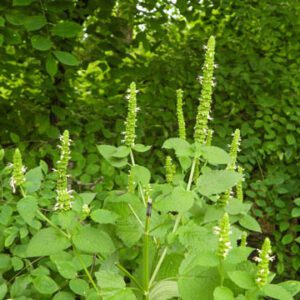
- Figure 4. Giant yellow hyssop, Agastache nepetoides
-
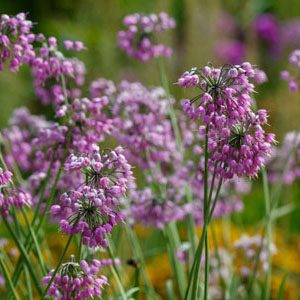
- Figure 5. Nodding onion, Allium cernuum
-
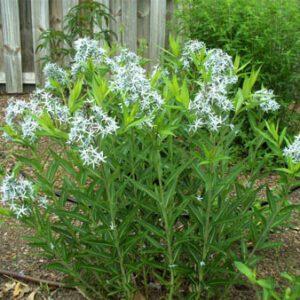
- Figure 6. Eastern bluestar, Amsonia tabernaemontana (Photo credit: Susan Strine CC BY 2.0)
-
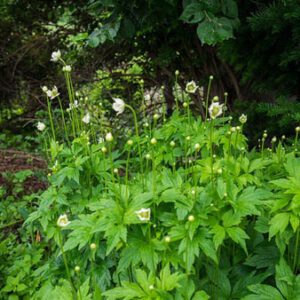
- Figure 7. Tall anemone, Anemone virginiana (Photo credit:: F. D. Richards CC BY-NC 2.0)
-
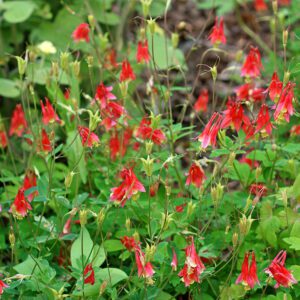
- Figure 8. Eastern columbine, Aquilegia canadensis
-
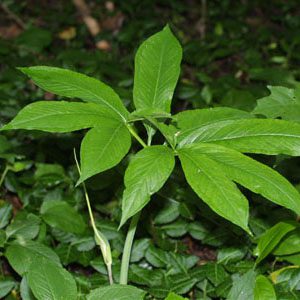
- Figure 9. Green dragon, Arisaema dracontium (Photo credit: Steven J. Baskauf CC BY 4.0)
-
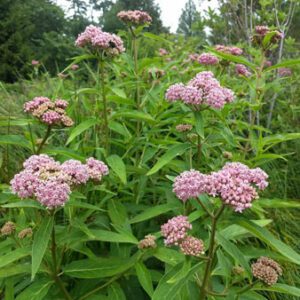
- Figure 10. Swamp milkweed, Asclepias incarnata (Photo credit: Charlotte Glen CC BY-NC-SA 4.0)
Table 1. Plants Native to North Alabama and Suitable for Landscapes: Perennial Flowers (cont.)
See first table for Germination Codes, Shade Definitions and Spread Definitions.
| Common Name | Botanical Name | Soil | Light | Height | Bloom Time | Spread | Germination | Description |
|---|---|---|---|---|---|---|---|---|
| common milkweed (figure 11) | Asclepius syriaca | Moist, Dry | Full Sun | 3-5 ft. | May-June | Aggressive | 2(30) | Under preferred conditions can spread rapidly through its deep rhizome, making it a better choice for field restoration projects than residential landscapes. More aggressive than swamp milkweed or butterfly milkweed. Most natural populations north of Alabama. |
| butterfly milkweed (figure 12)* | Asclepius tuberosa | Moist, Dry | Full Sun | 1-2 1/2 ft. | May-Aug. | Slow | 2(30) | Identified by AU-BEES, the Auburn University Bee Center, as a powerhouse pollinator species, used in field restoration and home gardens. Prefers direct seeding over transplanting, but either a great choice for landscaping. Highly attractive flower to pollinators, though other milkweed species may be preferred as larval hosts to monarch butterflies. |
| white wild indigo (figure 13) | Baptisia alba | Moist, Dry | Full Sun | 2-4 ft. | April-May | Slow | 2(10), 3 | Can take several years to flower. Natural populations more common on coastal plain. |
| blue wild indigo (figure 14) | Baptisia alberrans | Moist, Dry | Full Sun | 2-4 ft. | April-May | Slow | 2(10), 3 | Legume. Natural populations rare in Alabama. Now considered only blue-flowered Baptisia in state, though often confused with B. australis. |
| wood mint (figure 15) | Blephilia hirsuta | Moist, Dry | Some Shade, Full Sun | 1-2 1/2 ft. | May-July | Moderate | 2(60) | Short-lived perennial. Similar in appearance to bee balm (Monarda). |
| fairywand (figure 16) | Chamaelirium luteum | Moist | Deep Shade, Some Shade | 1-2 ft. | May | Slow | 2(30) | Prefers high organic matter, acidic soils. Separate male and female plants, both needed in population for reproduction by seed. Blooms 3 years after planting. Some value in herbal trade. Can be difficult to establish, especially struggling through hot summers. |
| horsebalm (figure 17) | Collinsonia verticillata | Moist | Deep Shade | 2-4 ft. | May | Slow | 2(90) | Mint family plant for ground cover use in woodland gardens. C. canadensis also native, more naturally abundant, and may be (rarely) found in nurseries. |
-
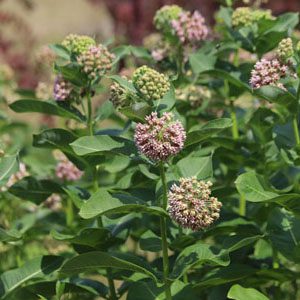
- Figure 11. Common milkweed, Asclepias syriaca
-
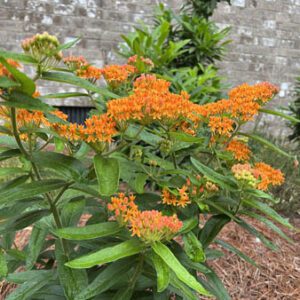
- Figure 12. Butterfly milkweed, Asclepias tuberosa
-
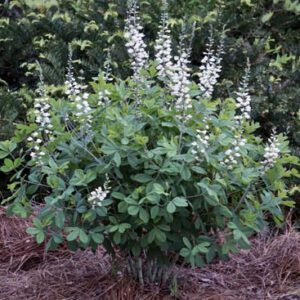
- Figure 13. White wild indigo, Baptisia alba (Photo credit: Nancy Kurul CC BY 4.0)
-
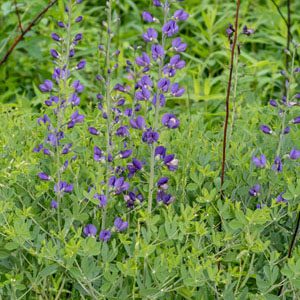
- Figure 14. Blue wild indigo, Baptisia aberrans (Photo credit: © Richard Hitt, some rights reserved (CC-BY-NC-SA)
-
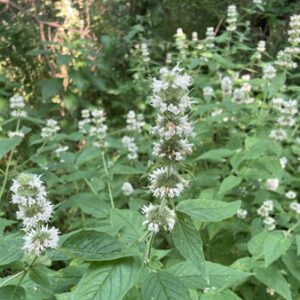
- Figure 15. Wood mint, Blephilia hirsuta (Photo credit: © smakrinos, some rights reserved (CC-BY-NC)
-
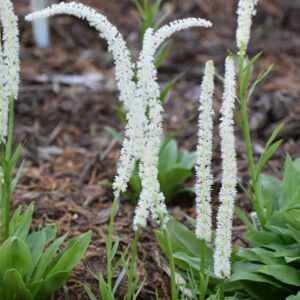
- Figure 16. Fairywand, Chamaelirium luteum (Photo credit: JC Raulston Arboretum CC BY 2.0)
-
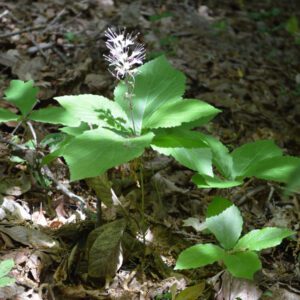
- Figure 17. Horsebalm, Collinsonia verticillata (Photo credit: Celeste Ray CC BY-NC 4.0)
Table 1. Plants Native to North Alabama and Suitable for Landscapes: Perennial Flowers (cont.)
See first table for Germination Codes, Shade Definitions and Spread Definitions.
| Common Name | Botanical Name | Soil | Light | Height | Bloom Time | Spread | Germination | Description |
|---|---|---|---|---|---|---|---|---|
| blue mist flower (figure 18)* | Conoclinium coelestinum | Wet, Moist | Some Shade, Full Sun | 2 ft. | Aug.-Oct. | Aggressive | 2(90) | Also known as wild ageratum or hardy ageratum. Good choice for fall bloomer in pocket prairies. Spreads readily in moist soils. |
| lance leaf coreopsis (figure 19) | Coreopsis lanceolata | Moist, Dry | Full Sun | 1-2 ft. | May-July | Aggressive | 2(30) | Tends to spread (sometimes coming back from seed rather than perennial from roots) but is common garden plant easy to grow. Most commonly available of native coreopsis, but a dozen others are native to Alabama. |
| white turtlehead (figure 20) | Chelone glabra | Wet, Moist | Some Shade | 2-3 ft. | Aug.-Oct. | Moderate | 2(60) or 5 | For rain gardens and pond edges. Propagates by seed, division, or cuttings. |
| Maryland golden aster (figure 21) | Chrysopsis Mariana | Moist, Dry | Full Sun | 1-2 ft. | Aug.-Oct. | Moderate | 1 | Short-lived perennial best in pocket prairies and wild-type gardens. Resistant to deer, pests, drought. Gold/yellow flower. Also called Heterotheca Mariana. |
| purple prairie clover (figure 22) | Dalea purpurea | Moist, Dry | Full Sun | 8-20 in. | June-Aug. | Moderate | 3 | Legume native to Tennessee Valley and Black Belt prairies. Use in short-grass pocket prairies. For germination, remove or scarify seed hulls with sandpaper or boiling water soak. Endangered species in Tennessee where restrictions apply to sale. |
| purple coneflower (figure 23)* | Echinacea purpurea | Moist, Dry | Full Sun | N/A | May-Aug. | Slow | 1 | Many cultivars available. Dependable flower with long bloom time and one of most common native perennial flowers used in landscaping. Wild populations very rare. Some cultivars sterile. For ecological benefit, choose wild-type plant or cultivar with similar flower color and structure to wild type. |
| rattlesnake master (figure 24)* | Eryngium yuccifolium | Moist | Full Sun | 2 1/2 - 5 ft. | June-Sept. | Slow | 2(60) | Interesting foliage in carrot family. Use in formal landscapes and pocket prairies. Drought resistant. |
-
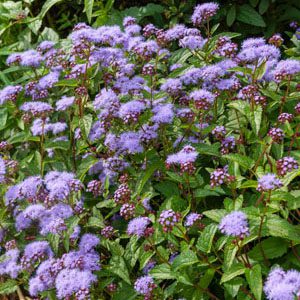
- Figure 18. Blue mist flower, Conoclinium coelestinum
-
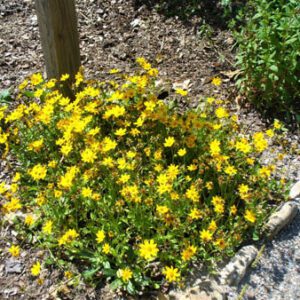
- Figure 19. Lance leaf coreopsis, Coreopsis lanceolata (Photo credit: Susan Strine CC BY 2.0)
-
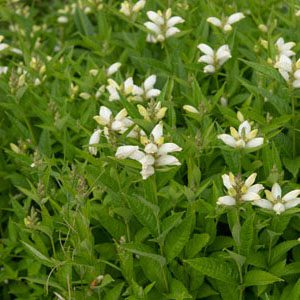
- Figure 20. White turtlehead, Chelone glabra
-
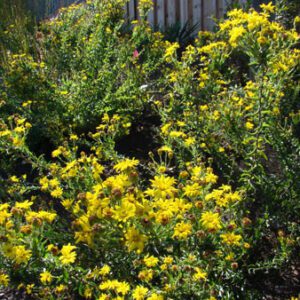
- Figure 21. Maryland golden aster, Chrysopsis Mariana (Photo credit: Linda Querec CC BY 2.0)
-
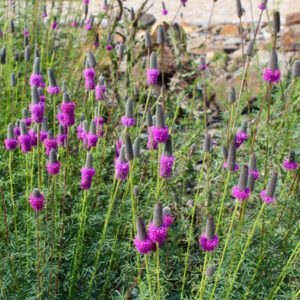
- Figure 22. Purple prairie clover, Dalea purpurea
-
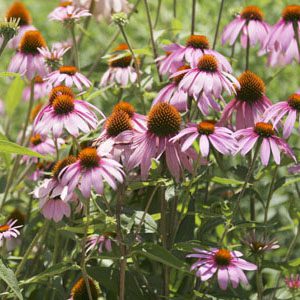
- Figure 23. Purple cone flower, Echinacea purpurea
-
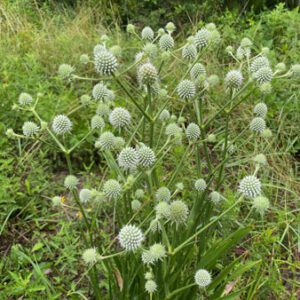
- Figure 24. Rattlesnake master, Eryngium yuccifolium (Photo credit: © Matt, some rights reserved (CC-BY-NC))
Table 1. Plants Native to North Alabama and Suitable for Landscapes: Perennial Flowers (cont.)
| Common Name | Botanical Name | Soil | Light | Height | Bloom Time | Spread | Germination | Description |
|---|---|---|---|---|---|---|---|---|
| common boneset (figure 25) | Eupatorium perfoliatum | Wet, Moist | Some Shade, Full Sun | 2-5 ft. | Aug.-Oct. | Moderate | 2(30), 4 | Tolerates occasional flooding. Prefers high organic matter. Easy to grow with adequate moisture. Known larval host for Haploa clymene (clymene moth), Papaipema cataphracta (burdock borer moth), Schinia trifascia (three-lined flower moth), and Chlorochlamys chloroleucaria (blackberry looper moth). |
| white wood aster (figure 26) | Eurybia divaricata | Moist, Dry | Deep Shade, Some Shade | 1-2 ft. | July-Oct. | Moderate | 2(30), 4 | Late summer bloomer for shade with several cultivars available. Can be moderately aggressive. Propagation by seed or division in early spring. |
| hollow Joe Pye weed (figure 27) | Eutrochium fistulosum | Wet, Moist | Some Shade, Full Sun | 4-7 ft. | July-Sept. | Moderate | 2(60) or 4 | Found in stream banks, wet ditches, and disturbed areas in natural settings. Many cultivars (bred for sturdy growth and showy blooms) common in formal landscapes, where they thrive in full sun and tolerate some shade, especially if stems supported. Species formerly called Eupatorium fistulosum. |
| sweet Joe Pye weed (figure 28) | Eutrochium purpureum | Wet, Moist | Some Shade, Full Sun | 4-6 ft. | July-Sept. | Moderate | 2(30) | Also called gravel root. Provides nectar for butterflies, moths, and bees. Seed head provides bird food. Also serves as host plant to several caterpillar species. Cut down to ground in early spring in garden settings. Seeds can be hard to germinate. Propagation through stem cuttings taken in June possible. Deer resistant. |
| wild geranium (figure 29) | Geranium maculatum | Moist | Deep Shade, Some Shade | 1-2 ft. | Apr. | Moderate | 2(60) or 5 | Also called cranesbill. Woodland ground cover when planted in masses. Closely related but not same plant as common lawn species, Geranium carolinianum. Popular and showy woodland flower for ornamental settings. Easy to grow. May die back in summer. |
| rose vervain (figure 30) | Glandularia canadensis | Dry | Full Sun | 1 ft. | Mar.-May | Moderate | 2(60), 4 | Treated as Verbena canadensis in some taxonomies. Prefers well-drained soil. Drought tolerant once established. Short-lived perennial. Spreads along ground, rooting at nodes. |
| swamp sunflower (figure 31) | Helianthus angustifolius | Wet, Moist | Full Sun | 4-7 ft. | Aug.-Oct. | Aggressive | 1 | Also called narrowleaf sunflower. Cut back in May or June for branching, more compact growth if desired. Very showy fall blooms. Aggressive. Not advisable for small yards where opportunity to spread to neighbors. |
-
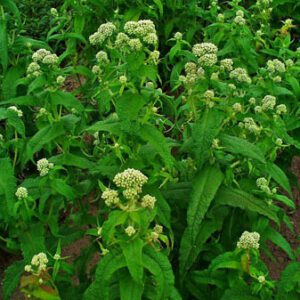
- Figure 25. Common boneset, Eupatorium perfoliatum (Photo credit: H. Zell CC BY-SA 3.0)
-
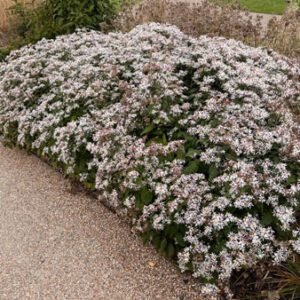
- Figure 26. White wood aster, Eurybia divaricata
-
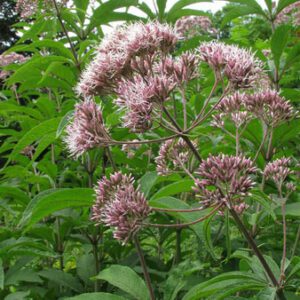
- Figure 27. Hollow Joe Pye weed, Eutrochium fistulosum (Photo credit: Kerry Woods CC BY-NC-ND 2.0)
-
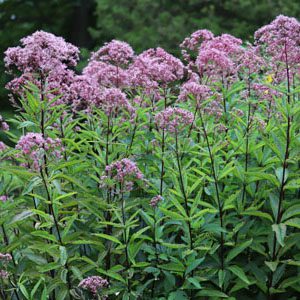
- Figure 28. Sweet Joe Pye weed, Eutrochium purpureum
-
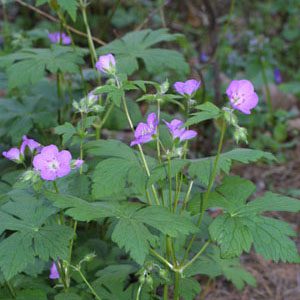
- Figure 29. Wild geranium, Geranium maculatum (Photo credit: Steven J. Baskauf http://bioimages.vanderbilt.edu/ CC BY 4.0)
-
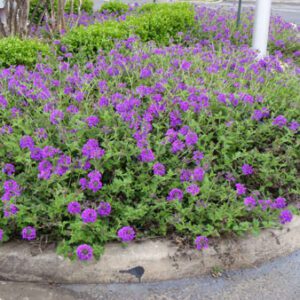
- Figure 30. Rose vervain, Glandularia canadensis (Photo credit: Jim Robbins CC BY-NC-ND 4.0)
-
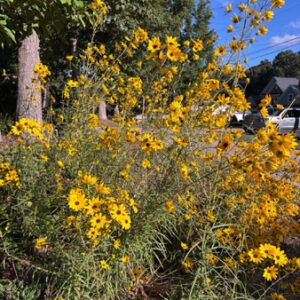
- Figure 31. Swamp sunflower, Helianthus angustifolius (© elmorel, some rights reserved (CC-BY-NC))
Table 1. Plants Native to North Alabama and Suitable for Landscapes: Perennial Flowers (cont.)
See first table for Germination Codes, Shade Definitions and Spread Definitions.
| Common Name | Botanical Name | Soil | Light | Height | Bloom Time | Spread | Germination | Description |
|---|---|---|---|---|---|---|---|---|
| ashy sunflower (figure 32) | Helianthus mollis | Moist, Dry | Full Sun | 3-5 ft. | Aug.-Oct. | Aggressive | 2(30) | Tough, drought-tolerant plant. Many other Helianthus species native to Alabama. |
| rose mallow (figure 33)* | Hibiscus moscheutos | Wet | Full Sun | 3-7 ft. | July-Oct. | Moderate | 2(60) | Prefers wet/moist organic soils. Host plant to many butterfly species. Attracts hummingbirds and other pollinators. Pink, burgundy, white flowers. Compact cultivars available. Can be affected by Japanese beetles. |
| woodland spider lily (figure 34) | Hymenocallis occidentalis | Wet, Moist, Dry | Deep Shade, Some Shade, Full Sun | 1-2 ft. | July-Sept. | Slow | 5 | Occurs in both floodplains and upland hardwood forests. Grown from bulb division or seed. Many other species in Hymenocallis genus (some native and others not). More flowers with increased sunlight exposure. |
| southern blue flag iris (figure 35)* | Iris virginica | Wet | Full Sun | 1-3 ft. | July-Sept. | Moderate | 2(120) | Found naturally in standing water. Consider for water gardens or in consistently moist, acidic garden soil. Use in pond borders in water up to 6 in. deep. |
| dense blazing star (figure 36) | Liatris spicata | Wet, Moist | Full Sun | 2-5 ft. | Apr. | Slow | 2(60) | Slow to establish from seed. Many other Liatris species native to Alabama found in drier soils. Some more compact cultivars available. |
| cardinal flower (figure 37)* | Lobelia cardinalis | Wet, Moist | Some Shade, Full Sun | 2-4 ft. | Aug.-Oct. | Slow | 2(60) | Best tolerates full sun in Alabama in consistently moist soils. Usually occurs naturally along stream banks. Readily attracts hummingbirds. Showy ornamental with cultivars available. |
| great blue lobelia (figure 30) | Lobelia siphilitica | Wet, Moist | Some Shade, Full Sun | 2-4 ft. | Aug.-Oct. | Slow | 2(60) | Needs consistently moist soils. Blue flowers (rarely white). |
-
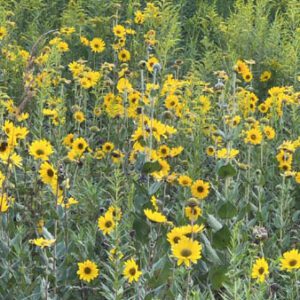
- Figure 32. Ashy sunflower, Helianthus mollis (© chapma72, some rights reserved (CC-BY-NC))
-
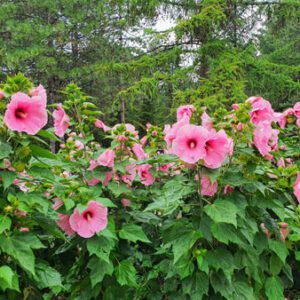
- Figure 33. Rose mallow, Hibiscus moscheutos
-
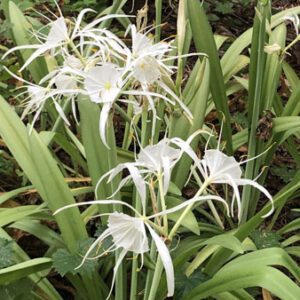
- Figure 34. Woodland spider lily, Hymenocallis occidentalis (Photo credit: © Chris Acree, some rights reserved (CC-BY-SA))
-
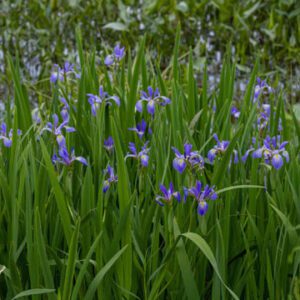
- Figure 35. Southern blue flag iris, Iris virginica (Photo credit: © Kevin Shrock, some rights reserved (CC-BY-NC))
-
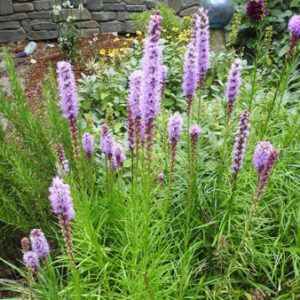
- Figure 36. Dense blazing star, Liatris spicata (Photo credit: Kathleen Moore CC BY 4.0)
-
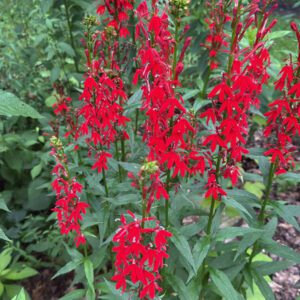
- Figure 37. Cardinal flower, Lobelia cardinalis (Photo credit: © nbski, some rights reserved (CC-BY-NC))
-
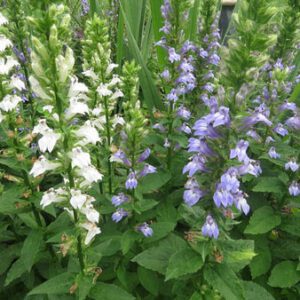
- Figure 38. Great blue lobelia, Lobelia siphilitica (Photo credit: Kerry Woods CC BY-NC-ND 4.0)
Table 1. Plants Native to North Alabama and Suitable for Landscapes: Perennial Flowers (cont.)
See first table for Germination Codes, Shade Definitions and Spread Definitions.
| Common Name | Botanical Name | Soil | Light | Height | Bloom Time | Spread | Germination | Description |
|---|---|---|---|---|---|---|---|---|
| broadleaf Barbara’s buttons (figure 39) | Marshallia trinervia | Wet, Moist | Some Shade, Full Sun | 1-2 ft. | May-June | Slow | 1 | Appropriate for stream banks and moist rock gardens. Marshallia obovata another native option for north Alabama M. graminifolia native to Atlantic coastal plain but commonly available and attractive with stronger preference for full sun. Propagate through division or seed. |
| wild bergamot (figure 40)* | Monarda fistulosa | Moist, Dry | Some Shade, Full Sun | 2-3 ft. | June | Moderate | 1 | Supports specialist bees. Foliage can be used for tea. Showy early summer blooms. Flowers pink, lavender, or rarely white. Monarda didyma more commonly sold but not native to Alabama. |
| spotted bee balm (figure 41) | Monarda punctata | Dry | Full Sun | 2 ft. | Aug.-Sept. | Moderate | 1,4 | Like other Monarda species, is susceptible to powdery mildew, which is mostly superficial. More common in south Alabama. Drought and deer tolerant. Short lived. May be aggressive in good conditions. |
| wild quinine (figure 42) | Parthenium integrifolium | Moist, Dry | Full Sun | 2-3 ft. | June-Aug. | Moderate | 2(60) | More commonly used for prairie restoration than in home gardens, but nice summer bloom for pocket prairies. |
| foxglove beard tongue (figure 43) | Penstemon digitalis | Moist | Some Shade, Full Sun | 3-4 ft. | May | Moderate | 2(30), 4 | Best of Penstemon species for clay soil. |
| eastern beard tongue (figure 44)* | Penstemon laevigatus | Moist | Some Shade, Full Sun | 2-3 ft. | May-June | Moderate | 2(30), 4 | Easy to grow and more common to Alabama than Penstemon digitalis. |
| Carolina phlox (figure 45) | Phlox Carolina | Moist | Some Shade, Full Sun | 4-7 ft. | May-June | Moderate | 1 | Similar functions as other native phloxes: P. glaberrima, P. maculata, P. paniculata, and P. pilosa. Can be bothered by powdery mildew and spider mites. |
-
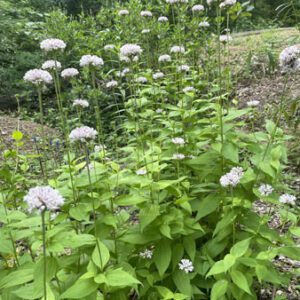
- Figure 39. Broadleaf Barbara’s buttons, Marshallia trinervia (Photo credit: © frang, some rights reserved (CC-BY-NC))
-
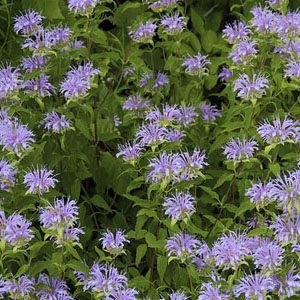
- Figure 40. Wild bergamot, Monarda fistulosa (Photo credit: Dan Mullen CC BY-NC-ND 2.0)
-
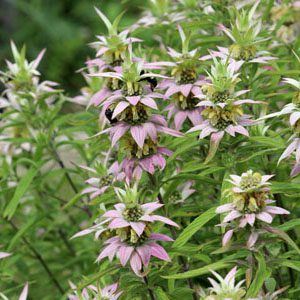
- Figure 41. Spotted bee balm, Monarda punctata
-
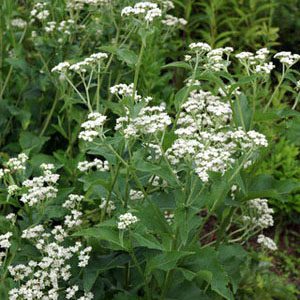
- Figure 42. Wild quinine, Parthenium integrifolium
-
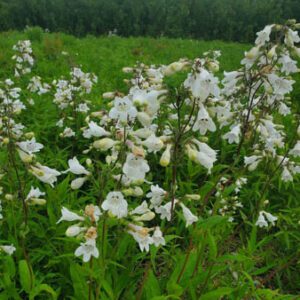
- Figure 43. Foxglove beardtongue, Penstemon digitalis (Photo credit: © chri3357, some rights reserved (CC-BY-NC))
-
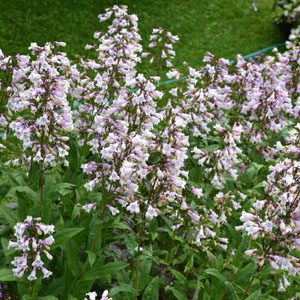
- Figure 44. Eastern beardtongue, Penstemon laevigatus
-
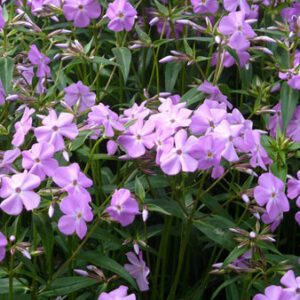
- Figure 45. Carolina phlox, Phlox Carolina (Photo credit: Peganum CC-BY-SA 2.0)
Table 1. Plants Native to North Alabama and Suitable for Landscapes: Perennial Flowers (cont.)
See first table for Germination Codes, Shade Definitions and Spread Definitions.
| Common Name | Botanical Name | Soil | Light | Height | Bloom Time | Spread | Germination | Description |
|---|---|---|---|---|---|---|---|---|
| obedient plant (figure 46) | Physostegia virginiana | Wet, Moist | Some Shade, Full Shade | 2-4 ft. | Aug.-Nov. | Aggressive | 2(60) | Mint family. Can be aggressive in preferred conditions. |
| Jacob's ladder (figure 47) | Polemonium reptans | Wet, Moist | Some Shade | 1 ft. | Mar.-Apr. | Moderate | 2(60) | Does not tolerate drought and will go dormant. Needs moist but well-drained soils. |
| Solomon's seal (figure 48) | Polygonatum biflorum | Moist, Dry | Deep Shade, Some Shade | 1-3 ft. | Apr.-May | Moderate | 6 | Woodland plant. Slowly spreads by rhizomes to form colonies. May yellow or die back in summer. Flower and fruit along stem (not at end, as in false Solomon’s seal, Maianthemum racemosum). Propagates by division or seed. |
| white flower leafcup (figure 49) | Polymnia canadensis | Wet, Moist, Dry | Deep Shade, Some Shade | 2-4 ft. | July-Sept. | Moderate | 2(60) | Large leaves, small white flowers attracting many pollinators. Use in forest gardens with a wild feel. |
| hoary mountain mint (figure 50) | Pycnanthemum incanum | Moist, Dry | Some Shade, Full Sun | 2-3 ft. | July-Sept. | Moderate | 1 | Fragrant and edible leaves, good for tea. Deer resistant. Drought tolerant. |
| clustered mountain mint (figure 51)* | Pycnanthemum muticum | Wet, Moist | Some Shade, Full Sun | 2-3 ft. | June-Sept | Moderate | 2(21), 4 | Prefers wetter areas than other mountain mints. Will grow in dry places but not spread as readily. |
| narrowleaf mountain mint (figure 52) | Pycnanthemum tenuifolium | Moist, Dry | Some Shade, Full Sun | 1-2 ft. | June-Aug. | Moderate | 4 | Also called slender mountain mint. Fragrant with edible leaves and good for tea. Deer tolerant. Drought tolerant. |
-
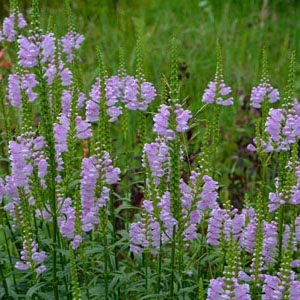
- Figure 46. Obedient plant, Physostegia virginiana
-
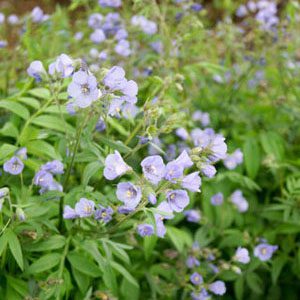
- Figure 47. Jacob’s ladder, Polemonium reptans
-
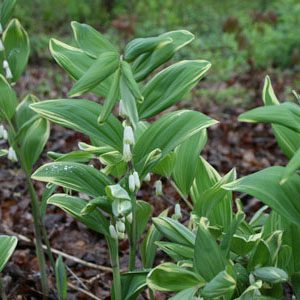
- Figure 48. Solomon’s seal, Polygonatum biflorum (Photo credit: Chris Alberti CC BY 4.0)
-
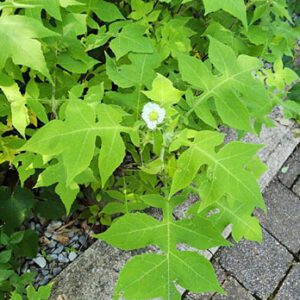
- Figure 49. Whiteflower leafcup, Polymnia canadensis (Photo credit: © karenandphillip, some rights reserved (CC-BY-NC))
-
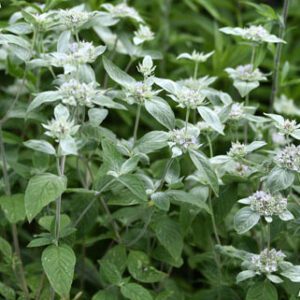
- Figure 50. Hoary mountain mint, Pycnanthemum incanum (Photo credit: © Sandy Thomas, some rights reserved (CC-BY-NC))
-
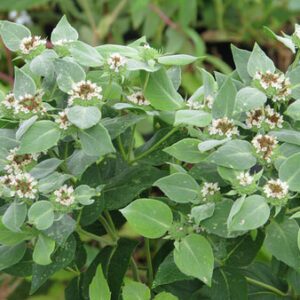
- Figure 51. Clustered mountain mint, Pycnanthemum muticum (Photo credit: pegnum CC BY-SA 4.0)tenuifolium (Photo credit: © j1952, some rights reserved (CC-BY-NC))
-
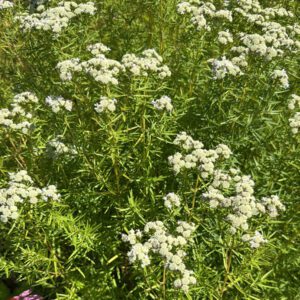
- Figure 52. Narrowleaf mountain mint, Pycnanthemum tenuifolium (Photo credit: © j1952, some rights reserved (CC-BY-NC))
Table 1. Plants Native to North Alabama and Suitable for Landscapes: Perennial Flowers (cont.)
See first table for Germination Codes, Shade Definitions and Spread Definitions.
| Common Name | Botanical Name | Soil | Light | Height | Bloom Time | Spread | Germination | Description |
|---|---|---|---|---|---|---|---|---|
| gray-headed coneflower (figure 53) | Ratibida pinnata | Moist, Dry | Full Sun | 3-5 ft. | June-Aug. | Moderate | 2(30) | Naturally occurs in Tennessee Valley prairies, cedar glades, chalk outcrops. Drought tolerant once established. Plant in masses since leaves sparse. Easy to grow from seed. |
| pale meadow beauty (figure 54) | Rhexia mariana | Wet, Moist | Some Shade, Full Sun | 1-2 ft. | June-Sept. | Aggressive | 2(60), 4 | Showy with light purple flowers and red/yellow stamens. Naturalize along ponds or wet areas. Rhexia alifanus, native to south Alabama, taller, and less aggressive. |
| black-eyed Susan (figure 55)* | Rudbeckia fulgida | Moist, Dry | Full Sun | 2-3 ft. | Aug.-Oct. | Moderate | 2(90) | Common native landscaping plant. Some cultivars less attractive to pollinators so use wild ecotype plants or research cultivars before purchase. Blooms later than Rudbeckia hirta. |
| black-eyed Susan (figure 56) | Rudbeckia hirta | Moist, Dry | Some Shade, Full Sun | 2-4 ft. | May-July | Agressive | 2(30) | Common native landscaping plant with many cultivars available. Biennial or short-lived perennial. Blooms best in full sun but will tolerate woodland edge. |
| cutleaf coneflower (figure 57) | Rudbeckia laciniata | Wet, Moist | Some Shade, Full Sun | 3-8 ft. | Aug.-Sept. | Agressive | 2(30) | Edible spring greens, also known as sochan. Often found naturally in Alabama along creek banks. Much taller than other Rudbeckia species. |
| brown-eyed Susan (figure 58) | Rudbeckia triloba | Moist | Some Shade, Full Sun | 2-4 ft. | July-Sept. | Aggressive | 2(30) | Short-lived perennial. Easy to grow and easily reseeds. Less compact growth form than Rudbeckia hirta, but smaller flowers. Often used in woodland borders and prairies rather than formal landscape beds. |
| blue sage (figure 59) | Salvia azurea | Moist, Dry | Full Sun | 3-5 ft. | Aug.-Oct. | Slow | 1 | Needs full sun for best growth but will survive in part shade. Easy to grow from seed. Rarely bothered by deer. |
-
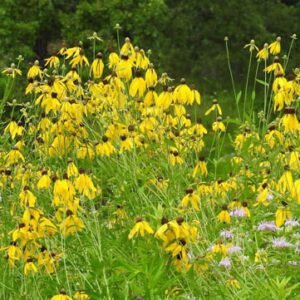
- Figure 53. Gray-headed coneflower, Ratibida pinnata
-
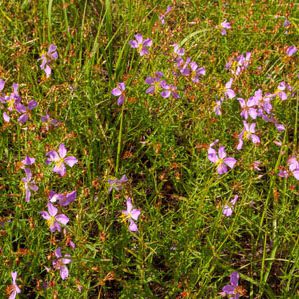
- Figure 54. Pale meadow beauty, Rhexia mariana
-
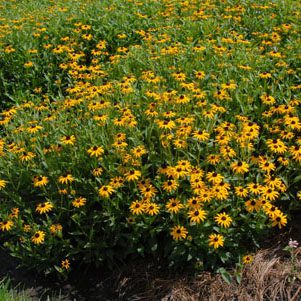
- Figure 55. Black-eyed Susan, Rudbeckia fulgida (Photo credit: Jim Robbins CC BY-NC-ND 4.0)
-
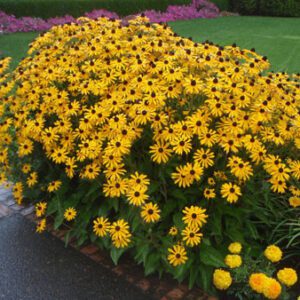
- Figure 56. Black-eyed Susan, Rudbeckia hirta (Photo credit: Jim Robbins CC BY-NC-ND 4.0)
-
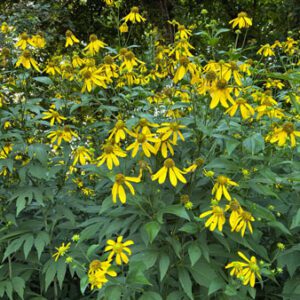
- Figure 57. Cutleaf coneflower, Rudbeckia laciniata (Photo credit: © Mossy Ox, some rights reserved (CC-BY-NC))
-
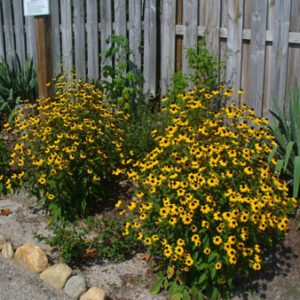
- Figure 58. Brown-eyed Susan, Rudbeckia triloba (Photo credit: Susan Strine CC BY 2.0)
-
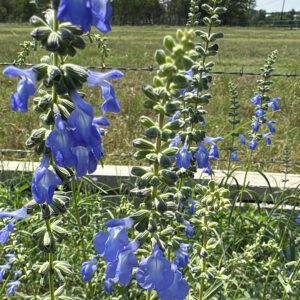
- Figure 59. Blue sage, Salvia azurea (Photo credit: © Anthony Scott, some rights reserved (CC-BY-NC))
Table 1. Plants Native to North Alabama and Suitable for Landscapes: Perennial Flowers (cont.)
See first table for Germination Codes, Shade Definitions and Spread Definitions.
| Common Name | Botanical Name | Soil | Light | Height | Bloom Time | Spread | Germination | Description |
|---|---|---|---|---|---|---|---|---|
| nettleleaf sage (figure 60) | Salvia urticifolia | Moist, Dry | Some Shade | 1-2 ft. | Apr.-May | Slow | 1 | Spring bloomer that tolerates some shade. |
| lizard's tail (figure 61) | Saururus cernuus | Wet | Some Shade, Full Sun | 2-3 ft. | May-June | Aggressive | 5 | Aggressive ground cover for wet soils and pond edges. Showy white flower resembling a lizard’s tail. |
| heartleaf skullcap (figure 62) | Scutellaria ovata | Moist, Dry | Some Shade, Full Sun | 1-2 ft. | May-June | Aggressive | 1 | Several other Scutellaria species are native and sold commercially, notably downy skullcap, S. incana. Deer tolerant. Can be difficult to germinate. Subtle flowers. |
| wild senna (figure 63) | Senna marilandica | Wet, Moist | Some Shade, Full Sun | 3-6 ft. | July-Aug. | Moderate | 2(10), 3 | Legume formerly known as Cassia marilandica. Brings a wild, almost tropical feel to a garden. More often planted in informal landscapes. |
| fire pink (figure 64)* | Silene virginica | Moist, Dry | Some Shade | 1-2 ft. | Apr.-May | Moderate | 2(60) | Short-lived perennial that reseeds itself. Main pollinator is ruby-throated hummingbird. Silene stellata is white-flowered native option in genus that blooms in summer. |
| starry rosinweed (figure 65) | Silphium asteriscus | Moist | Full Sun | 3-5 ft. | July-Sept. | Moderate | 2(60) | Drought tolerant. Long bloom time. Grows well in wide range of soil types. Silphium integrifolium similar and also native, though naturally occurring only on soils underlain by limestone. |
| compass plant (figure 66) | Silphium laciniatum | Moist, Dry | Full Sun | 3-9 ft. | June-Sept. | Moderate | 2(60) | Naturally occurs on limestone glades and outcrops. Deep tap root. Can take several years to flower. Use in a back border. Silphium perfoliatum similar and also native. |
-
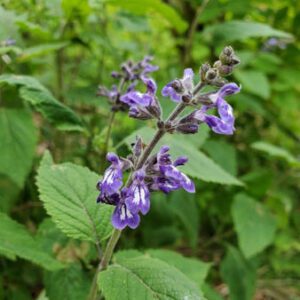
- Figure 60. Nettleleaf sage, Salvia urticifolia (Photo credit: © Charles Winder, some rights reserved (CC-BY-NC))
-
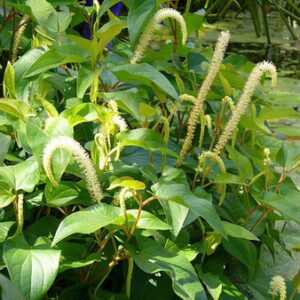
- Figure 61. Lizard’s tail, Saururus cernuus (Photo credit: Scott Zona CC BY-NC 4.0)
-
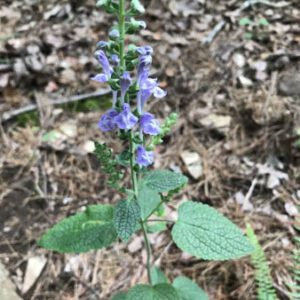
- Figure 62. Heartleaf skullcap, Scutellaria ovata (Photo credit: © Eleanor G., some rights reserved (CC-BY-NC))
-
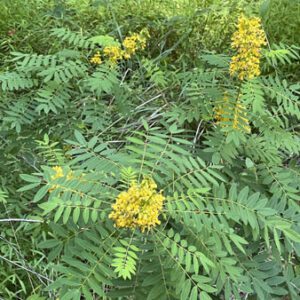
- Figure 63. Wild senna, Senna marilandica (© Peggy Conner, some rights reserved (CC-BY-NC))
-
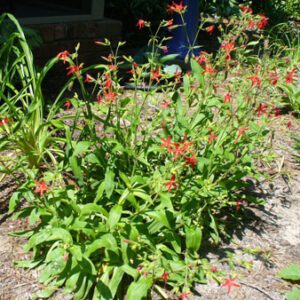
- Figure 64. Fire pink, Silene virginica (Photo credit: Susan Strine CC BY 2.0)
-
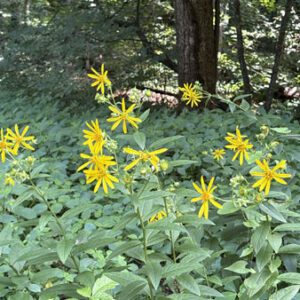
- Figure 65. Starry rosinweed, Silphium asteriscus (Photo credit: © keljb26, some rights reserved (CC-BY-NC))
-
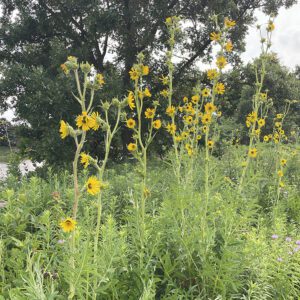
- Figure 66. Compass plant, Silphium laciniatum (Photo credit: © Katya Mischenko-Mycyk, some rights reserved (CC-BY-NC))
Table 1. Plants Native to North Alabama and Suitable for Landscapes: Perennial Flowers (cont.)
See first table for Germination Codes, Shade Definitions and Spread Definitions.
| Common Name | Botanical Name | Soil | Light | Height | Bloom Time | Spread | Germination | Description |
|---|---|---|---|---|---|---|---|---|
| blue-eyed grass (figure 67)* | Sisyrinchium angustifolium | Wet, Moist | Some Shade, Full Sun | 6-15 in. | April - May | Moderate | 2(60) | Iris family. Not technically a grass but looks like grass after blooming. Plant in masses since so thin and delicate with short-lived blooms. Performs better in full sun. |
| bear's foot (figure 68) | Smallanthus uvedalia | Moist | Some Shade, Full Sun | 3-8 ft. | July-Sept. | Moderate | 2(60) | Large leaves, small yellow flower. Insects overwinter in standing hollow stems. |
| tall goldenrod (figure 69) | Solidago altissima | Moist, Dry | Full Sun | 3-8 ft. | Aug.-Oct. | Aggressive | 2(90) | Most common goldenrod in north Alabama. Large plant that spreads aggressively. Use in naturalized tall meadows. Also called Canada goldenrod. |
| field goldenrod (figure 70) | Solidago nemoralis | Moist, Dry | Full Sun | 1 1/2 - 3 ft. | Sept.-Oct. | Aggressive | 2(60), 4 | Alabama is home to dozens of species of goldenrod that are important hosts for specialist native bees and provide vibrant fall color. S. nemoralis thrives in poor soil. Is one of smaller goldenrods and one of latest to bloom. Can take over landscapes. Do not use where aggressive plants not desirable. |
| sweet goldenrod (figure 71) | Solidago odora | Moist, Dry | Some Shade, Full Sun | 2-3 ft. | Aug.-Oct. | Moderate | 2(90) | Desirable for home gardens. Will not spread as readily as other goldenrods. Noticeable anise scent. |
| wrinkle leaf goldenrod (figure 72)* | Solidago rugosa | Wet, Moist | Some Shade, Full Sun | 2-4 ft. | Aug.-Oct. | Aggressive | 2(60), 4 | Prefers consistently moist soils. Suited for rain gardens and erosive sites. ‘Fireworks’ is a commonly available cultivar. |
| showy goldenrod (figure 73)* | Solidago speciosa | Moist, Dry | Full Sun | 2-4 ft. | Aug.-Oct. | Aggressive | 2(60), 4 | Showy bloom as name suggests. Can become weedy and spread but is often commercially available and used successfully in home gardens. Natural populations in Alabama rare. |
-
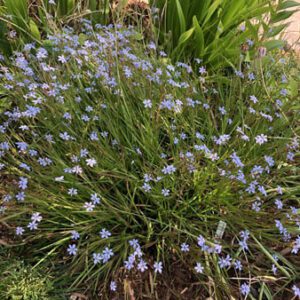
- Figure 67. Blue-eyed grass, Sisyrinchium angustifolium (Photo credit: Cathy Dewitt CC BY 4.0)
-
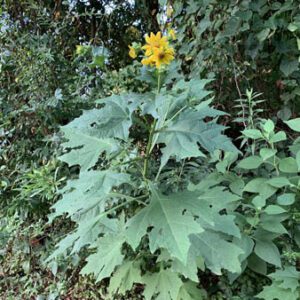
- Figure 68. Bear’s foot, Smallanthus uvedalia (Photo credit: K. Andre CC BY 2.0)
-
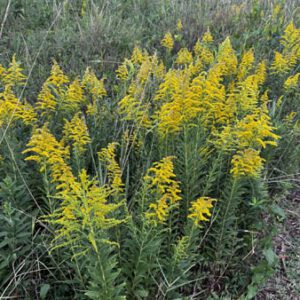
- Figure 69. Tall goldenrod, Solidago altissima (Photo credit: © Jeff Garner, some rights reserved (CC-BY-NC))
-
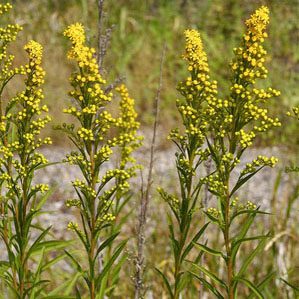
- Figure 70. Field goldenrod, Solidago nemoralis (Photo credit: Dan Mullen CC BY-NC-ND 4.0)
-
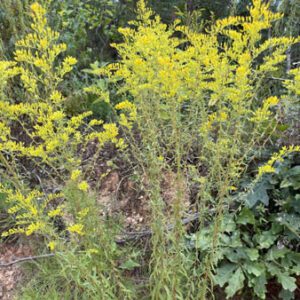
- Figure 71. Sweet goldenrod, Solidago odora (Photo credit: © Luke Benjamin, some rights reserved (CC-BY-NC))
-
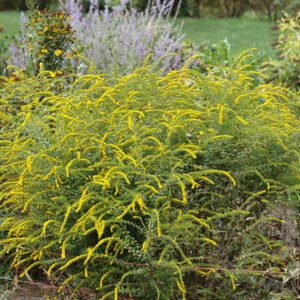
- Figure 72. Wrinkle leaf goldenrod, Solidago rugosa (Photo credit: F. D. Richards CC BY-SA 4.0)
-
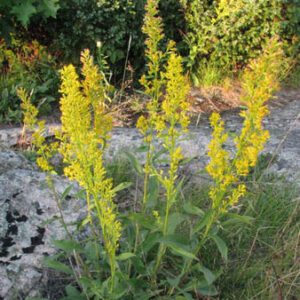
- Figure 73. Showy goldenrod, Solidago speciosa (Photo credit: Kerry Woods CC BY-NC-ND 2.0)
Table 1. Plants Native to North Alabama and Suitable for Landscapes: Perennial Flowers (cont.)
See first table for Germination Codes, Shade Definitions and Spread Definitions.
| Common Name | Botanical Name | Soil | Light | Height | Bloom Time | Spread | Germination | Description |
|---|---|---|---|---|---|---|---|---|
| Indian pink (figure 74) | Spigelia marilandica | Moist | Some Shade | 1-2 ft. | May | Slow | 2(60) | Reliable perennial once established. Hummingbird magnet. Deer and rabbit resistant. |
| calico aster (figure 75) | Symphyotrichum lateriflorum | Moist | Some Shade, Full Sun | 2-3 ft. | Sept.-Oct. | Moderate | 1 | Prefers alkaline soil. One of many native Symphyotrichum species. Disk flowers start out yellow and fade to purple. Ray flowers white. Colonizes in full sun. |
| American germander (figure 67) | Teucrium canadense | Wet, Moist | Some Shade, Full Sun | 1-3 ft. | July-Sept. | Aggressive | 2(60) | Attractive, dense pink/white flower spikes attract birds. Aggressive by rhizome and can form large colonies. Deer tolerant. Appropriate for pond banks and wet ditches. Teucrium chamaedrys is somewhat common ornamental plant of Mediterranean origin. |
| foamflower (figure 77) | Tiarella wherryi | Moist | Deep Shade, Some Shade | 6-12 in. | Mar.-Apr. | Moderate | 1,4 | Evergreen groundcover. Small white/pink flower. Sow seeds immediately to propagate. Tiarella cordifolia is another showy plant native to Southeast (but not strictly to Alabama in modern taxonomies). |
| spider-wort (figure 78)* | Tradescantia virginiana | Moist | Some Shade, Full Sun | 1 1/2 - 3 ft. | Mar.-May | Aggressive | 2(90) | Alabama is home to several Tradescantia species, including Virginia spiderwort (T. virginiana) and Ohio spiderwort (T. ohioensis), both sold commercially. Will spread throughout yard, so use where that movement is desirable. Blue to purple or occasionally pink flower. |
| blue vervain (figure 79) | Verbena hastata | Wet, Moist | Full Sun | 2-5 ft. | June-Aug. | Moderate | 2(90) | Rare in Alabama but demonstrated by AU-BEES, the Auburn University Bee Center, as high-value nectar plant for native bees. Does not have look of traditional ornamental plant. Use in wet prairie gardens. Do not confuse with more common but non-native Brazilian vervain (V. brasiliensis). |
| common wingstem (figure 80)* | Verbesina alternifolia | Wet, Moist | Some Shade, Full Sun | 3-8 ft. | Aug.-Oct. | Aggressive | 2(30) | Plant in tall meadows and alluvial forests where aggressive late-season flower desirable. Host plant for silvery checkerspot butterflies, Chlosyne nycteis. |
-
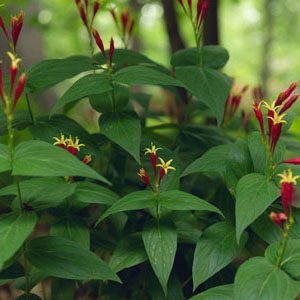
- Figure 74. Indian pink, Spigelia marilandica
-
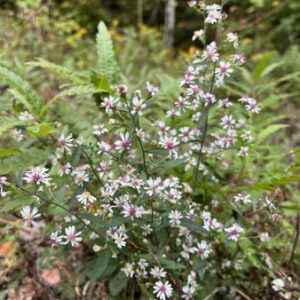
- Figure 75. Calico aster, Symphyotrichum lateriflorum (Photo credit: © fred_yost, some rights reserved (CC-BY-NC))
-
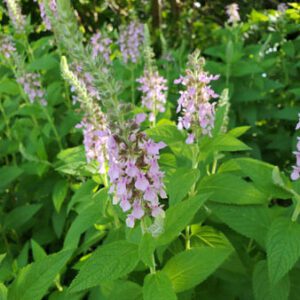
- Figure 76. American germander, Teucrium canadense (CCO (no rights reserved))
-
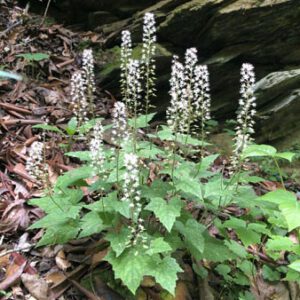
- Figure 77. Foamflower, Tiarella wherryi (Photo credit:a © Haley Hamblen, some rights reserved (CC-BY-NC))
-
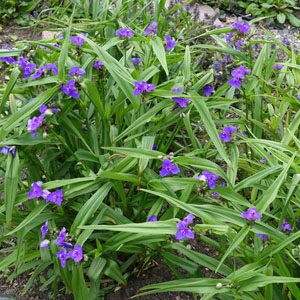
- Figure 78. Spider wort, Tradescantia virginiana
-
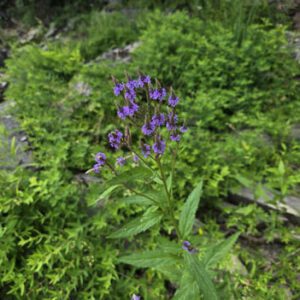
- Figure 79. Blue vervain, Verbena hastata (Photo credit: © wanderingeden, some rights reserved (CC-BY-NC))
-
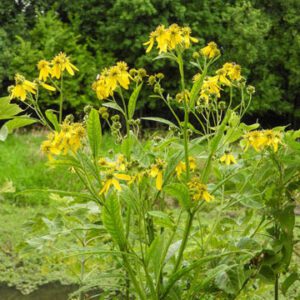
- Figure 80. Common wingstem, Verbesina alternifolia
Table 1. Plants Native to North Alabama and Suitable for Landscapes: Perennial Flowers (cont.)
See first table for Germination Codes, Shade Definitions and Spread Definitions.
| Common Name | Botanical Name | Soil | Light | Height | Bloom Time | Spread | Germination | Description |
|---|---|---|---|---|---|---|---|---|
| giant ironweed (figure 81) | Vernonia gigantea | Wet, Moist | Full Sun | 3-8 ft. | July-Oct. | Aggressive | 2(90) | Large plant that competes and spreads opportunistically. Use in meadow-type plantings and back borders. Good partner for larger goldenrod species in prairie gardens. |
| Culver's root (figure 82) | Veronicastrum virginicum | Wet, Moist | Full Sun | 4-5 ft. | July-Aug. | Slow | 4 | Slow to establish but low maintenance with showy flowering raceme. Prefers open woods and moist meadows. Very few remaining wild populations in Alabama. Do not disturb. |
| bird's foot violet (figure 83) | Viola pedata | Moist, Dry | Full Sun | 3-5 ft. | Mar.-Apr. | Moderate | 2(60), 4 | Largest of native violets. Somewhat difficult to grow. Will occasionally flower in fall in addition to spring. Not as common in the wild as other Viola species. Do not disturb wild populations. Alabama is home to over a dozen species of native wild violets, many of which appear naturally in residential yards. |
| golden Alexander (figure 84)* | Zizia aurea | Moist | Some Shade, Full Sun | 1-2 ft. | Mar.-Apr. | Moderate | 2(60) | Carrot family plant that is a larval host for black swallowtail butterflies. Once established, can spread and form a small colony. Easy to grow from seed or transplant. |
Table 1. Plants Native to North Alabama and Suitable for Landscapes: Spring Ephemeral & Woodland Spring-Blooming Perennial Flowers
Only purchase plants that have been responsibly propagated. Spring ephemerals should not be dug up from natural habitats. These plants have specific site preferences, most needing mature, undisturbed woodlands to thrive.
| Common Name | Botanical Name | Soil | Light | Height | Bloom Time | Spread | Germination | Description |
|---|---|---|---|---|---|---|---|---|
| Jack-in-the-pulpit (figure 85) | Arisaema triphyllum | Wet, Moist | Deep Shade | 1-2 ft. | Apr. | Slow | 5 | Plant in established hardwood areas with rich soil and allow leaf cover over winter. Toxic fruit. |
| cutleaf toothwort (figure 86) | Cardamine concatenata | Wet, Moist | Deep Shade | 1-2 ft. | Apr. | Slow | 5 | Brassica family, formerly called Dentaria lancinata. Prefers rich soil. Spreads slowly from a rhizome. Difficult to germinate from seed. Cardamine diphylla is another native option. |
-
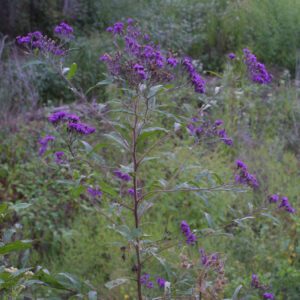
- Figure 81. Giant ironweed, Vernonia gigantea (Photo credit: Steven J. Baskauf CC BY 4.0)
-
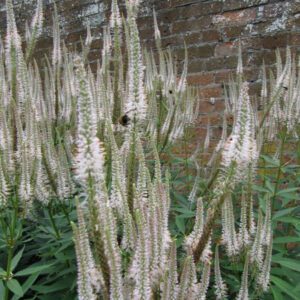
- Figure 82. Culver’s root, Veronicastrum virginicum (Photo credit: Lenora (Ellie) Enking CC BY-SA 4.0)
-
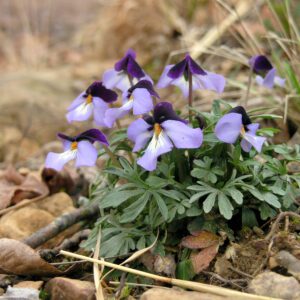
- Figure 83. Bird’s foot violet, Viola pedata (Photo credit: Marvin Smith CC-BY-SA 2.0)
-
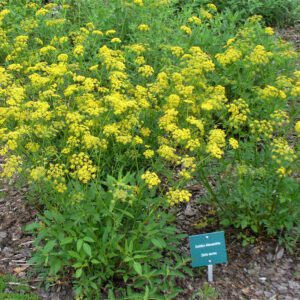
- Figure 84. Golden Alexander, Zizia aurea (Photo credit: Susan Strine CC BY 2.0)
-
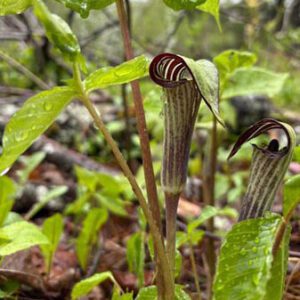
- Figure 85. Jack-in-the-pulpit, Arisaema triphyllum
-
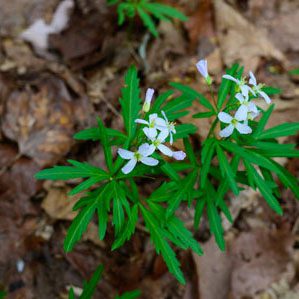
- Figure 86. Cutleaf toothwort, Cardamine concatenata
Table 1. Plants Native to North Alabama and Suitable for Landscapes: Spring Ephemeral & Woodland Spring-Blooming Perennial Flowers (cont.)
See first table for Germination Codes, Shade Definitions and Spread Definitions.
| Common Name | Botanical Name | Soil | Light | Height | Bloom Time | Spread | Germination | Description |
|---|---|---|---|---|---|---|---|---|
| spring beauty (figure 87) | Claytonia virginica | Wet, Moist | Some Shade, Full Sun | 1-2 ft. | Apr. | Slow | 5 | Early spring flower that grows in lawn settings and is capable of forming ground cover. To germinate seed, sow at 70° F for 3 mon. then move to 40° F so seed can germinate in cool temperatures in 6–7 weeks. Small tubers edible when cooked. |
| Dutch man's breeches (figure 88) | Dicentra cucullaria | Moist | Deep Shade | 6-12 in. | Mar. | Moderate | 2(90) | Grows in rich, moist, hardwood forests, including Tenn. Valley clay soils. North Alabama is southern extent of habitat range. Seeds can be difficult to germinate. |
| trout lily (figure 89) | Erythronium americanum | Moist | Deep Shade | 4-9 in. | Mar. | Slow | 6 | Can take 5 yrs. to flower after germination. Grows from corms. E. albidum, E. rostratum, and E. umbilicatum are also native. Some species extremely vulnerable in the wild in Alabama. As always, never transplant wild plants. |
| round-lobed hepatica (figure 90) | Hepatica americana | Moist | Deep Shade | 3-6 in. | Feb.-Mar. | Slow | 6 | Naturally occurs in moist, mature forests. Small, unassuming early spring wildflower. Not truly ephemeral since foliage persists, but fits nicely in spring woodland gardens. Shard-lobed hepatica, Hepatica acutiloba, is also native. |
| Virginia bluebells (figure 91) | Mertensia virginica | Moist | Deep Shade | 1-2 ft. | Mar. | Moderate | 2(60) | Prefers nutrient-rich alluvial forests. Partial to deep shade. Does best in cool microclimate. North Alabama is southern extent of range. Capable of forming solid colony on forest floor in preferred conditions |
| eastern blue phlox (figure 92)* | Phlox divaricata | Moist | Deep Shade, Some Shade | 1-2 ft. | Mar.-Apr. | Slow | 2(60) | Also called woodland phlox. Does well in cultivated landscapes. Occurs naturally along streams and in rich forests. Cultivars available. Can slowly form a colony. |
| mayapple (figure 93) | Podophyllum peltatum | Moist | Deep Shade, Some Shade | 1-2 ft. | Apr. | Moderate | 2(90) | Can move fairly quickly by rhizome to form a colony in preferred conditions. Typically emerges in Mar., flowers in Apr., and forms fruit by early summer before going dormant. Perfectly ripe fruits are edible. Do not eat seeds or any other parts of the plant, which are highly poisonous. |
-
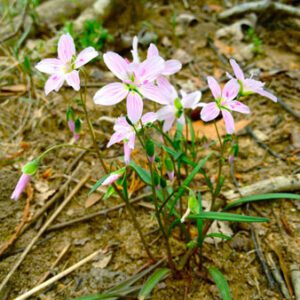
- Figure 87. Spring beauty, Claytonia virginica (Photo credit: Fritzflohrreynolds CC BY-SA 3.0)
-
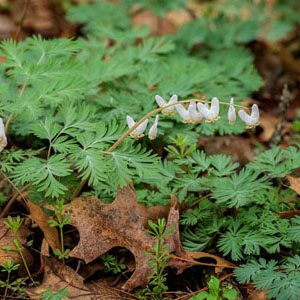
- Figure 88. Dutchman’s breeches, Dicentra cucullaria
-
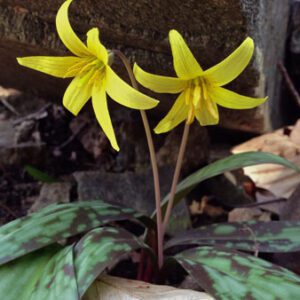
- Figure 89. Trout lily, Erythronium americanum (Photo credit: Fritzflohrreynolds CC BY-SA 3.0)
-
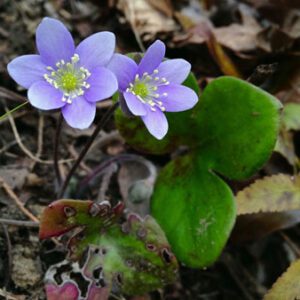
- Figure 90. Round-lobed hepatica, Hepatica americana (Photo credit: Fritz Flohr Reynolds CC-BY-SA 2.0)
-
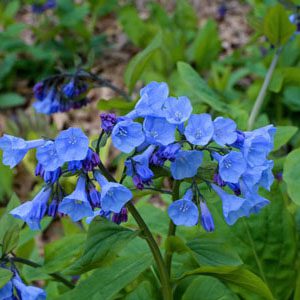
- Figure 91. Virginia bluebells, Mertensia virginica
-
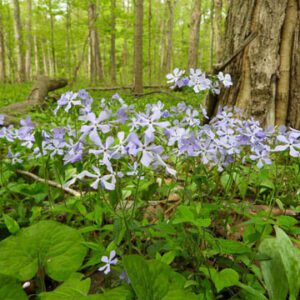
- Figure 92. Eastern blue phlox, Phlox divaricata
-
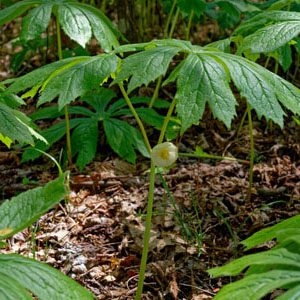
- Figure 93. Mayapple, Podophyllum peltatum
Table 1. Plants Native to North Alabama and Suitable for Landscapes: Spring Ephemeral & Woodland Spring-Blooming Perennial Flowers (cont.)
See first table for Germination Codes, Shade Definitions and Spread Definitions.
| Common Name | Botanical Name | Soil | Light | Height | Bloom Time | Spread | Germination | Description |
|---|---|---|---|---|---|---|---|---|
| eastern shooting star (figure 94) | Primula meadia | Moist | Some Shade | 8-18 in. | Mar.-Apr. | Slow | 2(21), 4 | Also known as Dodecatheon meadia. Fairly easy to grow in right landscape conditions but difficult to germinate from seed. |
| bloodroot (figure 95)* | Sanguinaria canadensis | Moist | Deep Shade | 4-6 in. | Mar. | Slow | 5 | Attractive, small spring blooms. Can use for natural dye, but handle with care since sap has toxic properties. Possible medicinal benefits, but never consume without expert supervision. Seeds spread by ants. Grow from seed (difficult) or by rhizome. Can spread into sizable colony but does not handle competition well. |
| rue anemone (figure 96) | Thalictrum thalictroides | Moist | Deep Shade | 4-6 in. | Mar.-Apr. | Slow | 6 | Delicate white flower. Fairly common and good choice for home woodland gardens. |
| little sweet Betsy (figure 97) | Trillium cuneatum | Moist | Deep Shade, Some Shade | 6-15 in. | Mar.-Apr. | Slow | 6 | One of many native trilliums but the most common in north Alabama. As always, confirm purchased plants were not dug from wild populations. Takes many years for new rhizomes to bloom. |
| yellow trillium (figure 98) | Trillium luteum | Moist | Deep Shade | 4-15 in. | Mar.-Apr. | Slow | 6 | Wild populations rare in Alabama. More common in the Smoky Mountains. |
| twisted trillium (figure 99) | Trillium stamineum | Moist | Deep Shade | 8-12 in. | Mar.-Apr. | Slow | 6 | Petals have distinct twist. Good trillium for alkaline soils. Seeds naturally dispersed by ants. |
| bellwort (figure 100) | Uvularia perfoliata | Moist | Deep Shade, Some Shade | 6-20 in. | Mar.-Apr. | Slow | 5 | Prefers moist, rich soil. Forms small colonies. One of a few Uvularia species in Alabama. Fairly easy to grow. |
-
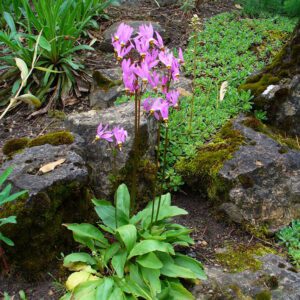
- Figure 94. Eastern shooting star, Primula meadia (Photo credit: H. Zell CC BY-SA 3.0)
-
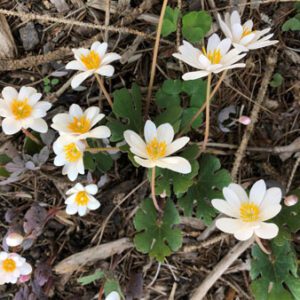
- Figure 95. Bloodroot, Sanguinaria canadensis (Photo credit: Patty Felder CC BY 4.0)
-
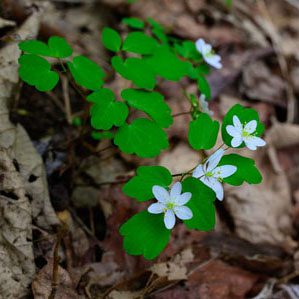
- Figure 96. Rue anemone, Thalictrum thalictroides
-
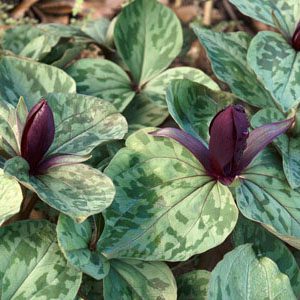
- Figure 97. Little sweet Betsy, Trillium cuneatum
-
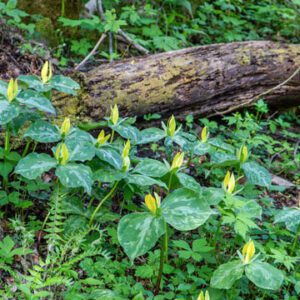
- Figure 98. Yellow trillium, Trillium luteum
-
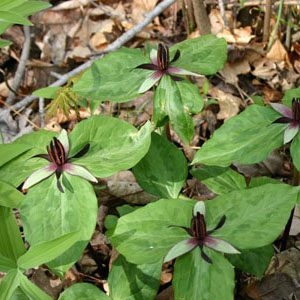
- Figure 99. Twisted trillium, Trillium stamineum, (Photo credit: Eric Soehren CC BY-NC 4.0)
-
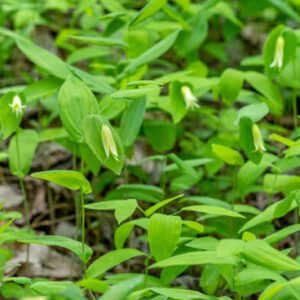
- Figure 100. Bellwort, Uvularia perfoliata
Table 1. Plants Native to North Alabama and Suitable for Landscapes: Annual and Biennial Flowers
See first table for Germination Codes, Shade Definitions and Spread Definitions.
| Common Name | Botanical Name | Soil | Light | Height | Bloom Time | Spread | Germination | Description |
|---|---|---|---|---|---|---|---|---|
| showy tickseed (figure 101) | Bidens aristosa | Wet, Moist | Full Sun | 2-6 ft. | Aug.-Oct. | Aggressive | 2(60) | Many other Bidens species are native to Alabama. Adaptable to most soil types. Use as an annual for late-season blooms or allow to naturalize along a moist woodland edge. Can be aggressive and dominate a landscape with enough moisture. |
| tall bellflower (figure 102) | Campanulastrum americanum | Moist, Dry | Some Shade | 2-5 ft. | June-Sept. | Moderate | 2(30), 4 | Especially occurs naturally in Tennessee Valley in areas underlain by limestone. Also called Campanula americana. |
| partridge pea (figure 103) | Chamaecrista fasciculata | Moist, Dry | Full Sun | 1-3 ft. | Aug.-Sept. | Aggressive | 2(30), 3 | Plant from seed in early spring. Will reseed itself. Legume. Use for erosion control or cover crop in disturbed landscapes before perennial plantings. C. nictitans also native to north Alabama. Larval food for little yellow (Pyrisitia lisa), sleepy orange (Abaeis nicippe), and cloudless sulphur (Phoebis sennae) butterflies. Scarification and short stratification improve germination but are not strictly necessary. |
| tickseed coreopsis (figure 104)* | Coreopsis tinctoria | Moist, Dry | Full Sun | 1-3 ft. | May-Aug | Aggressive | 1 | Readily self-seeds in disturbed soil. One of many Coreopsis species native to eastern U.S. C. tinctoria technically native to Great Plains and only some of Southeast, but widely naturalized in Alabama and commonly available as seed. Works as cut flower. |
| blanket flower (figure 105)* | Gaillardia pulchella | Dry | Full Sun | 1-2 ft. | May-Oct. | Moderate | 1 | Identified by AU-Bee lab as a powerhouse pollinator plant. More commonly growing in sandy coastal soils but found throughout state. Thrives in nutrient-poor soil. Will reseed itself. Possibly naturalized from original range in east Texas. |
| Indian tobacco (figure 106) | Lobelia inflata | Moist | Some Shade, Full Sun | 1-3 ft. | July-Sept. | Moderate | 4 | Delicate white flowers. All plant parts contain toxins. Several other Lobelia species are native to Alabama. L. cardinalis and L. siphilitica are showier perennial choices. |
| lemon bee balm (figure 107) | Monarda citriodora | Moist, Dry | Full Sun | 1 - 2 1/2 ft. | June-July | Moderate | 1 | Naturally found in limestone soils in Tennessee Valley and Black Belt. Can act as biennial in the South. Susceptible to powdery mildew but still a common garden choice. M. fistulosa, M. bradburiana, and M. punctata are native perennial bee balms. |
| fernleaf phacelia | Phacelia bipinnatifida | Moist | Deep Shade, Some Shade | 1-2 ft. | Mar.-Apr. | Moderate | 5 | Biennial. Germinates in summer. Overwinters as a rosette before blooming in spring |
-
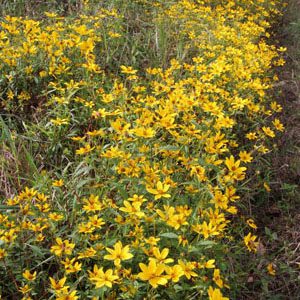
- Figure 101. Showy tickseed, Bidens aristosa (Photocredit: Jean Wilson CC BY 4.0)
-
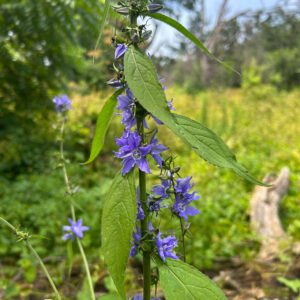
- Figure 102. Tall bellflower, Campanulastrum americanum (Photo credit: © erikatenjack, some rights reserved (CC-BY-NC))
-
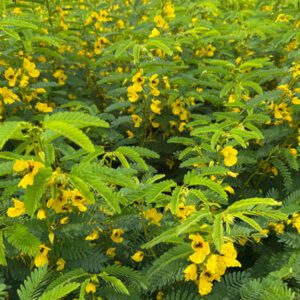
- Figure 103. Partridge pea, Chamaecrista fasciculata
-
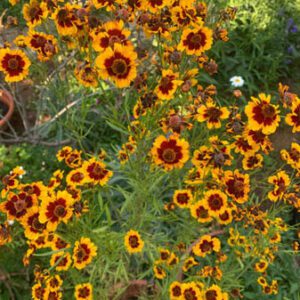
- Figure 104. Tickseed coreopsis, Coreopsis tinctoria
-
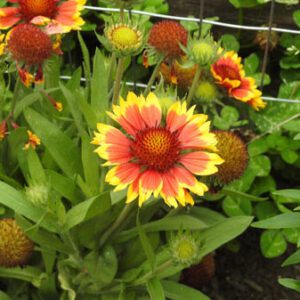
- Figure 105. Blanket flower, Gaillardia pulchella (Photo credit: Kathleen Moore CC BY 4.0)
-
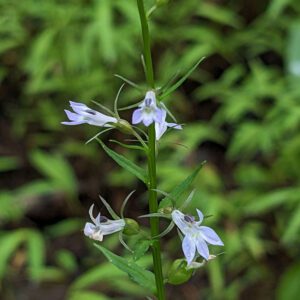
- Figure 106. Indian tobacco, Lobelia inflata (Photo credit: © gilbertj, some rights reserved (CC-BY-NC))
-
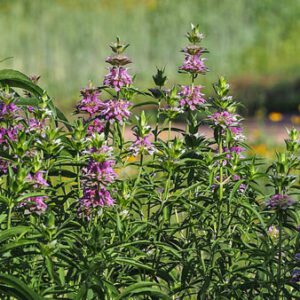
- Figure 107. Lemon bee balm, Monarda citriodora
-
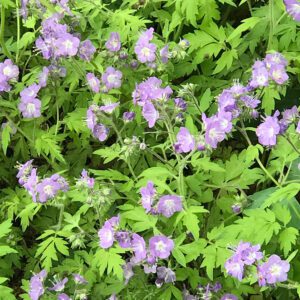
- Figure 108. Fernleaf phacelia, Phacelia bipinnatifida, (Photo credit: KATHERINE WAGNER-REISS CC BY-SA 4.0)
For More Information
- Alabama Butterfly Atlas. Host plants. Accessed December 2025.
- Burghardt, K., D. Tallamy, C. Phillips, and K. Shropshire. 2010. Non-native plants reduce abundance, richness, and host specialization in lepidopteran communities. Ecosphere 1(5): 1–22.
- Forister, M., V. Novotny, A. Panorska, and L. Dyer. 2014. The global distribution of diet breadth in insect herbivores. Ecology 112(2): 442–447.
- Fowler, J. 2020. Host plants for pollen specialist bees of the eastern United States.
- Hansen, G., and K. Graves. 2019. Basic principles of landscape design. University of Florida: IFAS Extension. Circ536.
- iNaturalist. Accessed 2025.
- Kartesz, J. T. The Biota of North America Program (BONAP). 2015. North American Plant Atlas. (http://bonap.net/napa). Chapel Hill, NC. [Maps generated from J. T. Kartesz. 2015. Floristic Synthesis of North America, Version 1.0. Biota of North America Program (BONAP) (in press)].
- Keener, B. R., A. R. Diamond, T. W. Barger, L. J. Davenport, P. G. Davison, S. L. Ginzbarg, C. J. Hansen, D. D. Spaulding, J. K. Triplett, and M. Woods. 2024. Alabama Plant Atlas. [S. M. Landry and K. N. Campbell (original application development), Florida Center for Community Design and Research. University of South Florida]. University of West Alabama, Livingston.
- Mallot, G., J. H. Pantel, and T. N. Romanuk. 2017. The effects of invasive species on the decline in species richness: a global meta-analysis. Advances in Ecological Research 56: 61–83.
- Mellichamp, L. 2014. Native plants of the southeast. New York, NY: Hatchett Book Group.
- Niemiera, A., and B. Von Holle. 2009. Invasive plant species and the ornamental horticulture industry. In: Management of invasive weeds 167–187.
- North Carolina Extension Gardener Plant Toolbox. NC State Extension. Accessed 2025.
- Plant Database. Ladybird Johnson Wildflower Center. University of Texas at Austin. Accessed 2025.
- Plant Database. Natural Resources Conservation Service. USDA. Accessed 2025.
- Plant Finder. Missouri Botanical Garden. Accessed 2025.
- Rainer, T., and C. West. 2015. Planting in a post-
wild world: designing plant communities for resilient landscapes. Portland, OR: Timber Press. - Rosenberg, K. V., A. M. Dokter, P. J. Blanche, J. R. Sauer, A. C. Smith, P. A. Smith, J. C. Stanton, A. Panjabi, L. Helft, M. Parr, and P. P. Marra. 2019. Decline of the North American avifauna. Science 366(6461): 120–124.
- Southern Regional Extension Forestry. Reforestation, nurseries & genetic resources: native plant network propagation protocols. Accessed 2025.
- Tallamy, D., D. Narango, and A. Mitchell. 2020. Do non-native plants contribute to insect declines? Ecological Entomology 46(4): 729–742.
- Tallamy, D., and W. G. Shriver. 2021. Are declines in insects and insectivorous birds related? Ornithological Applications 123: 1–8.
- Tennessee Native Plant Society. 2018. Wildflowers of Tennessee, the Ohio Valley, and the Southern Appalachians. D. Horn and T. Cathcart, editors. Auburn, WA: Lone Pine Publishing.
- Tennessee Smart Yards. University of Tennessee. Accessed 2025.
- Weakley, A. S., and Southeastern Flora Team. 2025. Flora of the southeastern United States Web App. University of North Carolina Herbarium, North Carolina Botanical Garden, Chapel Hill.

Holt Akers-Campbell, Extension Agent, Commercial Horticulture, Auburn University; Norm Haley, Kerry Steedley, and Dylan Taylor, all Extension Agents, Forestry, Wildlife, and Natural Resources, Auburn University; and Loretta Lynne Weninegar, Research Field Assistant, Botany, Alabama A&M University
New April 2026, Native Flowers for North Alabama Landscaping, ANR-3229