
Lawn & Garden

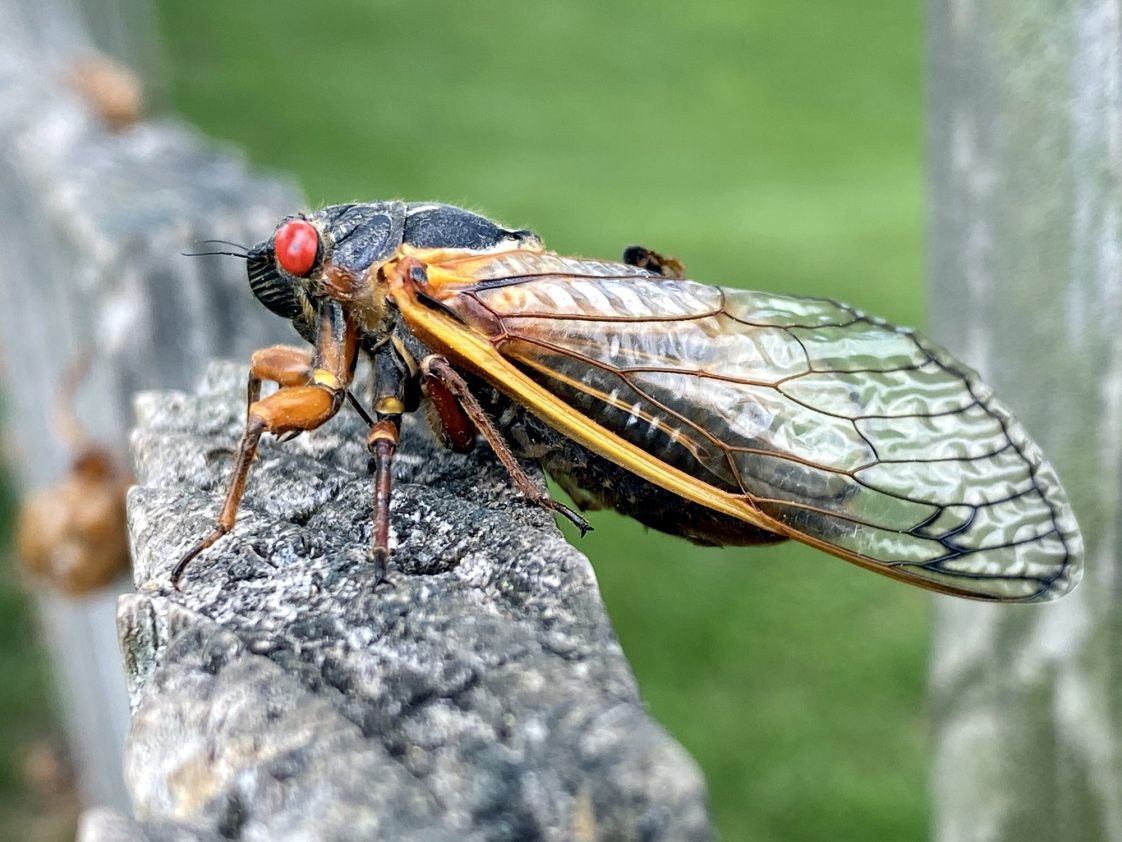
 Most people probably heard about the emergence of broods 13 and 17 of periodical cicadas in May and June 2024. This was unusual because the two broods hadn’t emerged simultaneously since 1809—in 221 years. Nevertheless, the cicadas came and are now gone. Their high-pitched buzzing sounds were heard in forests across Alabama. Other states, such as Arkansas, Georgia, Illinois, Kentucky, Mississippi, Missouri, North Carolina, South Carolina, Tennessee, and Virginia, also reported the emergence of these broods.
Male and Female Cicadas
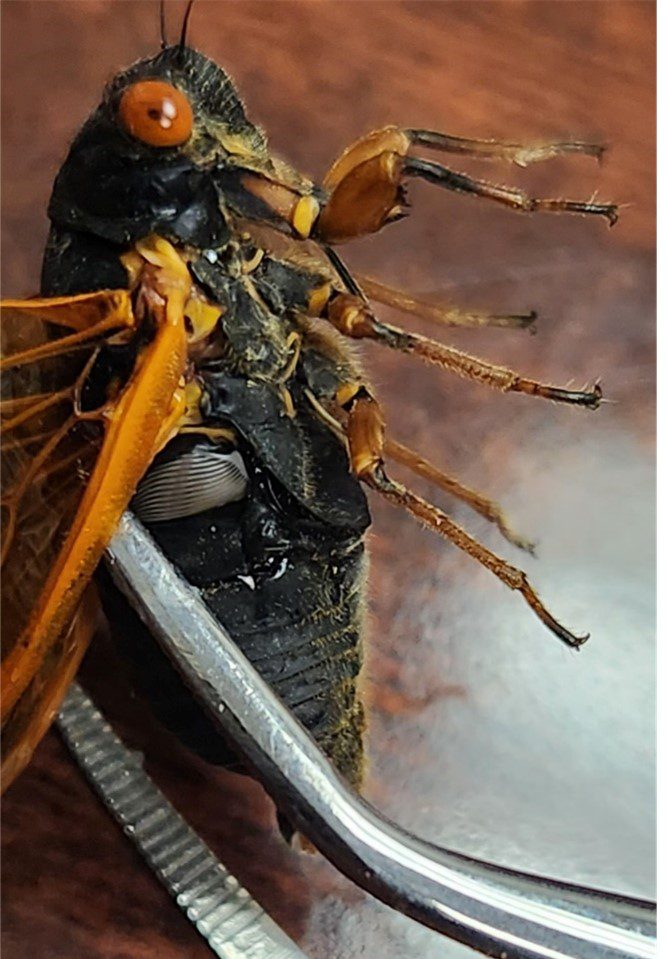
The male cicadas make noise using structures called tymbals. The tymbal is located under each wing on the thorax. The noise is echoed in tymbal when the wings are rubbed together.
After emerging, adult females will eat, mate, lay eggs, and die within a few weeks. Females use their egg-laying organ (oviposition) to cut through a thin, outer tree branch to lay their eggs. They will lay between 200 and 400 eggs in their life span of approximately four weeks. Since trillions of adult females emerge, several billions of eggs are laid. The eggs hatch into small nymphs 10 to 14 days after being laid. The nymphs will then drop to the ground to enter the soil. In the soil, the young nymphs feed on the roots of several plants. By now, most of the nymphs have left the trees and are in the soil waiting to return in another 13 or 17 years.
Plant Damage
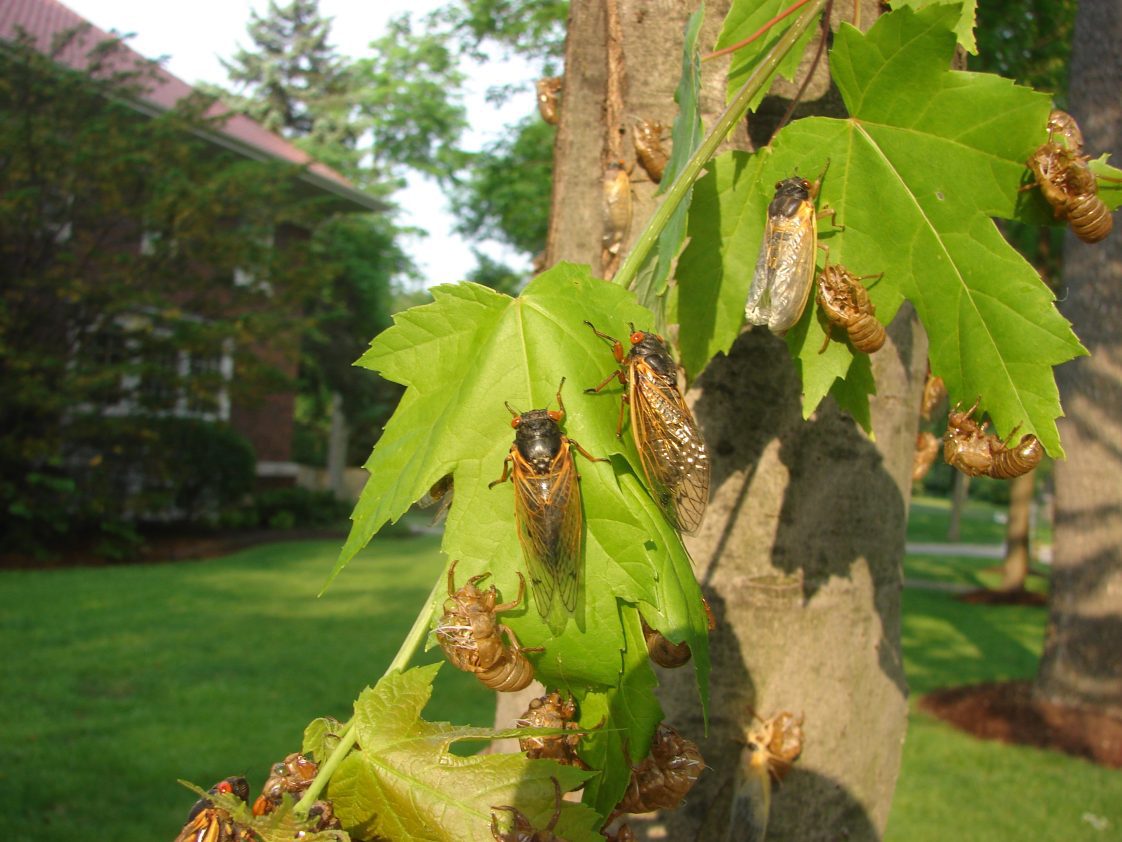
Cicadas eating tree leaves.
Estimating the number of cicadas that emerged in 2024 is difficult. However, some experts report that about 1 trillion individual cicadas emerged. Cicadas are generally harmless to humans and animals but can cause some damage primarily to plants and trees during certain stages of their lifecycle. Cicadas’ damage is minor but can be significant to young plants. Most established trees and plants can tolerate cicada feeding without long-term negative effects. However, young or stressed plants may require protection or management strategies during cicada emergences to minimize potential damage. You may encounter some residual effects of the tree damage. Typically, dying twigs and branches are signs of cicada damage.
More Information
Visit www.aces.edu for more information about pests and pest management.