
Lawn & Garden

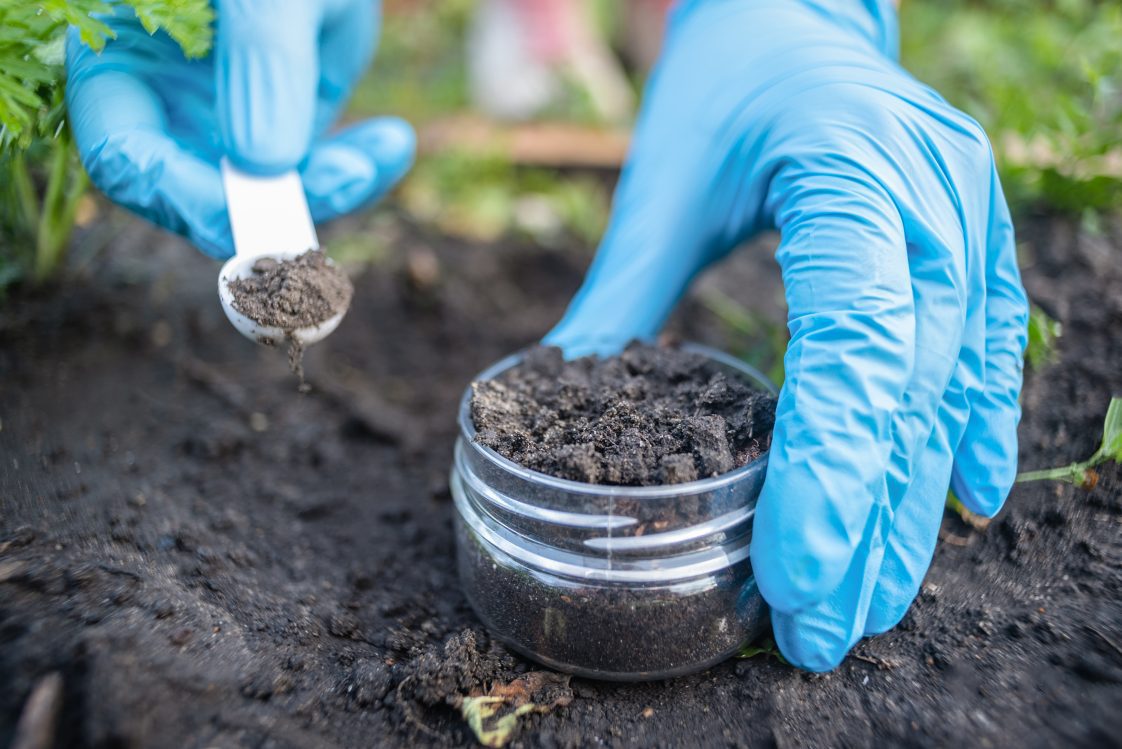
Community gardens in urban environments often face challenges, including heavy metal contamination in the soil itself. This contamination often comes in the form of lead (Pb), cadmium (Cd), or arsenic (As). There may also be signs of iron toxicity present in the soil. Heavy metal contamination generally comes from urbanization, such as industrial processes and facilities, mining operations, improper handling of electronic waste, and the use of pesticides and herbicides. Soil testing can help determine what metals exist in gardens.
Soil Testing
The Auburn University Soil, Forage, and Water Testing Laboratory offers a total elemental digestion (heavy metals) of soil samples through a strong acid digestion process. These are specialty soil tests that will give an approximate level of potential contaminants that are present in ppm (parts per million). These numbers do not always accurately reflect the ability of these minerals or toxic metals to be absorbed into plant tissue or their bioavailability. This is because not all heavy metals are in a form that can be absorbed by the plant. There is still so much to learn about heavy metals and how they interact with soil organisms and work their way up the food chain. Yet, some remediation processes can help to eliminate heavy soil metals.
Bioremediation Processes
Past soil remediation efforts (removing metals) included landfilling, digging and removing contaminated soils, soil washing, encapsulation (contain and isolate), and solidification (binding treatment). Excavation can lead to further contamination of other places and some elements become volatized (change into gas or vapor). This is a challenging situation that can be addressed using biological methods.
Bioremediation is the process of using biological systems to filter, clean, and lock up toxins by mimicking systems found in nature. These natural systems are complex and may require many species working symbiotically to remediate a contaminated site. Some of these methods of bioremediation include phytoremediation, mycoremediation, and using biochar to absorb and immobilize soil contaminants.
Phytoremediation
Phytoremediation utilizes different plant species to absorb and accumulate the specific elements that are present in the soil at toxic levels. Plants that are chosen for the task of remediation are reported to stabilize, reduce, and/or remove pollutants from soil or water. A common plant used in this way is Helianthus (sunflower). Many plants are cleaning up ecosystems without human intervention. Some species include Salix nigra, Trifolium incarnatum, and Ilex vomitoria.
In A Citizen’s Guide to Phytoremediation from the US Environmental Protection Agency, it states, “Growing and, in some cases, harvesting plants on a contaminated site as a remediation method is aesthetically pleasing, solar energy driven, passive technique that can be used to clean up sites with shallow, low to moderate levels of contamination.” Additionally, there have been multiple studies on phytoremediation and indoor air quality–houseplants are known to improve the air quality of indoor spaces.
Mycoremediation
Another method of remediation utilizes the powerful ability of mushrooms and their mycelium to absorb and digest pollutants, including heavy metals in a process called mycoremediation. There have been multiple studies, some international, that highlight a measurable decrease in heavy metals at contaminated sites after strategically placing a carbonaceous layer that is inoculated with mushroom mycelium. Like phytoremediation, specific metals are absorbed by different species of mushrooms. These metals can inhibit mushroom growth if toxins are too high in concentration, but in some cases, such as with iron and zinc, they can stimulate growth of the fungal fruiting bodies.
Biochar
Lastly, another bioremediation method of interest is using biochar to absorb and lock these toxic compounds. Biochar is produced in a high-temperature burning process with limited to no oxygen, sometimes referred to as pyrolysis. The materials used are rich in carbon, such as bamboo and woody biomass. The specific properties of biochar—including its large specific surface area, porous structure, enriched surface functional groups (microorganisms), and mineral constituents—allow it to have a high adsorption capacity. Activated biochar has showed promising results in agriculture and composting practices to increase and sustain microbial activity in the soil and increase the soil’s water-holding capacity. Biochar must be activated either by undergoing a composting process (inoculation) or by treating it with a water-soluble fertilizer to charge the organic material with nutrients or microorganisms.
Alternative Soil Remediation
An alternative to traditional soil remediation is constructing raised beds filled with topsoil and compost—an effective solution for community gardens operating under time constraints. To ensure safety, raised beds should be built using nontreated lumber, potentially incorporating repurposed materials to reduce costs. Bioremediation techniques can be integrated into these garden designs to enhance productivity within the community garden. Additionally, planting nonedible cut flowers or creating pollinator habitats not only contributes to soil restoration but also supports local biodiversity.
Conclusion
There are many ways to start the remediation process on contaminated soil. With current industrial processes and those of the past, all bioremediation methods should be considered to correct the accumulation of toxic compounds in our air, waterways, and soil. The processes of biological methods to reduce pollution and clean up polluted areas must be recognized and studied to further advance this field. The health of aquatic resources and the local environment are facing anthropocentric (man being the most important entity on Earth) conflict, as technology and industry continue in a destructive manner. It is pertinent to recognize these methods as a low cost and practical solution to remediate and clean contaminated soils.