
Landscaping

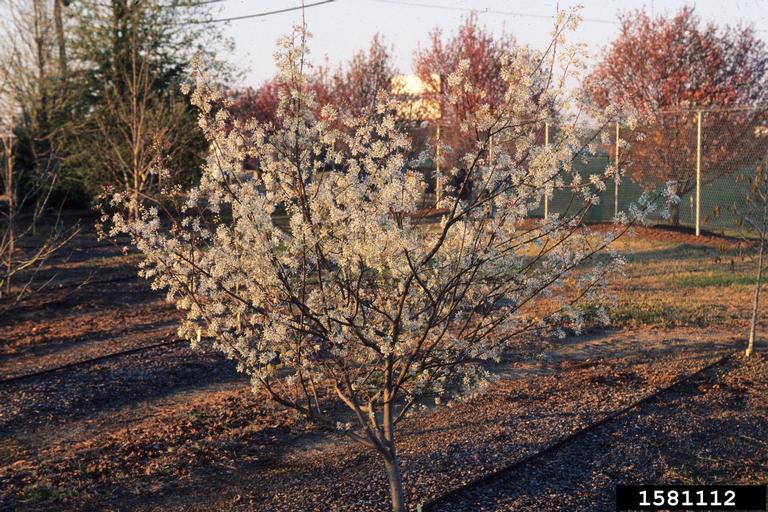
Learn why planting of ornamental invasive plants is harmful, and discover native replacements for eight of the most commonly sold invasive plants in Alabama: English ivy, nandina, Asian wisteria, callery pear, sweet autumn virgin’s bower, Asian privets, liriope, and Japanese honeysuckle. Native replacements are suggested based on similar ornamental qualities, growth habits, and landscape use.
Invasive plants are non-native plants that cause economic or ecological harm. Most introduced nonnative ornamental species are not invasive. However, approximately half of all invasive plants were intentionally introduced as ornamental plants. Many of those invasive plants are still available for purchase, but they should be avoided. They potentially spread beyond the original planting, outcompete beneficial native plants, harm biodiversity, and contribute to bird and insect decline.
Invasive species lack the ability of native plants to support specialist bees and feed caterpillars of native moths and butterflies. They also spread in the landscape to the extent that they replace beneficial native species, thereby harming biodiversity across trophic levels.
While invasive species can have some beneficial qualities (e.g., medicinal, erosion control, ornamental, and feeding or sheltering certain birds, insects, or other wildlife), planting them is ecologically harmful overall. A homeowner or landscaper may not notice a particular invasive plant spreading within a single landscape where it is planted; however, it is likely still spreading to the surrounding environment by seeds or other reproductive material transported by birds, wind, or other mechanisms.
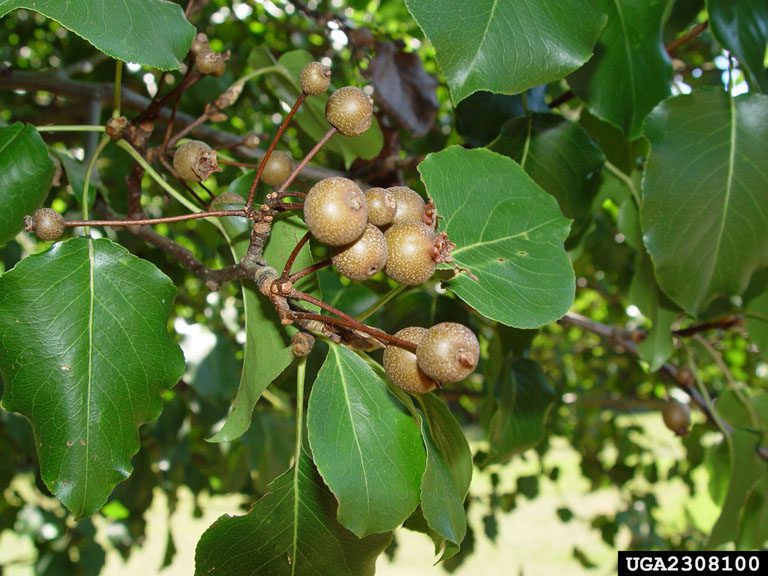
Callery pear (‘Bradford’ pear) (Pyrus calleryana Decne.) (Photo credit: Chuck Bargeron, University of Georgia, Bugwood.org)
The landscape plants featured here are listed by the Alabama Invasive Plant Council as invasive species, yet they are still commonly sold as ornamental landscape plants. Some of these plants have sterile cultivars, bred so that the plant cannot produce viable seeds and spread through the landscape (e.g., nandina ‘Firepower’). However, while some cultivars reliably remain sterile, others marketed as sterile have the potential to produce small amounts of seed or produce seed in some geographic locations and not others.
Planting natives with similar ornamental qualities to commonly used invasive plants eliminates the risk of ecological harm. Additionally, native plants in landscape settings can add to ecosystem function by serving as host plants for the larval stages of certain insects. For example, a zebra swallowtail butterfly pollinates and feeds on the nectar of many different species of flowering plants of various origins; however, its caterpillar (the larval stage of the butterfly) can eat only the leaves of pawpaw (Asimina triloba or A. parviflora) in Alabama. Native plants also provide pollen and nectar for the specialist bees that rely on them. When natives are functioning as host plants, something will be feeding on them.
Native plants have preferences for soil type, pH, moisture, and sun exposure. Even though a plant is native to the region, it may not do well in a particular landscape, especially in compacted or heavily disturbed urban soils. When making species selections it is important to assess the planting site to match native plants to the specific conditions, to consider how fast a native plant will spread within the landscape, and to determine the desired height of the plant. If a native landscape plant is improperly sited, it is more likely to develop disease or be fed on to the point of harm.
Invasive plant: English Ivy, Hedera helix
-
- Figure 1. English ivy
-
- Figure 2. Retail sales of invasive English ivy are still common.
Native replacement: crossvine, Bignonia capreolata
Common characteristic: evergreen vine
Crossvine is a native semi-evergreen vine commonly found growing up trees in Alabama woodland. It has the capacity to grow on a wall or fence and provides stunning spring blooms (figures 3 and 4). Crossvine tolerates a wide range of soil types and prefers medium to moderately wet conditions. It can be found growing in deep shade but will only flower with sufficient sunlight. It attracts hummingbirds. Peak blooms occur in April in most of Alabama. Crossvine is capable of reaching heights of 50 feet. Several cultivars are available.
Prune after flowering if needed, since blooms are produced on the previous year’s growth. There are no special germination requirements to grow from seed. Take cuttings from May to June (somewhat difficult).
-
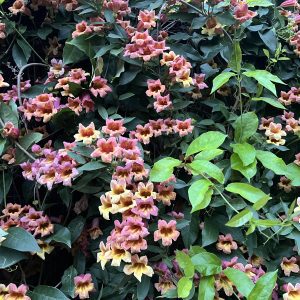
- Figure 3. Crossvine blooming in spring
-
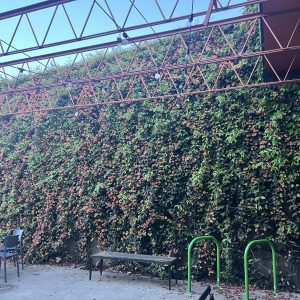
- Figure 4. Crossvine blanketing a wall
Native replacement: virgin’s bower, Clematis virginiana
Common characteristic: vigorous vine for sun or shade
Virgin’s bower is an easy-to-grow perennial vine that tolerates shade or sun and boasts an attractive autumn flower (figure 5). It will flower even in part shade. It tolerates pruning and produces blooms on current season growth, so winter or early spring pruning is possible if desired. It will grow to 20 feet long and can spread aggressively in moderate to wet soil. Virgin’s bower blooms from August to October and attracts hummingbirds. To grow from seed, sow outdoors in the fall for natural winter stratification.
Some species of clematis are non-native, and Clematis terniflora is invasive. Make sure to purchase the correct plant based on the botanical name. White leaf leather flower, Clematis glaucophylla, and netleaf leather flower, Clematis reticulata, are good native options.
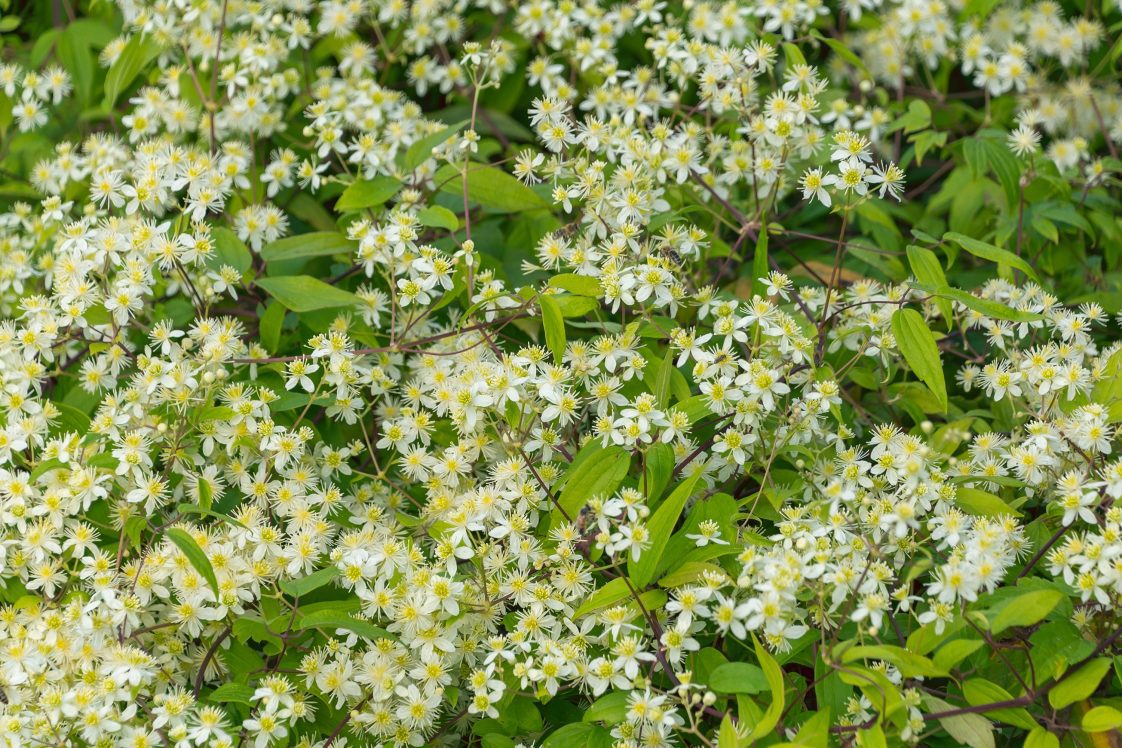
Figure 5. Blooming virgin’s bower, Clematis virginiana
Native replacement: green and gold, Chrysogonum virginiana, C. repens, and C. australe
Common characteristic: ground cover for shade areas
Green and gold is a low-growing perennial ground cover that can spread through rhizomes (figure 6). It prefers part to deep shade and rich, acidic soil with moderate moisture. Plants stay under 1 foot in height. Green and gold spreads by rhizomes to form a ground cover in its preferred conditions, but it is easily controlled. It flowers throughout the spring. Purchase and transplant green and gold, or cold stratify its seeds for 1 to 2 months prior to planting if starting your own.
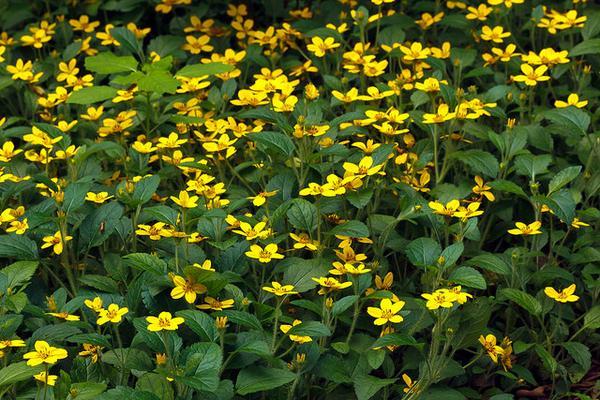
Figure 6. Green and gold used as a ground cover
Invasive plant: nandina, Nandina domestica
-
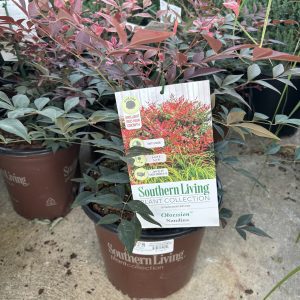
- Figure 7. Nandina is a common landscape plant.
-
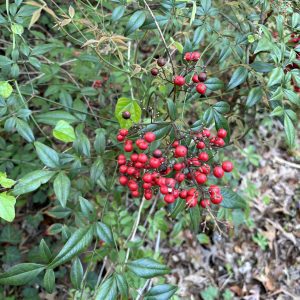
- Figure 8. Fruiting nandina
Native replacement: winterberry holly, Ilex verticillata
Common characteristic: red winter berry
Winterberry holly is a slow-growing native deciduous shrub that prefers a partly shady to full sun location (figure 9). It needs acidic soil with moderate to wet moisture. Its fall-ripening red berries provide winter interest. A male pollinizer is needed for the female plants to set berries. It grows from 3 to 15 feet in height, with dwarf cultivars available (figure 10). It tolerates pruning, with flowers appearing on new growth. The berries are a winter food source for a number of birds and mammals.
-
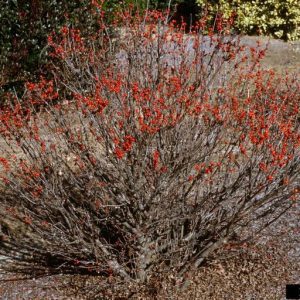
- Figure 9. Red winter berries on winterberry holly (Photo credit: John Ruter, University of Georgia, Bugwood.org)
-
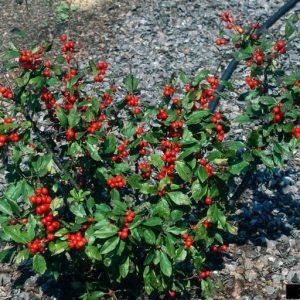
- Figure 10. Winterberry holly cultivar (Photo credit: John Ruter, University of Georgia, Bugwood.org)
Native replacement: red chokeberry, Aronia arbutifolia
Common characteristic: red winter berry
Red chokeberry occurs statewide, preferring moist to wet habitats and tolerating full sun and part shade (figure 11). Mulch in dry locations to retain moisture. Red berries provide winter interest in the landscape (figure 12). Red chokeberry also has attractive autumn foliage. The plant can spread through suckers to form colonies. It typically reaches 6 to 10 feet in height. Propagate through softwood cuttings or germinate seed after a 90-day stratification period.
-
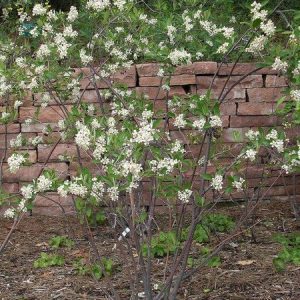
- Figure 11. Flowering red chokeberry
-
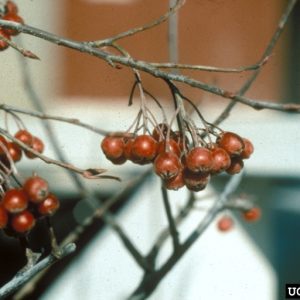
- Figure 12. Red winter berries on red chokeberry (Photo credit: Richard Webb, Bugwood.org)
Native replacement: Florida anise, Illicium floridanum
Common characteristic: low-maintenance evergreen shrub
Florida anise is found naturally in the Alabama coastal plain along streams and in moist woods in partial shade. As a landscape plant, it provides an attractive flower, evergreen foliage, and pest resistance (figures 13 and 14). It grows from 6 to 10 feet in height. Blooms occur March to April. Propagate through seed, cuttings, or division. Although it is in the same genus as the spice star anise (Illicium verum), its fruit is toxic and should not be consumed.
-
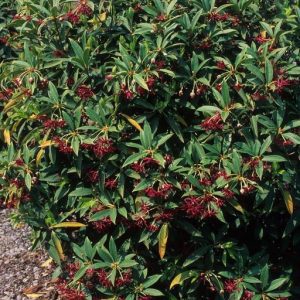
- Figure 13. Florida anise (Photo credit: John Ruter, University of Georgia, Bugwood.org)
-
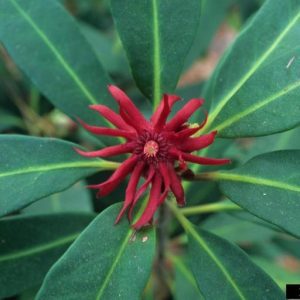
- Figure 14. Florida anise flower (Photo credit: John Ruter, University of Georgia, Bugwood.org)
Native replacement: witch-alder, Fothergilla major, F. gardenia, and F. milleri
Common characteristic: low-maintenance, attractive small shrub
Witch-alder rarely occurs in natural populations but is a common native landscape shrub. Fothergilla major can reach 12 feet in height, but witch-alder sold through nurseries (often a hybrid of the above species) stays smaller. Witch-alder is an adaptable shrub with attractive, upright white flowers (figure 15). It prefers acidic soil and part shade to full sun. It will spread slowly by suckers to form a dense colony. Bloom time is March to April in Alabama. Fothergilla major occurs naturally on rocky slopes in north Alabama, while Fothergilla milleri occurs in wet soils in south Alabama.
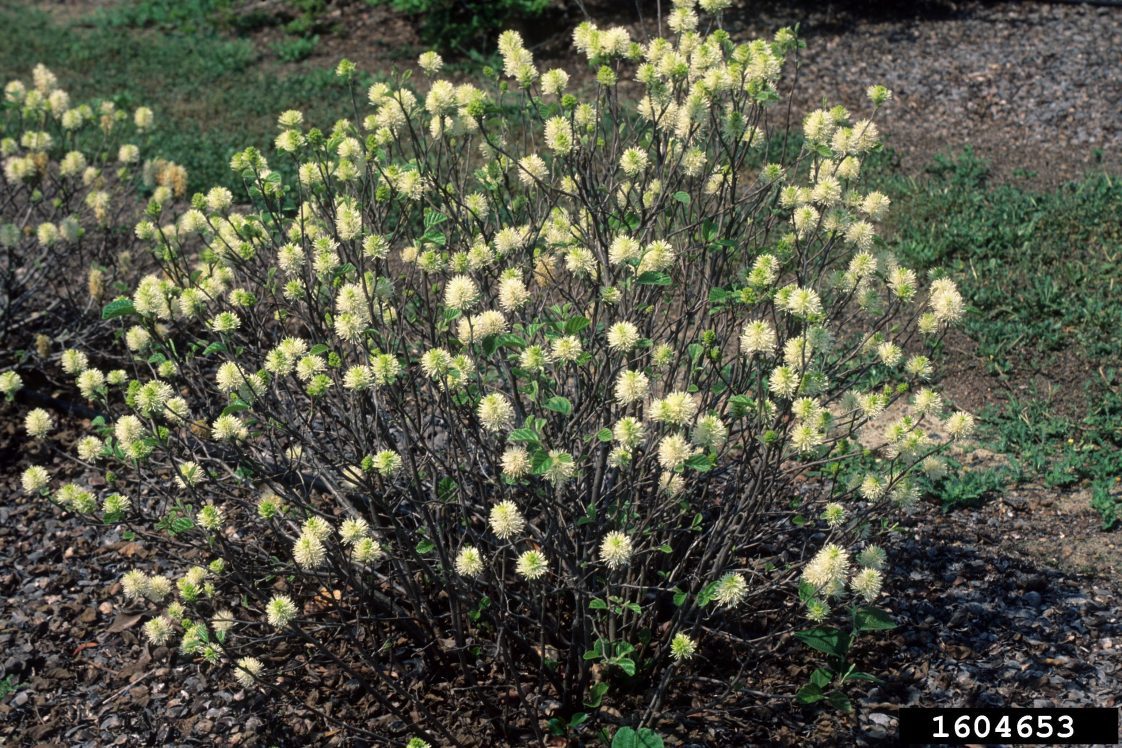
Figure 15. Witch-alder (Photo credit: John Ruter, University of Georgia, Bugwood.org)
Invasive plant: Wisteria, Wisteria sinensis
-
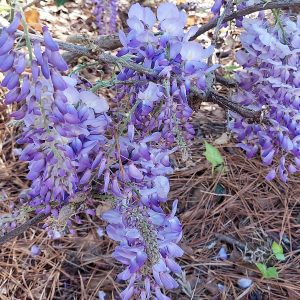
- Figure 16. Invasive wisteria blooms
-
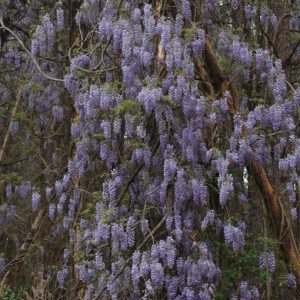
- Figure 17. Invasive wisteria smothering trees (Photo credit: Chris Evans, University of Illinois, Bugwood.org)
Native replacement: American wisteria, Wisteria frutescens
Common characteristic: vine with showy purple flowers
Invasive wisteria species from Asia (Wisteria sinensis and Wisteria floribunda) and their hybrids easily overtake native trees and landscapes. Fortunately, the native American wisteria offers many of the same ornamental features, though its inflorescence is smaller and it blooms later in the spring (figure 18). It prefers wet soils and flowers best in full sun, though it tolerates some shade. American wisteria can grow to 40 feet in length, but is usually much shorter and nowhere near as aggressive as its invasive counterparts. Grow on a trellis in rich, consistently moist soil (figure 19). American wisteria is a host plant for the silver-spotted skipper butterfly. It is harder to source than its invasive counterparts, so buy based on the botanical name from a reputable native plant supplier.
-
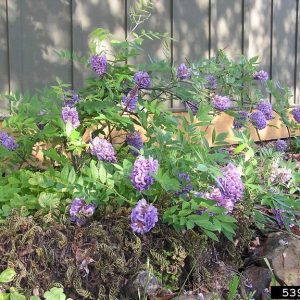
- Figure 18. Young American wisteria (Photo credit: Gena Todia, Wetland Resources Environmental Consulting, Bugwood.org)
-
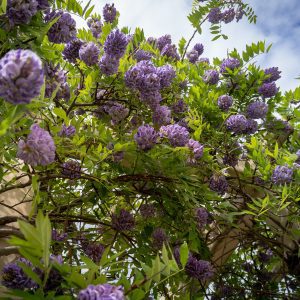
- Figure 19. American wisteria growing along a wall
Invasive plant: callery pear, Pyrus calleryana
-
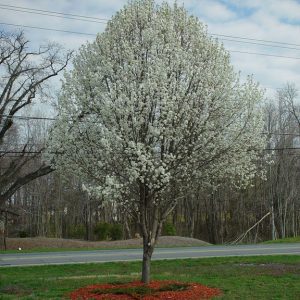
- Figure 20. ‘Bradford’ callery pear is a common landscape tree. (Photo credit: Dan Tenaglia, Missouriplants.com, Bugwood.org)
-
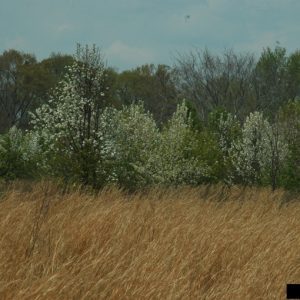
- Figure 21. Invasive callery pear blooming along field edges is a common sight. (Photo credit: David J. Moorhead, University of Georgia, Bugwood.org)
-
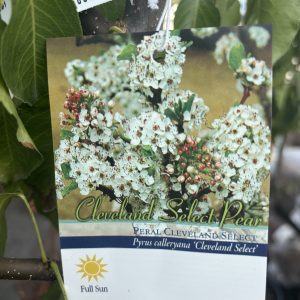
- Figure 22. Callery pear is commonly sold in nurseries.
Native replacement: serviceberry, Amelanchier arborea, and Amelanchier canadensis
Common characteristic: bountiful white spring flowers
Serviceberry is a small native tree with numerous spring blooms that tolerates full sun and part shade locations. It tolerates a wide variety of soil types and conditions. The blooms and subsequent berries provide food for wildlife. It tends to grow as a multi-stemmed small tree or large shrub (figures 23 and 24). Serviceberry can sucker from the roots and is susceptible to rose family diseases such as cedar-apple rust.
-
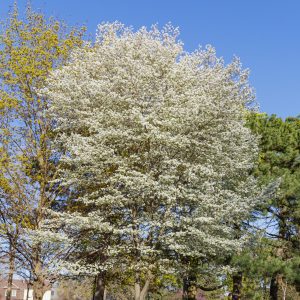
- Figure 23. Serviceberry (Amelanchier canadensis)
-
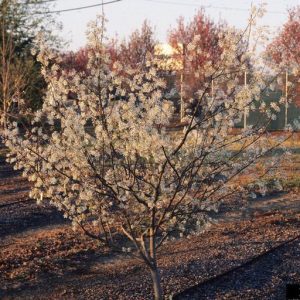
- Figure 24. Downy serviceberry, Amelanchier arborea (Photo credit: John Ruter, University of Georgia, Bugwood.org)
Native replacement: native plums, Prunus americana, P. mexicana, and P. angustifolia
Common characteristic: bountiful spring white flowers, small fruit for wildlife
American plum (Prunus americana) is a small native tree with a history of successful use as a landscape specimen, providing compact form, edible fruit, and showy white spring flowers (figure 25). It can grow as a single-stemmed small tree, but may produce root suckers. Chickasaw plum (P. angustifolia) is more commonly found naturally in Alabama and provides many of the same benefits, though it has a strong tendency to form thickets through root suckering (figure 26). It is often found in sandy soils. Mexican plum (P. Mexicana) has a larger tree form. Native plums can be susceptible to common Prunus pests, such as plum curculio, black knot, and brown rot. There is also wide genetic variation in the quality of their fruit. They are host plants for many butterflies, including the coral hairstreak, eastern tiger swallowtail, spring azure, viceroy, and red-spotted purple. Overall, they are tough, resilient plants that are highly adapted to Alabama conditions.
-
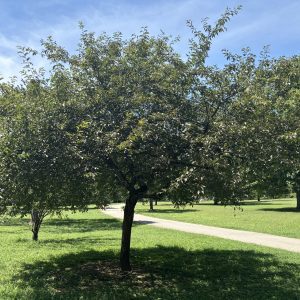
- Figure 25. American plum with summer foliage
-
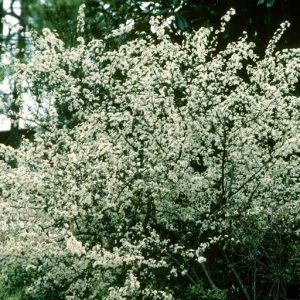
- Figure 26. Chickasaw plum with spring blooms (Photo credit: John Ruter, University of Georgia, Bugwood.org)
Native replacement: southern crabapple, Malus angustifolia, and sweet crabapple, Malus coronaria
Common characteristic: bountiful spring white flowers, small fruit for wildlife
Southern crabapple is a small native tree with attractive white spring blooms and small edible fruit (figure 27). It grows from 20 to 30 feet in height and can sprout from the roots. Sweet crabapple is more likely to be found in Alabama’s mountains (figure 28). Some plants will be susceptible to apple diseases, such as fire blight and cedar-apple rust.
-
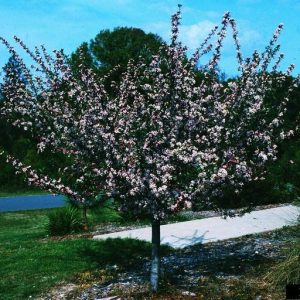
- Figure 27. Southern crabapple (Photo credit: John Ruter, University of Georgia, Bugwood.org)
-
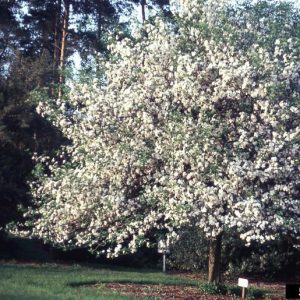
- Figure 28. Sweet crabapple (Photo credit: T. Davis Sydnor, The Ohio State University, Bugwood.org)
Native replacement: native hawthorns, such as Washington hawthorn, Crataegus phaenopyrum, and Mayhaw, Crataegus aestivalis
Common characteristic: attractive white spring flowers, vibrant fall color
Washington hawthorn is a small tree that tolerates urban environments, heat, and a wide range of soils (figure 29). It is one of many native hawthorns (not all hawthorns are native). Its bright red fruits are also eye catching. Washington hawthorns grow 25 to 30 feet tall and have thorns. Mayhaw is a small tree or shrub, also with attractive white flowers, with edible fruit (figure 30). It is naturally found in Alabama’s coastal plain in wet woods or swamps. It can tolerate a broad range of conditions in the home landscape. It is the host plant for butterflies that include the gray hairstreak, red-spotted purple, and viceroy.
-
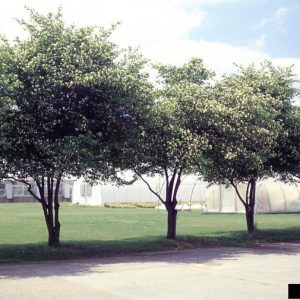
- Figure 29. Washington hawthorn (Photo credit: T. Davis Sydnor, The Ohio State University, Bugwood.org)
-
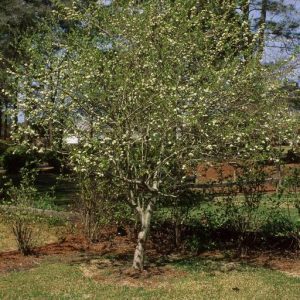
- Figure 30. Mayhaw (Photo credit: John Ruter, University of Georgia, Bugwood.org)
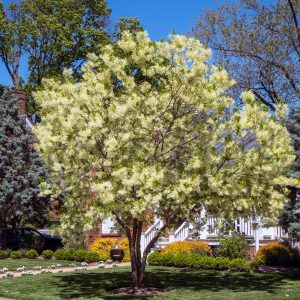
Native replacement: white fringetree, Chionanthus virginicus
Common characteristic: white flowering tree
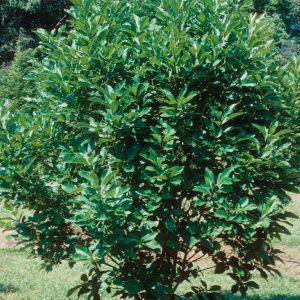
White fringetree, also known as grancy greybeard, is a small native tree with showy white spring flowers (figures 31 and 32). It grows 12 to 30 feet in height and tolerates a wide range of soils. White fringetrees will grow well in partial shade but will flower most impressively in full sun. It blooms in April in Alabama, where it is native throughout the entire state. Seeds require 2 years to germinate. It is very difficult to root cuttings.
-
- Figure 31. Flowering white fringetree
-
- Figure 32. White fringetree foliage (Photo credit: John Ruter, University of Georgia, Bugwood.org)
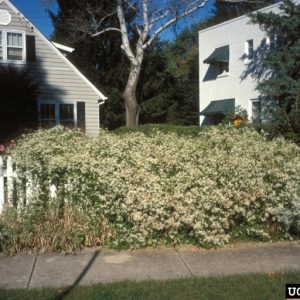
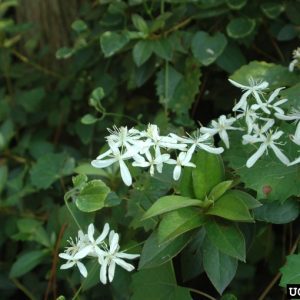
Invasive plant: sweet autumn virgin’s bower, Clematis terniflora
-
- Figure 33. Invasive sweet autumn virgin’s bower (Photo credit: Richard Webb, Bugwood.org)
-
- Figure 34. Flower of invasive sweet autumn virgin’s bower (Photo credit: Chris Evans, University of Illinois, Bugwood.org)
Native replacement: virgin’s bower, Clematis virginiana
Common characteristic: vigorous vine for shade with attractive flower
Virgin’s bower is an easy-to-grow vine that tolerates shade or sun and boasts an attractive autumn flower. Native virgin’s bower species include Clematis virginiana (figure 35), C. crispa (figure 36), C. glaucophylla, and C. reticulata. Consider these also as a replacement for English ivy. Some species of Clematis are non-native, and Clematis terniflora is invasive. Be sure to purchase the correct plant based on the botanical name.
-

- Figure 35. Native virgin’s bower, Clematis virginiana (Photo credit: John D. Byrd, Mississippi State University, Bugwood.org)
-
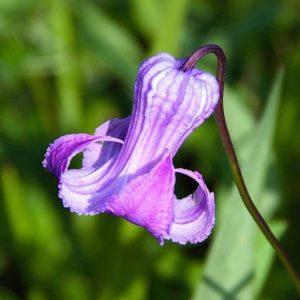
- Figure 36. Flower of swamp leather flower, Clematis crispa
Native replacement: coral honeysuckle, Lonicera sempervirens
Common characteristic: climbing vine with showy flowers
Coral honeysuckle (also called trumpet honeysuckle) is a native evergreen honeysuckle that grows up to 20 feet tall (figure 37). Plant it to climb a fence or arbor (figure 38). Coral honeysuckle is one of the showiest, most reliable native vines for the home landscape, adapting to a wide range of soils. It attracts hummingbirds. Coral honeysuckle blooms on the previous year’s growth, so prune after flowering is done in the summer. It roots easily from softwood cuttings. It can also be propagated by layering or seeding after a 3-month stratification period. Do not confuse this native honeysuckle with the more aggressive and invasive Japanese honeysuckle, Lonicera japonica.
-
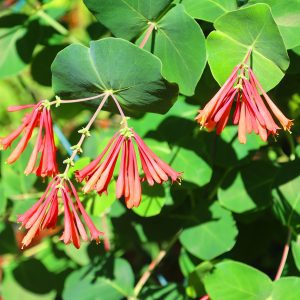
- Figure 37. Coral honeysuckle flowers
-
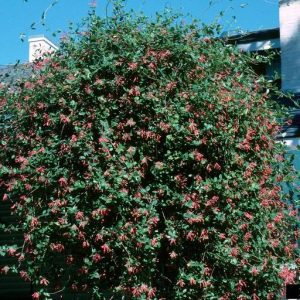
- Figure 38. Coral honeysuckle form (Photo credit: John Ruter, University of Georgia, Bugwood.org)
Invasive plant: Chinese privet, Ligustrum sinense, Japanese privet, Ligustrum japonicum, and glossy privet, Ligustrum lucidum
-
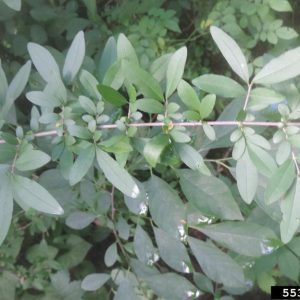
- Figure 39. Invasive Chinese privet (Photo credit: Richard Gardner, Bugwood.org)
-
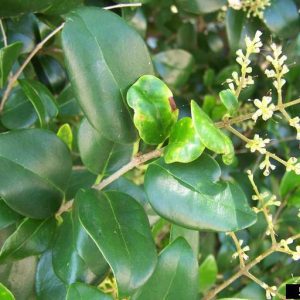
- Figure 40. Invasive Japanese privet (Photo credit: Karan A. Rawlins, University of Georgia, Bugwood.org)
-
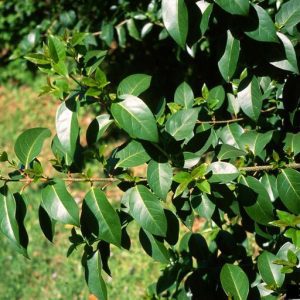
- Figure 41. Invasive glossy privet (Photo credit: John Ruter, University of Georgia, Bugwood.org)
Native replacement: native viburnums, including possumhaw viburnum, Viburnum nudum, and arrowwood viburnum, Viburnum dentatum
Common characteristic: flowering shrub for hedges
Possumhaw viburnum (figures 42 and 43) and arrowwood viburnum (figure 44) grow from 5 to 10 feet tall and provide attractive white spring flowers. Flowers appear on last season’s growth (keep this in mind if pruning). Arrowwood viburnum is native to Georgia and Tennessee, but natural populations in Alabama with similar characteristics are likely V. alabamense, V. scabrellum, or V. rafinesqueanum. Native viburnums tolerate a wide range of sun exposure. They prefer acidic, moist soil to wet sites. Plant more than one genetically distinct plant to produce fruit.
-

- Figure 42. Viburnum nudum ‘Winterthur’
-
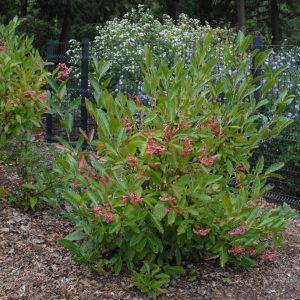
- Figure 43. Viburnum nudum ‘Brandywine’
-
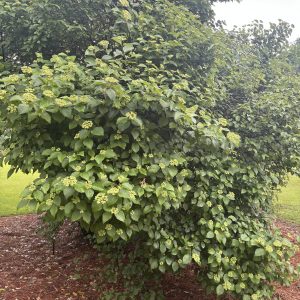
- Figure 44. Arrowwood viburnum
Native replacement: yaupon holly, Ilex vomitoria
Common characteristic: evergreen shrub for hedges
Yaupon holly is a native evergreen shrub, naturally occurring in Alabama’s coastal plain (figures 45 and 46). It can grow to 15 feet tall, but many shorter cultivars are available (figure 47). The leaves contain caffeine and can be brewed as tea. There are separate male and female plants, with only females producing fruit (with a male pollinizer). It is naturally found in dry, sandy forests and tolerates a wide range of light exposure. It withstands heavy pruning (figure 47). Plant it en masse as a screen, foundation planting, or windbreak.
-
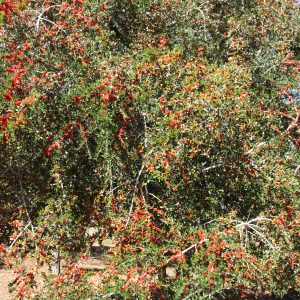
- Figure 45. Wild-type yaupon holly
-
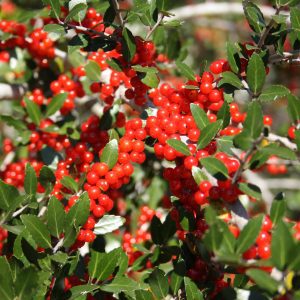
- Figure 46. Yaupon holly berries
-
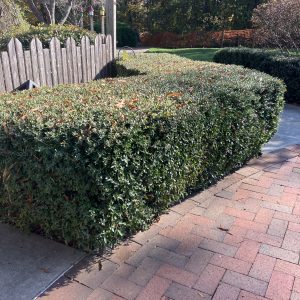
- Figure 47. Dwarf yaupon holly
Native replacement: wax myrtle, Morella cerifera
Common characteristic: evergreen shrub for hedges
Wax myrtle is a native evergreen shrub or small tree most commonly found in natural populations in south Alabama (figure 48). Wax myrtle is dioecious: male flowers and female flowers are produced on separate plants, with only female plants producing fruit for birds. It is found in moist to wet sites, but is widely planted as a suburban or urban ornamental in a range of conditions. Wax myrtle can grow to 25 feet in height but is usually much shorter. It tolerates pruning, but fruit appears on the previous season’s growth. It is a good choice for a privacy hedge throughout the state.
-
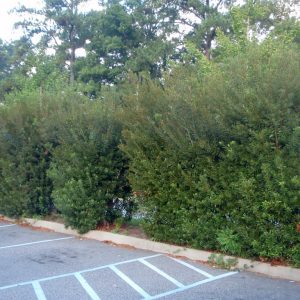
- Figure 48. Hedge of southern wax myrtle
-
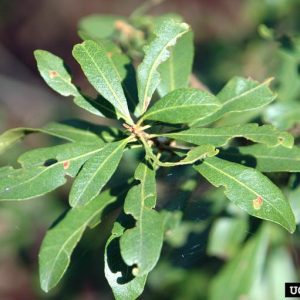
- Figure 49. Southern wax myrtle foliage (Photo credit: Chris Evans, University of Illinois, Bugwood.org)
Native replacement: Virginia sweetspire, Itea virginica
Common characteristic: shrub with bountiful spring white flowers
Virginia sweetspire is a native deciduous shrub with leaves that often persist into December (figure 50). It is found naturally along stream banks but can grow in drier conditions. Several cultivars are available, growing to various heights. It has attractive spring flowers produced along racemes. Virginia sweetspire can spread through suckers and is often planted as a hedge (figure 51). Flowers are produced on the previous season’s growth, so prune immediately after blooms are done, if desired. It tolerates a wide range of sun exposure, but blooms are best in full sun. Virginia sweetspire can grow from 3 to 9 feet tall, but most cultivars are on the shorter end of that range.
-
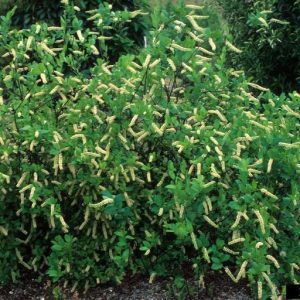
- Figure 50. Virginia sweetspire (Photo credit: John Ruter, University of Georgia, Bugwood.org)
-
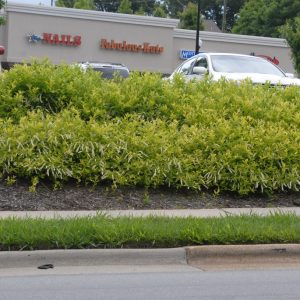
- Figure 51. Hedge of Virginia sweetspire
Invasive plant: thorny olive, Eleagnus pungens, and autumn olive, Eleagnus umbellata
-

- Figure 52. Invasive thorny olive
-
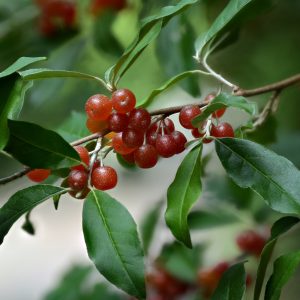
- Figure 53. Invasive autumn olive
Native replacements: Same native replacements as recommended for privets
Invasive plant: creeping liriope or monkey grass, Liriope spicata and Liriope muscari
Liriope species, known as monkey grass, creeping liriope, or lilyturf, are widely available ornamental grasses native to east Asia (figures 54 and 55). These species spread by rhizomes, corms, and seeds that may remain viable for 10 years or longer. While their ideal growing condition is in moist shade, the plants tolerate a wide range of conditions and have invasive tendencies, particularly in the southeastern United States. Liriope is not listed as an invasive plant in Alabama at the time of publication, but it is a listed species of concern by invasive plant councils in Georgia and Tennessee.
-
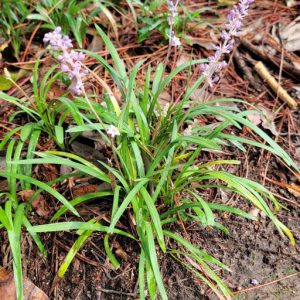
- Figure 54. Creeping lilyturf, Liriope spicata (Photo credit: Rebekah D. Wallace, University of Georgia, Bugwood.org)
-
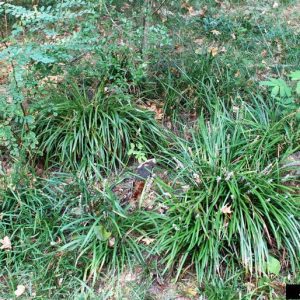
- Figure 55. Monkeygrass, Liriope muscari (Photo credit: James H. Miller, USDA Forest Service, Bugwood.org)
Native replacement: native sedges, including Cherokee sedge, Carex cherokeensis, plantainleaf sedge, Carex plantaginea, and blue wood sedge, Carex flaccosperma
Common characteristic: shade tolerant, low-growing evergreen, tuft-like appearance
Cherokee sedge (Carex cherokeensis) is found naturally throughout the state in moist forests (figure 56). It is a vigorous, adaptable plant that can handle a wide range of light and soil conditions in the home landscape. This evergreen sedge will fill in through seed and rhizome over time, especially in moist soil. Consider it along walkways, for mass plantings, as front borders, and as a lawn replacement.
Plantainleaf sedge (Carex plantaginea) is an evergreen grasslike perennial plant that grows 1 to 2 feet tall with leaf blades up to 1 inch across (figure 57). It is naturally found in northeast Alabama. It requires deep shade and thrives in moist, rich soils. The plant can be divided from established clumps. It can reseed to form colonies in its desired conditions and is an appropriate ground cover for moist, deeply shaded sites in north Alabama.
Blue wood sedge (Carex flaccosperma) is an evergreen sedge with wide, attractive leaves (figure 58). It can be found naturally across the state, especially in the northern half of Alabama. It prefers partial shade and moist to wet (but draining) soils.
Carex species can vary widely in their environmental preferences yet are difficult to distinguish. Research the soil and shade preferences of any sedge you are considering and purchase from a reputable supplier for best results.
-
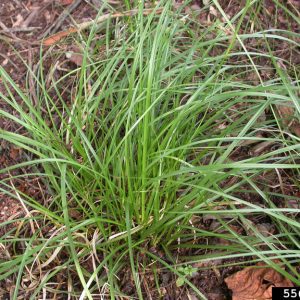
- Figure 56. Cherokee sedge, Carex cherokeensis (Photo credit: Shaun Winterton, Aquarium and Pond Plants of the World, Edition 3, USDA Aphis PPQ, Bugwood.org)
-
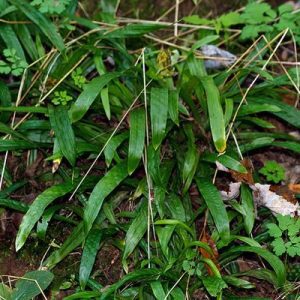
- Figure 57. Plantainleaf sedge, Carex plantaginea
-

- Figure 58. Blue wood sedge, Carex flaccosperma (Photo credit: Charles T. Bryson, USDA Agricultural Research Service, Bugwood.org)
Native replacement: blue-eyed grass, Sisyrinchium angustifolium
Common characteristic: low-growing, grasslike plant with an attractive flower
This bright blue blooming perennial forms dense clumps and grows up to 18 inches tall (figure 59). It does well in full sun to part shade and can tolerate poor soil but requires moisture. This native plant can be grown in any area of the state and supports various native insects. It can be used as a ground cover, border plant, or rain garden specimen. It becomes dormant in the winter, and clumps can be divided for propagation. It is capable of self-seeding in the home landscape; mow shortly after bloom to avoid this. Once spring flowering is over, it could be mistaken for a tall lawn grass. Cold-stratify seeds for 2 months prior to planting if starting your own from seed.
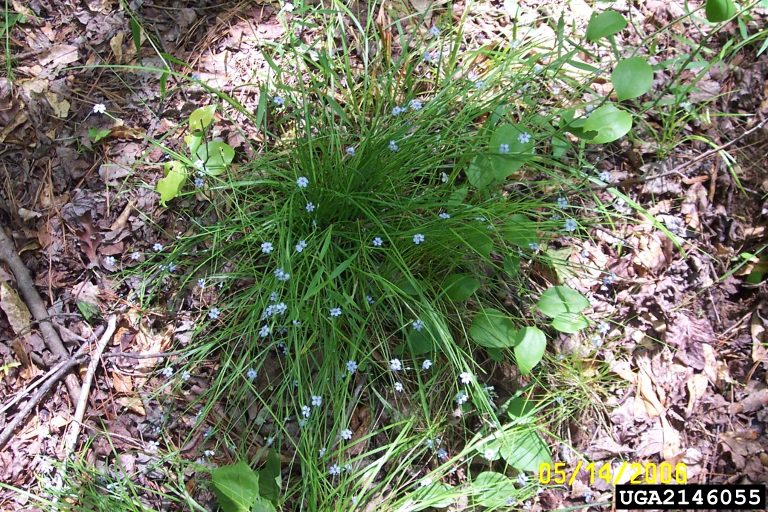
Figure 59. Blue-eyed grass (Photo credit: David Stephens, Bugwood.org)
Native replacement: dwarf crested iris, Iris cristata
Common characteristic: clump-forming, attractive flower, ground cover
Adored for its beautiful spring blooms and 4-to-9-inch bright green foliage, dwarf crested iris can serve as a ground cover in shade or part sun conditions (figure 60). Although it prefers rich, well-drained soil, it can tolerate drier shaded spots. In moister soil, it will spread to form a ground cover. It is found naturally in many parts of the state, but especially in north Alabama. This plant has high tolerance to deer damage but can be poisonous to humans and pets.
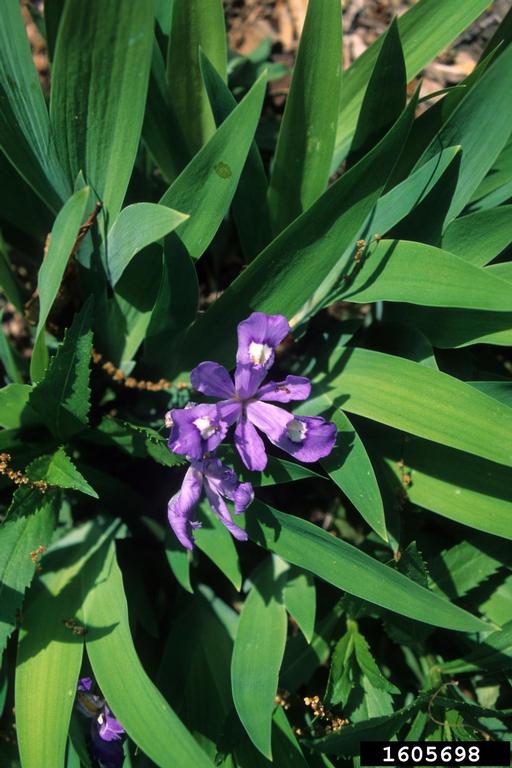
Figure 60. Dwarf crested iris (Photo credit: John Ruter, University of Georgia, Bugwood.org)
Invasive plant: Japanese honeysuckle, Lonicera japonica
Japanese honeysuckle has long been admired in landscapes for its beauty, but it is also highly invasive and can form dense vining mats that choke native vegetation (figure 61). Thankfully, there are many beautiful native vining plants to choose as an alternative.
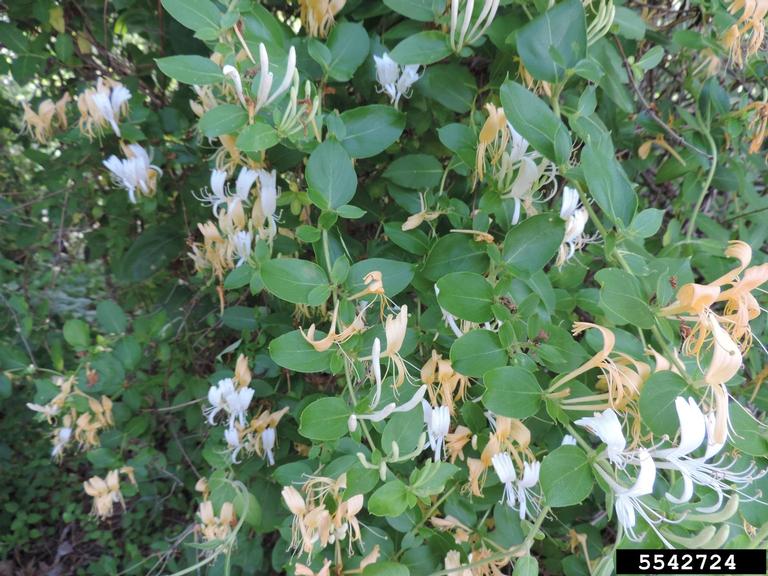
Figure 61. Japanese honeysuckle (Photo credit: Richard Gardner, Bugwood.org)
Native replacement: coral honeysuckle, Lonicera sempervirens
Common characteristic: climbing vine with showy flowers
Coral honeysuckle (figure 62) is a beautiful alternative vine to the invasive Japanese honeysuckle. Its bright pink flowers attract hummingbirds and other pollinators. It prefers full sun or partial shade and moist soils. However, it is highly flammable and should not be planted close to the home. It is also a suggested replacement for sweet autumn virgin’s bower.
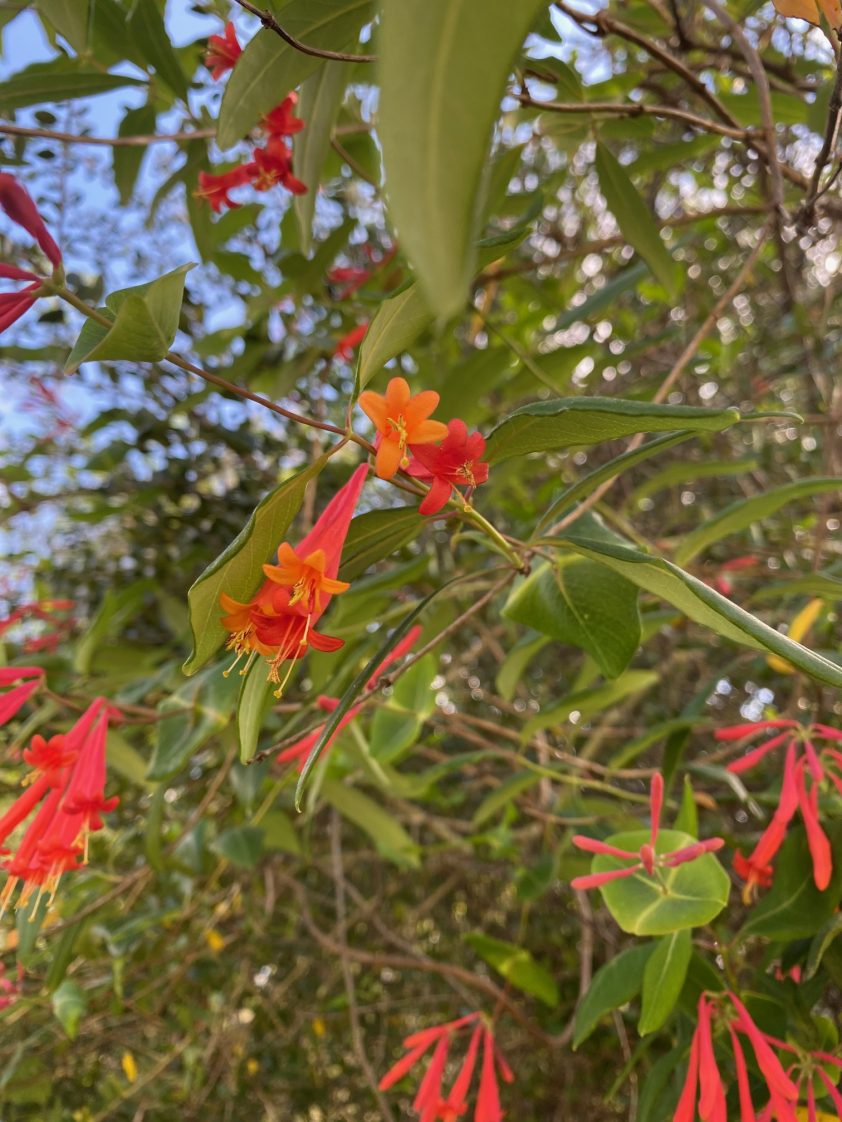
Figure 62. Coral honeysuckle
Native replacement: Carolina jessamine, Gelsemium sempervirens
Common characteristic: vine with attractive spring flowers
Carolina jessamine is an evergreen vine with sweet-scented yellow flowers, native to all of Alabama (figure 63). It prefers full sun and moist soil but is adaptable to some shade and other soil conditions. Carolina jessamine grows 12 to 30 feet in height. It is commonly planted as an ornamental on trellises or arbors, and cultivars are available. It attracts pollinators but is highly flammable and not recommended for plantings directly adjacent to a home. This plant is highly toxic.
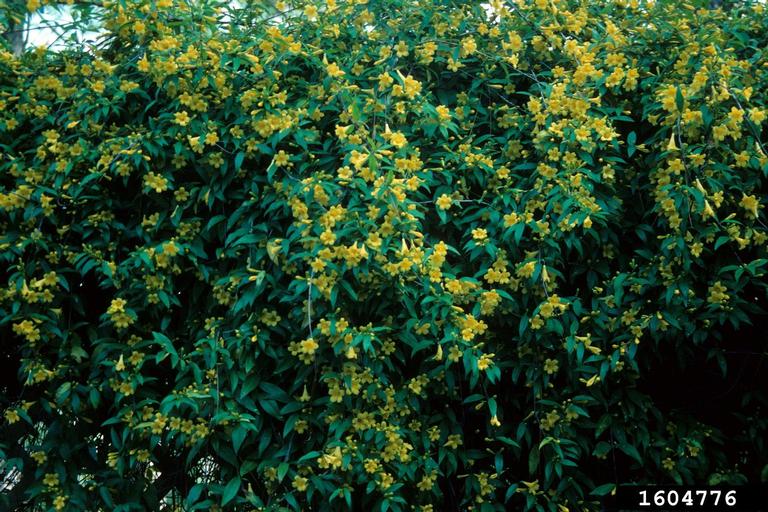
Figure 63. Carolina jessamine (Photo credit: John Ruter, University of Georgia, Bugwood.org)
Native replacement: crossvine, Bignonia capreolata
Common characteristic: vine with attractive spring bloom
For a striking burst of spring color, crossvine is a good native option that grows well in a variety of sun and soil conditions (figure 64). However, it is extremely flammable and should not be planted directly adjacent to a flammable building. It is also a suggested replacement for English ivy.
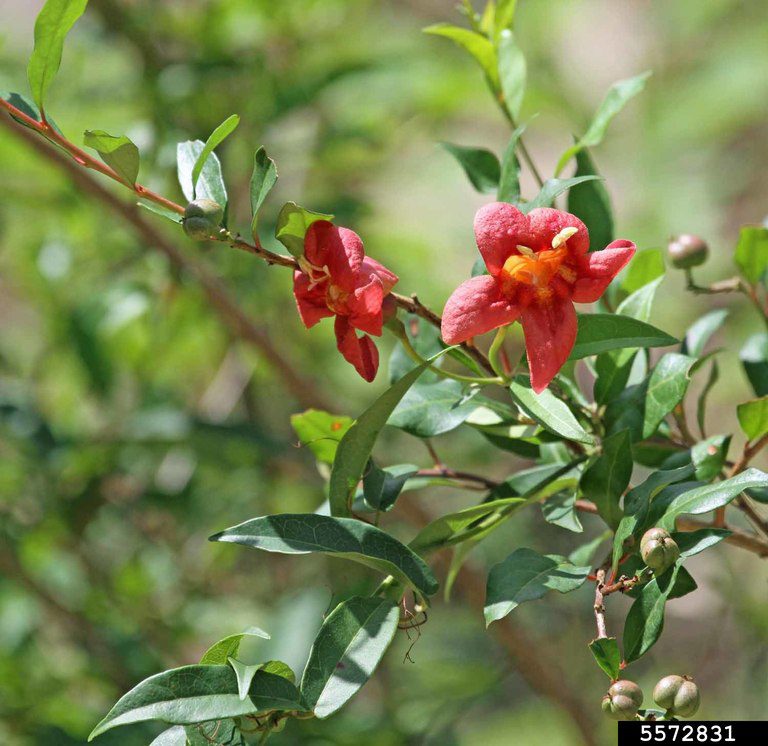
Figure 64. Crossvine (Photo credit: James R. Holland, Bugwood.org)
References
- Alabama Invasive Plant Council. Center for Invasive Species and Ecosystem Health. Accessed April 2025.
- Beaury, E, Patrick M, Bradley B. 2021. Invaders for sale: the ongoing spread of invasive species by the plant trade industry. Frontiers in Ecology and the Environment, 19(10): 550–556.
- iNaturalist. Accessed 2025.
- Invasive Plants. Tennessee Invasive Plant Council. Accessed April 2025.
- Keener BR, Diamond AR, Barger TW, Davenport LJ, Davison PG, Ginzbarg SL, Hansen CJ, Spaulding DD, Triplett JK, and Woods W. 2025. Alabama Plant Atlas. [SM Landry and KN Campbell (original application development), Florida Center for Community Design and Research. University of South Florida]. University of West Alabama, Livingston, Alabama.
- List of Invasive Species in Georgia. Georgia Invasive Species Council. Accessed April 2025.
- Mallot G, Pantel JH, and Romanuk TN. 2017. The effects of invasive species on the decline in species richness: a global meta-analysis. In: Advances in ecological research 56:61–83.
- Niemiera A and Von Holle B. 2009. Invasive plant species and the ornamental horticulture industry. In: Management of invasive weeds 167–187.
- North Carolina Extension Gardener Plant Toolbox. NC Cooperative Extension. Accessed 2025.
- Rycyna J, Wilson S, Deng Z, Iannone B, and Knox G. 2024. Landscape and female fertility evaluation of seven heavenly bamboo cultivars as potential non-invasive alternatives to the wildtype. PLOS One 19(9): e0310246.
- Tallamy D. 2007. Bringing nature home. New York, NY: Timber Press.
- Tennessee Smart Yards. University of Tennessee. Accessed 2025.
- Weakley, AS, and Southeastern Flora Team. 2025. Flora of the southeastern United States Web App. University of North Carolina Herbarium, North Carolina Botanical Garden, Chapel Hill, USA.
 Holt Akers-Campbell, Extension Agent, ACES-AFNR-Field, and Kerry Steedley, Extension Agent, ACES-AFNR-Field
New August 2025, Native Replacements for Commonly Sold Invasive Plants, ANR-3169