
Home & Family


Children who sleep well tend to have better mental and physical health, do better in school, and have fewer behavior problems. It is no wonder that sleep has been called the best medicine.
Children require physical safety and comfort, a calm mind and body, the ability to self-soothe, and a consistent schedule to have restful sleep. When children do not have these core things, they can develop sleep problems. Bedtime resistance, nighttime wakings, and separation anxiety are common and can be difficult for children and parents. There is no onesize- fits-all approach to address these sleep problems. However, bedtime routines can be one of the best ways to support children’s sleep.
A bedtime routine refers to activities performed regularly with at least one child and one adult one hour before lights out. Bedtime routine activities fall into four categories: hygiene, nutrition, communication (e.g., reading), and physical contact. Engaging in these activities every day trains the body and mind to know that it is time to sleep. The four activity categories in a bedtime routine are discussed here in further detail.
Hygiene
Hygiene activities can include bathing, washing one’s face, applying hair care (e.g., hair oiling), and brushing teeth.
Following are ways that hygiene supports sleep:
- Physical health and dental problems that negatively impact sleep may be avoided.
- Bathing can help to regulate body temperature, which is necessary for sleep to start.
Nutrition
Nutrition activities can include bottle/breastfeeding, eating a light snack, and drinking a warm beverage. If included in a bedtime routine, nutrition activities should be performed first.
 Following are ways that nutrition supports sleep:
- The body is better able to regulate temperature, depending on the snack (e.g., warm milk or herbal tea are good choices).
- Feelings of hunger are reduced, which lowers stress and increases feelings of safety.
Communication
Communication activities can include reading, telling a story, engaging in music, praying, and talking about your day. Music and stories are most relaxing when the child enjoys the content and is not overly excited by it. This looks different for every child. Some children may find stories of fantasy adventures relaxing, and others may find them too exciting before lights out.
Following are ways that communication supports sleep:
- Reading a story or singing a special song gives a child something to look forward to in a bedtime routine.
- Reflecting on the day’s experiences may help to improve a child’s ability to notice, name, and regulate feelings.
Physical Contact
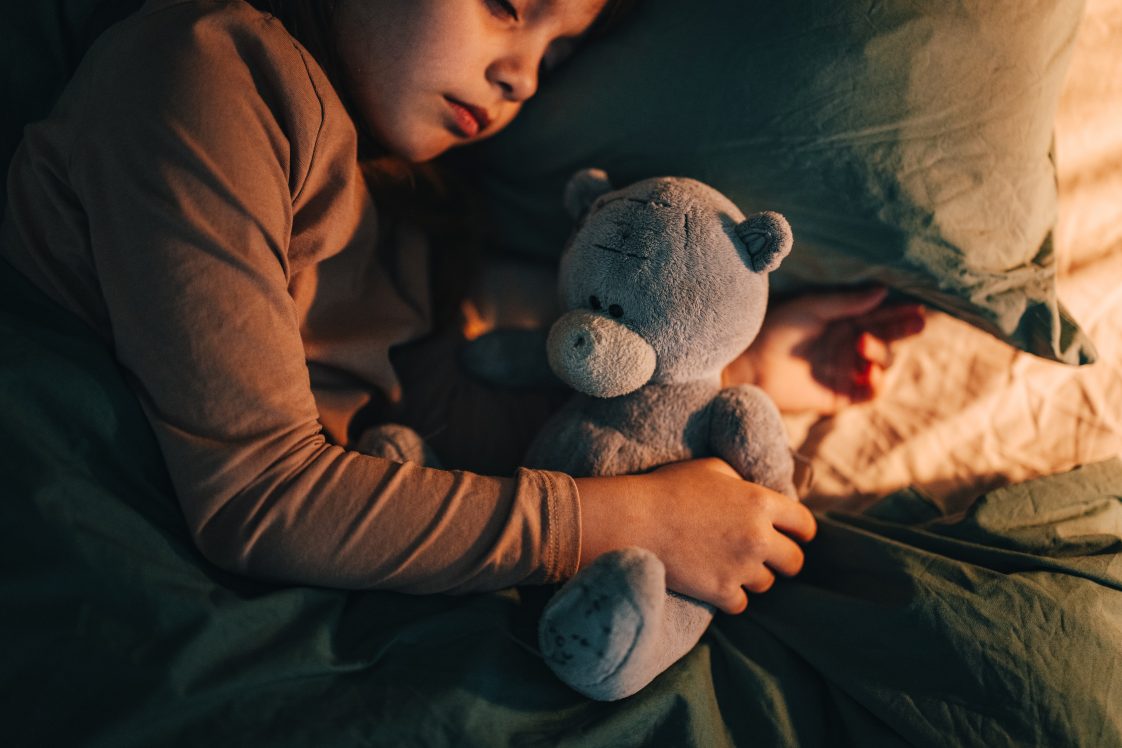 Physical contact activities can include cuddling, massage, and providing a comfort object. Providing a comfort object can be especially helpful for children with different sensory processing needs (e.g., autism, nerve damage).
Following are ways that physical contact supports sleep:
- Feelings of physical safety and comfort can result in deeper sleep.
- Use of a comfort object can help a child to self-soothe.
Conclusion
While it is never too late to develop a bedtime routine, research suggests that starting before a child is 5 years old offers the most benefit. Activities focused on communication and physical contact build a strong parent-child bond that helps a child feel safe, which is important for restful sleep. The activities performed in a bedtime routine also can benefit other areas of a child’s life, including school performance and the ability to control emotions.
The examples cited in this article are designed to give you and your family ideas for activities to include in a bedtime routine, but you do not have to do all of them for your child to sleep well. Some activities support sleep similarly; this offers flexibility in what your family decides to include in a routine.
When selecting activities, it is important to consider what your child will enjoy and what is realistic to do at least five nights per week. Overall, you want to choose activities that reduce excitement and stress, increase feelings of safety, strengthen the parent-child bond, and teach self-care habits that will help your child get better-quality sleep now and in the future.
Works Cited
- Allen SL, Howlett MD, Coulombe JA, & Corkum PV. 2016. ABCs of SLEEPING: A review of the evidence behind pediatric sleep practice recommendations. Sleep Medicine Reviews, 29(1):1–14.
- Mindell JA, Williamson AA. 2018. Benefits of a bedtime routine in young children: Sleep, development, and beyond. Sleep Medicine Reviews, 40(1):93–108.
- Selman SB, Dilworth-Bart JE. 2024. Routines and child development: A systematic review. Journal of Family Theory & Review, 16(2):272–328.
- Walker M. Why We Sleep: Unlocking the Power of Sleep and Dreams. New York (NY): Scribner Books; 2017.
 Olivia Martin-Pinon, Postdoctoral Fellow, and Adrienne Duke Marks, Extension Specialist, Associate Professor, Human Development and Family Studies, both with Auburn University
New May 2025, Importance of Bedtime Routines: Activities that Help Children Sleep, FCS-2879