
Forestry

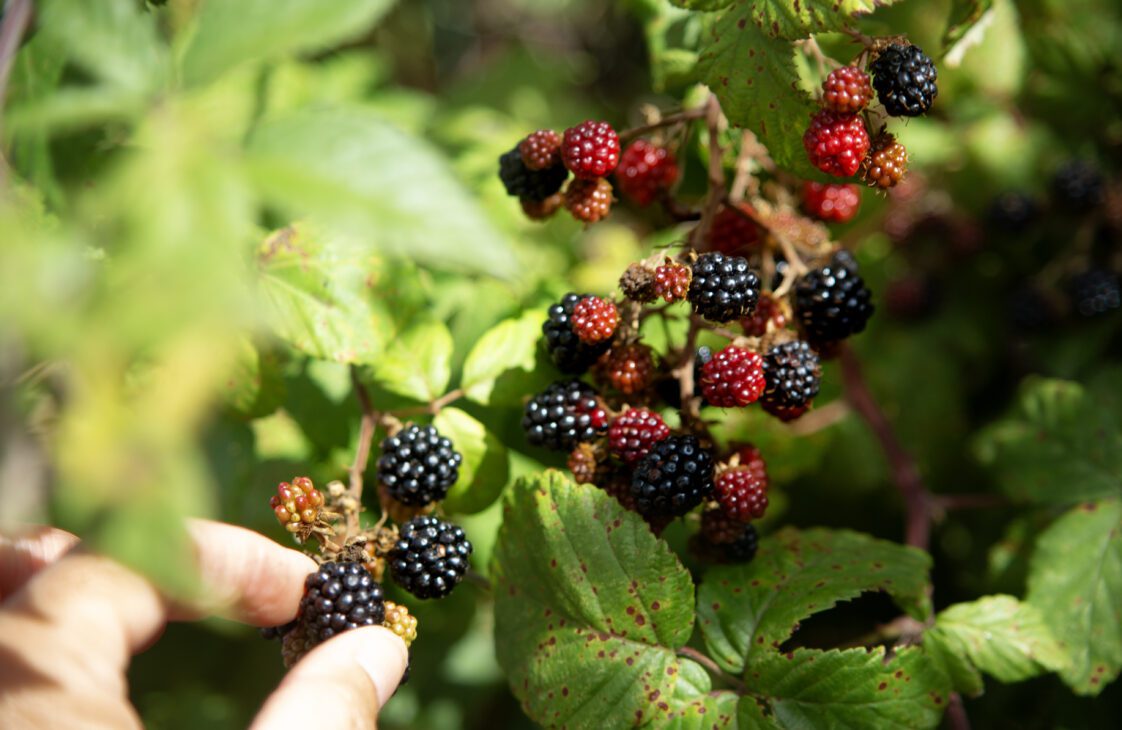
Blackberries are abundant in Alabama. They are beloved staples in early summer recipes, like cobblers and preserves, and are found both in the wild and through cultivation. Alabama has eight native blackberry species, four of which are common and valuable enough for harvesting.
Common Blackberries
General Description
The four most widespread blackberries in Alabama include sand blackberry (Rubus cuneifolius), northern dewberry (R. flagellaris), highbush blackberry (R. pensilvanicus), and southern dewberry (R. trivialis). These are low, perennial shrubs that spread by root suckers. Most have hooked prickles, even on the leaf stalks.
Blooming in late spring or early summer, the flowers are generally white with five petals and approximately 1 inch across. They emit a mild, sweet fragrance that attracts bees, butterflies, and other pollinators. Leaves are alternate with three to five serrated leaflets, growing prominently on their petioles above the stems.
The fruit ripens from dark red to black in early summer, forming an aggregate of small drupelets, each containing a seed. Each blackberry fruit is approximately 1 to 2 inches in length, with a juicy, tender texture. Flavor varies among species and growing conditions but generally is sweet with a hint of tartness, making them ideal for fresh eating or processing.
- Sand blackberry. Primarily found in central and south Alabama. Has erect stems up to 3 feet tall, forming dense thickets.
- Northern dewberry. Widespread but fruit quality declines in south Alabama areas. Has a sprawling, vine-like growth habit and roots along the stem.
- Highbush blackberry. Most widespread species. Has erect stems up to 9 feet tall with large prickles. Produces large thickets and abundant fruit, with leaves of five to seven leaflets and flower clusters (racemes) on floricanes.
- Southern dewberry. Common statewide but more abundant on the Coastal Plain. Similar sprawling growth to northern dewberry but with higher quality fruit.
Uses for People
Blackberries, whether wild or cultivated, are widely harvested and enjoyed fresh or in baked goods, preserves, and other culinary uses. Their dense growth habit makes them suitable for hedges and erosion control. During flowering, they support honey bee populations, contributing to local honey and pollen production.
Uses for Wildlife
Blackberries are a valuable food source for a wide range of wildlife, including game species, songbirds, small mammals, and reptiles such as box turtles. The dense thickets formed by blackberry shrubs also provide excellent shelter and nesting sites for small wildlife. Young foliage is moderately browsed by deer and consumed by a variety of insect species. The flowers attract numerous pollinators including native bees, honey bees, butterflies, and beetles, making blackberries important for supporting local insect populations.
Availability
Blackberries can be grown from seed, but particularly high-quality plants can be produced from cuttings or root suckers. These species, or cultivars of them, are available online or through select native nurseries. Only purchase species from reliable sources to avoid introducing exotic species or simply the wrong variety.
Cultivation
Blackberries grow well across Alabama. They thrive in full sun and well-drained loam soils but tolerate a range of soil types and moisture levels. Propagation is easy from both root suckers and hardwood cuttings. Follow Extension guidelines for pruning, fertilizing, and other management practices. Periodic mowing or prescribed fire is useful for controlling woody competitors and disease buildup in both wild and managed patches. For best results, choose a site that is appropriate for the species and decide what the primary purpose of the patch will be.
Preparations and Storage
Blackberries are best enjoyed fresh, either directly from the bush or soon after harvest. Ripe berries should be plump, firm yet tender, and easily detach from the plant. Because blackberries are delicate and perishable, they do not store well at room temperature. For optimal freshness, store unwashed berries in the refrigerator and rinse them just before use. Refrigeration slows spoilage and can extend their shelf life for up to a week.
To preserve blackberries for a longer time, it is best to freeze them. Spread the berries into a single layer on a tray and freeze them. Then, transfer them to freezer bags for storing. Juicing is another effective way to preserve blackberries for later use. Start by rinsing the berries and removing any stems or spoiled pieces. Use a juicer, blender, or food mill to juice the berries, and strain the mixture to remove seeds and pulp, if desired. You can add some sugar or lemon juice to enhance the flavor. Pour the juice into freezer-safe containers or ice cube trays, leaving space at the top for expansion. Frozen whole berries and juice can be stored between 8 to 12 months.
Blackberries can also be dried or made into preserves, jams, and jellies, which prolong shelf life and concentrate flavors. Additionally, making blackberry syrup is a delicious way to capture their sweetness for use in drinks, desserts, and pancakes.
Nutritional Information
Blackberries are nutrient-dense and packed with vitamins, fiber, and antioxidants:
- About 35 percent of the daily value of vitamin C per cup, supporting immune health and combating free radicals.
- About 10 percent of daily value of vitamin E, important for skin health and cellular protection.
- About 25 percent of daily value of vitamin K, essential for blood clotting and bone strength.
- About 29 percent of recommended daily dietary fiber intake per cup, aiding in digestion and blood sugar control.
Blackberries also contain minerals such as manganese, copper, and folate and are rich in anthocyanins and phenolic compounds with anti-inflammatory and potential cancer-preventing properties. For additional information, refer to Blackberry Fruit: Nutrition Facts and Health Benefits from Virginia Cooperative Extension.
Recipes
- Blackberry Jam—National Center for Home Food Preservation*
- Cup Cobbler—Alabama Cooperative Extension System
- Blackberry and Basil Spritzer—University of Kentucky Cooperative Extension Service
*This recipe has been tested and approved to be food safe.