
Forestry

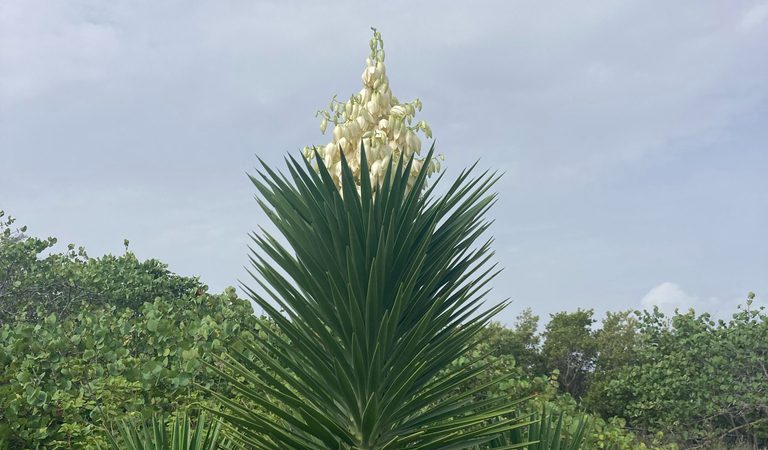
Because of Alabama’s latitude and climate, the state is home to many plant species that typically live in much drier, western regions. A variety of cacti and similar arid climate plants persist here, and some of these may be of direct benefit to humans and wildlife. One unusual example is the aloe yucca (Yucca aloifolia).
Description
Also known as Spanish dagger or Spanish bayonet, aloe yucca is a long-lived perennial shrub. These plants naturally occur on sandy, xeric soils in full sun but can persist around old home sites and in forested areas for many years. Young plants are individual stems, growing several feet tall, with radiating, blade-like leaves. Older plants may be multitrunked and sprawling thickets that are almost 12 feet tall. The lower portions of older trunks are skirted with dead leaves that remain persistent on the stem. The shrub’s flowers are produced on large, terminal panicles and are an off-white color, occasionally being streaked with purple. Fruit production is rare in much of Alabama because of the isolated nature of the plant. However, the fruits are large, leathery berries that are extremely dark purple and have a sweet pulp. The seeds are thin, black, and papery. The plant’s blooming stalk will die back, but the surrounding buds will persist and take its place in most cases.
Availability
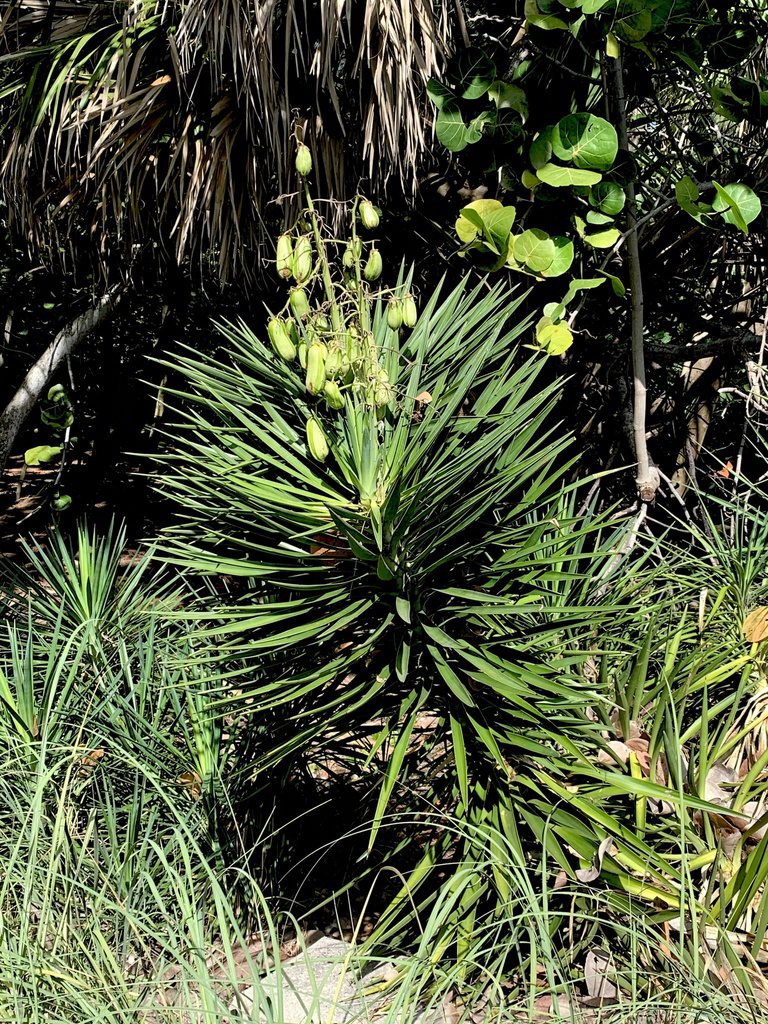
Aloe yucca. Photo credit: © geotropics, iNaturalist.org (CC BY-NC) some rights reserved
This species may be found online or through some native plant nurseries. When purchasing, ensure that you choose the correct plant, as many species may be hard to distinguish at young ages.
Uses for Humans
Yucca is an underutilized plant in the eastern United States but has a variety of potential uses:
- The fruit is exceptionally sweet and rich and sticky right off of the plant. While they are quite seedy, the fruits can be enjoyed raw or incorporated into a variety of dishes, such as cooked down for jellies, pies, and cobblers and blended into ice cream.
- The flowers can be collected and used in salads or combined into fritters.
- The leaves are extremely fibrous and have been utilized for coarse-fiber crafts. They are also quite rigid and spiky, which makes the plant useful as an edging or border plant for security purposes, and it does have an ornamental aspect for xeriscaping.
Uses for Wildlife
The fruits are eaten by a variety of species, and the flowers are pollinated or consumed by many insects. The plant’s dense and spiny growth form provides shelter for small animals, including insects and reptiles.
Cultivation
While aloe yucca persists in scattered sites through much of Alabama, it thrives best in full sun and xeric soils, which require only a small amount of moisture. They are easily outcompeted and overshadowed in more fertile areas. The plant can be grown from seeds, stem cuttings, and offsets from mature plants. In order to ensure semiconsistent fruit production, multiple aloe yuccas need to be planted. The clonal nature of the plant’s cuttings and offsets keeps fertilization and fruit set low, even if multiple stems bloom at the same time. They are resistant to most pest and disease pressures unless planted in unsuitable areas.
Header photo credit: © acornparker, iNaturalist.org (CC BY-NC) some rights reserved. Cropped selection from from original image.