
Forestry

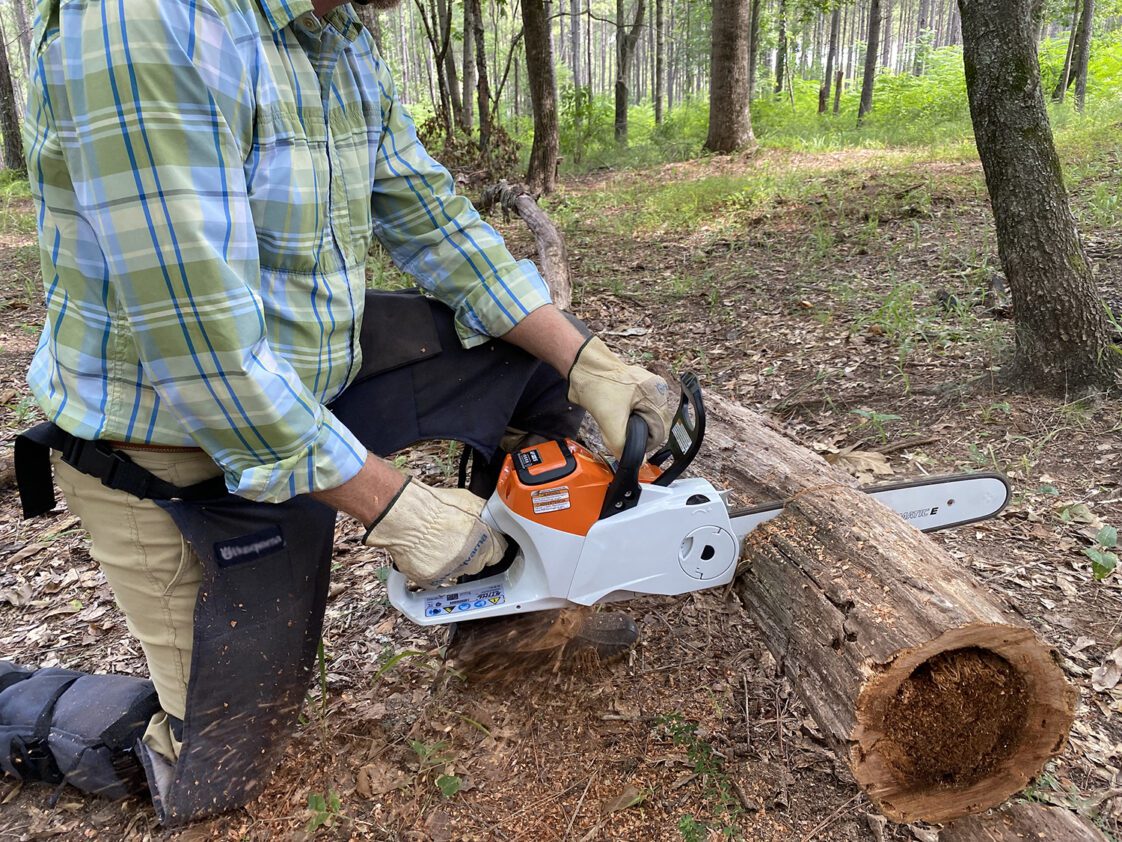
In the United States, more than 3 million chainsaws are sold each year to users with different levels of skill and experience. This inherently dangerous piece of equipment results in more than 36,000 chainsaw related injuries. In Alabama alone there have been more than 70 reported chainsaw-related injuries to state employees over the past 5 years. In many situations, injuries could have been averted by using proper technique and personal protective equipment (PPE). Chainsaw operators can also learn to recognize and mitigate potentially hazardous trees prior to storms.
Course Objective
Introduce and provide practical training for municipal, commercial, and emergency response personnel on basic chainsaw safety, maintenance, and felling procedures.
Course Learning Objectives
Upon completion, participants will be able to accomplish the following:
- Describe the history of the chainsaw.
- Identify key safety features of the chainsaw.
- Apply principles of risk management, emergency planning, and proper use of PPE.
- Demonstrate correct chainsaw ergonomics, starting protocols, and safe handling techniques.
- Explain methods for preventing chainsaw-related injuries.
- Perform safe limbing and bucking practices.
- Conduct basic chainsaw maintenance, including checking chain tension and sharpening.
Course Format
The course will consist of two full days of training, including classroom presentations, field demonstrations, and hands-on limbing, bucking, and chainsaw maintenance procedures. There are two versions of the two-day class:
Version One
This version is usually for classes that have more attendees than the second day can accommodate or that have students who will not attend the second day.
- Day One—Classroom instruction with minor maintenance procedures and field demonstrations of felling, limbing, and bucking.
- Day Two—Field demonstrations consisting of discussion, hands-on operation of saws, and hands-on maintenance procedures.
Version Two
This version is for classes of 12 or less people who attend all of day one. Twelve or less attendees will participate on day 2.
- Day One—Classroom instruction with in-depth maintenance procedures.
- Day Two—Field demonstrations consisting of discussion and hands-on operation of saws.
Course Instructor
The training will be conducted by a qualified chainsaw-safety instructor.
Certificates
Participants will receive a Certificate of Attendance.