
Forestry

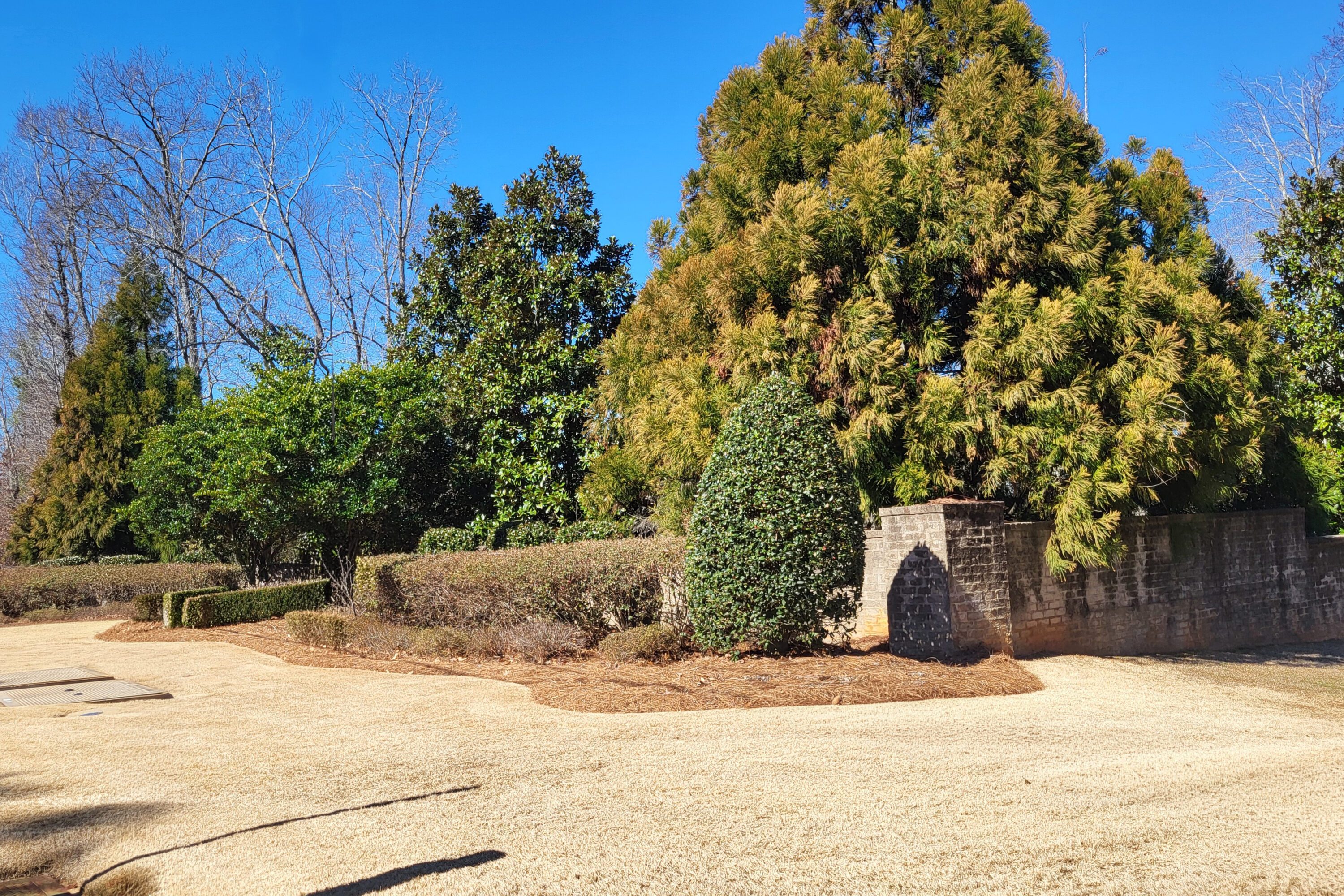
Alabama’s diverse landscapes—whether in urban neighborhoods, rural properties, businesses, or schools—offer plenty of opportunities to create beautiful and functional outdoor spaces. One common landscaping goal is to screen or block certain areas, whether to reduce noise from a nearby road or school, provide a windbreak, or simply enhance privacy.
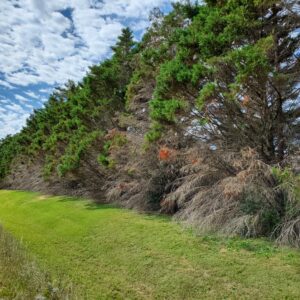
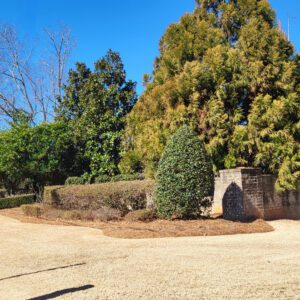
Using plants for these purposes not only addresses the practical need but also contributes to a more natural, visually appealing environment than that of a fence or walled barrier. As with any landscape feature, selecting the right plants for your specific goals and conditions is key to long-term success. Screens are groupings of plants, trees, and shrubs, usually 6 feet or more in height, used to hide or cover unwanted views, reduce noise, and block winds. Evergreen trees are an important part of screens, but they should not be the only trees used. Deciduous trees add color variety and texture. While it is common to see a uniform row of trees or shrubs for screening, relying on a single species can lead to long-term challenges. Monoculture plantings are more vulnerable to pests, diseases, and environmental stress, making them a less sustainable solution over time (figure 1). Instead, mixed plantings offer a more resilient and visually dynamic alternative. A diverse combination of trees, shrubs, and ground covers can create an attractive, layered screen that performs well across seasons and under various environmental conditions (figure 2).
-
-
Figure 1. A monoculture planting, such as Leyland cypress,
can result in challenges over time.
-
-
Figure 2. A combination of trees shrubs, and groundcovers
can provide a durable screen that performs well throughout the seasons.
Benefits of Mixed Screens
Species diversity enhances the landscape in the following ways:
- Resilient landscapes. Incorporating a diverse mix of tree and shrub species into a privacy screen enhances its resilience to environmental stresses. While extreme weather, such as heavy rainfall or drought, can severely affect certain species (yews in overly wet conditions), a mixed planting with varying moisture and light tolerances ensures that if one species fails, others can continue to thrive, preserving the screen’s function and appearance.
- Structural diversity. Mixed screens include trees and shrubs of different heights and forms, from tall evergreen trees to low-growing ground covers. This creates a tiered effect that improves screen architecture.
- Wildlife habitat. A range of plant species offers food and shelter for several small mammals, birds, butterflies, and beneficial insects. For example, the berries of American holly (Ilex opaca) attract birds, while dense shrubs provide nesting sites.
- Visual appeal. Combining evergreen and deciduous plants provides year-round interest. Evergreens offer continuous coverage, while deciduous trees and shrubs contribute flowers, fall color, and unique winter branching patterns.
Deciduous Trees
Eastern Redbud (Cercis canadensis)
- Small tree with dense branching and early spring flowers.
- Alabama native; prefers moist, well-draining soils; full sun to part shade.
- Height: 20’ to 40’; Width: 15’ to 25’
American Hornbeam (Carpinus caroliniana)
- Also known as musclewood; compact and strong wood excellent for screening.
- Alabama native; moist, well-draining soils; part shade to shade.
- Height: 30’ to 40’; Width: 20’ to 40’
Black Tupelo (Nyssa sylvatica)
- Sturdy tree with good wind resistance and beautiful fall color.
- Tolerates medium to wet soils, full sun.
- Height: 50’ to 80’; Width: 20’ to 40’
Nuttall Oak (Quercus texana)
- Large canopy; rapid growth rate.
- Height: 40’ to 80’; Width: 30’ to 60’
Shumard Oak (Quercus shumardii)
- Fast-growing and strong-branched oak species.
- Height: 60’ to 90’; Width: 40’ to 60’
Cockspur Hawthorn (Crataegus crus-galli)
- Tolerates a range of soil types; good for layered screening.
- Height: 20’ to 30’; Width: 20’ to 30’
Florida Maple (Acer floridanum)
- Adaptable tree with fast growth and dense foliage.
- Height: 20’ to 40’; Width: 25’ to 40’
White Fringetree (Chionanthus virginicus)
- Full sun to part shade; moist, well-draining soils.
- Common name of Grancy Greybeard; multistemmed, fragrant flowers in spring
- Height: 30’; Width: 12’ to 20’
Deciduous Shrubs
American Hazelnut (Corylus americana)
- Dense, multistemmed shrub ideal for lower-level screening; naturalizes.
- Height: 10’ to 12’; Width: 8’ to 12’
Indigo Bush (Amorpha fruticosa)
- Medium-sized shrub with airy growth but great wind resistance when planted in groups.
- Full sun to partial shade; moist soils.
- Height: 10’ to 12’; Width: 8’ to 10’
Possumhaw (Ilex decidua)
- Full sun to part shade, adequate soil moisture needed.
- Height: 8’ to 15’; Width: 8’ to 10’
Eastern Ninebark (Physocarpus opulifolius)
- Hardy and bushy with exfoliating bark; excellent in mixed screens.
- Full sun to partial shade, well-drained soils.
- Height: 6’ to 8’; Width: up to 5’
Buttonbush (Cephalanthus occidentalis)
- Moist soils, tolerant of wet soils, not tolerant of dry soils; forms dense thickets in appropriate conditions.
- Height: 5’ to 12’; Width: 4’ to 8’, colonizes
Chokecherry (Prunus virginiana)
- Spreads easily and creates dense thickets ideal for wind protection.
Smooth Sumac (Rhus glabra)
- Colonizing shrub with excellent fall color; forms effective windbreaks when grouped.
- Full sun, drought tolerant.
- Height: 8’ to 12’; Width: 8’ to 12’
Elderberry (Sambucus canadensis)
- Vigorous shrub with dense foliage; also provides wildlife benefits; colonizes readily.
- Full-sun to partial shade; moist soils.
- Height: 8’ to 12’; Width: 8’ to 12’
Evergreen Trees
Eastern Redcedar (Juniperus virginiana)
- Dense, pyramidal conifer; excellent for windbreaks and privacy screens.
- Height: 40’ to 50’; Width: 10’ to 20’
- Full sun to partial shade; drought tolerant once established.
Southern Magnolia (Magnolia grandiflora)
- Large, broadleaf evergreen with thick foliage; provides strong visual and wind barrier
- Full sun to partial shade, moist soils that drain well.
- Height: 40’ to 80’; Width: 20’ to 40’
- Dwarf varieties such as ‘Little Gem’ and ‘Teddy Bear’ grow to a height of up to 20’ and may be more feasible as a screening plant.
Wax Myrtle (Morella cerifera)
- Full sun to partial shade; tolerates dry to moist soils.
- Height: 10’ to 20’; Width: 10’ to 15’
Loblolly Pine (Pinus taeda)
- Fast-growing pine that forms a tall, effective windbreak; best used in mixed plantings.
- Height: 60’ to 90’; Width: 20’ to 30’
Shortleaf Pine (Pinus echinata)
- Native pine with more open form than loblolly, but good for layered screens.
- Height: 70’ to 100’; Width: 20’ to 40’
Longleaf Pine (Pinus palustris)
- Iconic native pine of Alabama; slow to establish but eventually forms tall, wind-tolerant stands.
- Height: 80’ to 100’; Width: 30’ to 40’
Evergreen Shrubs
Yaupon Holly (Ilex vomitoria)
- Dense, adaptable shrub that tolerates pruning and works well in formal or informal screens.
- Full sun, dry soils; only females produce fruit.
- Height: 10’ to 15’; Width: 5’ to 15’
Inkberry Holly (Ilex glabra)
- Compact and bushy; ideal for lower-level evergreen screening.
- Full sun to partial shade; moist, well-draining soils.
- Height: 6’ to 10’; Width: 5’ to 8’
Mountain Laurel (Kalmia latifolia)
- Partial shade; rich, well-drained soils. Mountain laurel is hard to establish under less than optimum conditions.
- Broadleaf evergreen for partial shade; provides dense foliage and seasonal interest.
- Height: 6’ to 10’; Width: 5’ to 10’
Fetterbush (Lyonia lucida)
- Evergreen shrub tolerant of wet soils; good for naturalistic screens in suitable conditions.
Leucothoe (Eubotrys racemosa, formerly Leucothoe racemosa)
- Arching shrub with evergreen foliage; works well in the understory of windbreak layers.
Florida Anise (Illicium floridanum)
- Shade-tolerant broadleaf evergreen; dense and aromatic; ideal for moist, protected sites.
Design Tips for Effective Screens
- Plan for Mature Size. Research each plant’s mature height and spread to ensure adequate spacing and avoid future overcrowding. Look up to ensure that mature trees and shrubs will not interfere with power lines.
- Layer the Plants. Place taller trees in the back, mid-sized shrubs in the middle, and small-sized plants at the front to create multiple rows with staggered formations.
- Provide Adequate Spacing. Crowding plants can lead to competition for water, light, and nutrients, reducing their health and longevity.
- Avoid Invasive Species. Some species traditionally used in screens—bamboo, Japanese barberry, and burning bush—are now recognized as invasive. These plants can escape cultivated areas, outcompete and displace native vegetation, and disrupt ecosystems. Check your local Extension services or the Alabama Invasive Plant Council for up-to-date guidance.
Planting for Long-Term Success
Proper planting techniques are key to establishing a healthy screen. Therefore, consider the following:
- Test Your Soil. Conduct a soil test before planting to understand pH, nutrient levels, and drainage.
- Check for Utilities. Always contact utility services before digging to have buried utilities marked and located. The national call-before-you-dig phone number is 811.
- Prepare the Planting Hole Properly. Avoid planting deeper than the existing root ball. Plant trees at or slightly above the root flare, which is the point where the roots spread at the base of the trunk. The pit should be two to three times wider than the root ball. The publications “Planting & Establishing Woody Landscape Plants” (ANR-0410) and “Best Practices for Successful Tree Planting” (FOR-2192) on the Alabama Extension website at www.aces.edu provide detailed planting methods.
- Girdle Roots. Loosen and spread out or remove roots if they are circling the root ball. Root pruning must be minimal and focused on removing problematic roots.
- Use Mulch Wisely. Apply 2 to 3 inches of mulch around plants, but keep it away from the base of the trunk or stems. Always use organic mulch (wood chips, bark, leaves) and spread it in a doughnut shape.
- Irrigate as Needed. New plantings require regular watering until they become established. Specifically, water recently planted trees daily during the first 2 weeks. Then water them every 2 to 3 days for about 3 months. After that, water weekly until the tree is established (it takes approximately 1 year per inch caliper to establish). Finally, consider the soil type, as sandy soils need more frequent watering while clay soils retain moisture longer.
Conclusion
Creating a natural screen with a thoughtful mix of native trees and shrubs not only enhances privacy but also supports local wildlife and adds beauty to your property. By avoiding monocultures and following best practices for plant selection and care, you can build a resilient, attractive, and ecologically responsible landscape feature that lasts for years.
Additional resources:
- LayLa Burgess, HGIC Horticulture Extension Agent, Clemson University. 2017. Mixed Screens
- Smith, K., D. Williams, K. Tilt. 2019 Residential Landscape Design,
 Dani Caroll, Extension Agent, Home Horticulture, and Georgios Arseniou, Extension Specialist, Assistant Professor, Forestry, Wildlife, and Environment, both with Auburn University
New March 2026, Creating Resilient Screen Plantings, ANR-3223