
Forestry & Wildlife

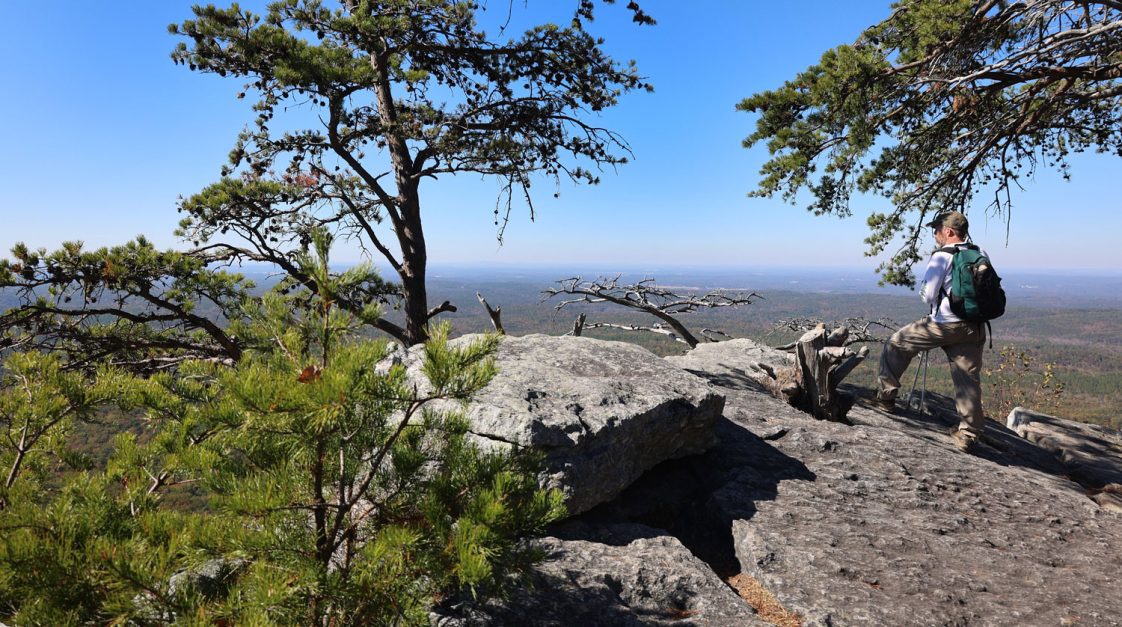
Alabama is blessed with incredible biodiversity—amongst the highest in the nation—but there is an increasing need to better document this biodiversity. The Marble Bowl gives college football fans the chance to contribute to this documentation, all while besting their university rivals in a citizen-science competition.
Millions of people look forward to the arrival of college football season each year. While many storied rivalries exist, few are more eagerly anticipated than the Iron Bowl, the annual game between Auburn University and the University of Alabama. The Marble Bowl is a riff on the Iron Bowl, pitting Auburn and Alabama fans against each other in a participatory-science matchup…until now! Now in its fourth year, the Marble Bowl is excited to open competition to several institutions of higher education in Alabama.
About the Marble Bowl
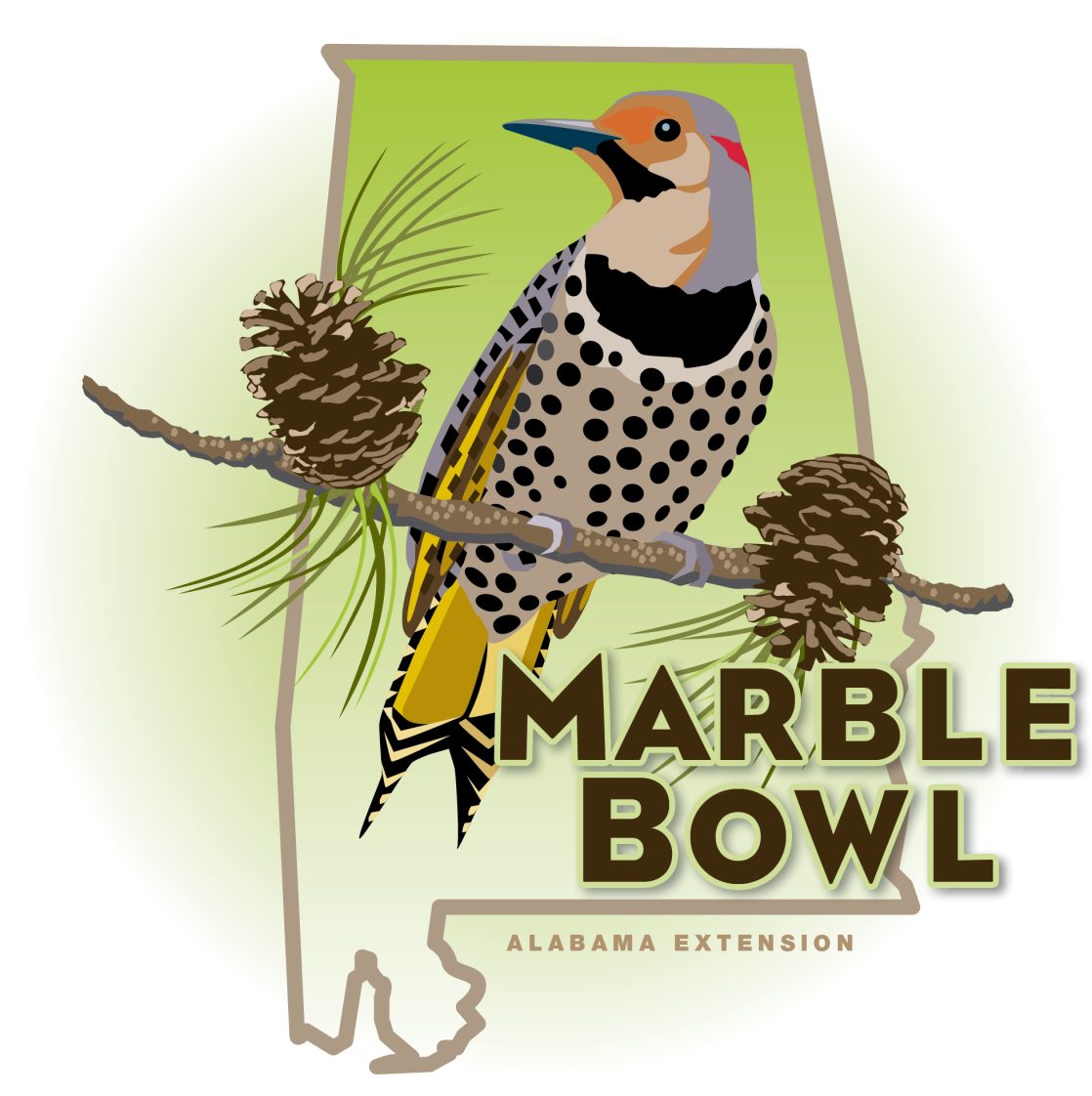 Why marble? Turning to the natural resources world, incorporating different state symbols into the name and logo of this competition was key. Marble is Alabama’s state rock. This rock, from in and around Sylacauga, is renowned for its beauty and has been used in the construction of iconic buildings around the country. To represent a couple of Alabama’s other natural features, the logo shows the state bird–the northern flicker–on a branch of the state tree, the longleaf pine.
There are more species of crayfish, freshwater fishes, mussels, freshwater snails, and turtles within Alabama’s borders than anywhere else in the country. The tree diversity is also spectacular. This has led some to refer to Alabama as America’s Amazon. Unfortunately, there is also a high number of endangered species and a high rate of extinction. Participatory science can be defined as public participation in research. It is a common misconception that only those with advanced degrees can help make meaningful contributions to science–in this case biology and conservation. In reality, most anyone can help collect valuable data to further knowledge of biodiversity. Also, it isn’t just observations of rare species that are valuable. The world is changing rapidly and a biodiversity baseline must be established. Down the road, assessments and decisions can be made based on these data to determine what to do about it.
Competing Colleges & Universities
Competing Colleges & Universities
In 2025, there are fan bases from 11 universities and one community college vying to be crowed champion of the Marble Bowl, setting it up to the be most exciting competition to date.
- Alabama A&M University
- Auburn University
- Auburn University at Montgomery
- Jacksonville State University
- Samford University
- Southern Union State Community College
- The University of Alabama
- The University of Alabama in Huntsville
- The University of North Alabama
- The University of South Alabama
- The University of West Alabama
- Troy University
Partners
Partners
While the competition may be fierce, cooperation is important. The Marble Bowl is a collaboration between the Alabama Cooperative Extension System, Alabama Museum of Natural History, Auburn University Museum of Natural History, and Auburn University College of Forestry, Wildlife, and Environment.
How to Join
How to Join
From the opening weekend of football through the weekend of the Iron Bowl, everyone has the opportunity to participate in the Marble Bowl by submitting observations of wild plants, animals, and fungi to their team’s project on iNaturalist. iNaturalist is an online platform that crowdsources biodiversity observations and identifications. Starting off is as simple as going to www.inaturalist.org and signing up for a free account. There is never a charge to participate. iNaturalist is available as a mobile app and through a web browser. Whichever the preference, join the The Marble Bowl project to keep up with the current scores. From there, select your team’s project to ensure your observations count and you are contributing to the fun. Be sure to only join one of the projects. Otherwise, your observations will cancel each other out.
How to Make an Observation
How to Make an Observation
Making an observation is as simple as taking a photo of a wild organism with your phone. Because phone photographs are automatically timestamped and geotagged, all the necessary information is already with the photograph. If you prefer to take photos with a digital camera, note the location and include it with your observation if the camera doesn’t geotag it for you. Of course, observations can be uploaded to iNaturalist through a browser, as well.
As you submit observations, the platform’s artificial intelligence, also known as computer vision, will suggest an identification based off what is in the photo along with similar species that have already been observed nearby. You can suggest a different identification if you are confident about what you saw. Select an identification then hit submit. That’s all that is required to add an observation. Any iNaturalist user can then view your observations and either agree with the identification you selected or suggest a different one. More information on recording observations and the iNaturalist platform in general can be found on iNatHelp’s Getting Started web page.
Rules
Rules
Like any good competition, there are some rules to make sure it is fun and fair for all involved. The rules are as follows:
- Winner. The winner of this competition will be the project that has the highest score out of 100 points from a combination of unique observations (50 percent) and unique species (50 percent) as determined by the iNaturalist platform. For example, if the Alabama project has 1,000 unique observations and the Auburn project has 900, Alabama gets the full 50 points while Auburn earns 45.
- Location. Observations must occur within the state of Alabama.
- Date and time. Observations must occur between kickoff weekend (Midnight on Saturday, August 30) and the end of Iron Bowl weekend (11:59 p.m. on Sunday, November 30). No photographs taken before this time can be used.
- No captive/cultivated observations. As much as people may love their pets, they aren’t suitable subjects for iNaturalist observations. The goal of this project is to record observations of wild plants, animals, fungi, and other organisms across the state. Pets and other domesticated animals—such as horses, chickens, and goats—should not be added to the project. Observations of cultivated plants are also not allowed.
- Quality grade. To be counted in the competition, observations must meet the criteria for Research Grade or Needs ID. Read more about those classifications on the iNaturalist website.
Past Winners
Past Winners
Auburn has led the Marble Bowl rivalry, winning in 2022, 2023, and 2024. The competition, however, has been fierce. The real winner each year has been Alabama’s biodiversity and people’s ability to act as better stewards of it. In the 2024 competition alone, 498 observers contributed almost 50,000 observations. In addition, 5,723 species were documented. Between these observations and species, 2024 marked the most successful competition to date.
Get involved and help bring this competition from the gridiron to the realm of participatory science. While observations can be made anywhere across Alabama, you don’t need to be at the top of Mount Cheaha or deep inside the Mobile-Tensaw Delta to participate. There’s a good chance you can make worthwhile observations from your favorite tailgate spot or in your backyard during halftime. So get outside—and may the best team win!