
Forestry & Wildlife

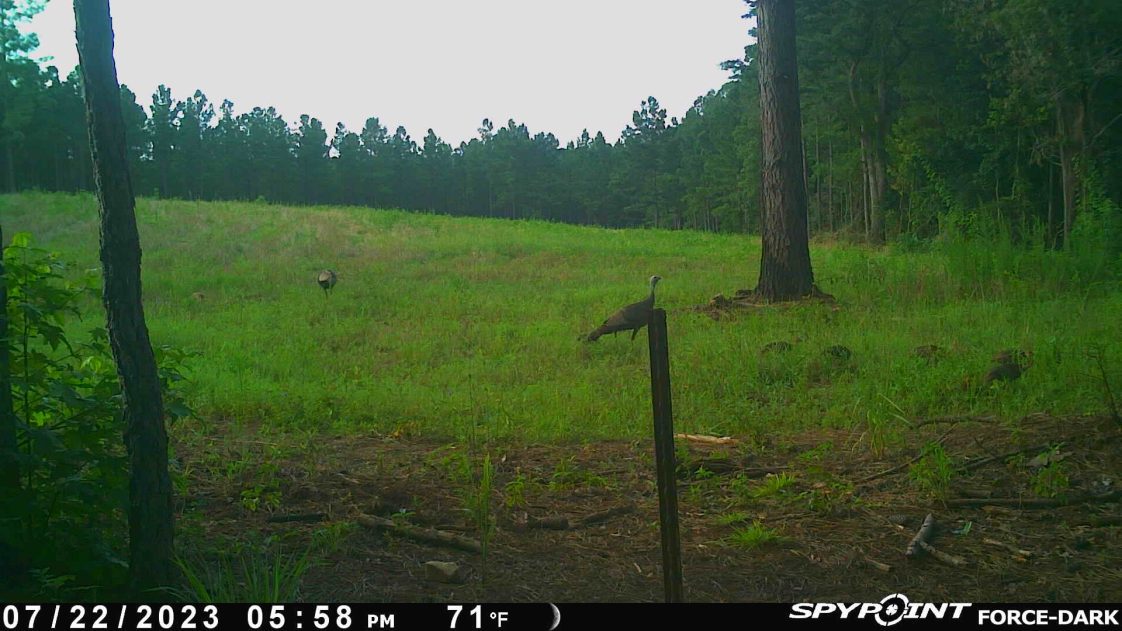
AUBURN UNIVERSITY, Ala. — Beyond planting warm-season food plots, summer is an ideal time to implement wildlife and forestry management techniques to ensure both wildlife and food plots thrive during the hunting season.
Norm Haley, an Alabama Cooperative Extension System forestry, wildlife and natural resources Extension agent, said summer is a great time to manage and enhance properties for wildlife throughout the year.
Growing Season Prescribed Burning
Haley said burning during the summer or growing season can be advantageous, but it’s still less common than dormant-season burning.
“Although suitable burn days are fewer in the humid summer months, burning during this time can provide many benefits,” Haley said. “Particular benefits include control of undesirable woody species, reducing over-abundant grasses and spurring on native browse that provides nutrition for nursing does and bucks with growing antlers.”
Most burns during this time are conducted on areas of early succession such as old fields or natural openings. Fire during this time closely mimics the natural fire regime of summer lightning strikes and can foster nutrition and cover that benefits deer, turkey and other game species. In fact, even non-game species can benefit from summer burns.
Invasive Species
Haley said identifying invasive plant species is important to determine their effective control and timing.
“Managing invasive plant species on the property is a good way to encourage plant diversity, promote beneficial native vegetation and increase the value of timber on the property,” Haley said. “Summer is a great time to control undesirable woody species through hack and squirt, cut stump and foliar applications.”
Non-native Chinese privet, Bradford/Callery pear, tree of heaven and paulownia can be controlled at this time. Plus, summer can be a good time to control undesirable native trees such as sweet gum and elm. Removing these invasive species can help to develop the forest understory to provide food and cover and release mast producing oaks for greater acorn production.
Learn more about controlling invasives in the following Extension publications:
- Cut Stump Herbicide Treatments for Woody Plant Control
- Control Options for Chinese Privet
- Management Options for Chinese Tallowtree
- Callery Pear: History, Identification and Control
Road and Water Maintenance
Haley said roads through a property can serve many purposes. However, well-built roads can improve land access and serve as fire breaks. In addition, daylighting roads can reduce maintenance of limb trimming. Plus, exposing roads to sun dries them more quickly while also creating edge used for wildlife food and cover.
“If a landowner is looking to sell or lease the property in the future, roads allow potential customers to quickly and easily travel the property to evaluate timber, view wildlife and inspect habitat types and other improvements,” Haley said.
Summer offers a time to assess how spring runoff has impacted roads, trails and other areas that need attention. Reworking or installing water bars, turn outs, broad based dips and culverts is easier in drier months and can pay dividends towards maintaining a safe and long-standing road system. Learn more about best management practices for forest roads in the Extension Brief titled Importance of Erosion Control During and After Timber Harvesting.
Camera Surveys
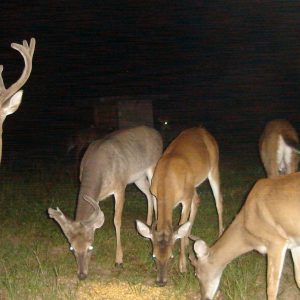
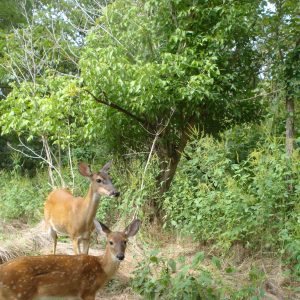
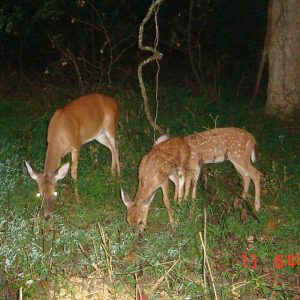
Game cameras are a great tool for landowners to keep track of wild game and estimate populations on the property. This includes both desirable wildlife and predators.
Haley said camera surveys allow wildlife managers to gather useful trend data on buck:doe and fawn:doe ratios, as well as buck age structure. They can also be used to assess turkey populations and monitor hen:poult ratio. This information can be used to drive harvest, assess predation and guide overall land management decisions.
“There is a detailed publication titled Managing White-tailed Deer: Camera Surveys that provides guidance on how to effectively conduct a dedicated game camera survey,” Haley said. “In short, it requires one camera per 100 acres over a 7- to 10-day period.”
Process photos by counting bucks, does, fawns and unique bucks. Then, enter those totals into a few simple calculations to provide valuable herd and management data.
Predator Control
“When done properly, timely predator (coyote) trapping over the summer months can be an effective way to increase fawn survival,” Haley said. “Trapping coyote a few months prior to and during your area’s fawn drop (200 days after peak rut) has been shown to increase fawn survival on some properties.”
Still, considering the cost and effort towards an effective trapping program, Haley said it is important to know if your property has a predator problem. Data from game camera surveys provides this. Improving habitat (fawning cover) through prescribed burning and forest stand improvements can significantly buffer predation. Address this issue prior to any predator control efforts.
Although coyotes no longer have a closed season in Alabama, Haley recommends keeping a regular check on the Alabama Hunting and Trapping regulations. This can help wildlife managers avoid any infractions based on season or the trapping equipment used.
More Information
Learn more about wildlife management by visiting aces.edu or contacting the forestry, wildlife and natural resources agent in your county.