
Forestry & Wildlife

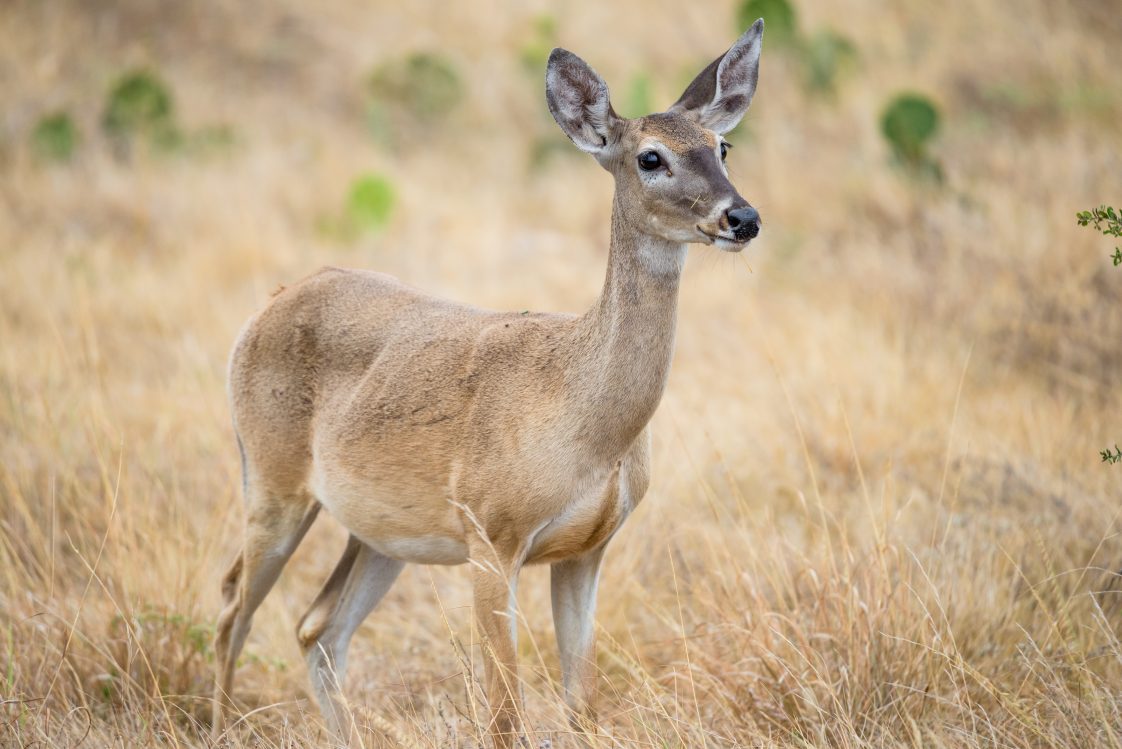
AUBURN UNIVERSITY, Ala. — Nothing gets a hunter’s heart racing quite like a big buck stepping into their sites and turning broadside. That’s the moment hunters pursue all season long. But what if the animal that strides into view is an antlerless deer? While it may not be the same heart-pounding experience, there can be times and places where it is appropriate and even helpful to take a doe.
According to Mark Smith, an Alabama Extension forestry and wildlife specialist at Auburn University, harvesting antlerless deer can benefit the herd and landowners when populations exceed an area’s carrying capacity.
“The technical definition of carrying capacity is the amount of animals that land can support,” Smith said. “However, there’s also social carrying capacity, and that’s the amount of animals that people are cool with having in their same space. It’s a tough task to figure out where that happy medium really is.”
The Right Times and Places
Carrying capacity and herd numbers vary drastically from one area to another. That makes local and state ordinances the No. 1 thing to know when harvesting antlerless deer.
“Here in Alabama, we harvest 250,000 to 300,000 deer per year,” Smith said. “We’ve done that for lots of years and still have more deer than we can shake a stick at. That’s why we have a pretty liberal bag limit, which was increased this year to two does per day during hunting season. It’s not that way everywhere. Some other states have lottery systems to get a tag for a buck or doe.”
Before pulling the trigger, Smith advised contacting local professional wildlife biologists for a site-specific examination.
“Without that expert guidance, it’s foolish to make a statement that you need to harvest more does,” Smith said. “Historically, biologists had it easy. As populations were growing, the mantra was to shoot more does. However, in some cases, like when fawn survival is low, that may not be the right thing to do. Biologists know what to look for in an animal’s body condition and fawn recruitment to provide the correct recommendations.”
If the examination finds there are too many does, then it is likely that removing at least some antlerless deer through harvest could have positive impacts.
Benefits to the Herd
No matter the area, there is only so much food available to deer herds. Reaching an appropriate carrying capacity of deer on that area of land can lessen competition and lead to better nutrition for all animals, including bucks.
“When a buck doesn’t get the nutrition it needs, antler development suffers. Plus, their body weight goes down,” Smith said. “You can see classic examples of deer populations exceeding carrying capacity oftentimes in public parks or nature preserves where deer herds are left unchecked. This often results in very noticeable browse lines and emaciated deer in extreme cases.”
Additionally, harvesting antlerless deer can improve the ratio of does to bucks. That leads to a more predictable breeding season and can produce bucks with bigger racks by the time hunting season rolls around.
“When there’s an overabundance of does, the bucks are running around trying to breed all of them, which leads to a much longer breeding season,” Smith said. “Deer have two estrus cycles, and it’s best if they’re bred during that first cycle. Late-born fawns are always trying to catch up. Their antler size is delayed compared to early born fawns.”
Benefits to People
An overabundance of deer can cause issues for people in urban and rural areas. Maintaining populations by harvesting antlerless deer can lead to improved habitat, reduced occurrences of Lyme disease and fewer vehicle accidents involving deer. Most importantly, though, harvesting antlerless deer can help reduce environmental and crop damage.
“Deer like to eat oak tree seedlings, clipping them before they really get growing,” Smith said. “That makes it really difficult to achieve oak tree regeneration. Deer feeding habits make it tough for understories to regenerate, as well, which can negatively impact other wildlife.”
On top of that, a recent survey in Alabama found that deer are a major cause for concern to soybean and cotton farmers.
“For many farmers, the biggest pests they deal with are not insects or nematodes. Their biggest pests are deer,” said Eddie McGriff, an agronomic crops agent with Alabama Extension. “Deer start eating cotton and soybean plants when the plants are young. They eat the terminal out of the plant, which means it will not continue to grow.”
That’s even more problematic in states where geographic constraints, such as mountains, leave farmers with small crop fields.
“The average cotton field in Alabama spans 19 acres, and they’re usually surrounded by trees,” said Scott Graham, an entomologist with Alabama Extension. “So, when deer eat 5 acres out of one 20-acre field, that’s a 25% loss. That’s a big deal.”
All those issues lead to a social carrying capacity for deer that is lower than the environmental carrying capacity.
“I grew up hunting in Mississippi, and the number of does you could take during the season was relatively low,” Graham said. “Now, in Alabama, you can take two does a day, and that tells you the regulators know we have a problem. Harvesting antlerless deer helps farmers and it helps landowners gain better herd health and antler size on their bucks. That’s a win-win for everybody.”
Knowing When the Time Is Right
While populations vary vastly from Alabama to Alaska and every state in between, harvesting antlerless deer can have a compounding effect on controlling populations.
“When you harvest the doe, you also remove her potential offspring for the following year,” McGriff said. “In certain areas of the country, we need to be doing that. While everybody likes getting a trophy buck, it’s hard to develop those trophy bucks when you have an overpopulation of deer.”
To gain more clarity on the situation where you hunt, Smith reiterated the importance of relying on expert recommendations from local and state biologists.
“We can’t put an exact number on our deer population,” Smith said. “We can estimate it, but we don’t know for sure. Plus, populations are never uniform across a state. There’s going to be higher densities in some areas and lower densities in others. That’s where that expert knowledge can really be helpful for ensuring you have a management plan that works best for the herd and your land.”
Alabama Extension offers numerous publications and educational materials about wildlife management. To find these resources, visit aces.edu and select Forestry & Wildlife from the Topics drop-down menu.