
Forestry & Wildlife

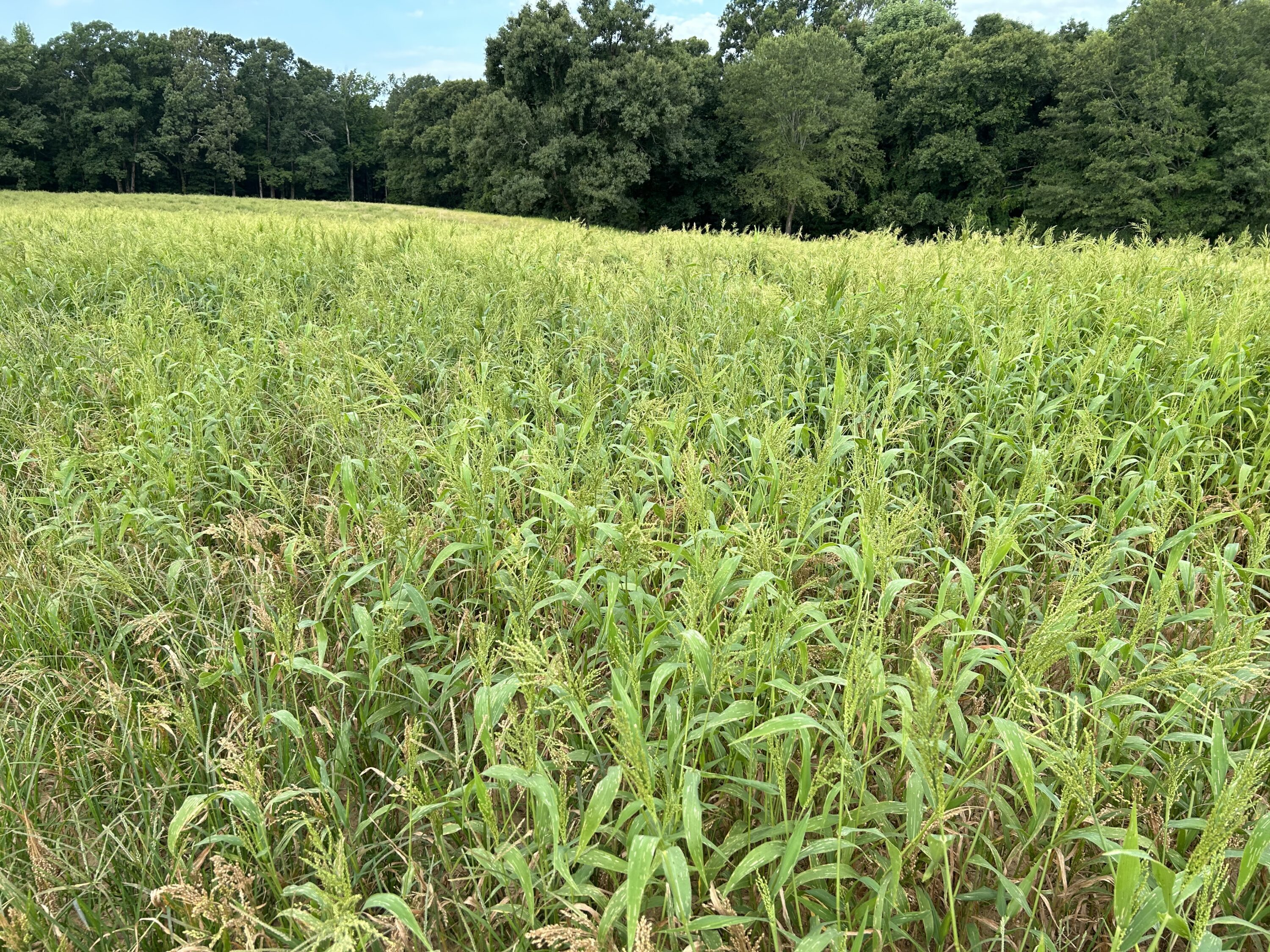
July is the time to plant browntop millet to attract dove and benefit many other game and non-game birds. With a 60-day maturation period, early July plantings will produce a tremendous amount of seed by September. Additionally, browntop millet is one of the most economical and attractive plantings for dove and generates much more seed and attraction than simply broadcasting wheat a few weeks prior to dove season.
Site Selection and Preparation
For dove, the best areas to plant offer close access to water, such as a pond or slow-moving creek. Tree lines that offer shade and a place for dove to loaf are also a consideration for field placement. It may even be worth it to deaden a few undesirable trees around a field, which provides an open canopy for doves to land and rest. Don’t forget about the comfort and concealment of hunters as well. They also appreciate shade and a place to hide on warm September hunts.
It is best to prepare sites with a burn down application of 2 quarts of glyphosate per acre two weeks prior to disking and planting. Killing existing vegetation reduces competition for the intended crop and makes disking a seed bed much easier. Recommended rates for broadcasting millet are 25-30 pounds per acre. Seed can also be drilled at a reduced rate of 15-20 pounds per acre. If broadcasting, cultipack or lightly drag the surface to ensure good seed to soil contact after seed is spread. Millet seed is very small and covering the seed too deep is a common mistake that can result in a poor stand or failed crop.
-
- Field of browntop millet
-
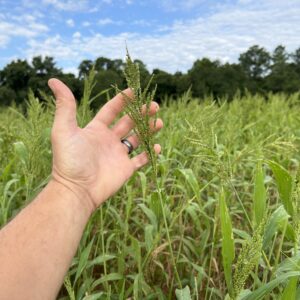
- The seedhead of browntop millet.
Additional Considerations
The biggest variable with mid-to-late summer planting is moisture. Producers are at the mercy of summer rains, but browntop is a resilient crop. It can tolerant low moisture and moderate pH, though it does prefer well drained soil. If possible, plant just prior to a rain to ensure quick germination.
With millet plantings, the weeds that come up after planting are rarely a concern. Often, these plants produce seed that are also fed upon by dove. Crabgrass, pigweed, foxtail, and similar plants are all used by dove. Additionally, grassy weed control is limited because millet is also a grass, which means it will be killed along with the weeds. However, some broadleaf weeds can be controlled with 2,4-D applications. Before applying herbicide, consider if the weeds may actually be beneficial and attract the wildlife.
Once browntop has matured, it often lays over because it is a leafy grass with weak structure. This makes it difficult for birds to land and feed. Mowing also creates a thatch at ground level that reduces seed availability and attractiveness. Because dove are smaller birds and poor at scratching, they prefer a clean site with little debris that allows easy access to seed. With this in mind, it is recommended that the field be burned to reduce thatch and expose seed.
As opposed to simply broadcasting wheat seeds, dove season can be more enjoyable with some planning, planting, and preparing a crop for dove and other birds. There is satisfaction in watching the crop mature and produce for all kinds of wildlife. Plus having dove bags more easily filled can be very rewarding.