
Forestry & Wildlife

In today’s digital era, smartphones have transformed how people interact with and document the natural world. Mobile apps for participatory science platforms—such as iNaturalist and EDDMapS (Early Detection and Distribution Mapping System)—make it easier, now more than ever, for anyone and everyone to help document the living world. Many people have favorite groups of organisms to observe. Some like photographing insects, reptiles, and other creepy crawlies. Others prefer wildflowers. Some like to document biodiversity in a specific place, like their backyard. There is truly no such thing as a bad biodiversity observation. As long as an observation has all the information needed to make it useful to a scientist or land manager—namely photo or audio documentation of the organism and a location, date, and time—it has value. Truly everyone is welcome and encouraged to participate.
Reasons to Submit Observations
There are many reasons to submit biodiversity observations. Alabama and the rest of the world are full of organisms that are hard to observe because they are rare, hide well, or both. By getting as many people documenting what they see as possible, the chance that these seldom-seen species get observed more often increases greatly. By extension, increased observations allow people to better manage and protect these species. Also, the world is constantly changing, and by establishing a baseline of what is currently around, scientists will be able to better understand those changes.
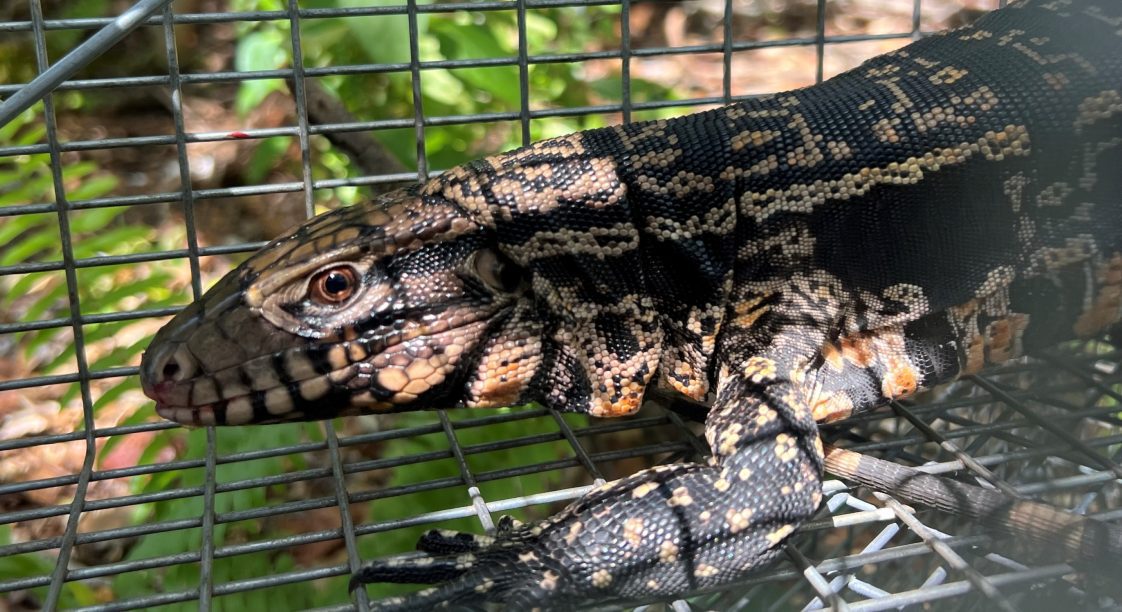
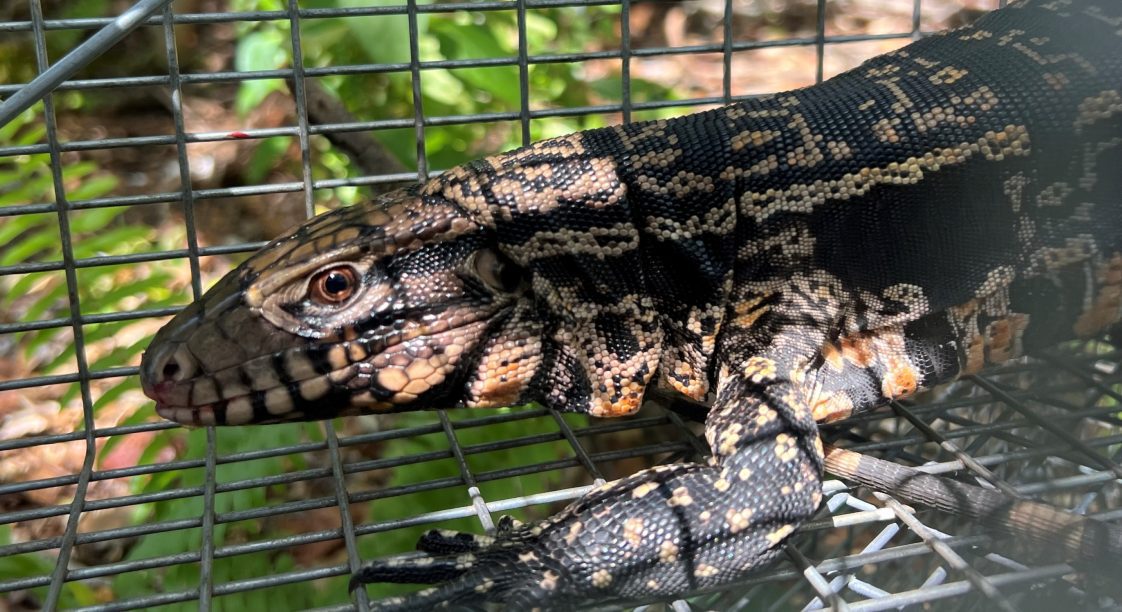
Argentine black and white tegus are not known to breed in Alabama but have the potential to become established. A sighting of this species would be best submitted to EDDMapS to better ensure rapid response.
Invasive Species
One agent of change around the world is invasive species. Invasive species are those that meet the following criteria:
- Not originally native to an area.
- Brought to the new area either intentionally or unintentionally by humans.
- Cause negative environmental, economic, and/or human health impacts.
Alabama has some well-known and well-established invasive species. Think about wild pigs and cogongrass. These species have widespread impacts and are established to the point where total elimination is likely impossible. However, given how interconnected the world is today, the establishment of new invasive species is always a threat. Some may spread from neighboring states, like the spotted lanterfly, which will likely arrive from Tennessee or Georgia in the coming years. Others, however, may be completely new to the region. This makes submitting biodiversity observations extremely important.
Where to Submit Observations
The iNaturalist platform (inaturalist.org) can be used for all biodiversity observations, including invasive species.
iNaturalist is the platform where people can submit all biodiversity observations, and identifications are sourced from community members. EDDMapS is specifically for reporting nonnative species, and identifications are made solely by preapproved verifiers. Being a nonnative species does not automatically mean that a species will become invasive. However, it is worth reporting any nonnatives that are seen, particularly those that are invasive elsewhere or are new to the region.
Choosing between iNaturalist and EDDMapS depends on your purpose. The following are some examples to help people determine which platform to use.
When to Use iNaturalist
- Observation of an invasive species (e.g., cogongrass) in an area where it is well-known to be established.
- Observation of an unknown insect or lizard that you have never seen before.
- Observation data that you want to be available to all and contribute to long-term biodiversity science.
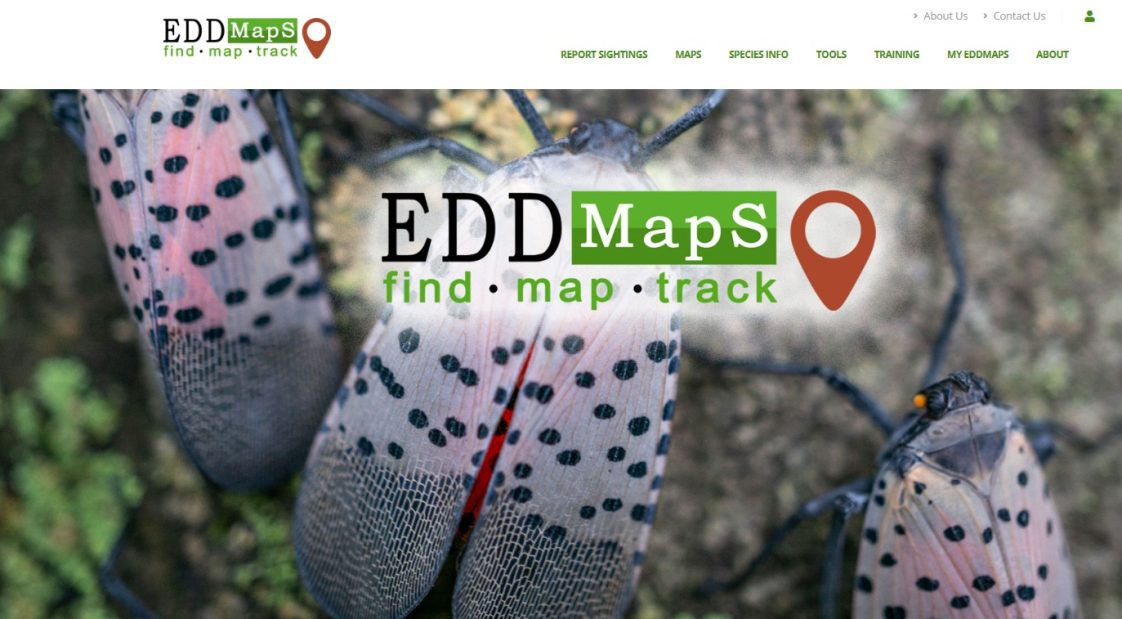
The EDDMapS platform (eddmaps.org) is used specifically to document nonnative species. The spotted lanternfly, pictured here, is one invasive species that may arrive in Alabama in the coming years from neighboring Georgia and Tennessee.
When to Use EDDMapS
- Observation of a known invasive species or nonnative in a new area.
- Sighting of an invasive species, such as an Argentine black and white tegu, where rapid response to your observation is important.
- Observation data that you want directly available to natural resource agencies and land managers.
- Observation that you are confident is a nonnative species.
Summary
By applying each tool in the right context, volunteer scientists and professionals can make meaningful contributions to conservation, research, and ecosystem health. At the end of the day, though, be sure to report your observation somewhere. After all, in order to be better stewards of the natural world, if you see something invasive, say something.