
Forestry & Wildlife

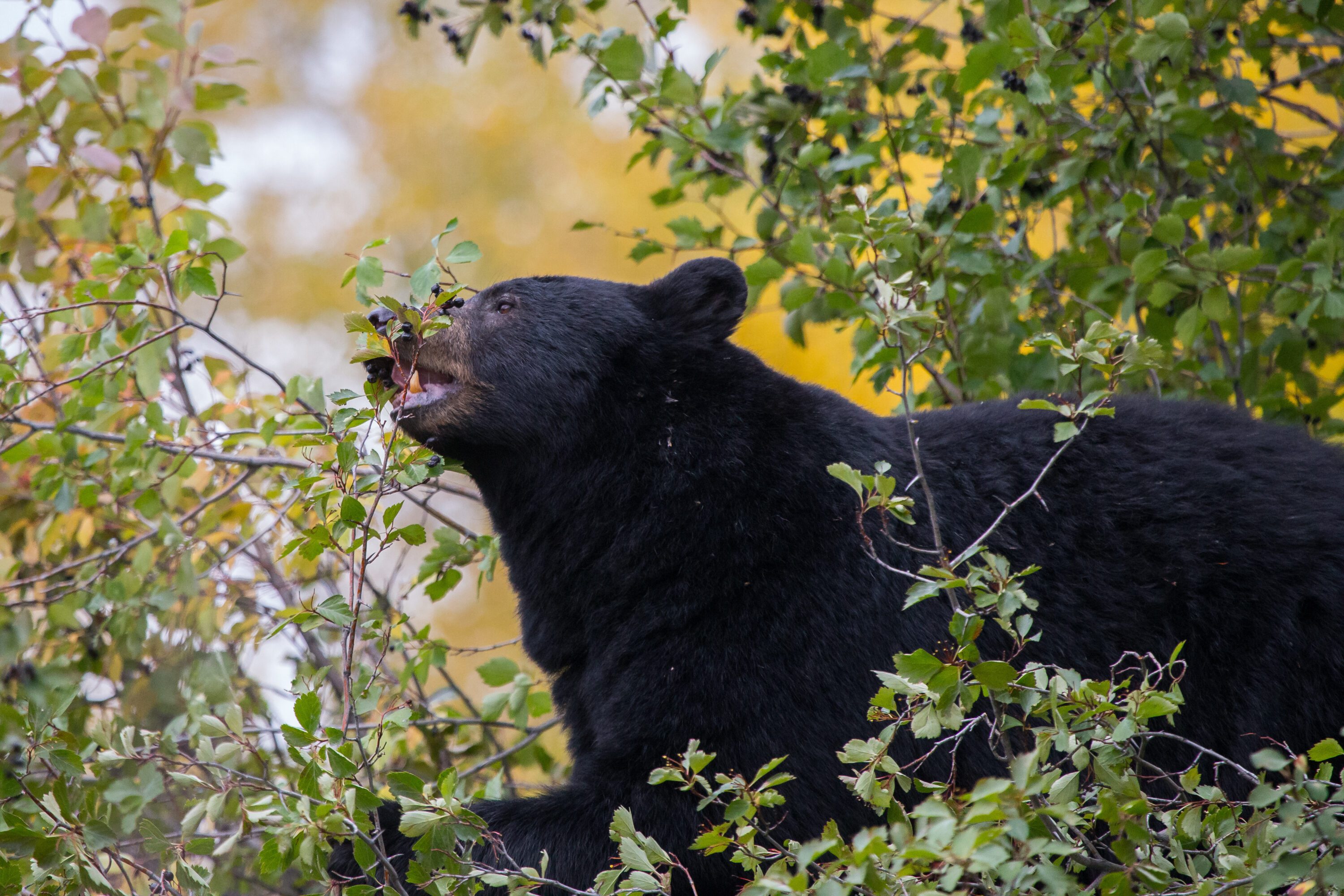
After decades of decline, the American black bear is reestablishing in Alabama. Understanding their behaviors along with how to avoid and deal with encounters can make for peaceful coexistence.
Black bears (Ursus americanus) are North America’s most widespread bear species, historically found in forested regions throughout the United States and Canada. Following decades of decline due to unregulated hunting and human-driven habitat loss, populations are now increasing in many states, including Alabama, Georgia, and North Carolina, thanks to game laws and wildlife management practices. In Alabama, rebounding black bear populations are considered a conservation success story.
As bears continue to repopulate and expand into areas where they once thrived, the potential for human interaction increases. It is beneficial to know tactics to avoid and deal with encounters.
Characteristics
Black bears prefer large tracts of forest land with minimal human presence. They thrive in woodlands, mountainous areas, and coastal regions but may be found anywhere they can find ample food, water, and shelter.
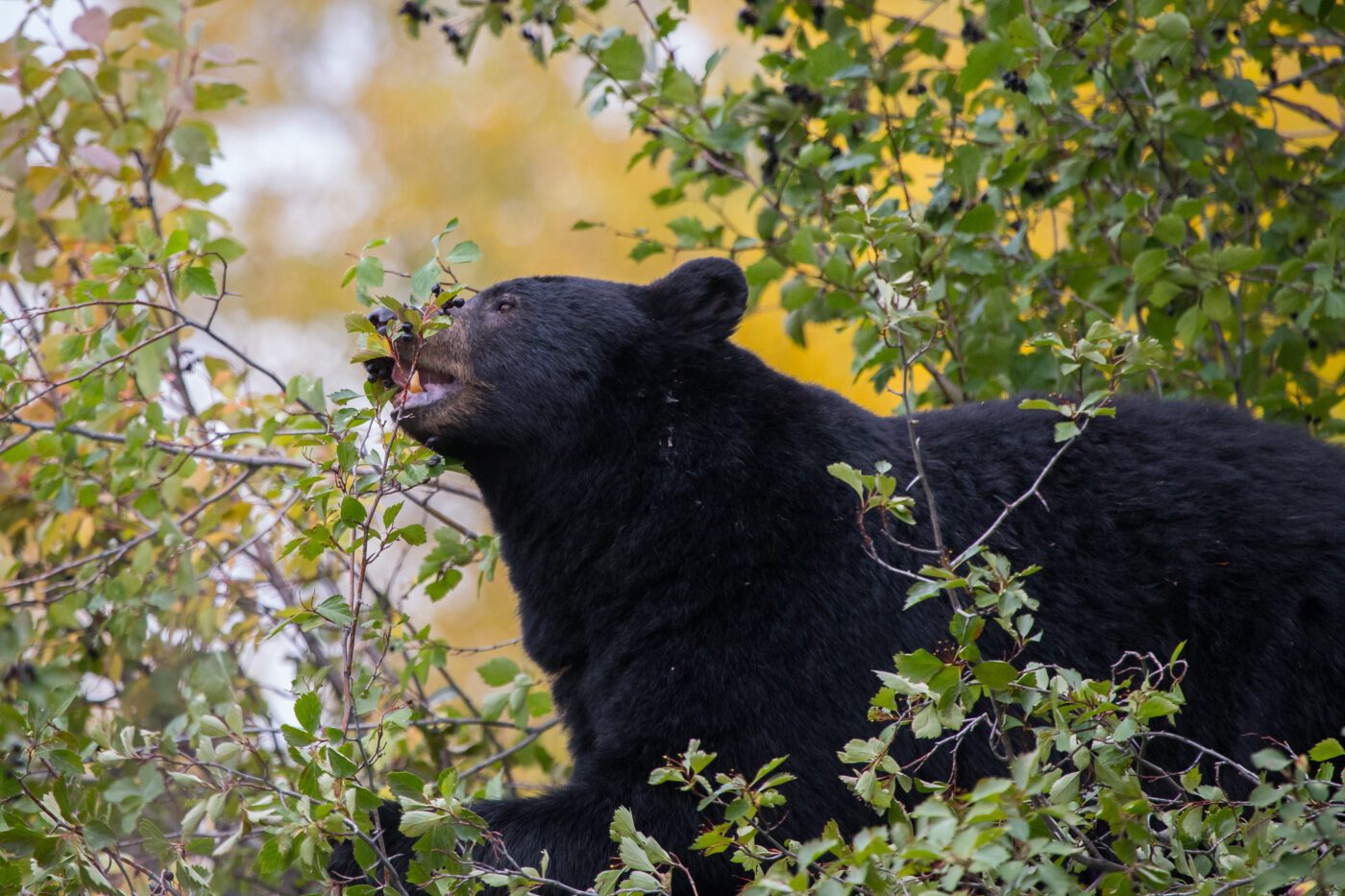
Figure 1. Black bear foraging for berries.
Black bears are opportunistic omnivores, meaning they feed on a wide variety of foods available to them. Approximately 85 percent of their diet consists of foraged food, including berries, grubs, acorns/nuts, crops, roots/tubers, grasses, and occasionally small mammals and fish. They also can be predators of deer and their fawns; however, bears prefer foraging, which requires less effort than hunting other animals (figure 1).
With an excellent sense of smell, bears rely on their nose to find food, which can lead them into towns and backyards where they are drawn to attractants like pet food, trash cans, bird feeders, bee hives, and even food residue on outdoor cooking equipment and pet food bowls.
Black bears are solitary animals, rarely found in the company of other black bears unless in family units or during breeding season. Black bears live within home ranges, which is an area they occupy and move through on a regular basis. These home ranges can be large but often overlap, with females typically roaming areas of 10 square miles and males 25 square miles. Adult male black bears generally average 200 to 300 pounds, and females typically range from 120 to 180 pounds.
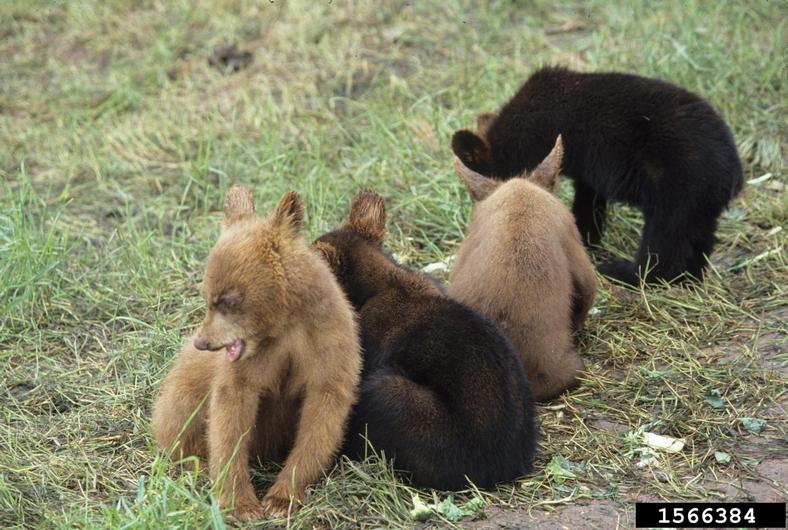
Figure 2. Black bear litter of four cubs. Coat color can vary from black to light brown, but variations beyond black are rare in the eastern United States. (Photo credit: Joy Viola, Northeastern University, Bugwood.org)
Breeding occurs in June and July, and births take place in late January and February while the female is denning. Bears seek out sheltered spots for denning, such as tree hollows, rock cavities, or areas with heavy brush, such as piles left from logging activities.
Black bears are not true hibernators, but instead enter a state of torpor, a lighter form of dormancy. While in torpor, a black bear’s heart rate, metabolism, and oxygen consumption decrease, allowing them to conserve energy when food is scarce. Unlike true hibernators, black bears’ body temperatures decrease only slightly, allowing them to wake up more easily during warm Alabama winters.
After cubs are born in the den, they nurse continuously and weigh up to 5 to 7 pounds when they leave the den in late March or early April (figure 2). At 1½ years old, cubs leave their mother. Females generally stay close to their mother’s home range, but males will travel farther away to avoid inbreeding.
Black bear sightings are most common in spring and summer when young males have emerged from torpor and are dispersing to find new territory, and adult males are covering extensive areas looking for mates.
Population Growth
Historically, black bear populations in the Southeast have significantly declined, reaching their lowest point in the early 1900s. In Alabama, populations were reduced to an estimated 80 percent, leaving only a small breeding population in the Mobile River Basin of Mobile and Washington Counties. In recent years, a second population of black bears has naturally expanded from Georgia and is now established in northeast Alabama (figure 3).
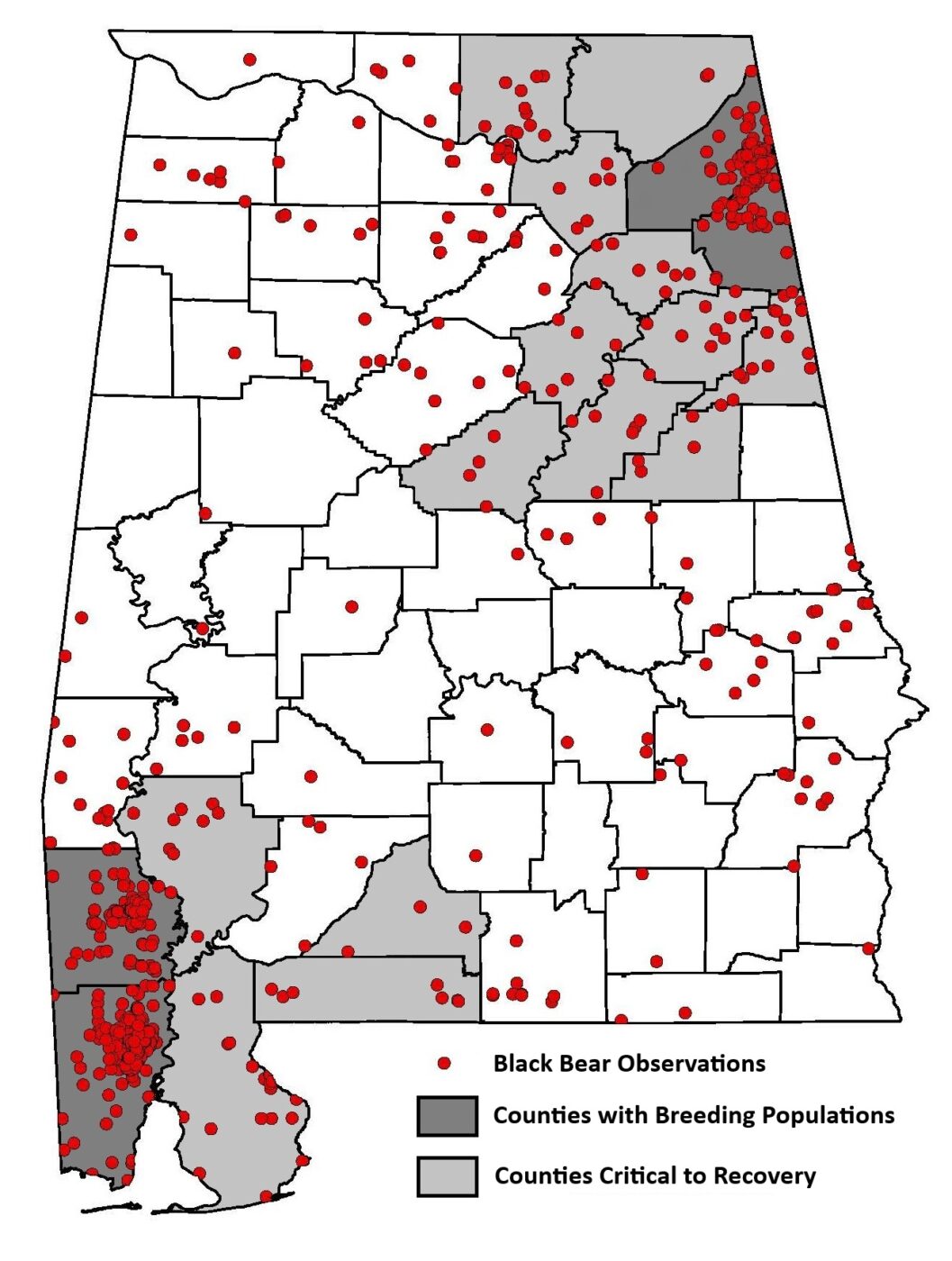
Figure 3. Black bear distribution in Alabama. Dark gray counties host breeding populations, and light gray counties are anticipated to be critical to black bear recovery. Red points are black bear observations from 2010 to 2024. (Graphic courtesy of ADCNR-AWFF)
Black bear litters average one or two cubs; however, bears in northeast Alabama have been observed with litters of three or four cubs, an indication of bear health and population recovery that highlights the high-quality habitat that northeast Alabama has to offer black bears.
Because of growing bear populations in northeast Alabama, areas surrounding DeKalb, Cherokee, and Etowah Counties will continue to see increased bear activity as populations expand and disperse to other forested areas in the region.
Laws and Regulations in Alabama
In Alabama, black bears are regulated and protected by the Alabama Department of Conservation and Natural Resources (ADCNR). Although black bears are listed as a game species, there is currently no open hunting season in the state.
Black bears are protected in Alabama to support population recovery, and it is illegal to injure, kill, trap, or capture black bears at any time (AL Code § 9-11-481). State law also prohibits selling, buying, or transporting black bears or their parts, whether alive or dead, except for bears legally harvested in other states. While most violations fall under state jurisdiction, federal penalties may apply if illegal activities occur across state lines, such as transporting unlawfully taken wildlife into or out of Alabama.
Penalties for violating black bear laws can include fines, loss of hunting privileges, and jail time. For more information and updates on Alabama laws regarding black bears, visit the Outdoor Alabama website.
Living Safely Near Bears
Black bears typically avoid humans, perceiving people as a threat and not as prey. Attacks are uncommon and fatalities are rare, with about one death per year in the United States from bear attack. Studies have shown that 52 percent of nonfatal incidents were defensive, 15 percent were predatory, and 33 percent were food motivated. In fatal incidents, most were predatory (88 percent). Many defensive attacks involve a bear that is startled, a female with cubs, or a bear that has been food conditioned. While black bears are naturally wary of humans, they can be drawn out of their natural habitat and into more populated areas when searching for mates, territory, or food.
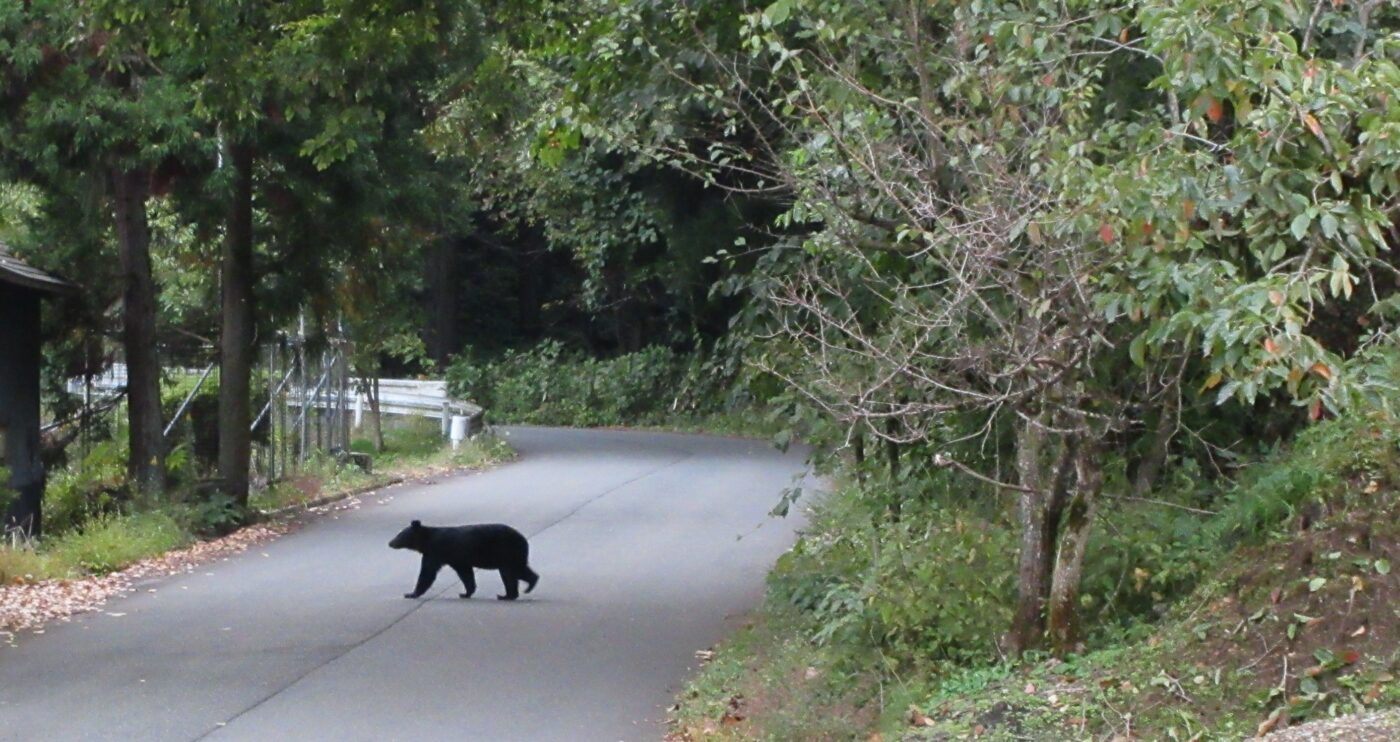
Figure 4. A young black bear crossing a rural road
Rising bear populations and continued urban sprawl have increased the likelihood of bear encounters in Alabama. Development and habitat fragmentation can cause bears to cross through neighborhoods or residential areas when traveling from one tract of land to another (figure 4).
Preventing Access to Food
Intentionally or unintentionally feeding bears can have serious consequences. Bears will return to the same area repeatedly if they learn that food is accessible. If you frequently see a bear on your property or near the same area or building, it is likely the same individual returning to a known food source.
Bears that associate humans with food lose their natural fear of humans and may approach humans for food or become aggressive. These individuals are often referred to as nuisance bears because they pose a threat to human safety or property due to repeated food conditioning. Bears that have been food conditioned may be relocated or euthanized by wildlife authorities for public safety.
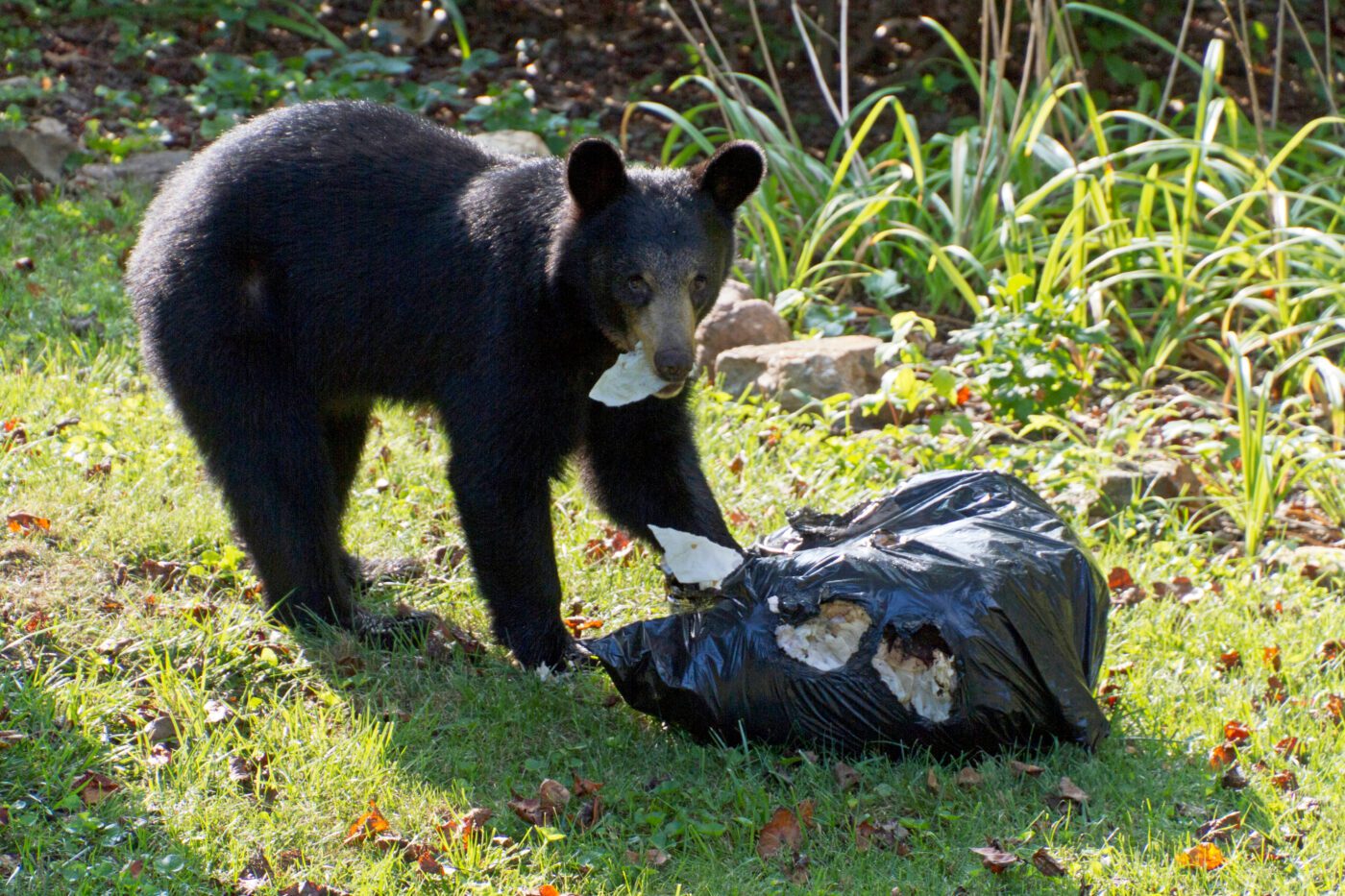
Figure 5. Black bear searching for food in trash. This situation creates food conditioning that often leads to nuisance relocation or euthanasia, spawning the phrase “‘a fed bear is a dead bear.”
While relocation of nuisance bears is generally preferred by the public over euthanasia, it is not an effective or humane solution. Relocating these bears involves capturing and releasing them into unfamiliar territory. Bears that have been relocated may have trouble adapting to their new environment, and many do not survive. Some bears will attempt to return to their original range, while others will cause similar problems where they are released. The best solution to dealing with nuisance bears is to remove access to human food sources, thus preventing bears from becoming food conditioned in the first place (figure 5).
Reducing Attractants around the Home
If black bears have been spotted in your area, there are steps you can take to avoid drawing them to your property.
Remove food attractants. Bears have an excellent sense of smell and are often drawn to residential areas by the scent of food or garbage. Once bears learn a specific location offers an easy source of food, they will likely return. Here are some tips:
- Secure trash by bear-proofing containers. You can purchase various types of trash can locks to secure your garbage. Another option is to buy bear-resistant trash cans that have more secure lids and are made from heavy-duty materials (figure 6).
- Store trash in garages or enclosed structures.
- Store grills and smokers in a secure area, such as a garage or shed.
- Remove bird feeders, especially during active bear season (figure 7).
Clean off food residue. Even small amounts of leftover food, grease, or waste can attract bears to your yard. Here are some tips:
- Clean outdoor cooking equipment (and spills) after each use.
- Clean up any residue or leftover pet food from outdoor bowls. Be sure to take empty bowls inside, as the grease residue from pet foods is highly attractive.
- Clean up fallen fruit from trees or gardens.
- Avoid adding meat, dairy, or oily foods to outdoor compost piles. Sometimes composting must be halted if bears continually visit (figure 8).
Use barriers and deterrents. When attractants cannot be completely removed, barriers and other deterrents can help discourage bears from entering your property. Here are some tips:
- Use sturdy fencing. While not completely bearproof, fences can function as a deterrent.
- Consider installing an electric fence around larger areas or attractive resources, such as gardens, beehives, chicken coops, or compost areas (figure 9).
- Use heavy chains, locks, or ratchet straps to secure areas and exclude bears from a wide variety of resources.
- Set up lights, alarms, and motion-detecting water sprinklers to startle and repel bears.
-
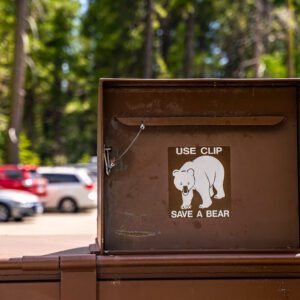
- Figure 6. Bear-proof garbage cans and dumpsters protect against bears accessing human food.
-
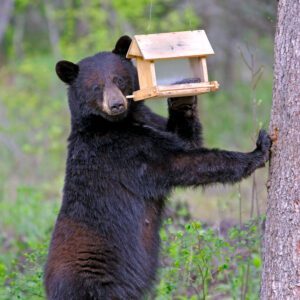
- Figure 7. Black bear reaching for a bird feeder to feed on sunflower seeds
-
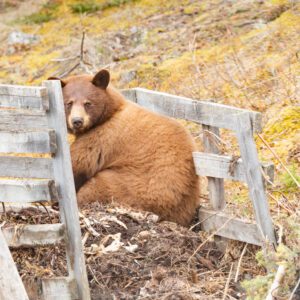
- Figure 8. Most any human food by-products are attractive to black bears, even garden compost piles like the one this bear is scavenging in.
-
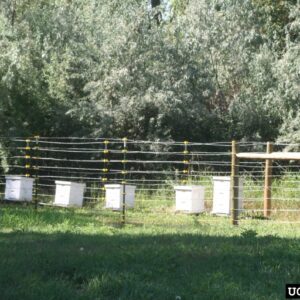
- Figure 9. Electric fencing is effective at protecting resources such as gardens and apiaries. (Credit: Whitney Cranshaw, Colorado State University, Bugwood.org)
What to Do During a Bear Encounter
You see a bear in the wild:
- Remain calm.
- Do not run.
- Do not approach the bear.
- Move slowly and quietly back away.
A bear approaches you:
- Stand your ground. Do not turn your back or run.
- Make yourself look big by standing tall and taking a wide stance.
- Yell, clap, and make other loud noises to scare away the bear.
A bear is on your property:
- Keep your distance.
- Do not corner the bear. Always provide an escape route.
- Make loud noises to scare it away.
Black bears are skittish and generally run when they encounter humans. If a bear does attack, it is best to fight back utilizing any available deterrents, such as pepper spray, bear spray, air horn, or stun device, along with any rocks or sticks that you can use to defend yourself and ward off the bear.
Conclusion
Thanks to conservation efforts, Alabama is fortunate to have a growing black bear population once again. As bear populations in Alabama continue to rebound, human and bear interactions are likely to increase. With proper planning and responsible behavior, black bears and humans can coexist safely.
Further Reading
- Hooker, M. J., et al. 2025. Potential for population expansion by black bears in Alabama. Journal of Mammalogy, Oxford Academic.
- National Park Service. 2026. Black Bears: Great Smoky Mountains National Park Is Bear Country.
 Elizabeth Shea, Extension Intern, and Norm Haley, Extension Agent, both in Forestry, Wildlife, and Natural Resources, Auburn University
New February 2026, Black Bears in Alabama: History, Biology & Reducing Conflict, FOR-2198