
Forestry & Wildlife

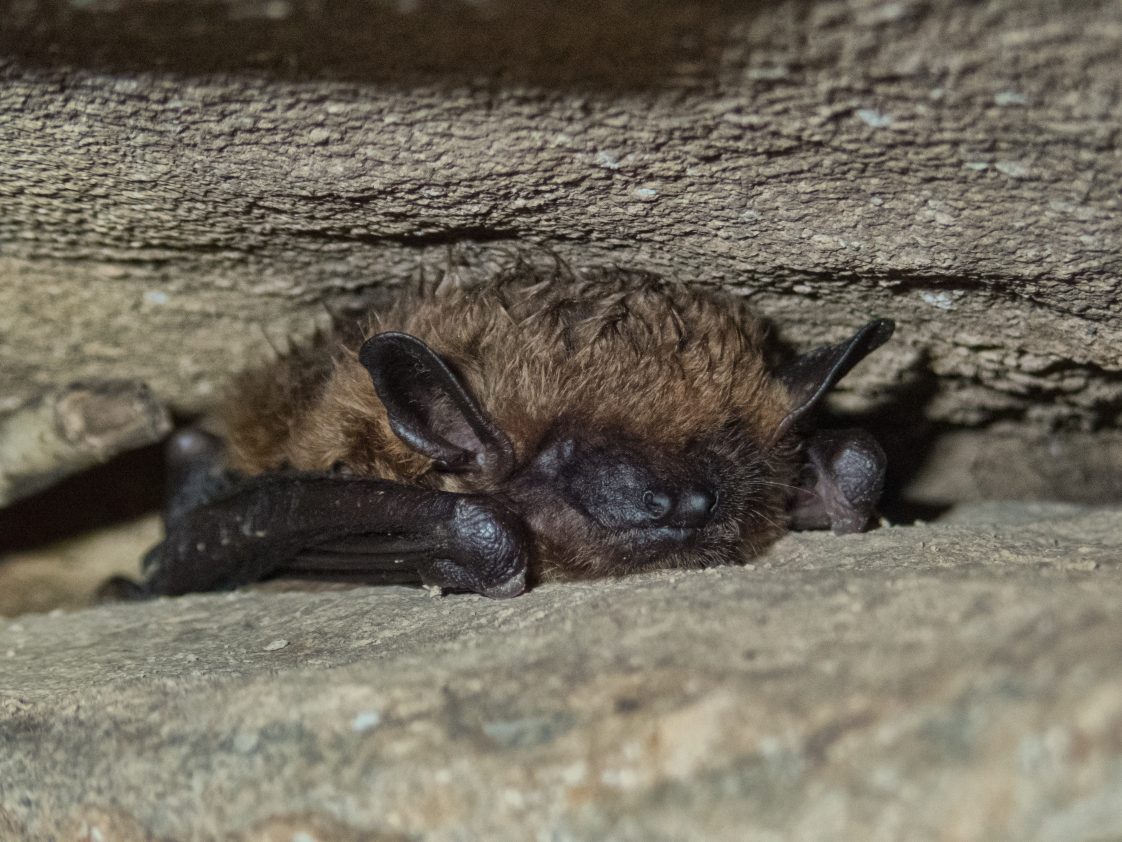
AUBURN UNIVERSITY, Ala. — As the only mammal capable of true flight, the bat is one of the most fascinating creatures across the world. From countless television shows and movies to Halloween décor, bats have become cultural phenomenons. With this fascination comes a flurry of popular myths and misconceptions. In reality, these misunderstood creatures play critical roles in their ecosystems.
Fact or Fiction?
Wesley Anderson, an Alabama Extension wildlife specialist at Auburn University, said there are few animals with more myths surrounding them than bats.
“No matter what Barney Fife says, bats won’t get stuck in your hair and lay eggs,” Anderson said. “Bats are also not blind. While they have small eyes, they can see well in dark conditions. They also rely on echolocation to find insect prey and navigate at night.”
Thanks to the popularity of Dracula and other vampires who transform into bats, the myth that most bats suck blood exists. While authors and directors have certainly taken creative liberties over the years, the blood-eating storyline is not completely false but is greatly exaggerated.
“There is a small group, fittingly known as vampire bats, that do eat blood,” Anderson said. “However, instead of sucking blood, vampire bats will create a small cut with their teeth, then lap the blood. For Alabamians, the closest vampire bats are in Mexico, so, unless you take a trip south of the border, the chance of encountering one is small.”
Bats of Alabama
Globally, there are more than 1,400 known bat species. However, Alabama is home to only 16 species, with the northern half of the state having the greatest diversity of species. Anderson, also an assistant professor in the Auburn College of Forestry, Wildlife and Environment, said big brown bats, Brazilian/Mexican free-tailed bats, eastern red bats and evening bats are most common in Alabama.
“Free-tailed bats are the ones that often take up residence in big, manmade bat barns or boxes, where there can be hundreds of thousands of bats,” Anderson said. “They often use other human-made structures, too.”
From insect control to seed dispersal, there are many services that bats provide. In pest control alone, the United States Geological Survey reports that bats save U.S. agriculturalists billions of dollars each year, with some estimates being as much as $53 billion annually.
“Bats offer some of the best free pest control that we have,” Anderson said. “In general, they do have diverse diets. However, for those eating insects, they need to consume 120% of their body weight per day. That is a lot of insects removed at no charge.”
-
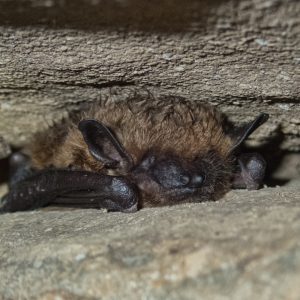
- Big Brown Bat
-
-
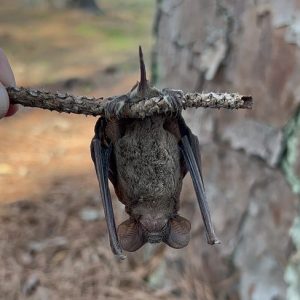
Mexican Free-Tailed Bat
Photo credit: © planthropist, iNaturalist.org (CC BY-NC) some rights reserved
-
-
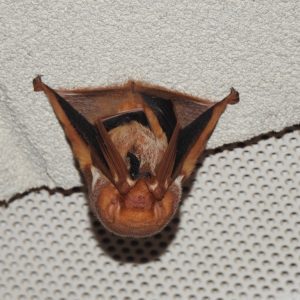
Eastern Red Bat
Photo credit: © Grover J. Brown, iNaturalist.org (CC BY-NC) some rights reserved
-
-
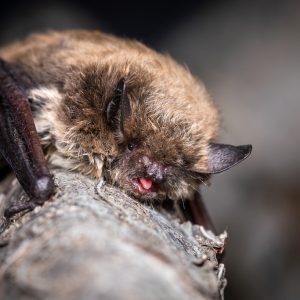
Little Brown Bat
Photo credit: © Jason Headley, iNaturalist.org (CC BY-NC) some rights reserved
Unfortunately, conservation efforts are needed to protect many of the species in Alabama. Ten species have some level of protection, either from the state government or both the state and federal governments.
“Three Alabama species are currently threatened with extinction and are listed under the Endangered Species Act,” Anderson said. “Those species include the gray bat, Indiana bat and the northern long-eared bat. Many of these species are threatened by a fungus that causes the disease, white-nose syndrome.”
For more information on conservation efforts in the state, visit the Alabama Department of Conservation and Natural Resources website, www.outdooralabama.com.
Bat Management
Even with the benefits they offer, there are some instances in which people may need to manage bat populations. Anderson said one of those instances is when they get into houses and other structures.
“If that happens, it is usually best to call a qualified nuisance wildlife operator, as bat problems can be tricky,” Anderson said.
While it is rare, the other time bats are not friends is when rabies is involved. Less than 1% of bats will test positive for rabies. However, Anderson said they are one of the more common mammals to contract the disease.
“For this reason, it is especially important to seek prompt medical treatment if a bite from a bat is observed or even suspected,” he said.
More Information
For more information, check out the new Alabama Extension publication, “Bat Management for Alabama.” There, people will find more about bats and related myths, benefits, conservation and management. Also, check out the “Alabama Bats” poster at aces.edu, which provides more information about the environments where bats live.