
Forestry & Wildlife

AUBURN UNIVERSITY, Ala. — For some hunters, the pursuit of a single species is a lifelong passion. Whether it’s the rack of a whitetail buck or the gobble of a spring tom, their focus never wavers. For others, variety is the spice of hunting. These outdoorsmen and women embrace the challenge of multiple seasons and species. When hunters take on the responsibility of managing land for wildlife, there is a critical question to build a foundation for success: Can you manage your property for multiple species?
Kyle Marable, a forestry, wildlife and natural resources agent with Alabama Extension at Auburn University, said the answer is, yes — with careful planning and a clear understanding of habitat needs.
“The best place to start is by consulting a local natural resources professional,” Marable said. “These individuals are trained to know the local wildlife and their needs, the best management practices in the region and even how to help land managers figure out their personal wants and needs.”
Shared Habitat, Great Opportunity
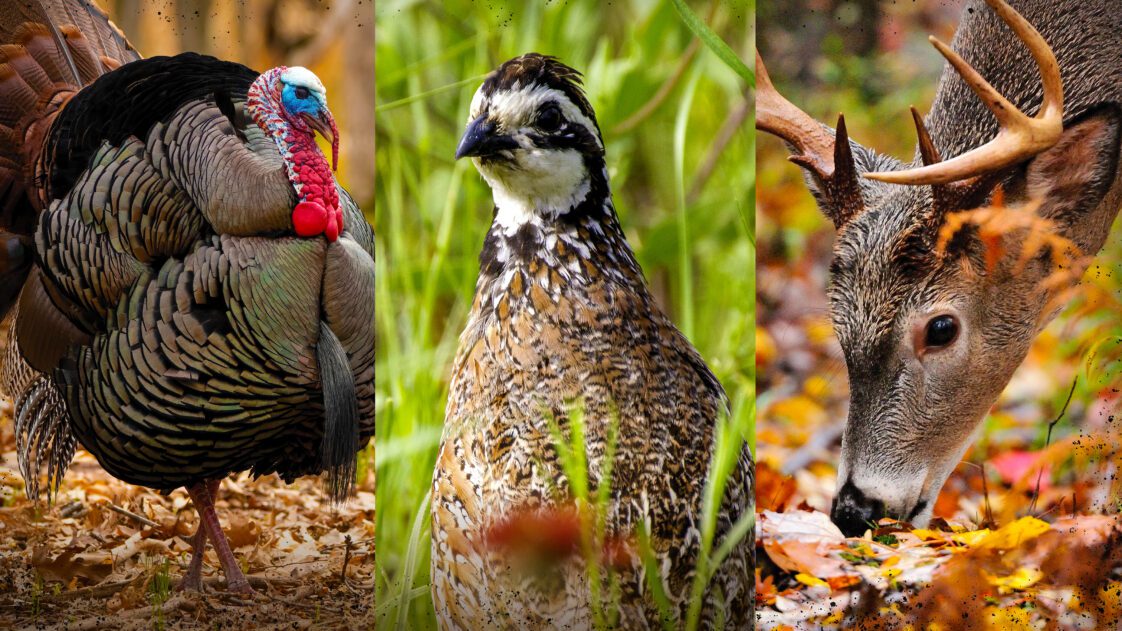
In the Southeast, the three game species often managed together are whitetail deer, eastern wild turkey and northern bobwhite quail. These native species share overlapping habitat needs, particularly a reliance on early successional ecosystems. These areas are dominated by grasses, forbs and young shrubs that emerge after disturbances like fire or timber harvest.
Quail are habitat specialists that require a substantial early successional component for survival. Deer, on the other hand, are generalists and can adapt to a variety of ecosystems. However, they do thrive with early successional habitat.
Marable, who is also a certified wildlife biologist, said turkeys fall somewhere in between, needing more of this habitat than deer but less than quail.
“When managing for species with similar habitat needs, it’s often beneficial to focus on the species with the most specialized needs,” Marable said. “The more generalist species will be able to adapt better.”
Defining Goals and Priorities
Before diving into habitat work, it is important for landowners to define their goals. Are you a single-species hunter focused solely on trophy bucks or a multispecies enthusiast who wants to hunt deer, turkey and quail? Maybe you’re a conservation-minded manager aiming for a balanced ecosystem.
Each goal influences management decisions. For example, a quail-focused strategy may involve frequent prescribed burns and hardwood removal, while deer management might prioritize mast-producing trees and varied burn intervals. If management difficulties arise, knowing the priority species for a given tract of land helps guide decision making.
Property ownership and control also play a role. Those leasing land or with limited management rights may only influence food plot composition and timing. Full owners have more flexibility — but even they face constraints like property size, budget and labor availability.
Scale Influences Strategy
Property size significantly affects the potential for multispecies management. Small landowners can optimize habitat within their acreage but may face limitations. For instance, while deer and turkey have large home ranges and may regularly leave the property, quail coveys might thrive but not in numbers sufficient for sustainable hunting.
Marable said the deer, turkey and quail in the Southeast likely have enough habitat overlap that landowners could manage for all three on a small property. Larger properties offer more options. Managers can divide land into zones and tailor practices to specific species. For example, one area might be burned on a one-to-two-year interval and cleared of upland hardwoods for quail, while another retains mast trees and follows a three-to-seven-year burn cycle for deer.
“This ability to independently manage different parts of the property can create significant benefits,” Marable said. “Parts of it could be dedicated to strict quail management — which the deer would likely greatly benefit from anyway — and parts could be dedicated to strict deer management to meet the needs missing from the quail-focused areas.”
The Turkey Middle Ground
Turkey management often falls between the two extremes of quail and deer strategies. A turkey-focused plan might include patchwork burns every one to three years, as well as open forests with early successional plants and retention of hardwoods for mast, cover and roosting. While this approach may not fully satisfy the needs of deer or quail, it still provides a balanced habitat that supports all three species to varying degrees.
On smaller properties, this middle-ground strategy may be the most practical compromise. Quail populations may not reach huntable levels and deer may rely on neighboring lands for some resources, but habitat improvements still benefit wildlife overall.
Ecosystem Diversity as an Asset
Some properties naturally lend themselves to multispecies management because of ecosystem diversity. A tract with both wetlands and upland forests could support waterfowl in one area and upland game in another. Because these habitats don’t overlap, managers can optimize each zone without conflict.
Measuring Success
Effective wildlife management isn’t just about habitat manipulation — it’s about tracking outcomes.
Marable encourages landowners to be active and intentional with their land management.
“Take pictures, document your current habitat and wildlife management, and record your hunting successes and beneficial harvest data,” Marable said. “You can also note your likes and dislikes, make informed decisions and learn when to be content with successes.”
Success can be measured objectively through plant community assessments, population numbers and health indicators. But Marable said the ultimate measure is more personal.
“There is a deep sense of satisfaction when you can look at your property and know that you’ve improved the habitat quality and created a healthier, more stable population,” Marable said. “A measure of success may even be when you’ve had that successful harvest you were after.”
Moving Forward
Managing land for multiple species is both an art and a science. It requires understanding habitat needs, setting clear goals and making informed compromises. Whether you’re working with 50 acres or 500, Marable said the key is to be intentional, adaptive and engaged. While news stories and feature articles can offer valuable insight, hunters and landowners should always work with experts to develop and implement specific land management practices.
“Work with a natural resources professional, learn your property, learn your plants, seek out research-based management practices and be active with your management,” Marable said.
In the end, multispecies management is about more than maximizing harvests. It’s about stewarding the land for future seasons, future hunters and the wildlife people cherish.