
Forestry & Wildlife

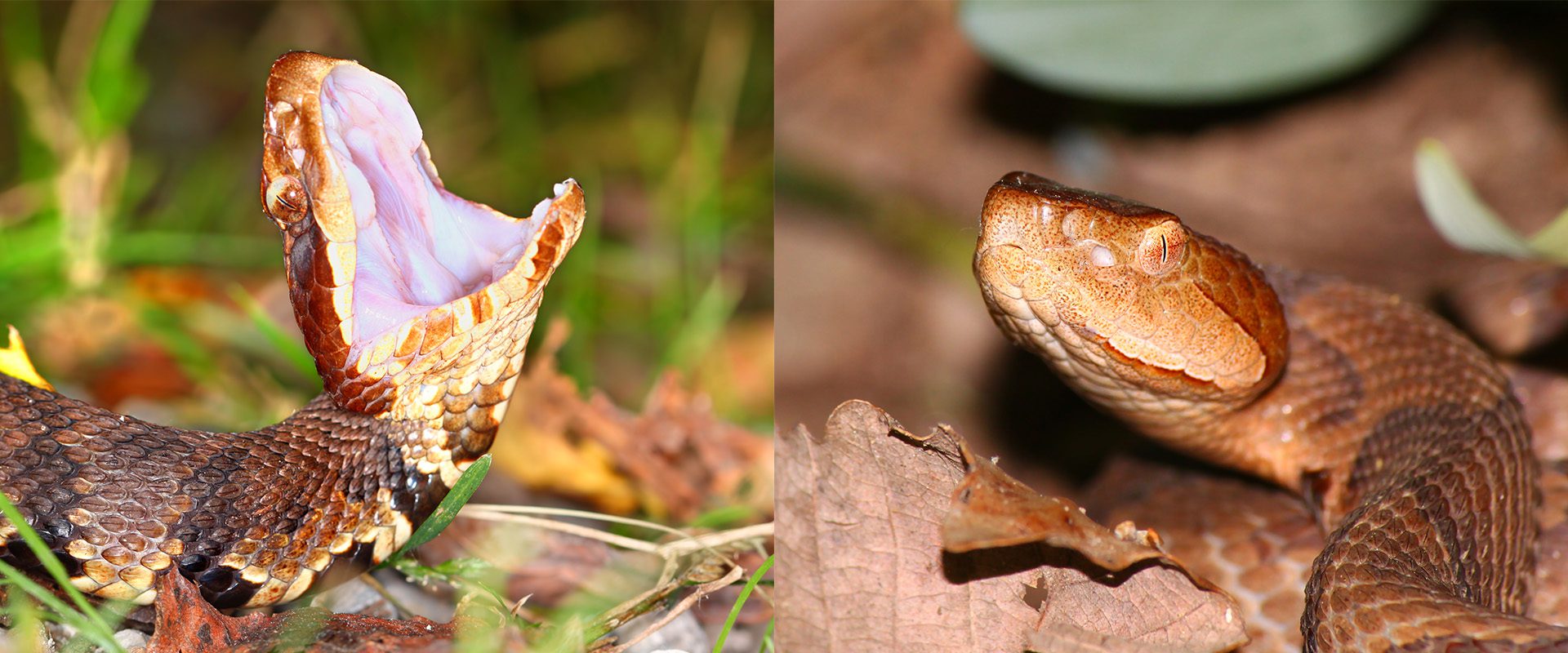
AUBURN UNIVERSITY, Ala. — Alabama is home to a variety of snakes, including six venomous species. The copperhead and cottonmouth are the most encountered of the venomous snake species throughout the state. Understanding their differences, similarities and behaviors can help residents appreciate the vital roles these snakes play in the ecosystem.
“Copperheads and cottonmouths, particularly, are some of our most feared wildlife in Alabama,” said Wesley Anderson, an Alabama Extension wildlife specialist at Auburn University. “While they are both deserving of respect, they are also both commonly confused and misunderstood. Neither are nearly as aggressive or dangerous as many people think.”
Shared Similarities
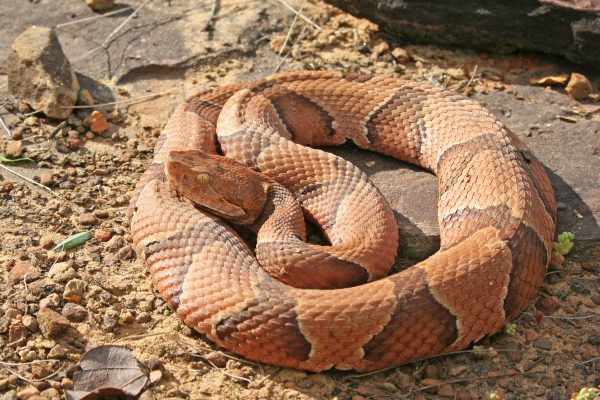
Copperhead
Copperheads and cottonmouths give live birth in late summer, typically in August or September. The newborns are venomous from birth but no more dangerous than adults. Young snakes are often easier to identify because of their more defined markings and yellow tail tips, which they use to lure prey.
Both species possess venom that breaks down cells and tissues. However, it is a myth that either species is quick to strike without warning. In general, both will vibrate their tails when threatened. Like all venomous snakes, they can still bite even after death, so caution is always advised when handling a recently killed snake.
“Venomous snakes play important roles in our environment, like pest control, and I don’t personally advocate for killing any snake — venomous or not,” said Anderson, also an assistant professor in the Auburn College of Forestry, Wildlife and Environment. “If someone feels like they must kill a copperhead or cottonmouth, please at least take precautions after doing so.”
It is important to never handle dead snakes with bare hands. Anderson said the head can still deliver a dangerous bite hours after being decapitated. Also, be mindful of children and pets. If they are close by, move the snake’s body with a shovel or rake to an area where they cannot encounter it.
Unique Differences
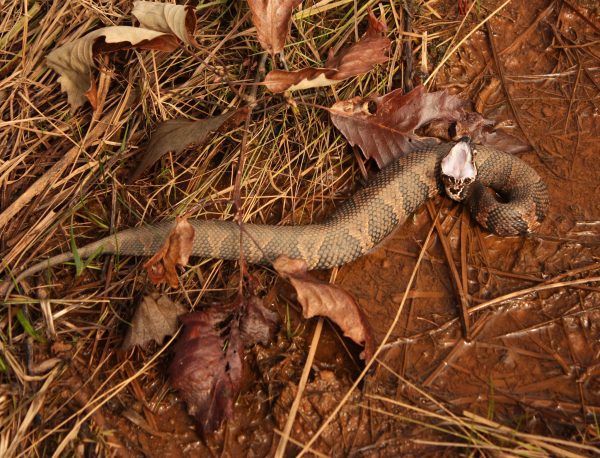
Cottonmouth
Copperheads are the most encountered venomous snake in the U.S., particularly in suburban and urban areas. They are medium-sized snakes, typically measuring 2 to 3 feet long. Their tan-to-copper coloring is distinctive, but copperheads are not always easy to identify. Multiple species of harmless snakes are often mistaken as copperheads and killed.
Cottonmouths, also known as water moccasins, are larger and heavier than copperheads are, averaging 2.5 to 4 feet long. They are semiaquatic snakes and are commonly found near water. They hunt both in water and on land, feeding on a wide range of prey, including fish. Their initial patterns may resemble those of copperheads, but Anderson said their markings tend to appear more pixelated or ragged.
“As cottonmouths age, they may lose their patterns almost entirely,” Anderson said. “Unlike copperheads, cottonmouths have a darker facial mask and sometimes show a light-colored mouth, which can appear white.”
Contrary to popular belief, copperheads are more likely to bite than cottonmouths are. However, while copperheads are responsible for the most venomous snakebites in the U.S., their bites are rarely fatal. Rather than fleeing, they often rely on camouflage to avoid confrontation.
Cottonmouths are more likely to stand their ground when confronted. They will gape and expose their light-colored mouths to serve as a warning signal to back off. Despite this dramatic show, fatalities are extremely rare from this species. In fact, cottonmouths only account for about approximately 2% of snakebite deaths in the U.S.
More Information
Both copperheads and cottonmouths are important parts of Alabama’s natural landscape. While they can seem scary if threatened or accidentally encountered, they generally avoid humans when given the opportunity.
Learning to identify these snakes, understanding their behavior and maintaining a respectful distance can help prevent negative encounters, while promoting coexistence with native wildlife. For more information on these and other snakes living in Alabama, visit the Alabama Extension website at aces.edu.