
Fish & Water

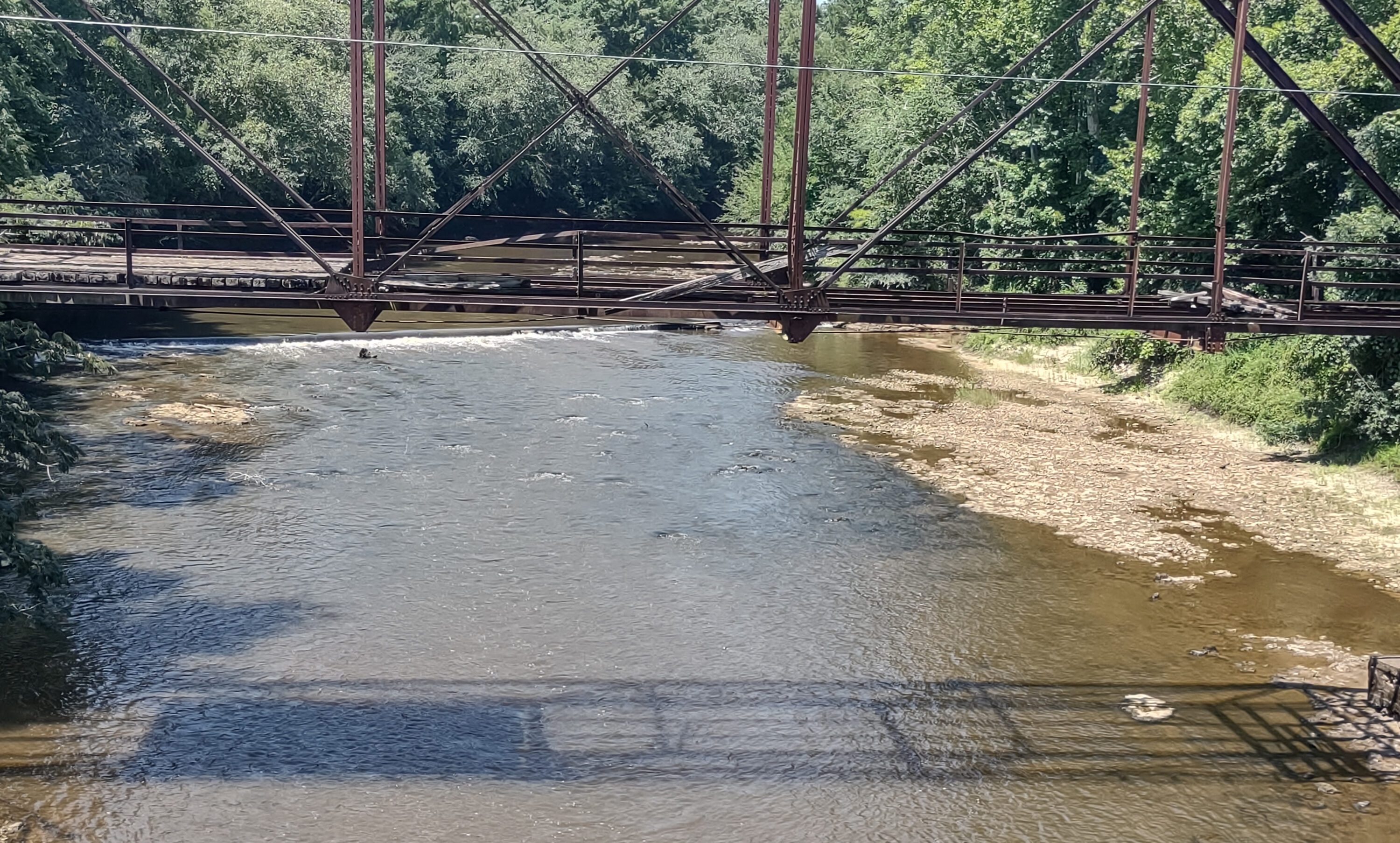
Low-head dams have long been a topic of interest and concern to aquatic resource scientists, managers, recreationist, industry professionals, and community members. Dams referred to as low-head are constructed to produce a low hydraulic head. The hydraulic head of a dam system is the difference in water elevation between the points at which water enters and exits the system. Also known as weirs or mill dams, these structures were commonly constructed throughout the United States during the nineteenth and early twentieth centuries to facilitate the diversion and use of freshwater from streams and rivers.
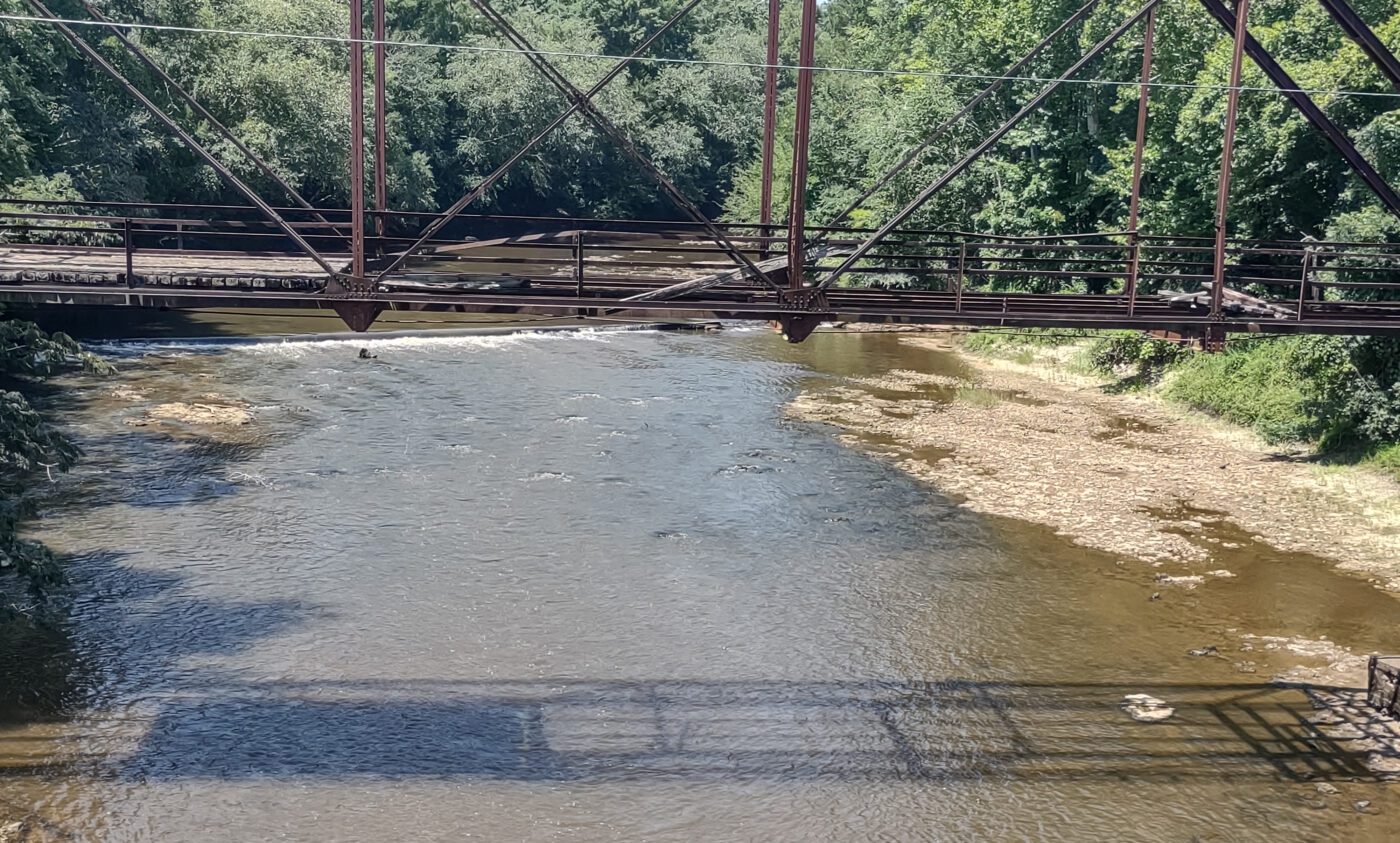
Figure 1. A low-head dam near Coffee County Road 147 on the Pea River. The crest of the dam is difficult to see, indicated only by a faint line of white foam. Photo credit: Michael Mullen
Low-head dams are now considered a major threat to recreationist safety and the health of aquatic ecosystems. They have resulted in the deaths of an estimated 1,400 people nationwide, with at least ten recreationist deaths having been reported in Alabama in the last 5 years. Recognizing these dangers, various stakeholder groups are leading efforts to develop a national inventory that lists the locations of low-head dams and provides information about the hazards they present to the public.
Low-Head Dams in Alabama
Most low-head dams in Alabama produce hydraulic heads that are 1 to 15 feet. These are much smaller than the heads created by larger dams used for hydropower, which can be several hundred feet at their maximum reservoir level. Because the drop-off appears relatively small, inexperienced recreationists or those unfamiliar with low-head dams may mistakenly assume that the area is safe. In fact, many recreationists approaching a low-head dam are unable to notice that any drop-off occurs until they are already dangerously close to the dam’s crest (figure 1).
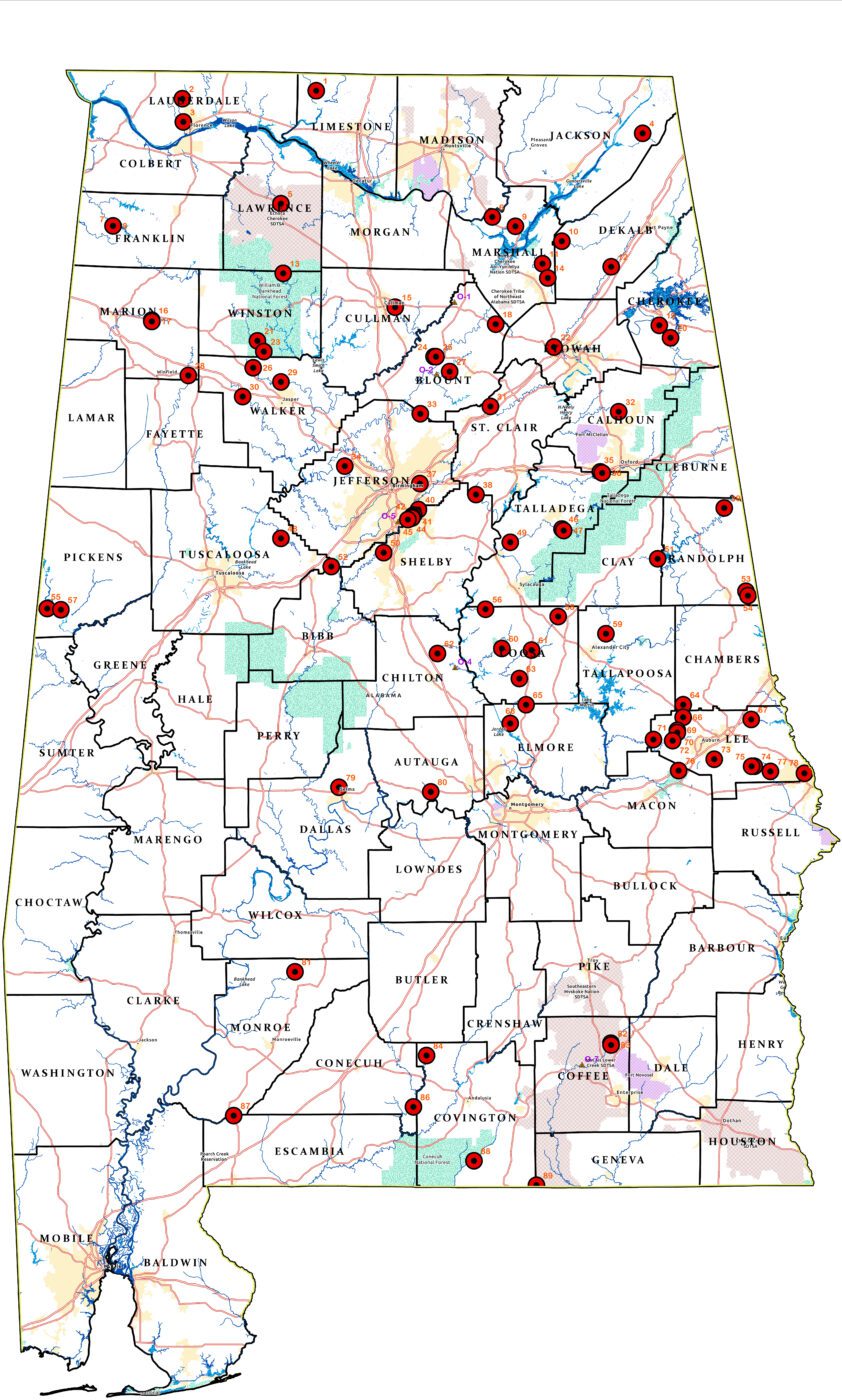
Figure 2. Locations of confirmed low-head dams in Alabama. Find the accessible version of this map at aces.edu/go/DamMap.
Fred Couch, an expert canoe paddler and founder of the Alabama Scenic River Trail (ASRT), has prioritized documenting the hazards on Alabama’s navigable waterways, focusing on the many low-head dams that are present across the state. As of August 2024, Couch and others have identified more than seventy-five low-head dams in Alabama, and it is likely for that number to increase (figure 2). Find an interactive map of these locations at www.aces.edu/go/DamMap. Some of these dams discharge directly onto shallow, submerged rock surfaces, which increases the risk of serious injury for recreationists who unintentionally pass over the dam’s crest.
Two areas that have a particularly high low-head-dam density are Lee County and a roughly 4-mile stretch of the Cahaba River along the Jefferson-Shelby County line. The large number of dams in Lee County is largely attributed to the historical importance of creek-powered mills in the region. The concentrated stretch along the Cahaba River is a result of the City of Birmingham’s desire to generate localized areas of raised water elevation for municipal water harvesting. Many of the dams in Alabama have been abandoned for decades and have fallen into severe disrepair. Derelict dams can present additional safety and navigation challenges that are not present in maintained dams.
In a state with abundant freshwater resources and strong participation in paddling and other water-based recreation, public education and awareness of low-head dam locations and hazards are essential. The Alabama Cooperative Extension System’s RiverKids paddling education program promotes statewide youth and adult participation in responsible outdoor recreation, with water safety being its bedrock. Started in collaboration with ASRT in 2016, many youth paddlers cite water safety—how to save a drowning person, always wear a personal flotation device (PFD) and be safe, water safety is important, and wear your life vest—as the most important things that they learned through the program. Low-head dams and other stream barriers are important topics for educational programs, such as RiverKids, as they work to increase environmental literacy.
What Makes Low-Head Dams Dangerous?
Low-head dams produce a special type of current, often called a hydraulic, that creates a turbulent recirculation immediately downstream of the dam known as a backwash (figure 3). This backwash recirculation can easily trap swimmers and paddlers that cross the crest of the dam, resulting in rapid drowning. PFDs do not prevent a person from being drawn into the recirculating current, because the highly aerated water within the hydraulic is less dense and provides reduced buoyancy. The strength of the hydraulic is dependent upon the amount of water present within the stream. During a particularly dry period, there may be no recirculating current. However, when heavy precipitation falls in an area and large amounts of rainwater drain into a stream where a low-head dam is located, a hydraulic can form within a few hours or less.
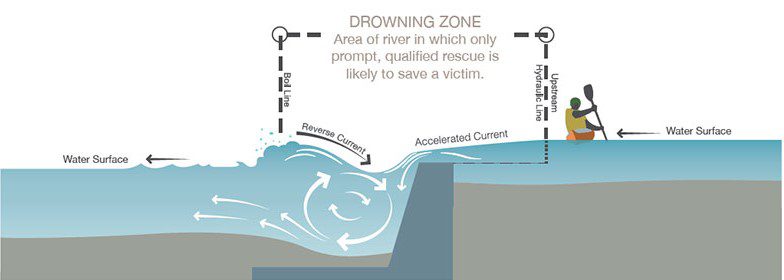
Figure 3. A profile view of a hydraulic. Photo credit: National Weather Service
Avoiding and Escaping Hydraulics
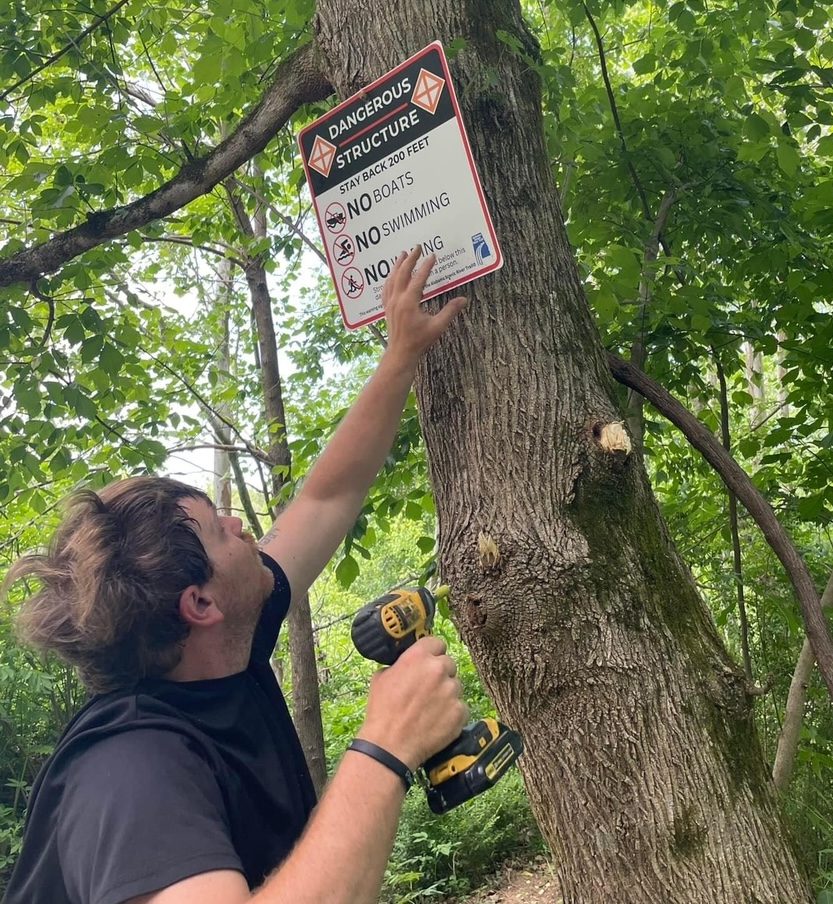
Figure 4. Alabama Scenic River Trail representative installing a sign upstream of a low-head dam. Photo credit: Fred Couch
The best way to survive a hydraulic is to avoid one. If there are danger signs posted along the waterway about a low-head dam, you should turn around before reaching it (figure 4).
If you cannot safely turn around, exit the water and portage your vessel around the hazard. Carry it along the shoreline until you are well downstream of the boil line—the point where the surface of the water appears to froth and bubble. This area marks the transition between the opposing flow directions created by the hydraulic. Upstream from the boil, water is pulled back toward the dam. Downstream from the boil, water flows away from the dam.
As a last resort, if you have no choice but to go over a low-head dam, experts advise to push through in a straight path with as much force as possible to attempt to cross the hydraulic before it can pull you in.
If caught in a hydraulic, never attempt to swim against its surface current. Instead, dive down toward the bed of the stream as deep as possible to increase your chance of being flushed out of the recirculation. Do not remove your PFD unless it is preventing you from descending. If you cannot dive, assume the low-head dam safety position by tucking your chin down against your neck, drawing your knees up to your chest, and wrapping your arms tightly around your knees. Being in this position increases the chance that the recirculation will push you down to the streambed, allowing you to be flushed out to safety.
Rescuers should never enter a hydraulic if other options are available. If you witness another recreationist caught in a hydraulic, remain on the shore and call emergency services.
Ecological Impacts of Low-Head Dams
Research suggests that low-head dams can have similar environmental impacts to those caused by larger hydropower dams. Dams disrupt natural sediment transport by trapping sediment upstream of the dam structure, resulting in aquatic nutrient deficiencies. Low-head dams can increase downstream water temperatures, altering the thermal cues that help aquatic invertebrates time events in their reproductive cycles. Warmer water temperatures also increase metabolic rates in fish, which can elevate food demand to unsustainable levels and increase oxygen consumption by aquatic plants, leading to the formation of low-oxygen zones downstream of the dam. In Alabama, low-head dams have been shown to impede fish migration, which can prevent the transportation of mussel larvae that attach to fish gills. These conditions can reduce habitat quality for fish and other aquatic organisms, potentially leading to localized declines in abundance and diversity.
When a dam breaches, liberated sediment loads rush downstream, releasing sediment-bound contaminants—such as harmful organic chemicals and heavy metals—and smothering the habitats of crayfish and other macroinvertebrates. Also, following a breach, fish populations in affected areas will often shift to include more species that feed on macroinvertebrates. Increased flow velocities following a dam breach can scour streambeds and, in some cases, expose underlying bedrock, which increases algae growth and attracts algae-consuming minnow species that outcompete invertebrates who need healthy sediment beds for habitat.
Conclusion
Low-head dams are structures that can be major hazards for aquatic recreationists and have negative impacts on the surrounding environment, especially when they are allowed to fall into disrepair. In Alabama, some low-head dams discharge onto shallow, submerged rock surfaces, creating the potential for serious injury. Under special flow conditions, low-head dams can generate powerful recirculating currents known as hydraulics, which can trap and drown recreationists within minutes. These safety concerns are underscored by the more than ten reported fatalities associated with low-head dams in Alabama during the past 5 years. This has created a desire for many diverse stakeholders to develop a comprehensive catalogue of the locations of such structures throughout the state.
To date, a collaborative effort has documented more than seventy-five stream barriers, including low-head dams, across the state, but there are almost certainly additional undocumented dams present across Alabama. If you have information about the low-head dams present in figure 2, or any information pertaining to currently unidentified low-head dams or other aquatic hazards in Alabama, contact Emily Nichols at ekn0001@auburn.edu.
Resources
- Low-Head Dams—boat-ed.com
- Hydropower Basics—renewablesfirst.co.uk
- What We Know (And Don’t Know) About Low-Head Dams—damsafety.org
- Lowhead Dam Safety—ohiodnr.gov
- Dam Effects On Rivers—eelriver.org
- Stream Anatomy—Stream Bed: lakesuperiorstreams.org
- Low-Head Dams—in.gov