
Fish & Water

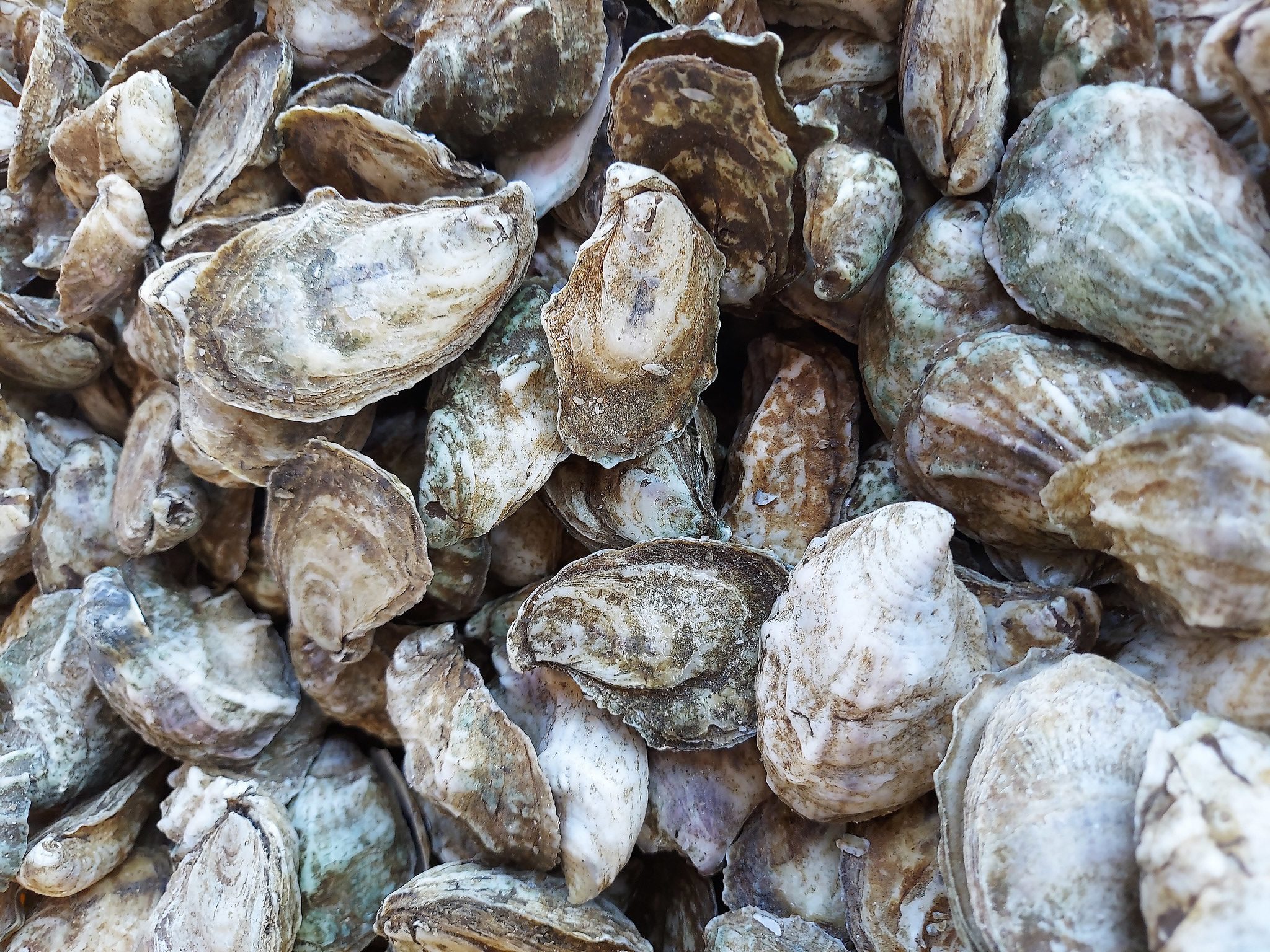
AUBURN UNIVERSITY, Ala. — Somewhere off the Gulf of Mexico, a special kind of farmer releases a metal basket into the water. While suspended, a hidden treasure grows inside the basket — the ever-versatile oyster. Straddling the line between farmer and fisherman, the oyster producer takes great care in growing and collecting the pearls of the sea — the kind served with Tabasco and saltines.
With high production costs and labor-intensive work, Alabama oyster producers rely on science and support from researchers like Andrea Tarnecki, an Alabama Cooperative Extension System specialist, assistant professor and dedicated researcher at the Auburn University Shellfish Laboratory. Nestled on tranquil Dauphin Island in Pelican Bay, the Auburn University Shellfish Lab is part of the School of Fisheries, Aquaculture and Aquatic Sciences. There, Tarnecki and her colleagues study marine invertebrates like the Eastern Oyster. They examine the biological, ecological and economic factors that shape shellfish production along Alabama’s coast.
“Whether on-site at our lab or directly on a grower’s farm, we engage growers often to identify their concerns and develop grant proposals and research projects aimed at addressing the issues they communicate to us,” Tarnecki said.
With their luxury status, oysters are considered a culinary delicacy commanding a premium price. Oysters are always in high demand due to their rarity and the costs of growing, harvesting and delivering them from sea to table. For this reason, the team at the AU Shellfish Lab analyzes ways to improve oyster production and takes their results straight to the growers.
Remarkable Reproduction
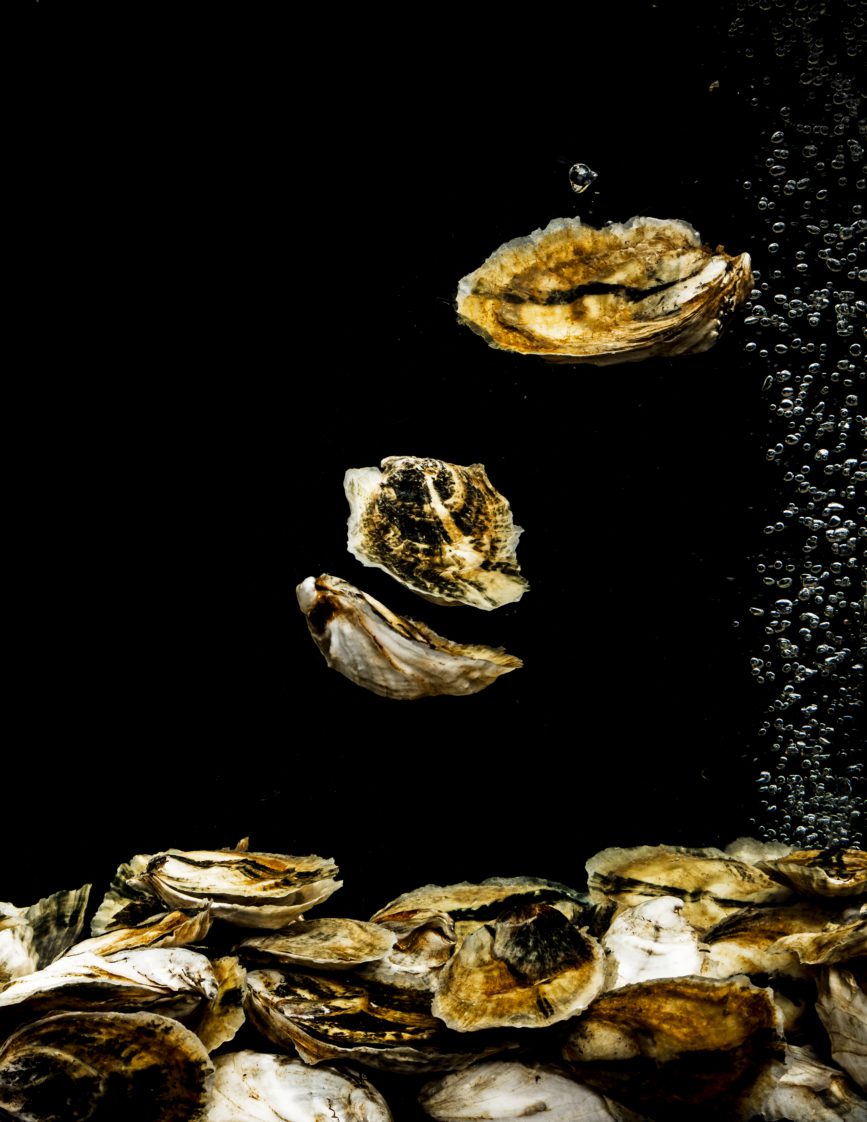 The AU Shellfish Lab examines all parts of oyster life, starting with reproduction. The reproductive process of oysters is called spawning. This occurs when oysters release eggs and sperm into the water, and fertilization happens externally. Scott Rikard, the hatchery manager and lab researcher, oversees the production processes of spawning oysters and rearing larvae.
“One of the fascinating things about oyster production is how a microscopic egg transforms in less than a year into a briny delicacy on a restaurant plate,” Rikard said.
The AU Shellfish Lab team of research assistants and technicians puts adult oysters into individual containers to trigger the spawning process. With temperature control, the oysters are tricked into spawning, which typically occurs when temperatures reach approximately 74 degrees Fahrenheit in the spring. Separating these broodstock oysters into containers allows the lab to differentiate males and females by the way they behave when they spawn and control the parentage of the resulting offspring.
Once the eggs are fertilized, millions of tiny oysters are moved to culture tanks in the outdoor hatchery. During the growth stage, baby oysters are free swimming larvae. The one-thousand-gallon culture tanks house around 40 million larvae per tank, and the microscopic oysters develop for about two weeks.
After the initial days of growth, the lab reduces the density of oyster larvae to keep the growth rate high and maintain water quality. During this time, the lab monitors larval growth and feeds them a single cell algal diet. As the lab analyzes oyster reproduction, growth, and feeding variability, they develop recommendations to help oyster farmers optimize their operations.
“The interest in producing locally grown seafood has increased market production over the last few years,” Tarnecki said. “So, we try to provide our growers sustainable aquaculture practices and research that helps them save on production costs and get a great market price.”
From the hatchery, the oyster larvae are moved to a nursery when they are ready to set. For restoration projects, the larvae are put in tanks full of oyster shells. There, several larvae attach to each shell, creating clumps of oysters that are used for oyster gardening.
Not Your Average Garden
They say one man’s trash is another man’s treasure. That’s especially true in oyster gardening. The Auburn University Marine Extension and Research Center coordinates oyster gardening, using larvae provided by the AU Shellfish Lab to populate recycled shells. In fact, recycled oyster shells are collected from seafood restaurants across the Gulf Coast in partnership with the Alabama Oyster Shell Recycling Program. These recycled shells are then used to house spat—or young oysters—as they develop after attachment to the shell.
The AU Shellfish Lab researchers and technicians care for the spat-on-shell for several weeks. Next, they are delivered to volunteers around Mobile Bay to grow in cages — off piers — over a time period of a few months. After that process, the once-recycled shells now contain fully grown clusters of oysters. These oyster clusters are reintroduced into the wild to help rebuild wildlife reef populations in areas where restoration is needed.
Working in the laboratory and directly with growers, the AU Shellfish Lab is instrumental in conducting innovative research for oyster farming practices. To produce single seed for farming market oysters, silos are filled with a bottom layer of finely ground oyster shell. Inside the silo, the team releases approximately 300,000 oyster larvae and each larva attaches to a single grain of ground oyster shell. Each silo at the AU Shellfish Lab contains about 150,000 — to be used like seed — which is enough oysters for a small-scale oyster farm to operate.
After a few months of development, the oyster “seed” are transferred to floating cages in the near-shore estuarine waters of Alabama to grow out for about a year. To help oysters thrive, cages are designed to float just below the surface. This protects them from predators while ensuring steady water flow and better feeding conditions. The oysters grow and are checked often until they reach the desired experimental size.
Following maturation, the AU Shellfish Lab uses the fully developed oysters for various research purposes. The research efforts allow the team to provide best management practices to oyster farmers to enhance oyster growth and farming efficiency during production. This gives them the ability to get a better return on investment of their product. But their work isn’t limited to their own facilities; they work with oyster producers across the coastal region.
Oysters and Outreach
The AU Shellfish team offers hands-on training, site visits and educational, in-person meetings to deliver comprehensive research to growers. Through Alabama Extension outreach efforts, Tarnecki and the team work alongside coastal communities to deliver insights that advance sustainable aquaculture.
“Our research projects often take place directly on grower farms, and this broadens the sites we have available with different water quality parameters,” Tarnecki said. “For example, sites have varying salinities, environmental pressures, and predator abundances. Understanding these issues in different locations helps us give better recommendations.”
From science to shore, the Auburn University Shellfish Lab works steadfastly to ensure Alabama’s oyster farmers have the best recipe for success — all while honoring the deeper call of coastal stewardship.