
Farming

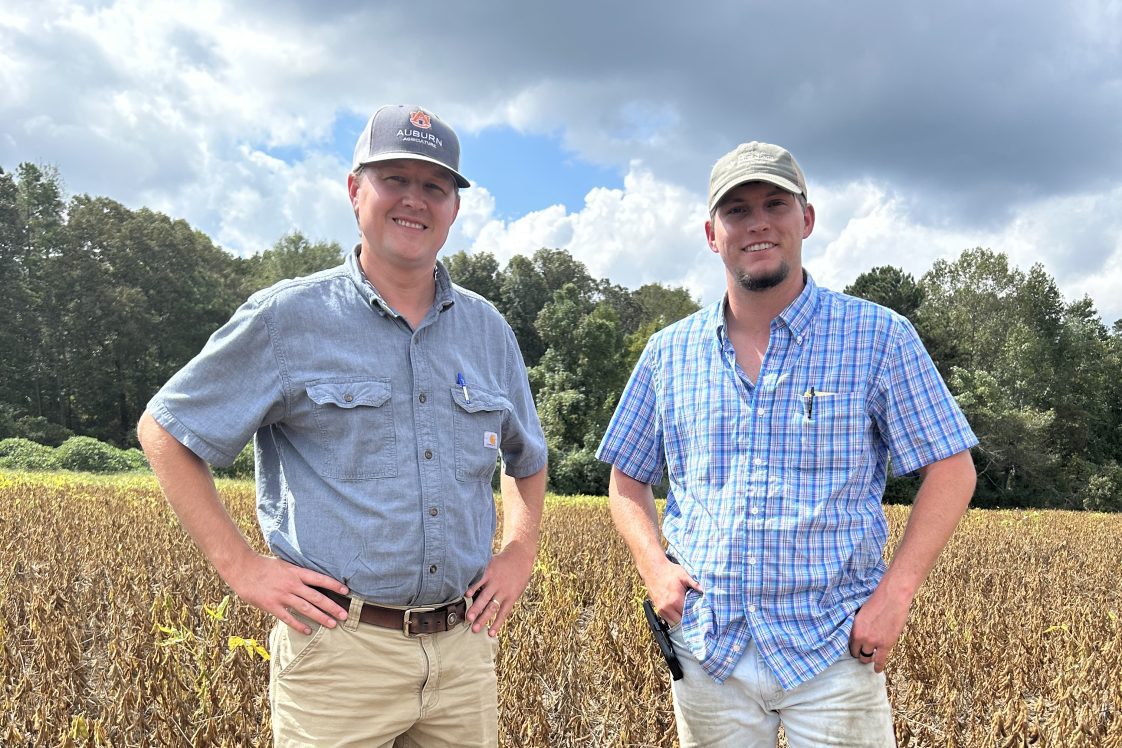
 AUBURN UNIVERSITY, Ala. — Payton Key has been around farming his entire life. Growing up, he helped his grandfather farm, which included raising poultry and growing hay. Since 2022, the 25-year-old has grown soybeans and corn on his own.
“The whole process of taking a piece of dirt and turning it into food, fuel and fiber, it’s always fascinated me,” Key said. “Row cropping never was a thing for my family. I just gained interest in it myself.”
As a new, young farmer, Key knew he could improve his productivity by reaching out to Alabama Extension. Cade Grace, an agronomic crops agent with Alabama Extension at Auburn University, was quick to work with Key on his goals. Grace suggested soil testing for higher yields.
“A soil test is your guide to producing a profitable crop year in and year out,” Grace said. “It’s a building block. There are different ways to go about it, but you need to get random samples from different spots in the field that represent different areas of topography. Then, the results will show recommendations for adding nutrients like nitrogen, phosphorus, potassium, calcium and magnesium.”
Soil Testing Success
Key’s soil test showed there was work to be done.
“The results said there was a lack of soil fertility,” Key said. “I’ve worked to correct that by applying chicken litter. That’s solved a lot of the problems. It’s not just dirt now. It’s fertile soil.”
All that work has paid off. During a rough drought last year, Key earned second place in the State Soybean Yield Contest.
“I can’t say enough good things about what Payton’s done in his short time farming,” Grace said. “In that contest, he was up against people who have farmed for 40 years or more. He’s succeeding because he’s diligent about his work and he asks the right questions. At Extension, we have the answers that have helped make him profitable, and we can help other farmers, too. It’s a team effort.”
Extension Field Trials
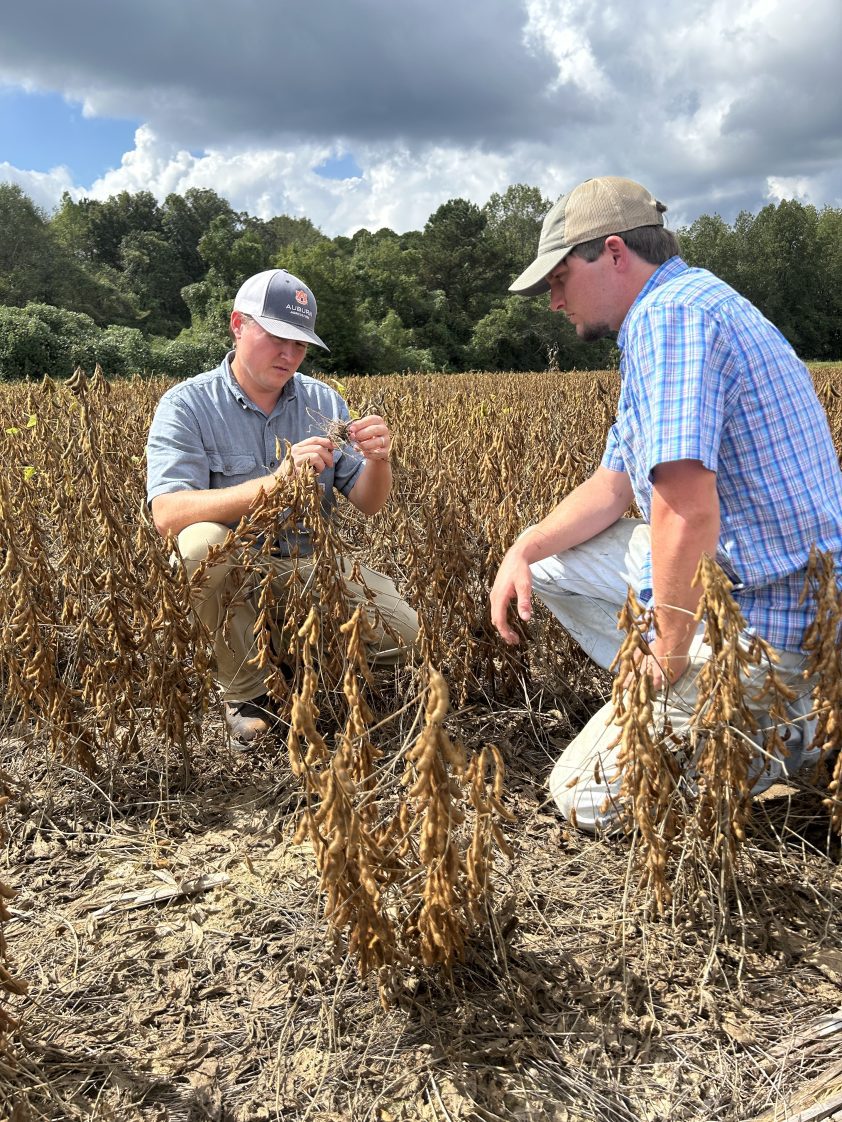
Agronomic Crops Agent Cade Grace of Alabama Extension at Auburn University examines root development on a soybean plant as he visits with Walker County farmer Payton Grace in his soybean field. Grace suggested Key do soil testing for higher yields.
Beyond soil testing for higher yields, Key also worked with Extension on a field trial this year.
“We planted a corn variety plot,” Key said. “That really opened my eyes about how Extension can help me with learning what different varieties can yield. Plus, I can see the return on investment using different products, such as insect and fungus control.”
The trial focused on dryland corn. In some spots on Key’s farm, yields on certain hybrids neared 300 bushels an acre.
“While some timely rains helped, we saw that kind of yield because Payton is soil testing and following the recommendations from Extension when it comes to adding soil amendments,” Grace said. “Extension is a very good resource for people who want honest, unbiased, scientific advice. I live my life to help people, and it means everything to me to be able to help good folks like Payton.”
Extension Does That!
The 2025 harvest brings Key’s fourth year of farming to a close. Even as he prepares for his fifth season, he knows expert advice is just a phone call or text away.
“The folks at Extension have more experience than I do, whether that’s on-farm experience or a degree in agriculture,” Key said. “Next year, I’ll still be calling Cade and asking about what to do about this bug or what he’d recommend based on an updated soil test.”
Helping farmers build soil fertility based on recommendations from soil tests? Extension does that! Plus, Extension is working to update farmers on best practices for minimizing crop damage caused by deer. Extension can also help new farmers make connections with local farmers markets. Learn about those stories and more at aces.edu/discover.