
Farming

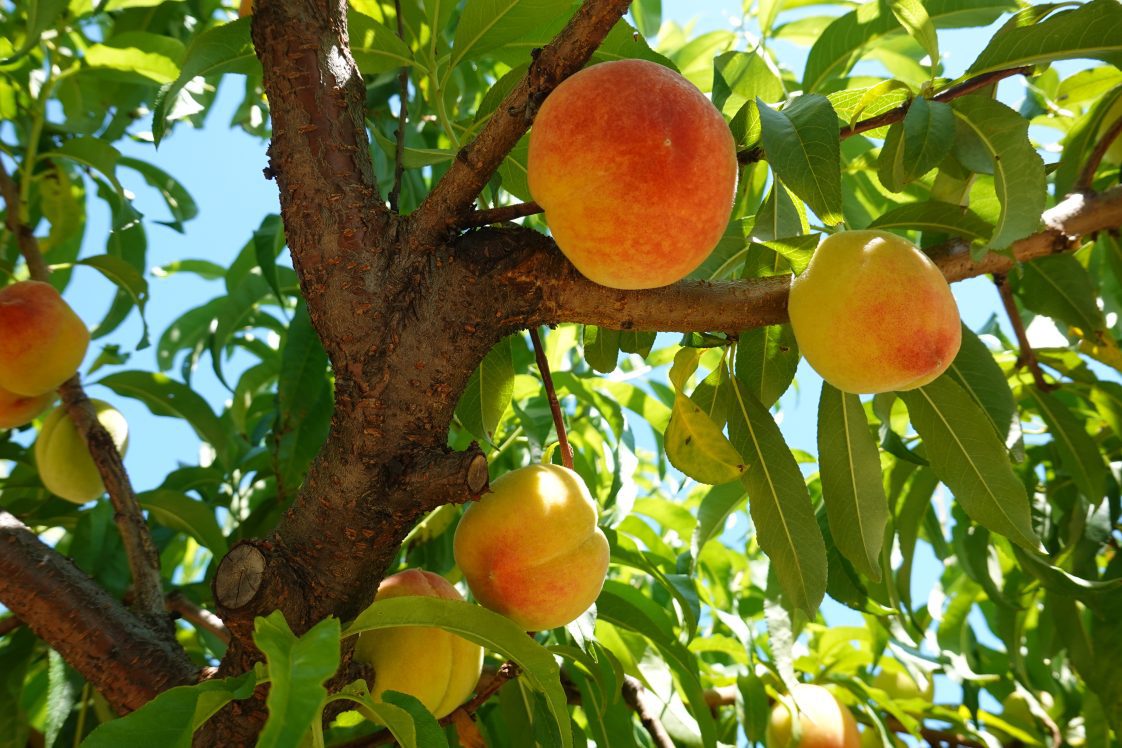
AUBURN UNIVERSITY, Ala. — In the heart of central Alabama, research is conducted throughout the year to find ways to protect one of the state’s most precious commodities: peaches. Among the most damaging diseases affecting stone fruit — especially peaches — is bacterial spot. As a result, Alabama fruit producers spend approximately $1.2 million every year to control and manage bacterial spot in mature orchards.
Bacterial spot is caused by the bacterium, Xanthomonas arboricola pv. Pruni. Leaf spots, leaf dropping, fruit lesions, twig cankers and even lesions on the fruit can make it unmarketable. At the Chilton County Regional Research and Extension Center, Edgar Vinson, an Alabama Extension assistant professor of horticulture at Auburn University, carefully conducts research projects. Although researchers through the Alabama Agricultural Experiment Station are executing various peach studies, Vinson emphasized that bacterial spot remains a high priority.
“A single peach grower with 100 acres of productive peach trees can expect to spend approximately $85,000 per acre on materials, labor and fuel,” Vinson said. “With high production costs, this study examines treatment methods like copper and biocontrol agents. We strive to provide growers with the information they need to control bacterial spot and protect their crop.”
Testing Treatments
Vinson’s project explores the leading control methods for bacterial spot in peach production. Currently, the primary leader for control are pesticides that contain copper. After years of use, copper-based, restricted-use pesticides are now facing resistance in some orchards, according to recent discoveries.
When a disease or bacteria-causing organism becomes resistant to a pesticide, the chemical control fails to stop the spread. This happens because the organism adapts gradually, allowing resistant strains to survive and grow. In order to fight resistance, peach producers can utilize antibiotics, such as streptomycin, oxytetracycline and kasugamycin. By pairing these products with copper fungicides, growers can better manage resistance problems. However, growers should know that this approach may only be a short-term solution, as microbes develop resistance to these over time.
“Copper-containing fungicides are the leading method for bacterial spot control,” Vinson said. “In order to be effective, these fungicides must cause a level of damage to the leaves that is like the damage caused by the bacterial spot disease. One mistake in the application of the fungicide can result in severe defoliation of the peach tree and that leads to reduced yields.”
Even though it has some drawbacks, copper provides battle-tested management for bacterial spot on peaches. However, growers should be aware that it is an aggressive method of control. Copper-based products — such as Kocide 2000, Kocide 3000 and Cuprofix Ultra 40 — are still available with restricted-use and can only be applied by a certified applicator. Researchers and Alabama Extension specialists recommend following label instructions for precise applications to ensure the best possible results.
Tackling New Technologies
With rising resistance and new technologies, peach producers are interested in adopting biocontrol methods. Farmers face many challenges in managing diseases and pests, including navigating Environmental Protection Agency regulations, as well as careful use of available control methods. In response, Alabama Agricultural Experiment Station research is evaluating the use of phage technology through this project.
“Phage technology involves the use of naturally occurring bacteriophages or viruses that infect bacteria to fight bacterial infections,” Vinson said. “It is part of a growing class of pesticides known as biologicals developed as alternatives to chemical pesticides.”
But how does phage technology work? The bacteriophage viruses infect the bacterial pathogen — in this case Xanthomonas arboricola pv. Pruni — replicating themselves inside of the bacteria. Once replicated, the bacteriophages lyse the bacteria, killing them and then spreading throughout the plant destroying the harmful bacterium. Currently, there is not much information available about the efficacy of phage technology in peaches, especially in the Southeast. According to Vinson’s research thus far, phage applications on infected peaches offer a more delicate approach than copper-based fungicides. As this study progresses, Vinson hopes to determine how effective incorporating phage applications could be for growers.
“If this technology proves effective and is economically feasible, it can help with management of copper resistance,” Vinson said. “That could result in providing disease protection during sensitive peach tree development stages when copper use is discouraged like during bloom.”
As this project continues, Vinson and the Chilton researchers and Extension team will provide information to peach producers through field days and workshops. With resources available, Alabama peach producers can find ways to tackle bacterial spot management.
More Information
Since 1948, researchers at the Chilton Regional Research and Extension Center have worked to protect Alabama’s peach production. Extension professionals like Vinson turn research into actionable insights for Alabama growers. Through educational resources and science-backed strategies, Auburn University research and Alabama Extension help growers improve operations and optimize efficiency.
Additional information about bacterial spot control in peach production is available in Vinson’s publication, “Bacterial Spot Treatment in Peaches,” available at aces.edu.
Trade and brand names used in this publication are given for information purposes only. No guarantee, endorsement, or discrimination among comparable products is intended or implied by the Alabama Cooperative Extension System.