
Farming

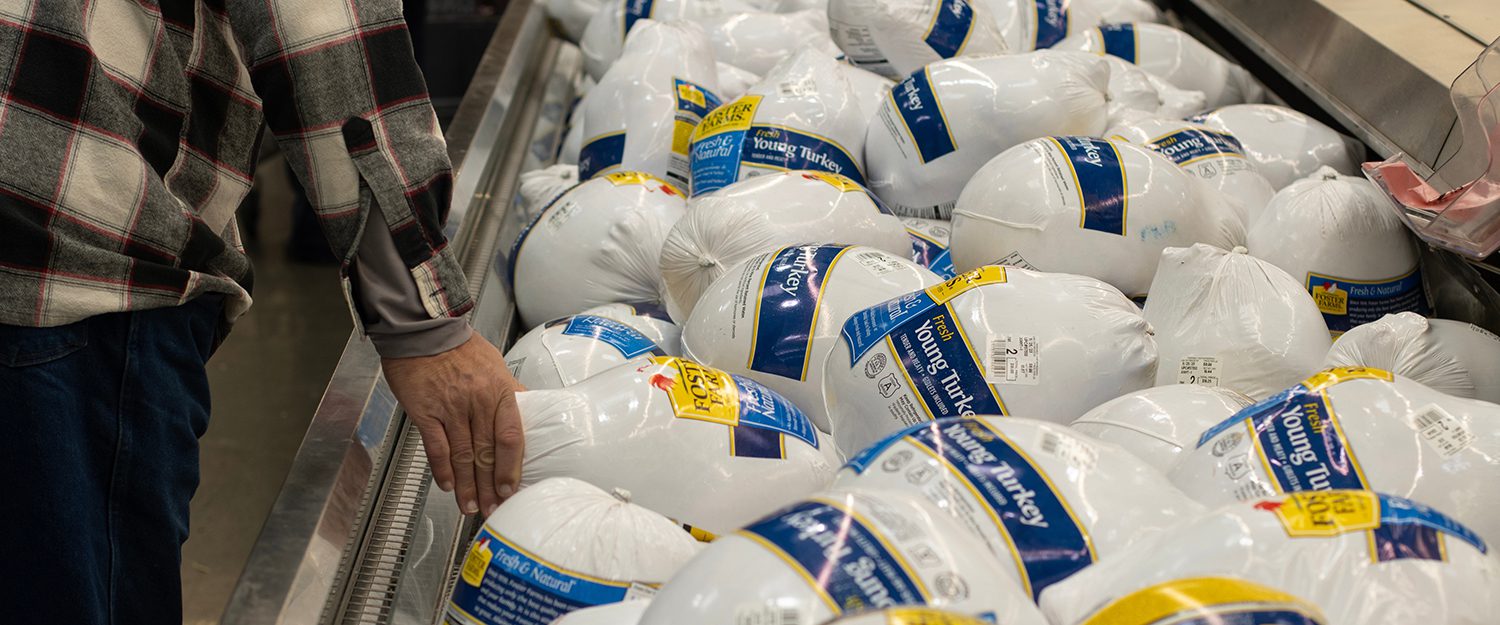
It’s turkey time once again. As an animal protein source, turkey has been behind chicken, beef, and pork respectively in the American diet for decades. However, it comes to the forefront this time of year as people begin to think about the traditional Thanksgiving turkey dinner. General inflation has caused increasing prices of most everything these days, including the grocery bill. Therefore, home cooks may be wondering if the price of the star of the Thanksgiving holiday meal is going to be a burden this year.
Storage
Supply becomes the main question to examine when trying to make a turkey prediction. The most immediate data needed is the amount of turkey currently in cold storage available for immediate movement into the retail market. Looking at today verses 2025, turkey in storage is slightly lower than last year for September but was slightly higher a couple months before. This could simply reflect early movement out of storage into retail sooner this year than last year (figure 1).
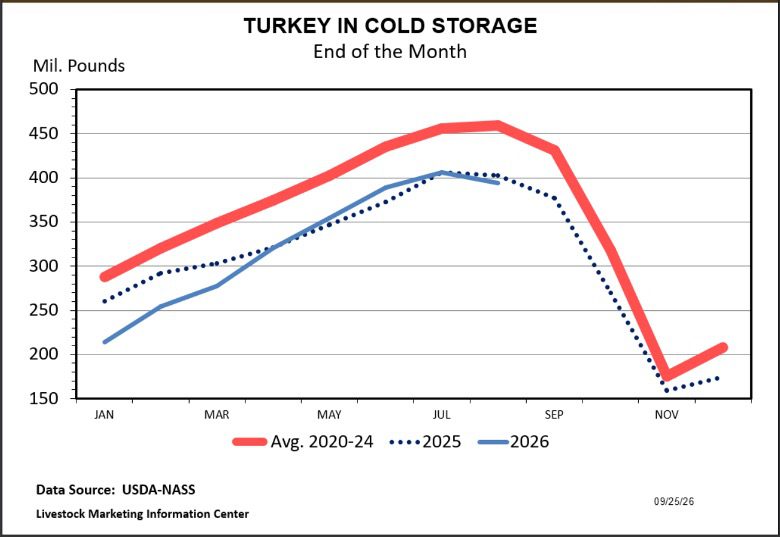
Figure 1. Turkey in cold storage. Source: USDA-NASS
Production
Turkey production in 2026 has stayed mostly consistent with previous years. Except for a drop in production in the spring of 2025 that was not present in 2026, no large production gains or losses have occurred (figure 2). This is partly due to the relatively lower impact of Highly Pathogenic Avian Influenza (HPAI) causing mortality on commercial turkey farms last year than the year before, and 2026 looks to be even less impacted so far – although the fall migration season has always proven to be a problematic time for HPAI (figure 3). That season is just now ramping up, and a few occurrences have been seen. Additional HPAI cases in the next month could potentially impact fresh turkey prices directly and could put upward pressure on frozen products as well.
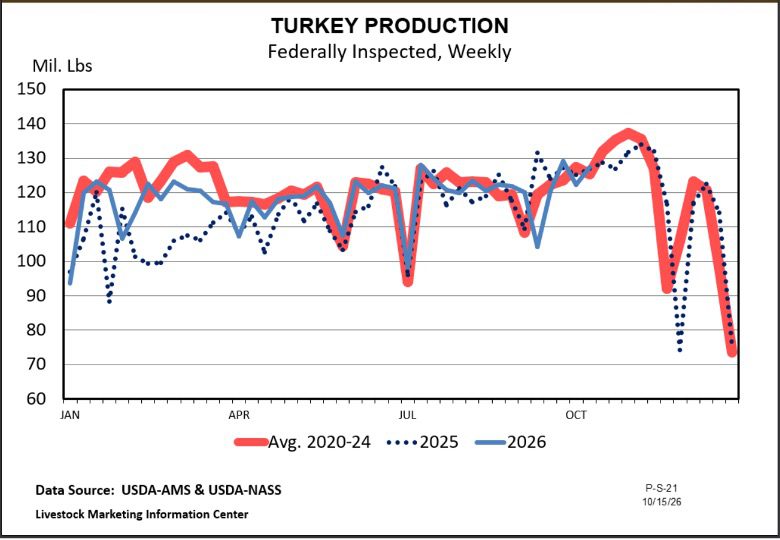
Figure 2. Turkey production. Source: USDA-AMS and USDA-NASS
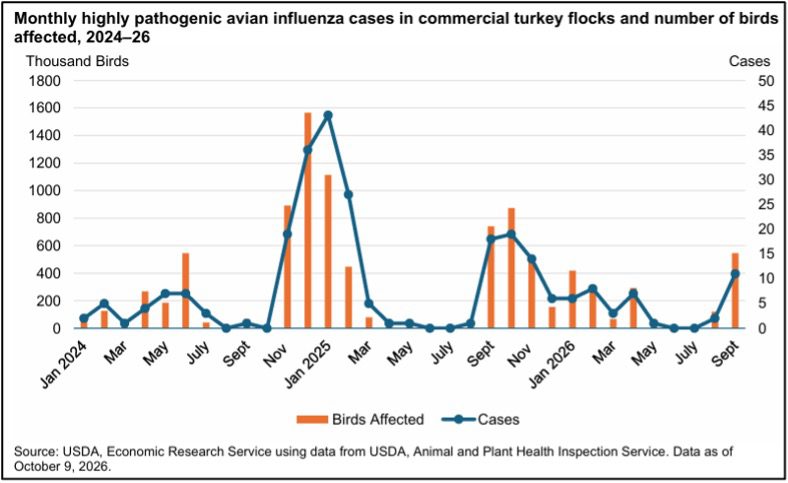
Figure 3. Monthly highly pathogenic avian influenza cases in commercial turkey flocks and number of birds affected, 2024-2026. Source: USDA Economic Research Service using data from USDA Animal and Plant Health Inspection Service
Prices
Finally, we look at current prices and try to make a prediction for what we might see this year for Thanksgiving turkey costs. Looking at the wholesale turkey breast prices first gives some positive hope that prices will be less, as wholesale prices are significantly 58 percent lower than last year at this time. But the current price is also right around the 2020-2024 average, so it seems to indicate that wholesale breast prices last year were in fact inflated and the graph seems to indicate those prices are settling back to normal. On the opposite end of the pricing spectrum, we see wholesale prices for 8-16 pound whole birds have maintained a price about 40 percent higher than the long-term average. These wholesale prices suggest a mixed bag of pricing for the consumer this year. But when we look at actual retail averages, USDA data shows modest increases for the consumer cost for both frozen boneless turkey breasts and frozen whole turkeys for this today compared to the same time last year.
The Bottom Line
It looks like going into the holiday season, the worst we could expect might be less than a $5.00 increase in the cost for the main star of the dinner (table 1). However, with the increases being so small, and the turkey supply not being a problem, it is also very likely that grocery stores could use turkey as a loss-leader or otherwise run sales on turkey to encourage consumers to spend more on higher margin items. Overall, it doesn’t look like home cooks need to be concerned about if there will be enough turkeys or if their budget will be stretched by their cost.
Table 1. Grocery Store Price Comparison for Common Thanksgiving Turkey Offerings
| Product | Oct. 2025 | Oct. 2026 | Percent Change | Price Change |
|---|---|---|---|---|
| Frozen whole turkey (16 lb.) | $1.08/lb ($17.28) | $1.23/lb ($19.68) | +13.9% | +$2.40 |
| Frozen whole bone-in turkey breast (7 lb.) | $1.26/lb ($8.82) | $1.36/lb ($9.52) | +7.9% | +$0.70 |