
Farming

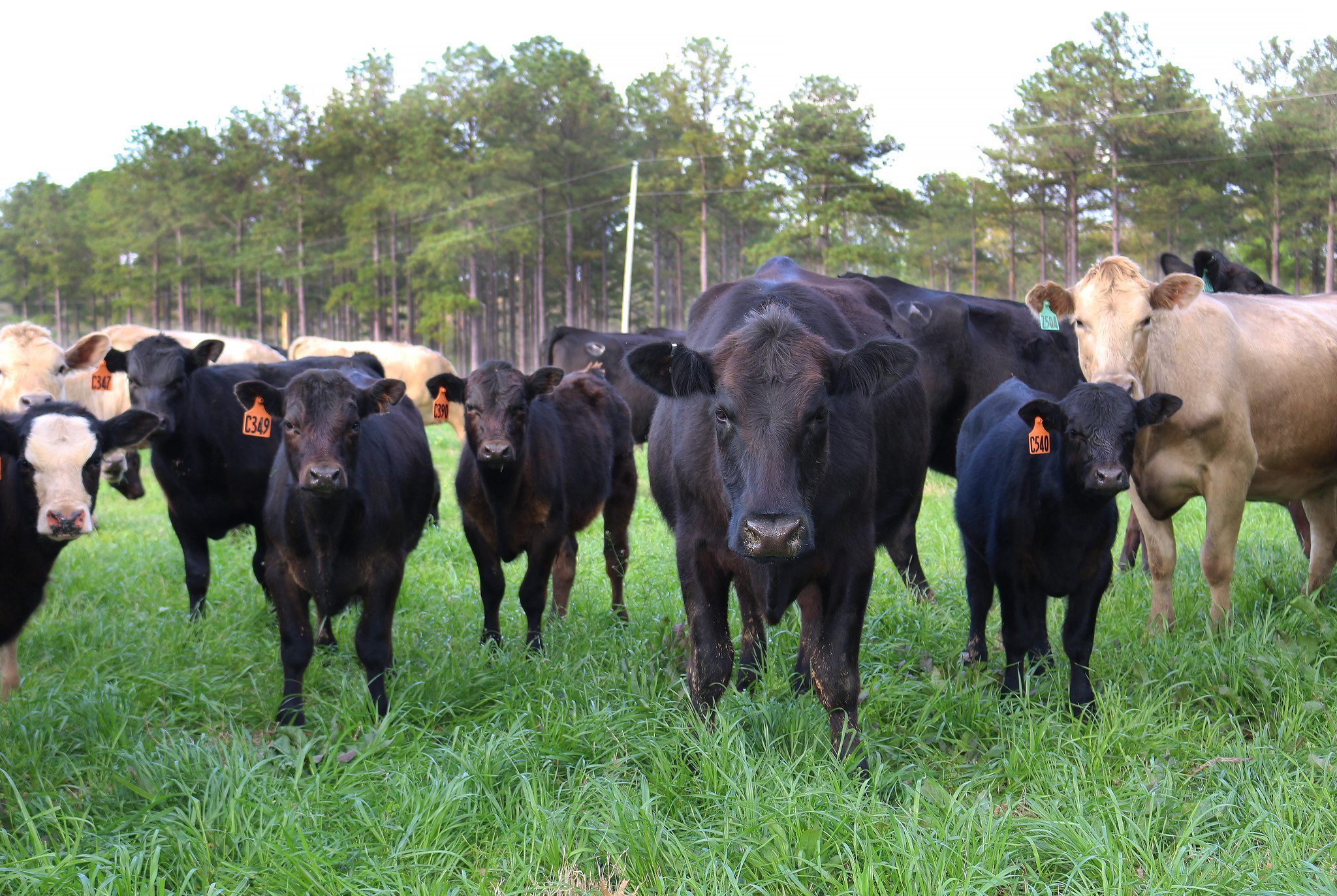
The decision to use poultry litter on cool-season forages involves an understanding of the variables, including challenges that may be involved.
Relatively mild winters in the southeastern United States allow producers to extend grazing into fall and winter, reducing reliance on hay and supplements. Grazing cool-season forages, such as fescue, annual legumes, ryegrass, or small grains (oats, wheat, rye), is often considered more cost effective than feeding stored forage. Regardless of forage choice, adequate soil fertility is essential for optimal yield. In Alabama and across the Broiler Belt, poultry litter is commonly applied to spring pastures to enhance fertility. This raises the question: Does applying poultry litter to cool-season forages provide good economic and agronomic benefits?
Why Not Choose Poultry Litter?
Several factors influence this decision. Producers must select a forage species, understand its nutrient requirements, and compare these to soil test results. Poultry litter typically contains approximately 3 percent nitrogen (N), 3 percent phosphorus (P2O5), and 2 percent potassium (K2O), though composition varies widely. Nutrient availability also depends on mineralization, a microbially driven process affected by soil temperature, moisture, and litter characteristics, which enables plants to utilize nutrients. Higher moisture content, for example, can reduce nitrogen concentration by up to 46 percent. Litter quality can vary with a grower’s housing management practices and in-house moisture control. Also, clean-out litter from multiple flocks generally contains less moisture and more nutrients than de-cake litter from one flock. Litter is also sometimes touted as a buffering agent for soil. It tends to be in the basic range, often with a pH higher than 8, compared to agricultural lime’s pH of 7. The more flocks on the litter, the higher the pH tends to be. But the higher the pH, the less nitrogen is present. The only way to know the true nutrient value of litter is to have it tested by a qualified testing facility. Auburn University’s Soil, Forage, and Water Testing Lab is a source for litter testing in Alabama.
Cool-season application presents additional challenges. Mineralization slows in cooler temperatures, potentially misaligning nutrient release with plant demand. Increased rainfall during winter (approximately 30 inches in Alabama) heightens the risk of nutrient leaching and runoff, potentially contributing to water quality concerns from high nutrient concentrations.
Economic Evaluation
Economic considerations further complicate fall application. Nitrogen (N) remains the primary consideration for short-lived annual fall forages. For example, annual ryegrass typically requires at least 30 pounds N per acre to produce one ton of forage. If applying 34 percent nitrogen urea (46-0-0 with added sulfur for 34-0-0-5S) at $575 per ton, plus $10 acre spreading fee, the cost would be $35 per acre. To supply equivalent nitrogen from poultry litter (3-3-2), 1,000 pounds per acre would be needed, making litter cost effective only if priced below $70 per ton spread. Lower-quality litter may require that more be spread per acre, reducing the break-even price further. That amount is unknown without the litter being tested for actual nutrient composition. Also, some litter-spreading equipment is only accurately adjustable down to 2 tons per acre. At this rate, more nutrients may be spread, based on quality, but may or may not be available to the plants, based on all the above factors. And at a 2-ton per acre rate, the litter would need to cost $17.50 per ton to be economically equivalent to commercial fertilizer on an available nitrogen plant food basis. (See equations and table 1.)
Table 1. Applying 30 Pounds of N Per Acre for Annual Ryegrass Example
| Fertilizer of Choice | Price Per Ton | Equivalent Cost Per Acre |
|---|---|---|
| 34-0-0-5S Urea | $575.00 | $35.00 |
| 3-3-2 Poultry Litter—0.5 ton/acre | $70.00 | $35.00 |
| 3-3-2 Poultry Litter—1.0 ton/acre | $35.00 | $35.00 |
| 3-3-2 Poultry Litter—2.0 ton/acre | $17.50 | $35.00 |
Conclusion
Given these agronomic, environmental, and economic factors, fall application of poultry litter should generally be approached with much caution unless litter nutrient analysis confirms high quality, and the nutrient-based cost per acre is lower than commercial fertilizers. Commercial fertilizers typically offer more predictable results for fall and winter forage production, but individual farms should carefully analyze all factors before deciding. Poultry litter remains a viable option for spring application when conditions better favor nutrient availability. For further guidance, see “Nutrient Content and Composition of Poultry Litter” on the Alabama Extension website at www.aces.edu.
Formula for calculating cost per acre for N:
Cost per acre = ((lbs. N needed / percentage N per lb.) / 2000) X price per ton + spread fee per acre.
For 34-0-0-5S Urea at 30 lbs N/acre = ((30/0.34) = 88.24 lbs urea per acre
88.24 / 2000 = 0.044 tons
(0.044 X $575.00) + $10.00 per acre fee = $35.37 per acre
References
- Balkam, Kip; Gamble, Audrey; “Cereal Cover Crop Response to Nitrogen Fertilizer”, ACES.edu, 2019
- Dillard, Leanne; “Extending Winter Grazing with Coolseason Annual Mixtures”, ACES.edu,”2023
- Griffen, Megen; et. al. “Pasture and Grazing Management Guide”, ACES.edu, 2021
- Mowrer, Jake; et. al.; “Liming Potential of Poultry Litter in a Long-term Tillage Comparison Study”, February 2020, Soil & Tillage Research, Volume 196, id. 104446
- Prasad, Rishi; Stanford, Kent; “Nutrient Content and Composition of Poultry Litter”, 2019
 Dennis Brothers, Associate Extension Professor, Agricultural Economics and Rural Sociology, and Rishi Prasad, Extension Specialist, Associate Professor, Crop Soil, and Environmental Sciences, both with Auburn University
New February 2026, Does Applying Poultry Litter to Cool-Season Grazing Make Dollars & Sense?, ANR-3227