
Farming

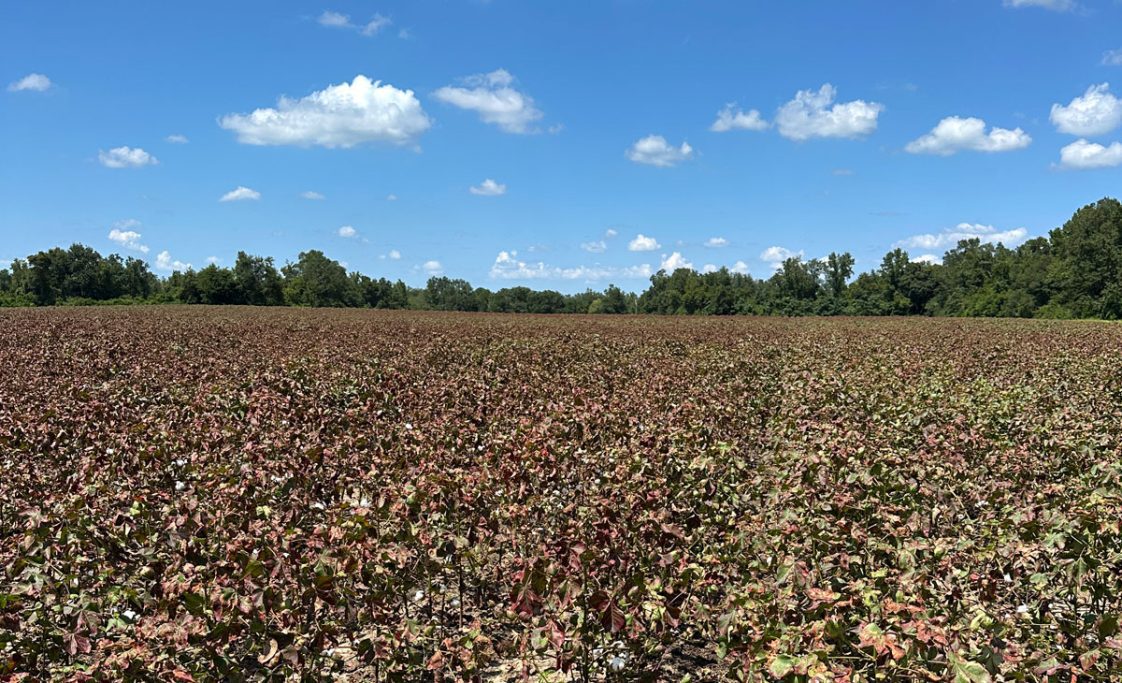
AUBURN UNIVERSITY, Ala. — In an already stressful and trying growing season, professionals with the Alabama Cooperative Extension System at Auburn University have confirmed an invasive insect, the two-spot cotton leafhopper, in cotton fields in Alabama. The insect is also commonly known as the cotton jassid.
On Aug. 12, Scott Graham, Alabama Extension cotton entomologist and assistant professor at Auburn University, was notified by a retail field advisor that the cotton jassid were present in a commercial cotton field in Henry County, Alabama.
“Since the detection of cotton jassids, new counties with findings are added almost daily,” Graham said. “With updated locations, we are collecting critical information to see how we can best get ahead of this issue. As always, our primary goal is to provide our cotton producers with more answers before our next growing season.”
Spot the Dots
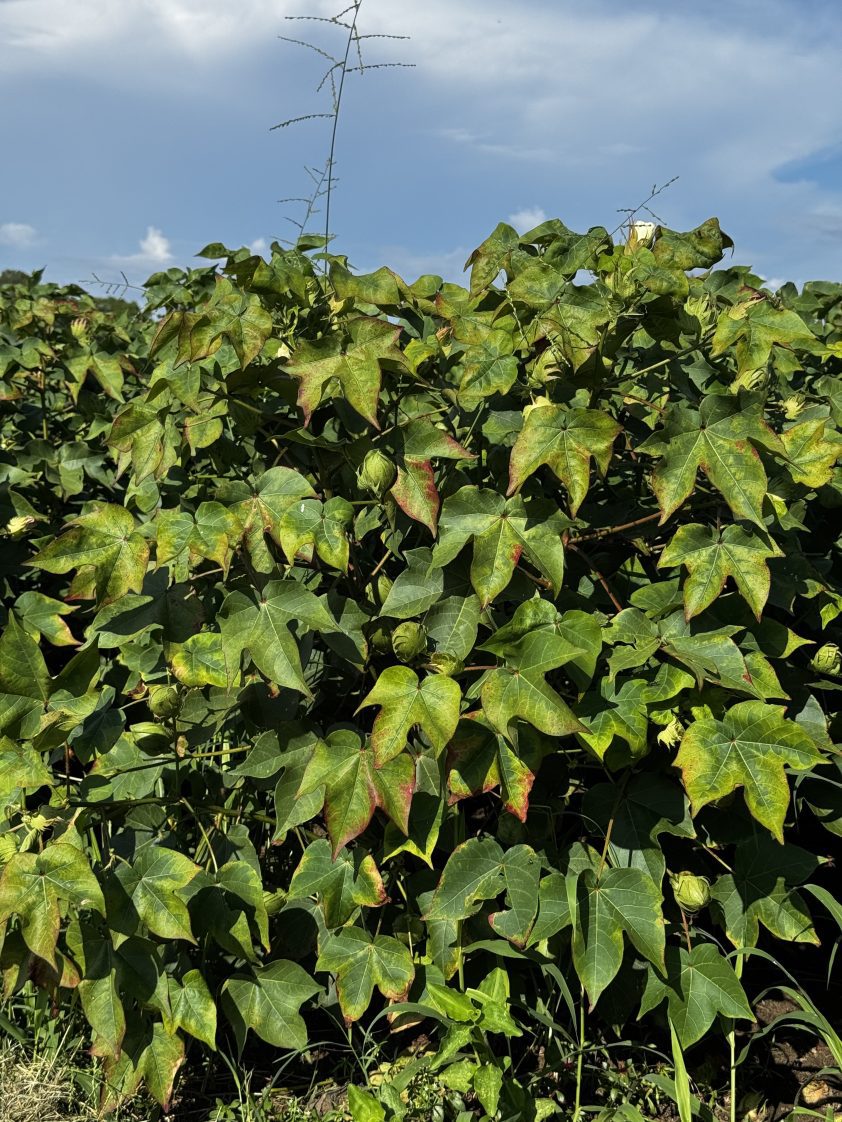
Early signs of jassid damage on cotton.
Alabama cotton growers are encouraged to look out for signs and symptoms of cotton jassids as harvest begins over the next few weeks. Cotton jassids can inflict major damage to cotton plants and are typically found on the underside of the leaf. The petiole — or center stem connecting the leaf to the stalk — is the common striking point for the cotton jassid. With pressure mounting, early detection is key to protecting cotton production for the future.
Identification can be tricky, but some distinctive characteristics can help entomologists and farmers confirm the presence of cotton jassids. The insects are dime-sized at adulthood. In addition, the most easily identifiable sign of a cotton jassid is the presence of two black dots on each wing. Unlike other leafhoppers, there are no orange-colored lines on the back of the pest.
With that in mind, there are a few telling symptoms that a cotton plant has been visibly damaged by cotton jassids. “Hopperburn” is the term used for the discoloration of plant leaves that is caused by many species of plant leafhoppers. Hopperburn-stressed leaves turn yellow, red or brown and often curl or pucker at the ends. Although leaf discoloration may resemble potassium deficiency, it can also signal the presence of cotton jassids.
Trials and Treatments
“We are pretty concerned about the potential yield losses caused by this highly invasive pest,” Graham said. “Since the report, our Alabama Extension row crops team, field specialists and Alabama Agricultural Experiment Station outlying units have begun testing management strategies.”
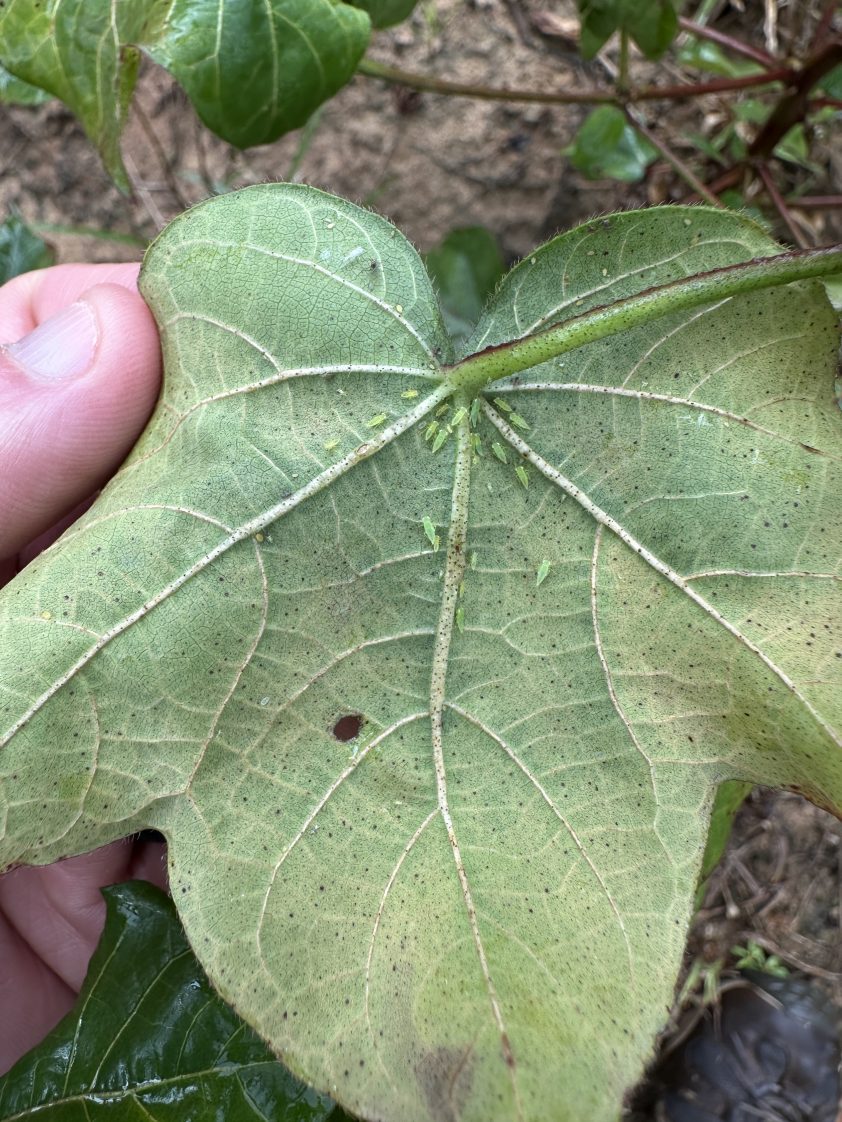
Cotton jassids can be found on the underside of a cotton leaf.
Graham and the teams are utilizing these trials to evaluate the efficacy of pesticides currently labeled for use in cotton. Currently, the threshold for treatment is one to two immature nymphs per leaf. While results are not yet conclusive for every trial, Graham recommends that producers follow sound application practices with any pesticide use.
“For the moment, the insecticides dicrotophos, thiamethoxam and sulfloxaflor have consistently provided good control in our trials,” Graham said. “That said, we strongly encourage Alabama producers to approach with clarity by following label recommendations and slow application to ensure maximum results. By guiding proper application, we aim help producers avoid the pitfalls of overusing insecticides.”
Native to Asia, the cotton jassid is moving quickly through the southeastern U.S. In 2024, the Florida Department of Agriculture reported detection of the pest only a few months after detections from Puerto Rice and the Virgin Islands. As of now, findings show the cotton jassid is present in Alabama, Georgia, Florida and South Carolina.
Now confirmed in several Alabama counties, the concern of this pest’s rapid movement is not limited to row crop systems. The cotton jassid is known to be a plant hitchhiker, meaning it disperses through many avenues and establishes populations in new areas. Whether blown by wind or transported on plant material, cargo or vehicles, the cotton jassid has the potential to spread far and wide.
United Front
With that in mind, reporting the presence of cotton jassids is imperative to help not only Alabama cotton farmers, but also Alabama Extension specialists and Auburn University researchers. To slow the spread of hitchhikers, people can do their part by checking nursery stock before purchase. In addition, avoid moving plants across county or state lines without proper inspection. As a result, Alabama Extension and the Alabama Department of Agriculture and Industries encourage immediate reporting of cotton jassid sightings.
Alabama Department of Agriculture and Industries plant protection coordinator Brittaney Allen said the department developed an action plan as fall approaches.
“In response to this pest, we are going to survey cotton fields all over the state starting next week,” Allen said. “This will continue through defoliation and cover hundreds of acres. Working cohesively with our industry partners allows us to be more effective and better protect Alabama cotton production.”
Focusing on today and the future, Auburn entomologists and Extension specialists are hopeful that control is possible with the right tools.
“I am learning side-by-side with the Extension regional agents and Experiment Station teams,” Graham said. “We rely on each other to provide timely updates to our stakeholders. Sometimes that means we are working early mornings, nights or weekends. We are here to help our industry to answer the tough questions and provide an outlook for an unpredictable future.”
More Information
The Alabama Cooperative Extension System and Auburn University are providing continuous updates as developments occur about the invasive species. Read updates at aces.edu or by visiting the web page Alabama Cotton Jassid Update.