
Farming

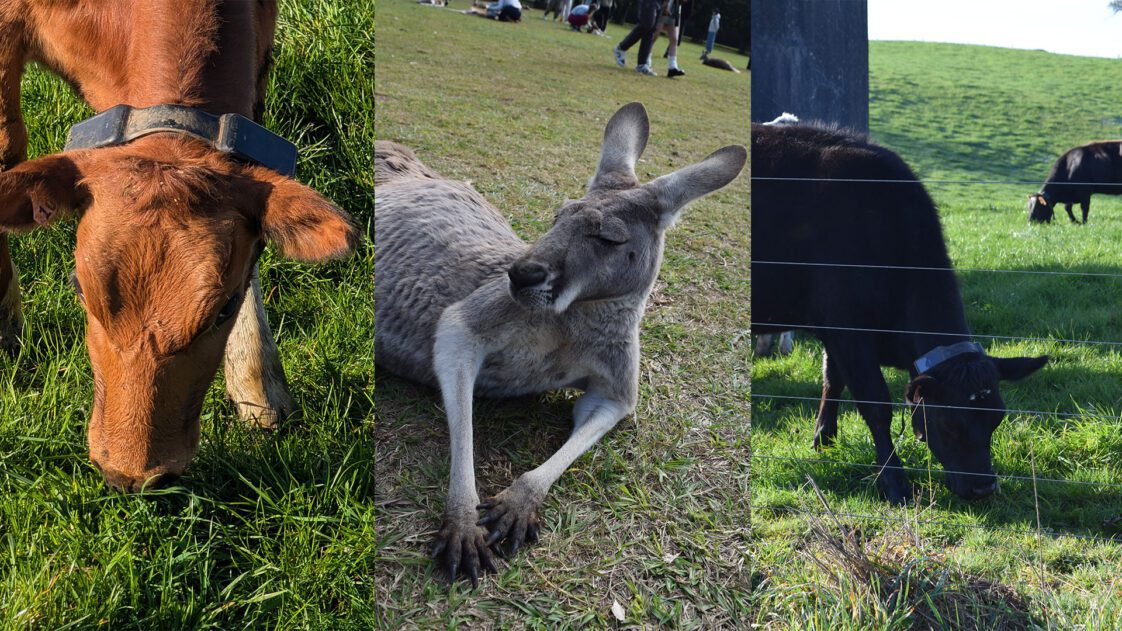
AUBURN UNIVERSITY, Ala. — Australia, the land of kangaroos and koalas, is more similar to Auburn, Alabama, than one may think. While more than 9,000 miles separate these two areas, they closely mirror each other in the world of livestock and forages, providing great opportunities for an international exchange of ideas and research. In July 2025, Auburn University animal science and forage experts took the trip of a lifetime to Australia and New Zealand. On their two-week excursion, experts from the Alabama Cooperative Extension System and Auburn College of Agriculture gained an insider’s experience into livestock and forage production within those countries.
Hubs of Technology
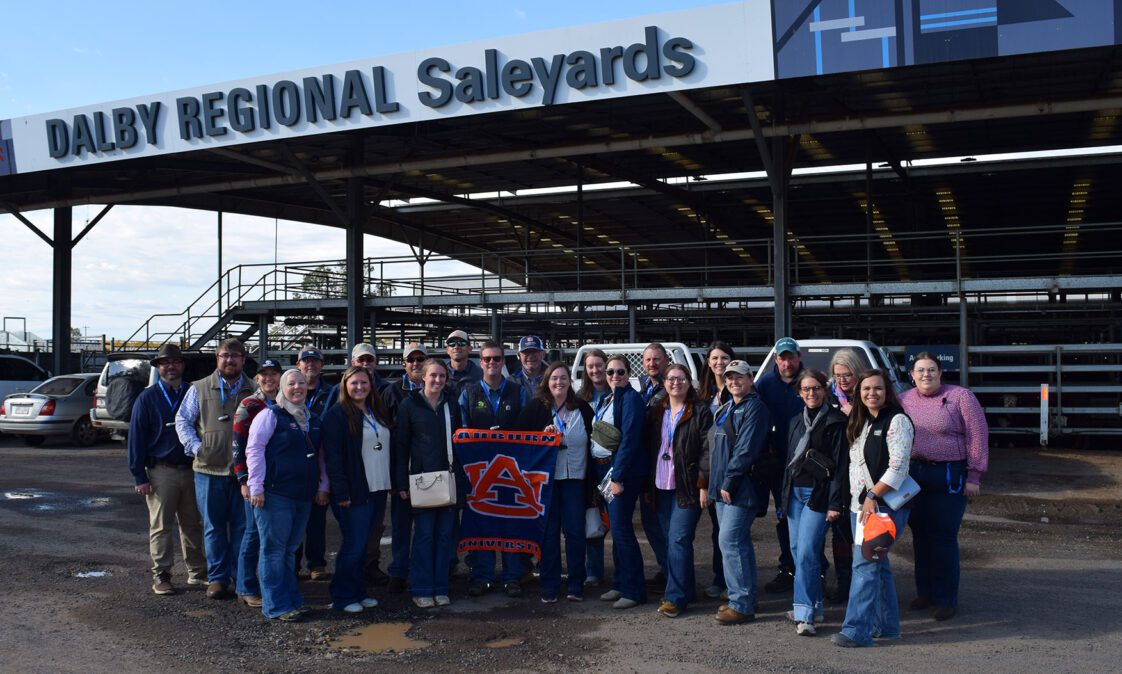
The team of Alabama Extension and Auburn University experts toured many animal science and forage facilities while on the trip, including Dalby Regional Saleyards, one of the largest livestock-selling saleyards in Queensland, Australia.
In the agricultural industry, research is continual. The problems research seeks to solve often know no borders, making it important for experts to sometimes look beyond Alabama for answers. About every five years, the Extension and Auburn animal sciences teams plan international trips in hopes of discovering improved ways to help Alabama farmers.
Australia’s east coast is roughly the same distance from the equator in the southern hemisphere as the southeastern U.S. is in the northern hemisphere. Their climates and growing seasons are similar, so many of the same livestock and forages systems are used in both areas. While New Zealand is further away from the equator, it is known as the mecca of forages. Both countries are also hubs of technology advancement and environmental stewardship. Leanne Dillard, a forage specialist and associate professor with Alabama Extension at Auburn University, said these factors made these countries prime locations for a team trip.
“Our goal is obviously to help the people of Alabama, but I think it’s important for all of our Extension agents to have opportunities to travel,” Dillard said. “There are other countries that are doing a really good job in animal and forage management, and we can bring some of those technologies back to Alabama producers. Not all states allow a trip like this, so I appreciate that our Extension system recognizes the need to be constantly looking outside of Alabama for answers.”
Improving Herd Management
Rates of adoption of some modern herd-management technologies are low in many parts of the U.S. On the trip, Jackson County Extension Director Matthew Webb was impressed with how open producers in Australia and New Zealand are to adopting different technologies to improve their operations. Some of these technologies include smartphone apps that allow producers to monitor items such as water levels in tanks or the voltage on electric fences.
“Similar to the U.S., labor is hard to come by in these countries, and these apps make simple-but-time-consuming jobs easier to manage,” Webb said. “Agriculture is definitely a science, and the emerging technology is amazing and helpful. But there is still an art form that requires the eyes to see what changes are occurring in order to do a good job.”
Virtual Fencing
 One of the more interesting technologies encountered on the trip was virtual fencing used on a dairy farm. Cattle wear a specialized collar that prevents them from entering certain areas of the pasture based on borders that the farmer draws virtually. The system works similarly to lane-assist technology on a vehicle. When an animal approaches the virtual border, a series of beeps is emitted on either side of the collar. If the animal walks too close to the border on its right side, the collar will beep on that side, telling the animal to go back to the left. If the animal continues toward the border, the collar will administer a small shock. Cattle have been known to quickly learn the collar’s audio cues, eliminating the need for it to administer a shock.
“The demonstration of the virtual fencing technology was my favorite memory from the trip,” said Kim Mullenix, professor and head of the Auburn Department of Animal Sciences. “We were able to watch this producer move cattle while he was standing on his back porch and effectively manage his pastures using this technology.”
With this system, borders can be changed at any time, depending on the management need. This eliminates the need to install temporary fencing for rotational grazing. It also makes tasks such as moving cattle a lot easier for the farmer.
“I believe many of the technologies and practices we saw in New Zealand and Australia have an application here,” Mullenix said. “I am working with our faculty and Extension team to integrate more of these technologies into our outlying Alabama Agricultural Experiment Station farms in the state.”
Adapting for Alabama
Researchers are eager to start testing these technologies to see how they may work in Alabama herds and terrains. By doing so, Auburn is one of the first universities in the Southeast to test these technologies. In addition to the virtual fencing, Maggie Justice, an Extension beef systems specialist and Auburn assistant professor, said they will be researching in-field weighing systems and technologies that monitor animal health. That includes ear tags that report metrics like respiratory rate.
“Bringing these technologies to Alabama could be a real game-changer for our beef producers,” Justice said. “These tools open the door to managing grazing and tracking cattle performance in ways we haven’t been able to before. It’s an exciting step forward: research that connects innovation directly to the needs of our producers and the challenges they face every day.”
Justice said the team hopes these technologies will give Alabama producers a more complete picture of herd performance and well-being. After the research trials, the teams hope to debut these technologies to producers next year through Alabama Extension beef and forage field days at the E.V. Smith Research Center and Sand Mountain Research and Extension Center.
Renewed Excitement
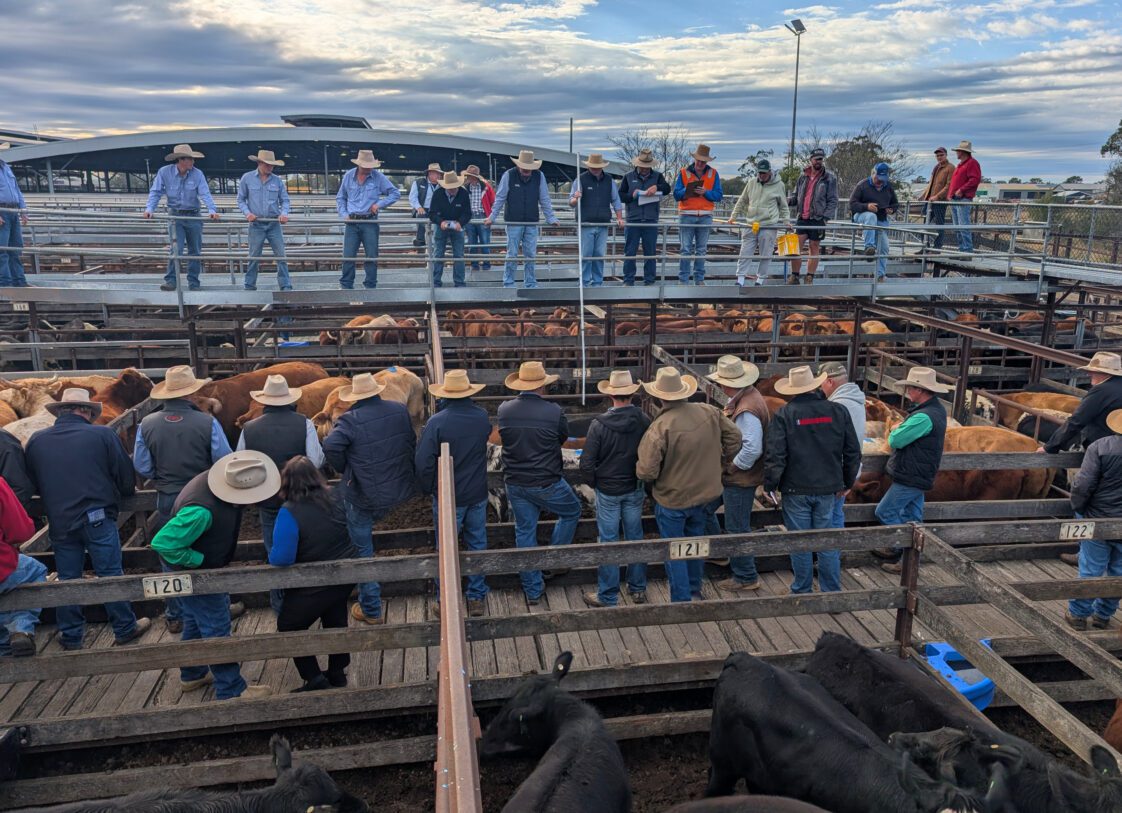 As an educator, Mullenix said the trip’s experiences challenged her to think more about not only the technologies and their resulting efficiencies but also what their use could mean to the broader picture of livestock and forages in the Southeast.
“Our advantage in the Southeast is the ability to grow grass nearly year-round,” Mullenix said. “If we can become better stewards of our resources from a forage production and nutrient cycling standpoint, we can help producers save costs and be more efficient with their land.”
For Webb, this trip was a full-circle moment, returning him to an area that holds fond memories of year’s past. More than 20 years ago, Webb completed an internship on a sheep farm in New Zealand. Now, Webb said experiencing these countries as an Extension educator was life-changing.
“It was refreshing to meet people who had a different focus when it came to goals, management and lifestyle,” Webb said. “Producers in both countries were much more aware of global trade than what I observe with my producers. I was particularly impressed that the producers we met were using their grazing and forage systems to better match the production cycles of their livestock, as well as the markets.”
More than half of the agents and specialists on the Extension animal science and forages team are fairly new to the team. While it was not the trip’s main objective, Dillard said their experiences across the two countries brought them all closer together.
“Getting to see a lot of our new agents experience a trip like this for the first time was amazing,” Dillard said. “This trip renewed my excitement for what we do. It reminded me why I picked this career and why I want to do this for the rest of my life.”