
Farm Management

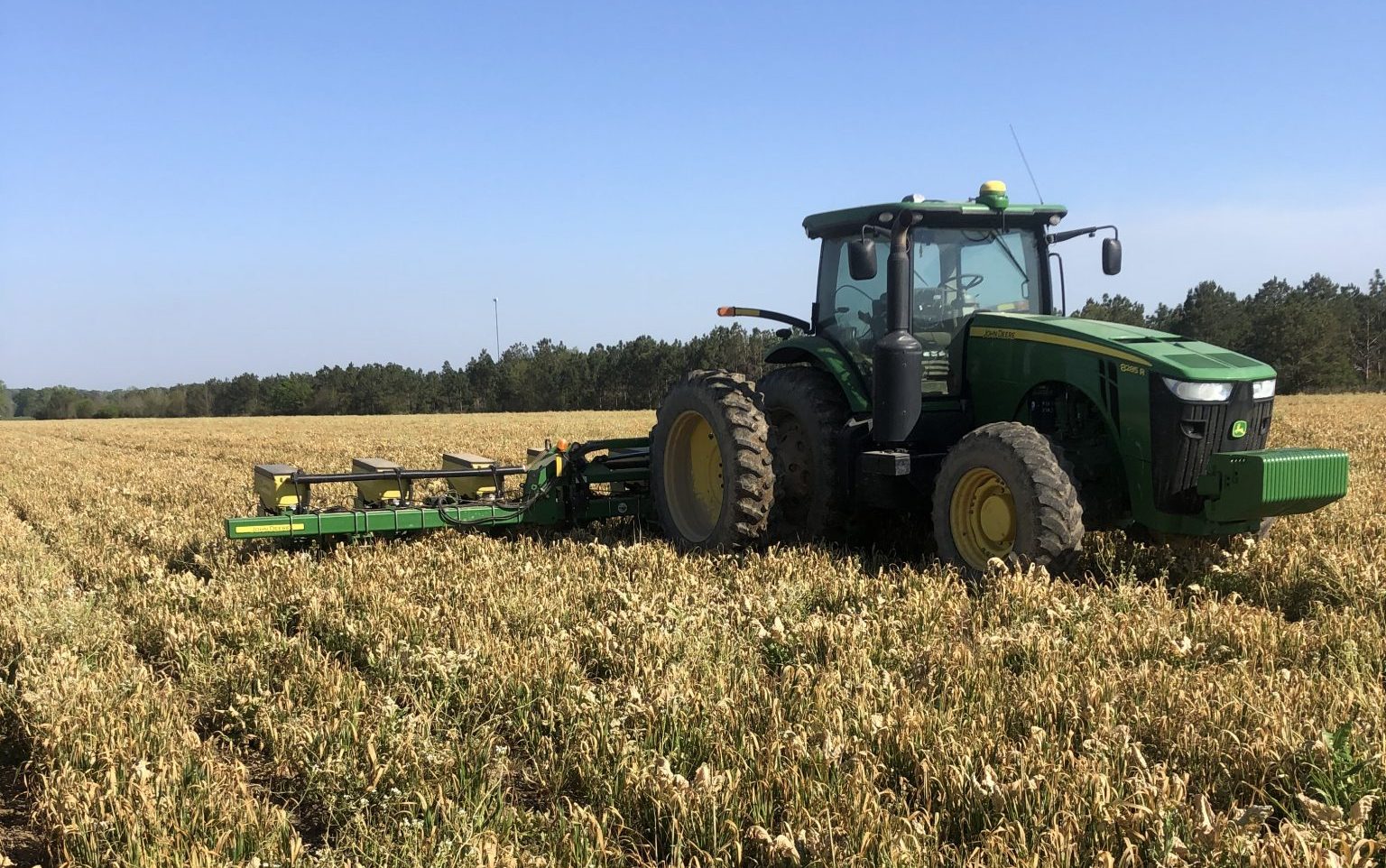
The Agriculture Improvement Act of 2018 — better known as the 2018 Farm Bill — is a piece of legislation that provides safety net support through the Agriculture Risk Coverage (ARC) and Price Loss Coverage (PLC) programs to farmers who have base acres. Congress authorized an extension on the Farm Bill that will now expire on September 30, 2025. Therefore, in 2025, farmers will make an election and enrollment decision by April 15 for the upcoming crop year. The current decision is for base acres established in Alabama for the 2025-2026 crop year, which begins between June and September, depending on the crop.
Effective Reference Price
The first piece of information needed to make a decision on enrollment in ARC or PLC is the Effective Reference Price (ERP). The ERP is used to calculate payments for both PLC and ARC-County (ARC-CO). The ERP for corn, grain sorghum, and soybeans increased for a second straight year. Meanwhile, the ERP increased for the first time for canola and wheat in 2025. Table 1 below shows the ERP for crops with base acres in Alabama.
Table 1. Effective Reference Price for 2025 Crop Year
Note: Seed cotton is a weighted average price of the cottonseed price and lint price.
| Commodity | Marketing Year | Unit | 2025 Effective Reference Price |
|---|---|---|---|
| Barley | June 1 - May 31 | Bushel | $4.95 |
| Canola | July 1 - June 30 | Pound | $0.2054 |
| Corn | Sept. 1 - Aug. 31 | Bushel | $4.26 |
| Grain Sorghum | Sept. 1 - Aug. 31 | Bushel | $4.51 |
| Oats | June 1 - May 31 | Bushel | $2.76 |
| Peanuts | Aug.1 - July 31 | Pound | $0.2675 |
| Seed cotton | Aug. 1 - July 31 | Pound | $0.3670 |
| Soybeans | Sept. 1 - Aug. 31 | Bushel | $9.66 |
| Sunflower seed | Sept. 1 - Aug. 31 | Pound | $0.2015 |
| Wheat | June 1 - May 31 | Bushel | $5.56 |
Price Loss Coverage Decision
PLC is a price-based safety net program. Payments are triggered when the national Marketing Year Average (MYA) price falls below the ERP. To decide whether to choose PLC, one needs to consider the potential for this to occur. While professionals do not have a crystal ball to determine prices for next year, there are some projections that can be made based on current MYA prices, supply, demand, futures markets, and forward contracts. Given this, those with base acres can consider what commodities would be eligible for PLC payments. For the 2024-2025 marketing year, peanuts, seed cotton, canola, and sunflower seed are the only commodities with base acres in Alabama that are expected to trigger a payment. While none of the crops whose ERP increased in 2024 were expected to trigger payments for the 2024 crop year, corn and grain sorghum, both of which saw an increase in their 2025 ERP, could trigger a PLC payment for the 2025 crop year. Additionally, peanuts, seed cotton, canola, and sunflower seeds are also expected to trigger payments once again. Note, payments are not guaranteed as increases in prices during the marketing year compared to current expectations may result in payments not being triggered for those commodities.
Agricultural Risk Coverage – County Decision
The ARC-CO program is a revenue-based program, which is a combination of county yields and the national marketing year average price. Payments are triggered when the revenue falls below the revenue guarantee. This can occur because of a lower yield compared to the benchmark yield, a lower price compared to the benchmark price, or a combination of the two. At the current price projections, the ARC-CO program is likely to only pay out if yields fall significantly below the county benchmark. Since this is a county-by-county determination, one needs to look at the individual county data. The links to PDF files below contain county level data for consideration.
- County names between Autauga and Cullman
- County names between Dale and Jackson
- County names between Lauderdale and Morgan
- County names between Perry and Washington
Find the benchmark yield, benchmark price, and computed revenue guarantees on each county page. Additionally, assumptions are presented to illustrate the point where a minimum or maximum payment rate may be triggered. If one assumes a marketing year average (MYA) price as shown, then the county yield must fall below the calculated yield to achieve the minimum payment rate. If the county yield falls even further, that would result in a higher payment rate, up to the maximum. Alternatively, if one assumes a county yield equal to the benchmark yield, then the MYA price level needed to achieve a minimum payment is shown. For some commodities, such as corn and soybeans, the MYA price projection is within the range to trigger a payment at the county benchmark yield. Ultimately, ARC payments are dependent upon both the price and yield outcome for the 2025 marketing year.
Implications on Crop Insurance
When making the ARC/PLC decision, one needs to also remember the implications on crop insurance decisions. If the Supplemental Coverage Option (SCO) was chosen for a planted crop, those base acres can only elect and enroll in PLC. Crops with ARC enrollment are not eligible for SCO on planted acres. For seed cotton, any enrollment in ARC/PLC is also ineligible for STAX. Producers should consider these other crop insurance options before making the ARC/PLC decision. There are cases where STAX may be the better option than ARC/PLC. A Southern Ag Today article from January 18, 2024, illustrates this point. SCO can also provide additional price protection when coupled with Revenue Protection, as discussed in a February 12, 2024 Southern Ag Today article.
Bottom Line
The bottom line for the 2018 Farm Bill safety nets for farmers with base acres is that while the ERP has started to trigger for some commodities, there are still limited payments expected for the 2025 crop year, which would not be paid until the following year in October 2026. Prices have stayed low, while production costs are still more than 20 percent higher than they were in 2019. The present structure of the ARC/PLC programs does not provide the safety net that is necessary to cover the cost of production. This resulted in an additional (ad-hoc) economic assistance for row crop producers that was authorized December 21, 2024. The next farm bill will hopefully address this issue. Ultimately, producers need to carefully consider their options and other risk management strategies.