
Farm Management


Caregiving is an important responsibility that influences household dynamics across Alabama. Nearly two-thirds of respondents from the 2025 Our State, Our Lives: Alabama Wellbeing Survey1, reported providing care for a child, an adult, or both within the past year. This document explores caregiving activities of household decision-makers, especially who caregivers are, who they care for, where they live, and how these responsibilities affect their financial stability and overall quality of life.
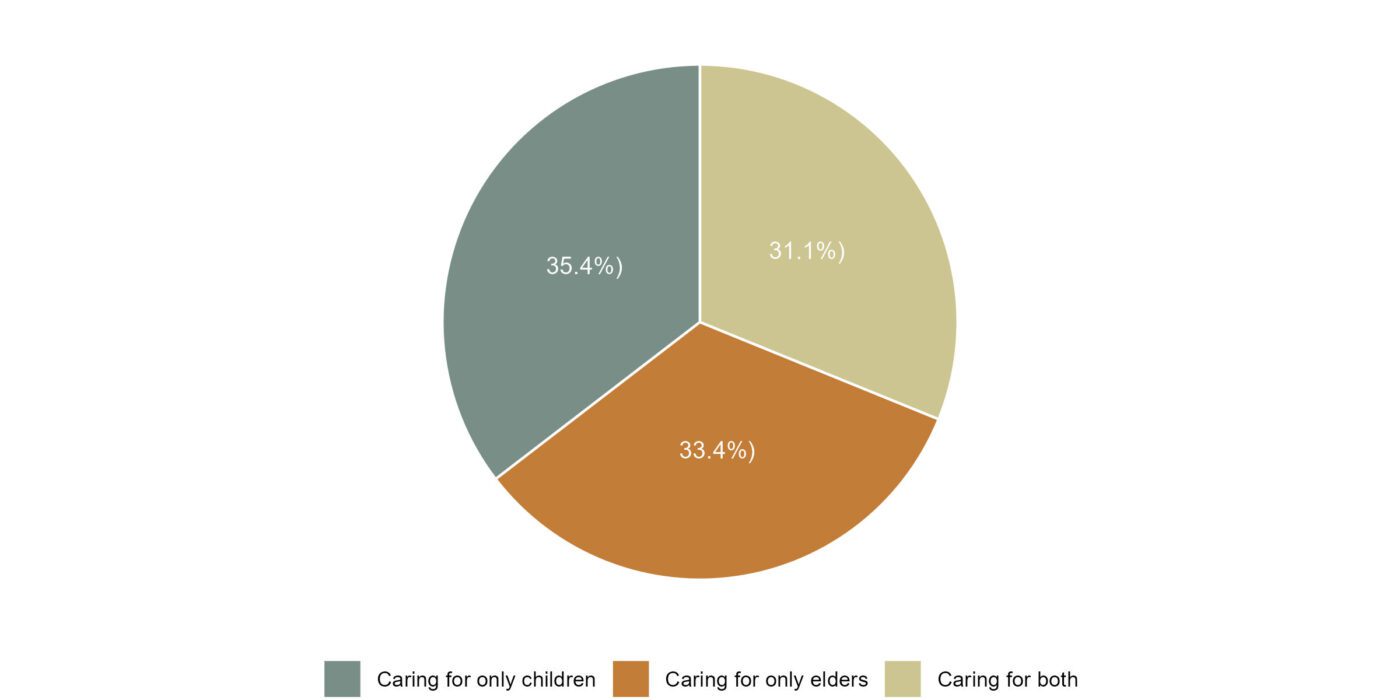
Figure 1. Distribution of caregivers in Alabama by care type (n=1,053)
Caregiver Groups in Alabama
The 1,053 respondents to the Our State, Our Lives survey, who reported providing care in Alabama, are almost evenly divided among three groups (figure 1). While caring for children remains the most common form of caregiving (35%), a significant percentage of household decision-makers in Alabama care for and support aging family members (33%) or juggle both roles simultaneously (31%). Those who care for both a younger and an older generation form the so-called sandwich generation.
Caregiving Roles Evolve but Do Not Disappear with Age
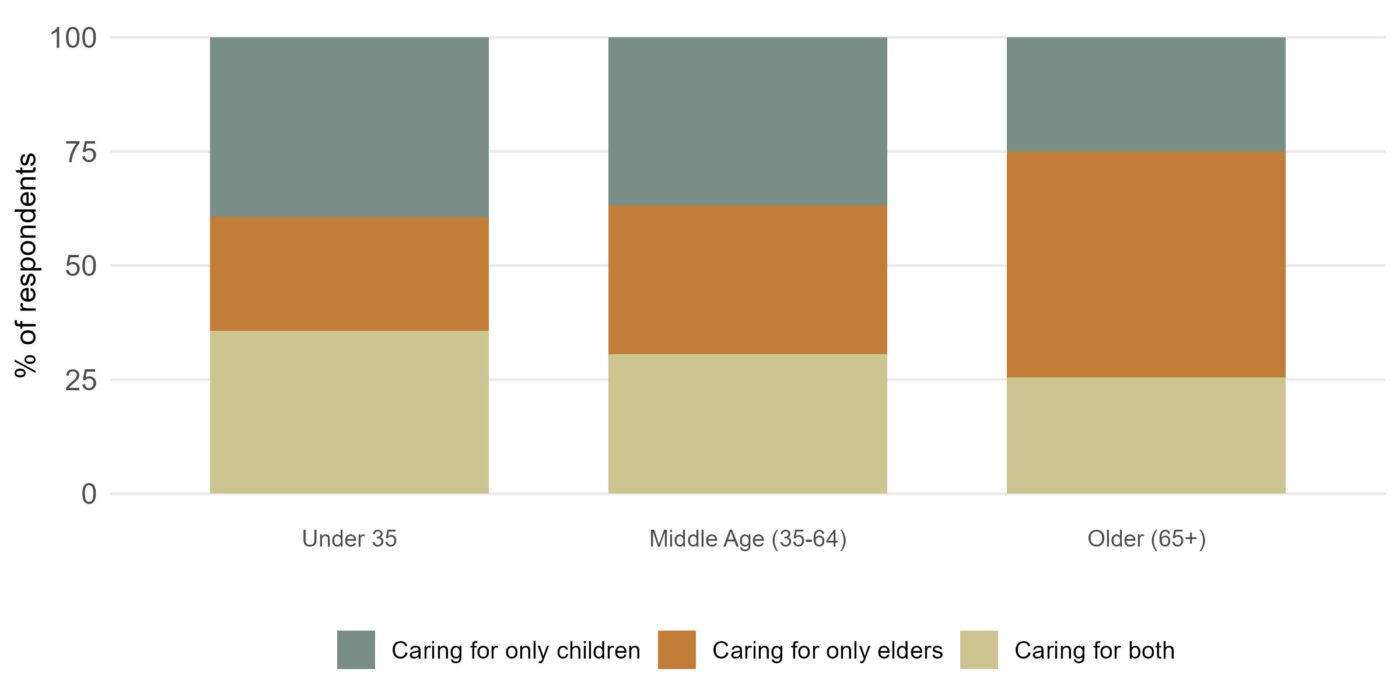
Figure 2. Distribution of caregivers by age groups
Figure 2 shows that caregiving is a lifelong role that evolves rather than disappears with age. Patterns of caregiving in Alabama vary noticeably across age groups. Younger adults (under 35 years old) are more likely to care for children. Middle-aged adults (35–64 years old) represent a balanced group, with many of them caring for both children and older relatives. Among older adults (65+), caregiving responsibilities shift primarily toward elder care by nearly 50 percent. In fact, figure 2 shows that elder care responsibilities are substantial across age groups.
Women Lead in Childcare & Men Share in Elder Care
Caregiving responsibilities in Alabama differ somewhat by gender. Women are more likely to be primary caregivers for children (39%) as compared to men (30%) (figure 3). Figure 3 shows similar levels of elder care involvement among men and women. Interestingly, the share of men providing care for both children and elders is slightly higher (35%) than that of women (28%).
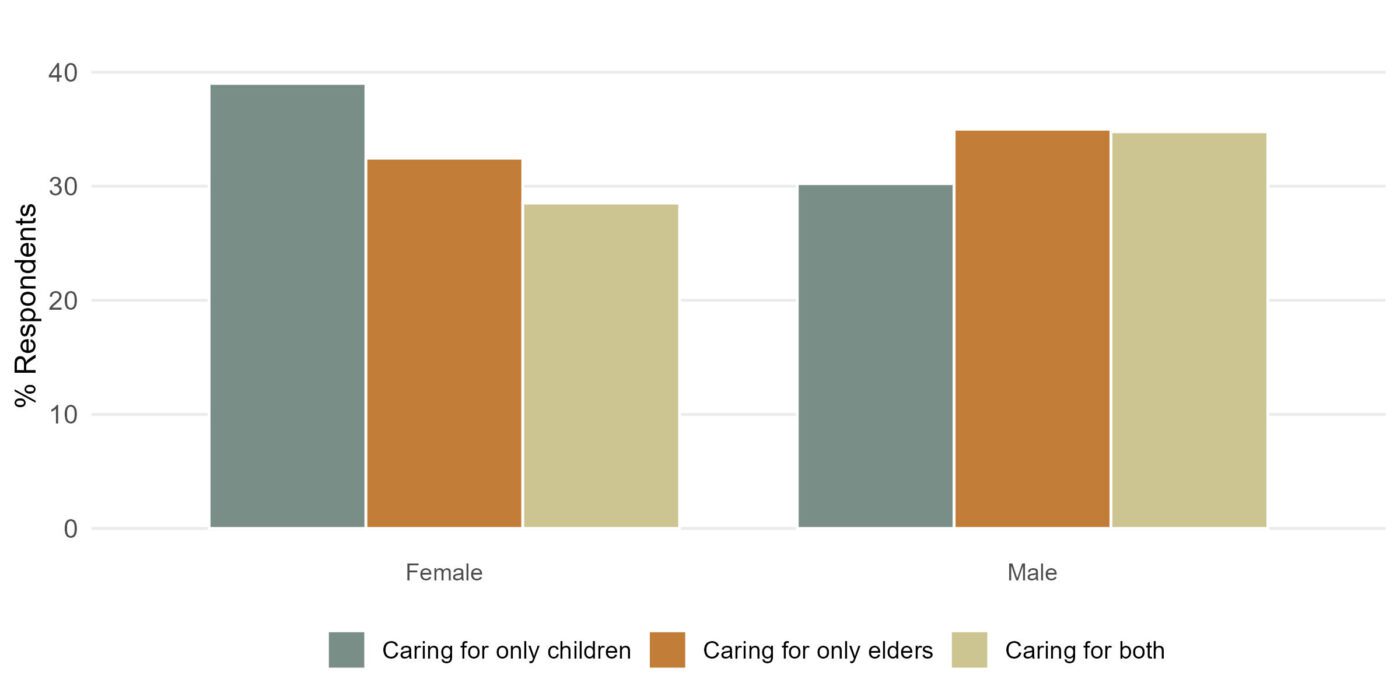
Figure 3. Caregiving roles by gender
Patterns of Caregiving Are also Visible Across Education Groups
Individuals with a high school diploma or less are more likely to care for children than their contemporaries with a post-secondary education. Those with additional years of education are more likely to care for both groups simultaneously. In fact, 40% of college-educated respondents juggle care for both children and older adults, compared with only 29% among those with a career; technical or vocational school training; or junior or community college educations. This latter group has a higher proportion of respondents who provide care only for elders.
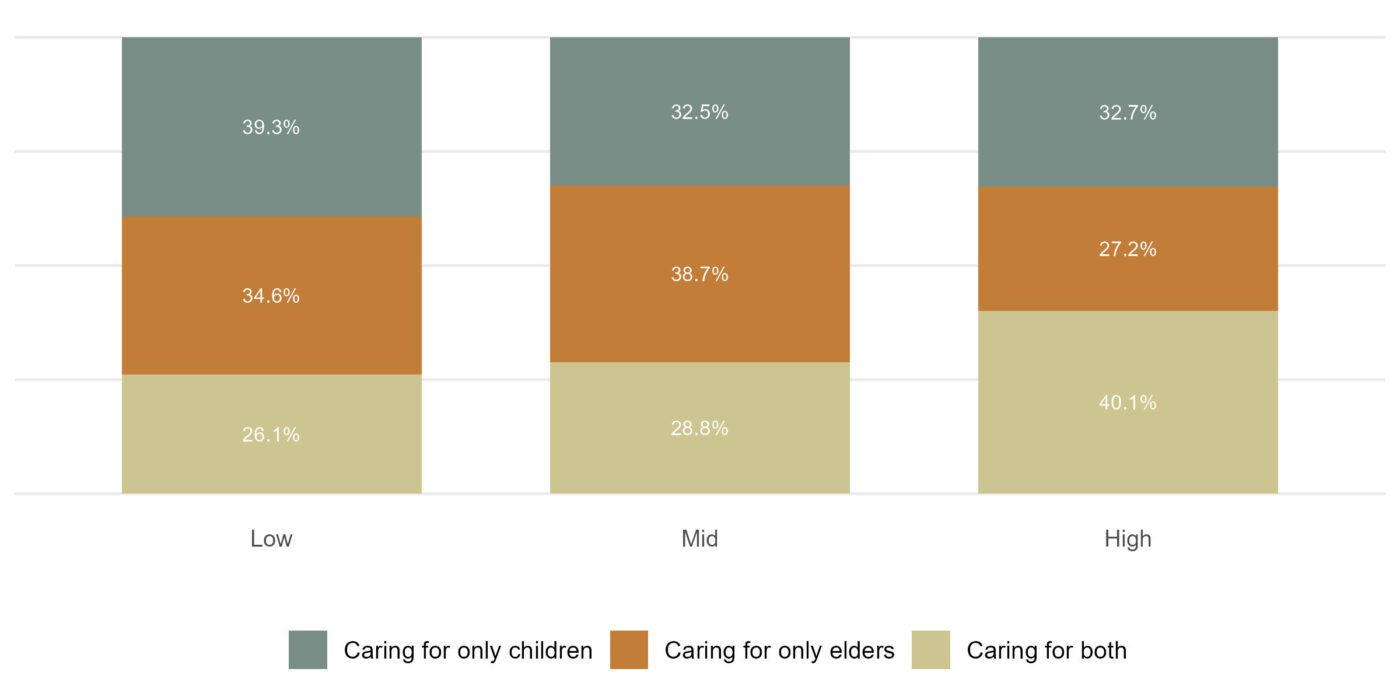
Figure 4. The highest level of education of caregivers
Race & Caregiving Responsibilities
Caregiving responsibilities appear fairly balanced across racial groups, though subtle differences emerge. Black, Non-White Hispanic, and Asian individuals are slightly more represented among caregivers for both children and elders (33%) compared to their White counterparts (29%). White caregivers, on the other hand, are somewhat more concentrated in the elder care category, with 35% of the respondents in this group caring for adults.
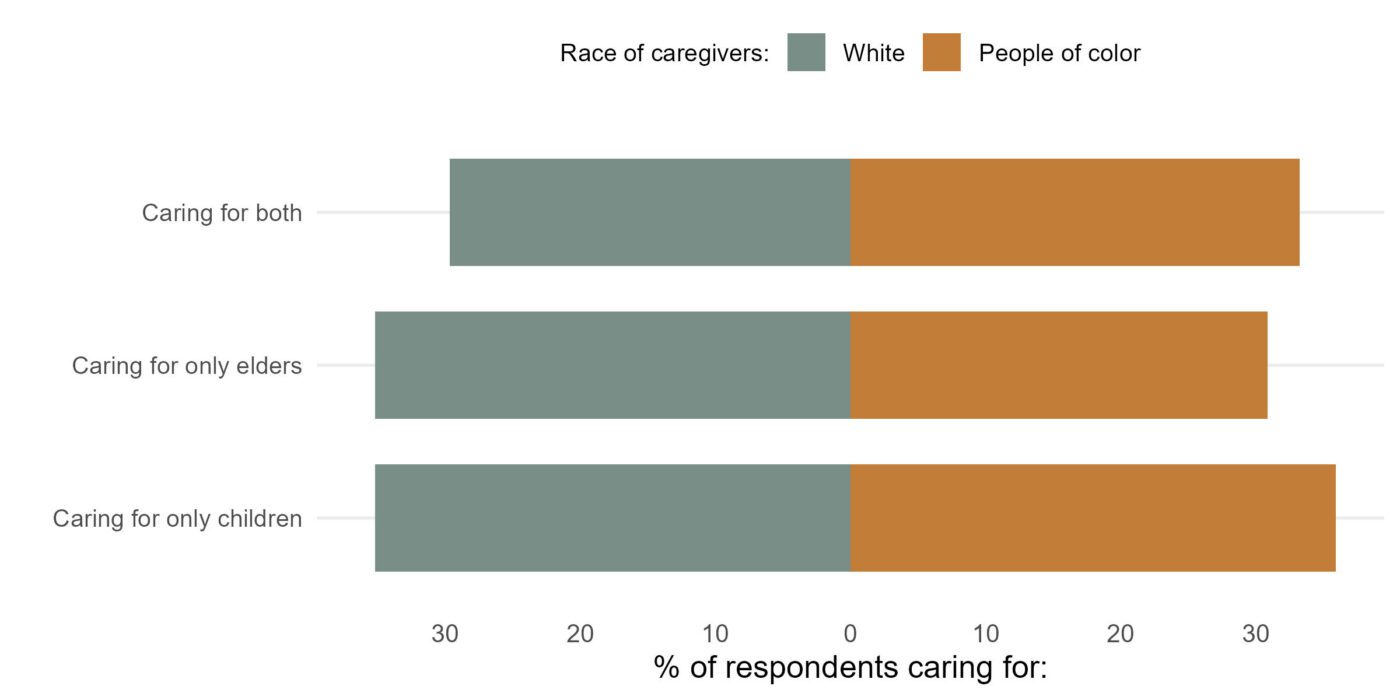
Figure 5. Race of caregivers
Balancing Work & Care
Caregiving responsibilities often overlap with professional life. For example, full-time workers represent the largest share of caregivers across all groups, whether caring for children, elders, or both (figure 6). Retirees are notably more present among those caring for elders, while part-time and unemployed respondents also make up a visible share of caregivers for both children and older adults.
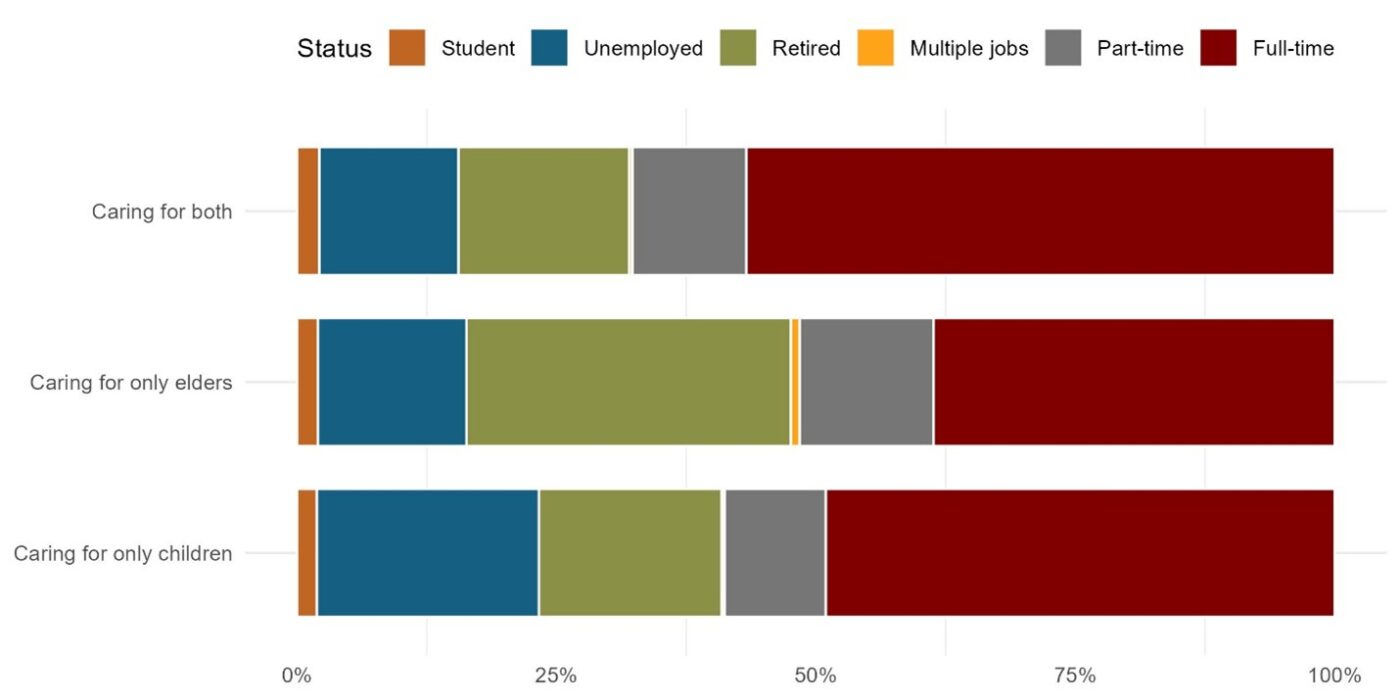
Figure 6. Employment status of caregivers
Greater Financial Stability May Come with Broader Caregiving Responsibilities
Figure 7 illustrates two distinct caregiving patterns in terms of financial earnings. The shares of caregivers of both children and older people increase with earnings. Twenty-four percent of this care earned below $50,000, while 35% are in the middle-income category, and 43% are in the high-income brackets (i.e., above $100,000). The second noticeable pattern is among respondents who provide care only for older adults. The majority of this group (39%) is in the low-income categories (i.e., below $50,000), while less than one-third and less than one-fourth are in the middle and high-income brackets, respectively. Caregivers of only children are more evenly distributed across income categories.
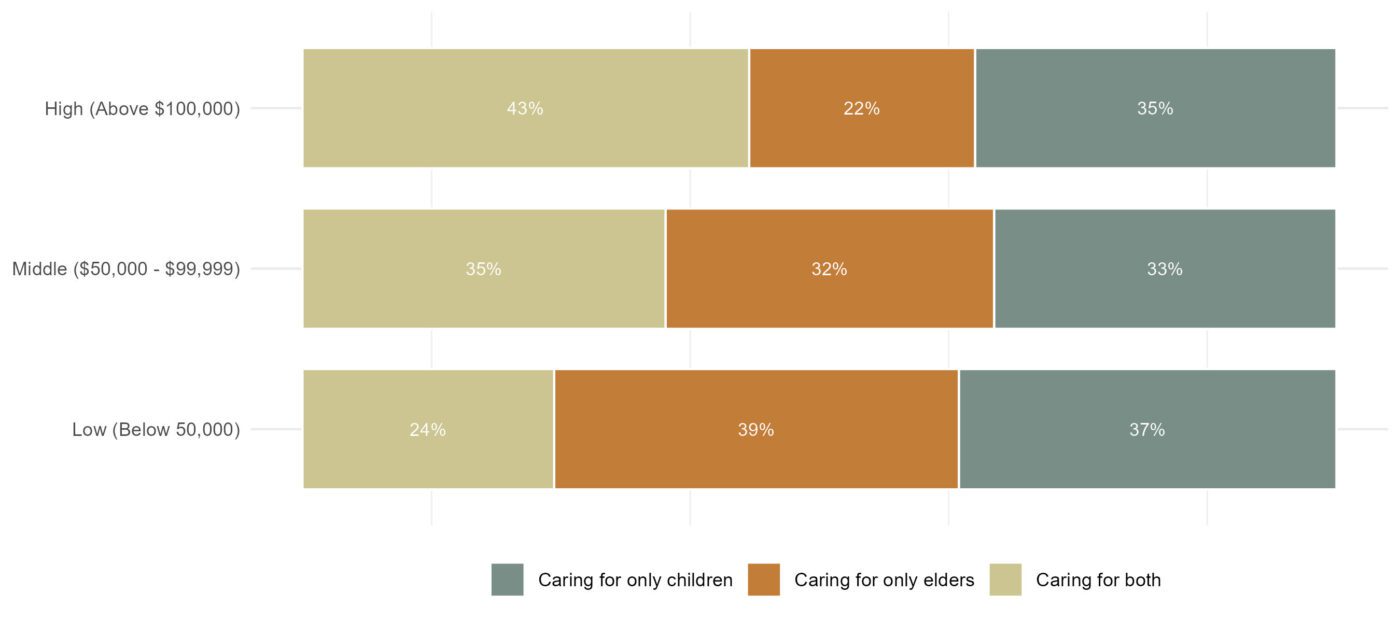
Figure 7. Income of caregivers
Multigenerational Caregiving Is a Reality in Cities
Urban families often juggle diverse caregiving responsibilities. Figure 8 shows a clear pattern of “dual caregivers” (those caring for both children and elders), with the majority concentrated in urban areas, while 31% and 24% live in suburban and rural areas, respectively. Most people providing elder care are only in suburban areas. In contrast, and interestingly, rural communities in Alabama show a younger family structure, with the highest percentage of people caring only for children in these places. In summary, childcare needs are more common in rural areas, while suburban households are mostly made up of older people needing care. The sandwich generation is most prevalent in the cities.
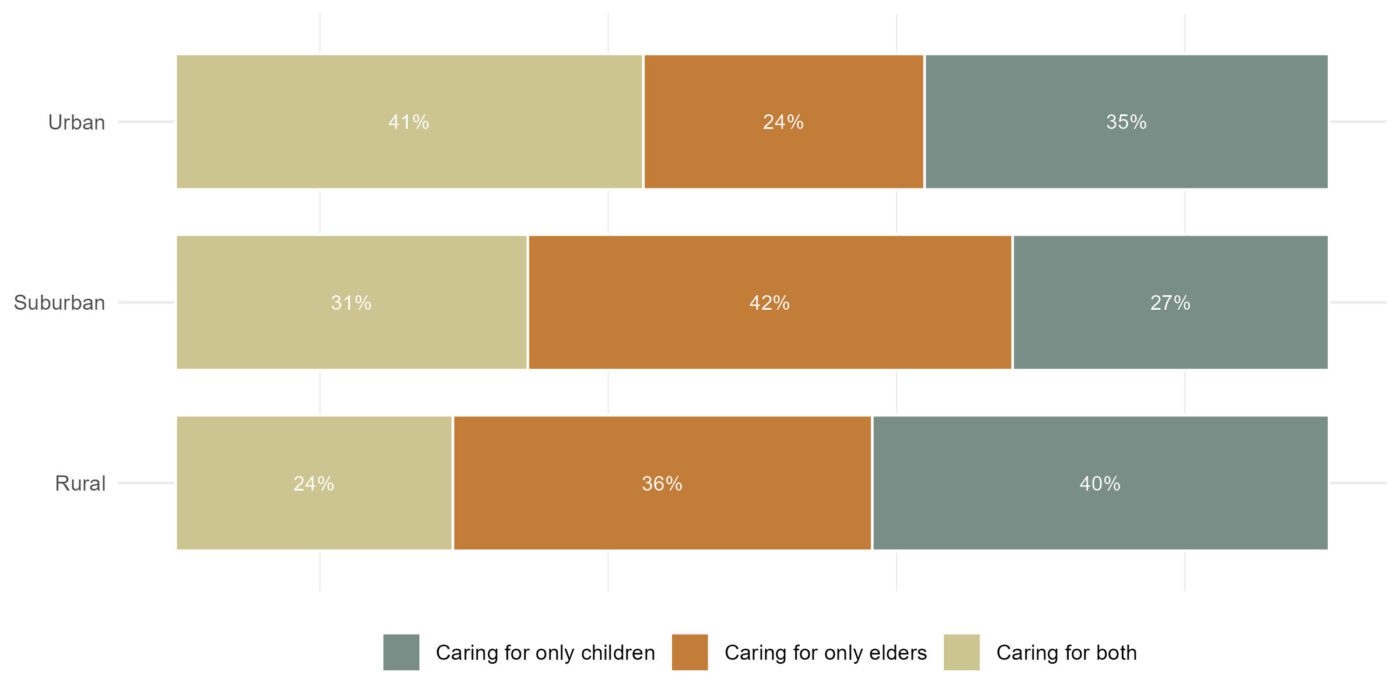
Figure 8. Where caregivers live across the state
Caregiving Roles Remain a Burden Across All Caregiver Types
In this sample of 1,053 caregivers, approximately 40% report consistent financial difficulties or an inability to pay household bills in at least half of the past 12 months (figure 9). More than one in ten experienced chronic financial distress every month. Differences are noticeable, though, for respondents who report occasional difficulties (i.e., only 1 or 2 months) and those who have never been in trouble during the past year. The dual caregiver group is less likely to report never having trouble paying bills. In addition to 41% showing signs of financial insecurity for at least half of the year, 39% reported occasional challenges paying their household bills. In general, caregivers for children or elders alone report somewhat better financial stability.
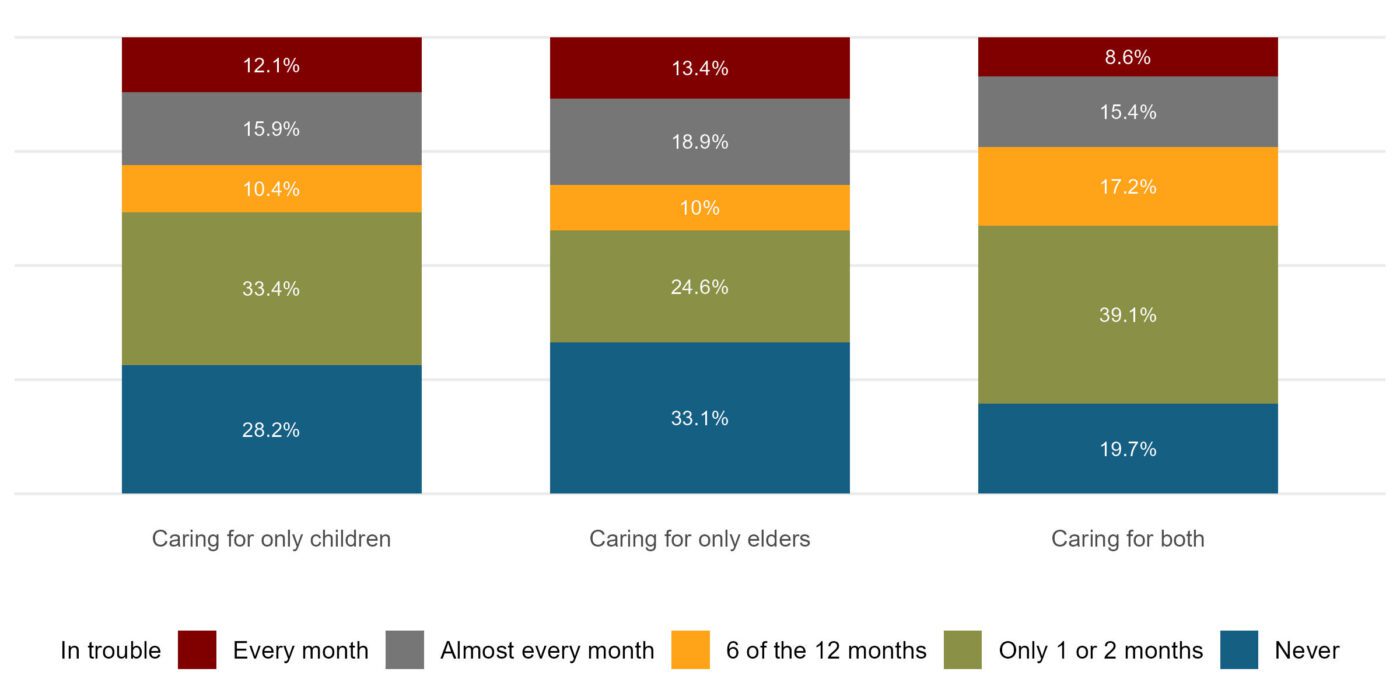
Figure 9. Struggles to pay household bills
Caregiving Responsibilities Clearly Affect Alabamians’ Ability to Work
As caregiving demands expand, balancing employment becomes increasingly difficult. For example, for those supporting multiple generations simultaneously, figure 10 shows that approximately half report that their caregiving duties limit their ability to work. This result is more than double the rate of those caring for children only and 17 percentage points higher than those caring for older people only. Even among caregivers focused solely on elder care, one in three reports facing work limitations. This pattern should be taken seriously because, when overlaying figure 6 (caregivers’ employment status) with figure 10, a significant share of unemployed and retired household decision-makers (35%) and part-time employees (12%) reported that their caregiving responsibilities constrained their ability to work. These results are more significant among dual caregivers, who are mostly in the older age group and self-reported as retired (figures 2, 6, and 10).
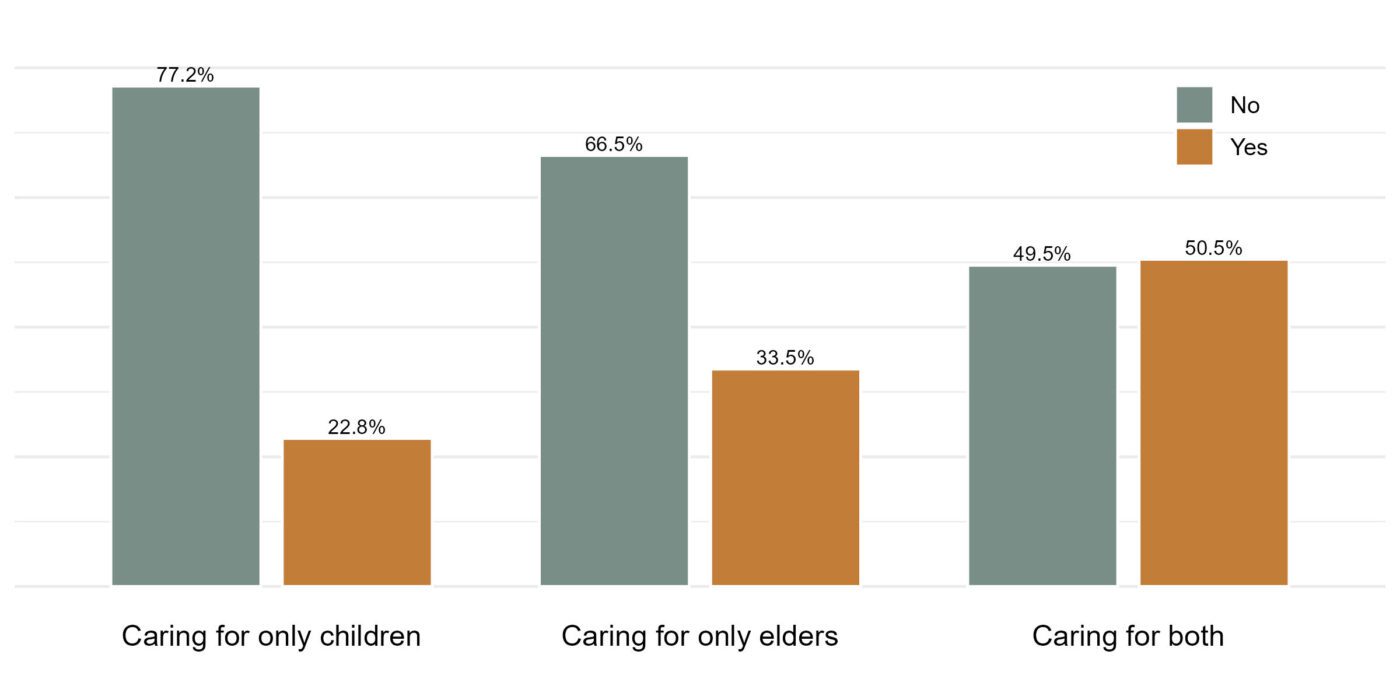
Figure 10. Constraint on ability to work
Elder Care May Take a Heavier Toll on Wellbeing
Figure 11 shows respondents’ perspectives on how family quality of life (QOL) has changed during the past 5 years preceding the data collection period and the expected change during the next 5 years. In general, QOL has declined in the past 5 years, but people remain optimistic about the future. Caregivers focused solely on elder care report the greatest decline in recent years: nearly 40% say their QOL worsened in the past 5 years, and 12% remain pessimistic about future conditions, while a similar, non-negligible percentage reports no change from the past and expects no change in the future. Those caring for both children and older adults express the most optimism, with 94% expecting their quality of life to improve or remain stable during the next 5 years. Middle-aged dual caregivers show a better outlook for their future (figures 2 and 11).
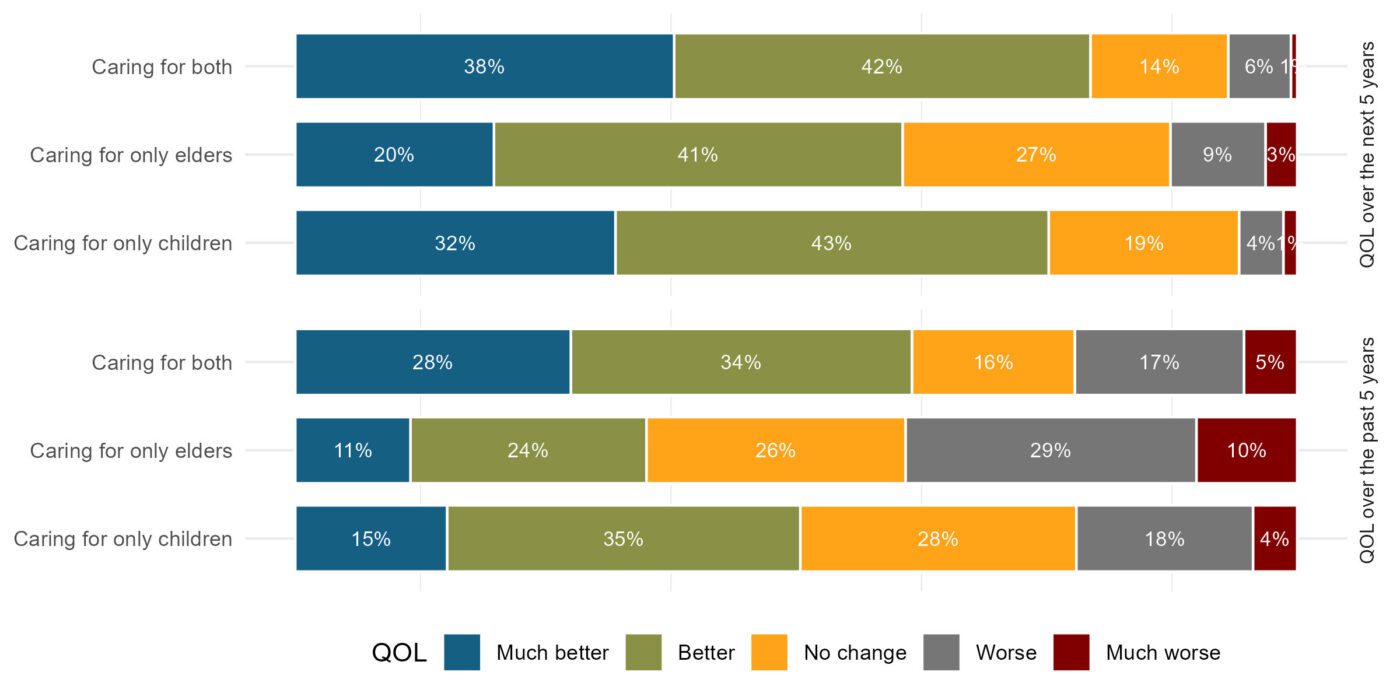
Figure 11. Past and expected change in quality of life of caregivers
Conclusion
Data from Alabama’s Our State, Our Lives Survey shows the dynamics of households across the state regarding caregiving responsibilities. Caregivers in general are confronted with challenges on multiple fronts. However, Alabama’s caregiving landscape reveals a quiet but significant strain on those balancing responsibilities for both children and aging family members. The sandwich generation stands at the intersection of work, family, and financial pressure. They often sacrifice their own wellbeing to meet the needs of others. Yet, their resilience is evident: many remain optimistic about the future despite the daily challenges. As caregiving remains an important reality across the state, these findings underscore the importance of support systems (from communities, the workplace, or the state) that recognize and sustain the people holding families together.
1 Our State, Our Lives: Alabama Wellbeing Survey is a biennial survey conducted by the Rural Partnership Institute at Auburn University regarding Alabamians’ wellbeing and quality of life. The survey is conducted online using a best quota sampling frame, meaning that the demographics of the poll reflect the demographics of Alabama regarding age, race, ethnicity, gender, and place (rural, urban, and suburban). The 2025 iteration had 1,947 total respondents. This work is supported by the Auburn University Rural Partnership Institute, project award no. 707500-38914, from the US Department of Agriculture’s National Institute of Food and Agriculture. Any opinions, findings, conclusions, or recommendations expressed in this publication are those of the authors and should not be construed to represent any official USDA or US government determination or policy.
Jean R. Francois, Postdoctoral Scholar; Kelli Russell, Assistant Extension Professor; and Mykel R. Taylor, Department Head, Professor, and ALFA Endowed Chair, all in Agricultural Economics and Rural Sociology at Auburn University
New March 2026, Inside the Hidden Pressures of Caregiving: Results from 2025 Our State, Our Lives Survey, ANR-3231