
Crop Production

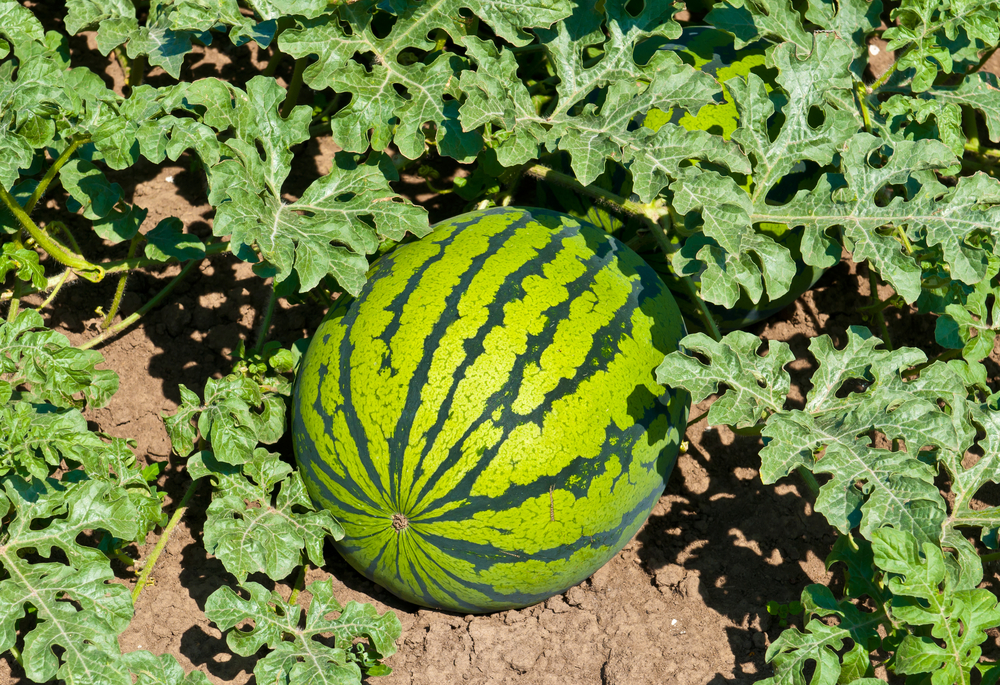
Watermelons can be a great crop for both home and commercial production. The following information outlines several key considerations before growing watermelons.
Preparing the Site
Like most crops, watermelons need to be planted on a well-draining site. They should never be planted in a low area that is susceptible to flooding or on land that has poor internal drainage.
Before planting, performing a soil test is recommended. It is known how much nitrogen, phosphorus, and potassium watermelons need to grow, but there is no way of knowing what elements are already present in the soil without a test. The soil test will analyze the elements in the soil and give recommendations for adding needed elements.
Growing cover crops is also recommended to help prepare the site. It takes time, but growing cover crops is a great way of increasing the organic matter and improving internal drainage of a field. When planting cover crops, it is recommended to perform a soil test in late summer. The Alabama Extension website has several resources on soil testing. You can also call your county Extension for any questions concerning soil testing.
Spacing
Plant spacing for watermelons is related to the desired size of the melon. Larger melons are generally given 24 to 30 square feet per plant. It is common to see watermelon rows spaced 6 feet apart with plants spaced 42 to 60 inches in the row. The mini melons that have become popular over the past few years can be spaced closer, such as 13 or 14 square feet per plant.
Disease Management
Watermelons are in the Cucurbitaceae family, which includes cucumbers, muskmelons, squash, pumpkins, gourds, and honeydew melons. It is common for plants in the same family to share diseases, making it important to rotate crops. If possible, it is recommended to wait up to 5 years before growing a crop such as watermelon in the same place as any other crop from the same family. This is easy to accomplish if you are planting small plots and have enough land but is difficult for farmers who plant large acreage of the same crop. If crop rotation is not possible, it is recommended to plan watermelon varieties with as much disease resistance as possible. Some varieties offer resistance or tolerance to certain diseases, including fusarium wilt race 1, anthracnose, and powdery mildew.
Transplants
If you are looking for an early watermelon, growing transplants may be an option. Temperatures should be 70 to 80 degrees F during the day and 65 to 70 degrees F at night. If adequate light is provided, transplants should be ready in 3 to 4 weeks. If the transplants are stretching out tall—with long internodes from one leaf to the next—and are not as compact as you would like, then they are probably not getting adequate light. Sunlight is best, but supplemental light can be added. Lights are helpful and can be put on a timer to provide 14 to 16 hours of light each day.
It is also recommended to start all seedless varieties in containers and transplant them into the field. Seedless varieties do not have good germination rates when compared to seeded varieties. So, when planting seedless watermelons, it is recommended to plant one-third of the field with a seeded pollinator. The seeded watermelons also need to be grown as transplants in order for them to provide pollen when the seedless plants begin blooming. Instead of planting two rows of seedless and one row of seeded watermelons, is better for pollination to plant two seedless plants and one seeded plant down the row. Also, make sure the rind pattern and/or color is different on the seeded melons, so you can quickly tell them apart from the seedless melons.
Recommended Varieties
Some recommended seeded watermelon varieties include ‘AU Producer’, ‘Crimson Sweet’, ‘Jubilee II’, ‘Estrella’, ‘Lemon Krush’ (yellow flesh), ‘Nunhems 800’, ‘Nunhems 860’, ‘Sangria’, ‘Starbright’, and ‘Top Gun’. A recommended mini melon variety that is seeded is ‘Mickey Lee’.
Recommended seedless watermelon varieties include ‘Affirmed’, ‘Bottle Rocket 7112’, ‘Buttercup’ (yellow flesh), ‘Captivation’, ‘Crackerjack’, ‘Crunchy Red’, ‘Exclamation’, ‘Fascination’, ‘Joy Ride’, ‘Orange Crisp (orange flesh)’, ‘Road Trip’, ‘Superseedless 7167’, ‘Superseedless 7197HQ’, ‘Sweet Dawn’, ‘Sweet Gem’, ‘Treasure Chest’, ‘Tri-X 313’, and ‘Troubadour’. Recommended mini melon varieties that are seedless include ‘Extazy’, ‘Mielheart’, and ‘Sirius’.
The home horticulture or commercial horticulture Extension agent in your area can provide information on disease-resistant varieties.