
Crop Production

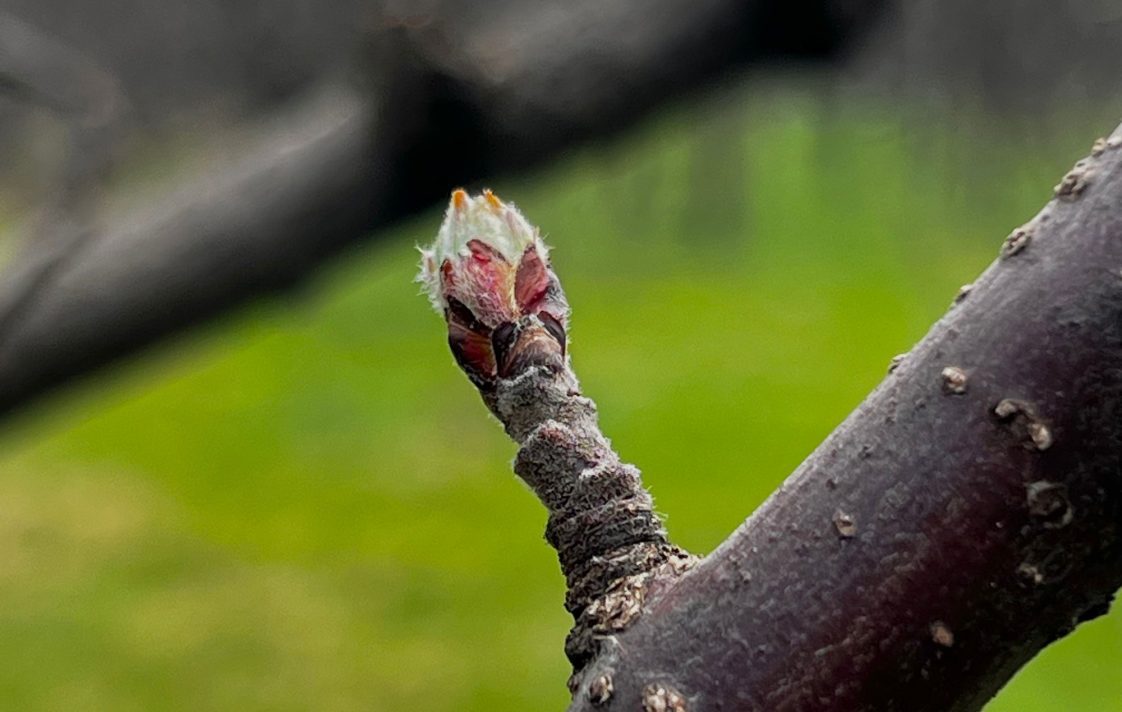
Shield budding, or T-budding, is a common grafting method used on various crops, such as plums, peaches, apples, and pears. Grafting is usually done on plants that cannot be readily propagated by other common methods, such as cuttings, seed, division, and layering. Budding is the process of taking a live bud from one tree and attaching it to another tree. The more closely related the plants—such as peach to peach, pear to pear, etc.—the greater the success. The shield budding method is commonly done during the growing season, from June to August. However, earlier in June may be better due to the summer heat.
Getting Started
Materials needed for budding include a sharp budding knife, grafting tape, a rootstock, and an actively growing shoot of the desirable plant. Again, the rootstock and the shoot that you take the buds from must be closely related. A grafter will often have access to the shoot the buds will be taken from but will need to purchase a tree to be used as a rootstock. If the budwood and rootstocks are not in the same location, cut healthy budwood, wrap it in a wet towel, and place it in a cooler for transport. The budwood should be kept cool and damp. If possible, bud the tree within a few hours of collecting the budwood.
Begin by cutting a T in a healthy rootstock, about ¼ to ½ inch in diameter. Budding is usually done near the base of the tree above the root system. However, budding can be done at any height. With a knife, lift the corners of the T to loosen the bark.
Next, find a healthy leaf bud on the desired plant, located at the base of the leaf’s petiole. Lift out the bud by cutting just behind it, trying not to remove any of the wood that is found under the bud. This is usually accomplished when the plant is actively growing during the summer. Many grafters will remove the leaf but leave the petiole. The petiole can then be used as a handle to hold the bud. Touching the cut part behind the bud can clog the vascular system and cause the bud to die.
Next, while holding the petiole, slide the bud behind the bark in the T cut on the rootstock. Use a knife to help hold the cut open. After the bud has been placed under the bark of the rootstock, cut off the bud shield so that it matches smoothly with the rootstock. Then, wrap grafting tape around the bud and rootstock to secure the bud shield to the rootstock and prevent the bud from drying. Break the rootstock above the bud and bend it over so that it shades the healing bud.
Care and Maintenance
Check the bud a couple of weeks after grafting to see if it looks healthy. If it is healthy, cut the rootstock just above the bud. If the bud union heals properly, a new shoot should begin to grow from the bud. Remove all other shoots that begin to grow from the rootstock. Some propagators will leave a nurse limb to feed the plant while the new shoot is beginning to grow. The nurse limb should not be allowed to grow taller than the shoot growing from the new bud. Nurse limbs can be removed completely during the winter. Trees budded in August should be left alone until the following spring. In the spring, when the bud starts to swell, cut the rootstock just above the bud. Remove any additional shoots that form below the bud. Remember to stake the new shoot to prevent damage.
More Information
For additional information on budding trees, call your county Extension office.