
Crop Production

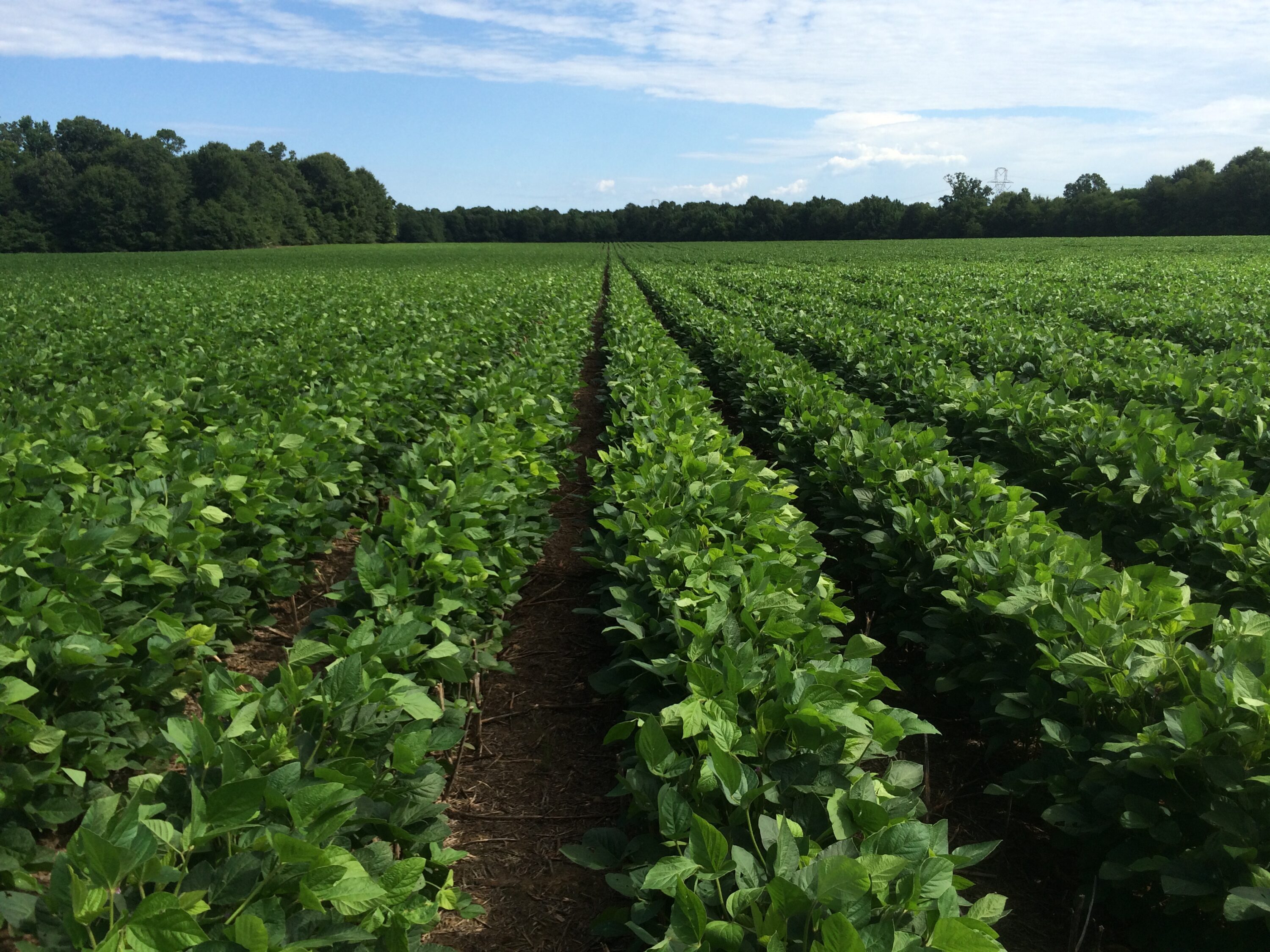
The US Environmental Protection Agency (EPA) has issued new federal herbicide labels for over-the-top (OTT) dicamba use on dicamba-tolerant (DT) cotton and soybeans. Three herbicide labels have been approved by the Alabama Department of Agriculture and Industries (ADAI). They are the following:
- Stryax (Bayer)
- Engenia (BASF)
- Tavium (Syngenta)
These updates apply to the 2026 and 2027 growing seasons and reflect significant changes aimed at reducing drift and volatility, protecting sensitive crops, and maintaining a critical tool for resistant-weed management.
Key Updates for 2026
These restrictions are newly added or substantially strengthened for the upcoming season.
Lower Annual Dicamba Limit
- Maximum of two applications at 0.5 pound acid equivalent per acre each year.
- Annual total of 1.0 pound dicamba per acre from all dicamba products.
- Overall dicamba load and potential off-site exposure reduced.
Increased Volatility Reduction Requirements
- Mandatory 40 ounces per acre Volatility Reduction Agent (VRA) in every application.
Conservation Practice Requirement
- Each treated field must earn three runoff or erosion mitigation points from EPA’s approved conservation practice menu.
- In certain Pesticide Use Limitation Areas (PULAs) with vulnerable species, six points are required. See Bulletins Live II for documentation and PULAs.
- Options include vegetative buffer strips, cover crops, contour farming, and other soil and water conservation structures.
Temperature-Based Limits
- If forecasted temperature is 85 to 95 degrees F on the day of or day after the planned application, growers may not apply more than 50 percent of their remaining untreated acreage of DT crops within that county.
- No application is allowed if the forecasted temperature is greater than or equal to 95 degrees F on the day of or day after the application.
Legacy Restrictions Retained for 2026
These requirements continue from previous federal registrations and remain fully enforceable.
Certification & Training
- OTT dicamba products remain restricted use pesticides and only certified applicators may apply them.
- Annual dicamba-specific training is mandatory.
Worker Safety
- Applicators, handlers, mixers, and loaders must wear label-required PPE.
- 24-hour Restricted Entry Interval (REI) remains in place.
Drift & Volatility Mitigation
- Mandatory Drift Reduction Agent (DRA) is required in every tank mix.
- A 240-foot downwind buffer required unless reduced by approved mitigation tools (hooded sprayer, windbreaks, etc.).
- No application is allowed when dicamba-sensitive crops or plants are located downwind.
Weather & Timing Restrictions
- Approved dicamba labels prohibit applications during temperature inversions, within 48 hours of forecasted rainfall, and within 1 hour after sunrise or within 2 hours before sunset.
- Applications should be made when wind speed is 3 to 10 mph while using a coarse or coarser spray droplets.
- Screenshots or printouts of weather at the time of application are required.
Application Method & Tank Mix Limitations
- Aerial application remains prohibited and no ammonium sulfate (AMS) products are allowed in tank mixes due to the risk of volatility or off-target movement.
Recordkeeping Requirements
- Applicators must maintain complete application records for regulatory compliance and potential enforcement actions.
Takeaways for Alabama Producers
Producers should ensure they do the following:
- Have either an updated commercial or private applicator license.
- Remember that all handlers are required to show proof of training and pesticide certification. Untrained, uncertified people working under the supervision of someone who is trained and certified is not allowed.
- Review updated label requirements before spraying.
- Complete required dicamba training. Online training is accepted.
- Plan for conservation practice points on treated fields.
- Monitor weather and temperature forecasts closely.
- Maintain detailed application records.
The Alabama Department of Agriculture and Industries will accept online training provided by the registrants. In-person trainings from Tennessee and Georgia will also be accepted.
Tavium (Syngenta)
- Product page is available at syngenta-us.com/herbicides/tavium.
- Application and stewardship is available at syngenta-us.com/herbicides/tavium-application-stewardship.
- Training module is available online.
Engenia (BASF)
Currently there are no online modules, but they do have free live trainings. See the training schedule available at engeniaherbicide.com/training/training-schedule.html.
Stryax (Bayer)
- Application requirements are available at stryaxapplicationrequirements.com.
- Bayer Stewardship Dicamba training and resources are available at bayerstewardshiptraining.com.
This is intended to be used as a guide for safe and legal applications that will hopefully help maintain dicamba as an effective weed management tool for Alabama cotton and soybean production.