
Crop Production

Appropriate irrigation is key to growers seeking to maximize their integrated pest management (IPM) in vegetable crops. Water availability during the growing season directly influences plant strength and can minimize stresses that make crops more susceptible to insect pests and diseases. Even in humid regions or during rainy seasons, drought pockets (often common in Alabama) can cause soil moisture deficits, requiring supplemental irrigation to maintain healthy crop development.
Growers should choose the most appropriate method of irrigation that will depend on multiple variables, including crop species, planting density, soil texture, slope of the field, water availability, salinity levels, and economic capacity. Systems must be technically and economically feasible to ensure efficient water use while supporting long-term crop health and pest resistance. A smart water management system does not have to be complicated, and basic irrigation resources are available in “Irrigation Best Practices” and the Farming Basics mobile app available on the Alabama Extension website at www.aces.edu and the Alabama Extension Commercial Horticulture Facebook page. These resources are especially helpful for beginner farmers and gardeners interested in appropriate irrigation methods and equipment.
Practical Irrigation Strategies for IPM
An appropriate irrigation schedule designed to maximize your specific IPM program should consider the following recommendations:
Irrigate at the Root Zone
Always apply water directly where it is needed. Drip irrigation systems are preferred for vegetables, as they deliver water efficiently to the root zone of plants, supporting healthy root systems while minimizing favorable conditions for foliar-feeding pests. Sprinklers may be used for early growth stages, but they promote pest outbreaks by disrupting (flushing) them to noninfested zones or washing away natural enemies.
Flood irrigation promotes the loss of topsoil and nutrients and can create anaerobic zones that stress plant roots. Avoid flood irrigation and apply water as close to the root zone as possible. Soaker hoses are a low-cost option but less suitable for high-efficiency production due to uneven distribution and increased soil surface moisture, which may benefit some pests.
Keep Foliage Dry to Reduce Pest & Disease Pressure
As mentioned previously, avoiding excessive wet foliage is important not only for disease control but also for effective pest management. Wet leaves can wash away biological control agents or contact insecticides, decreasing efficacy. Overhead irrigation increases humidity in the canopy zone and may enhance pest activity. However, sprinklers can help dislodge some soft-bodied pests, such as whiteflies, aphids, and mites, when used briefly and strategically. Overall, drip and subsurface systems are better suited for pestprone crops because of their precision and reduced disturbance of aboveground management tactics.
Use Mulch to Protect Irrigation Systems & Conserve Water
Mulching systems help retain soil moisture in desired levels, reduce weed pressure, and protect irrigation lines, but excessive mulch layers may harbor soil pests, such as cutworms, earwigs, and armyworms. When using mulch with drip irrigation, monitor for increased pest activity beneath the mulch. Choose mulch types and thicknesses appropriate for the crop and region, and avoid over-irrigating under mulch, which can create ideal microhabitats for insect pests. In small plots, pull back mulch and use barriers around the plant base to reduce cutworm damage.
Use a Chemigation System When Appropriate
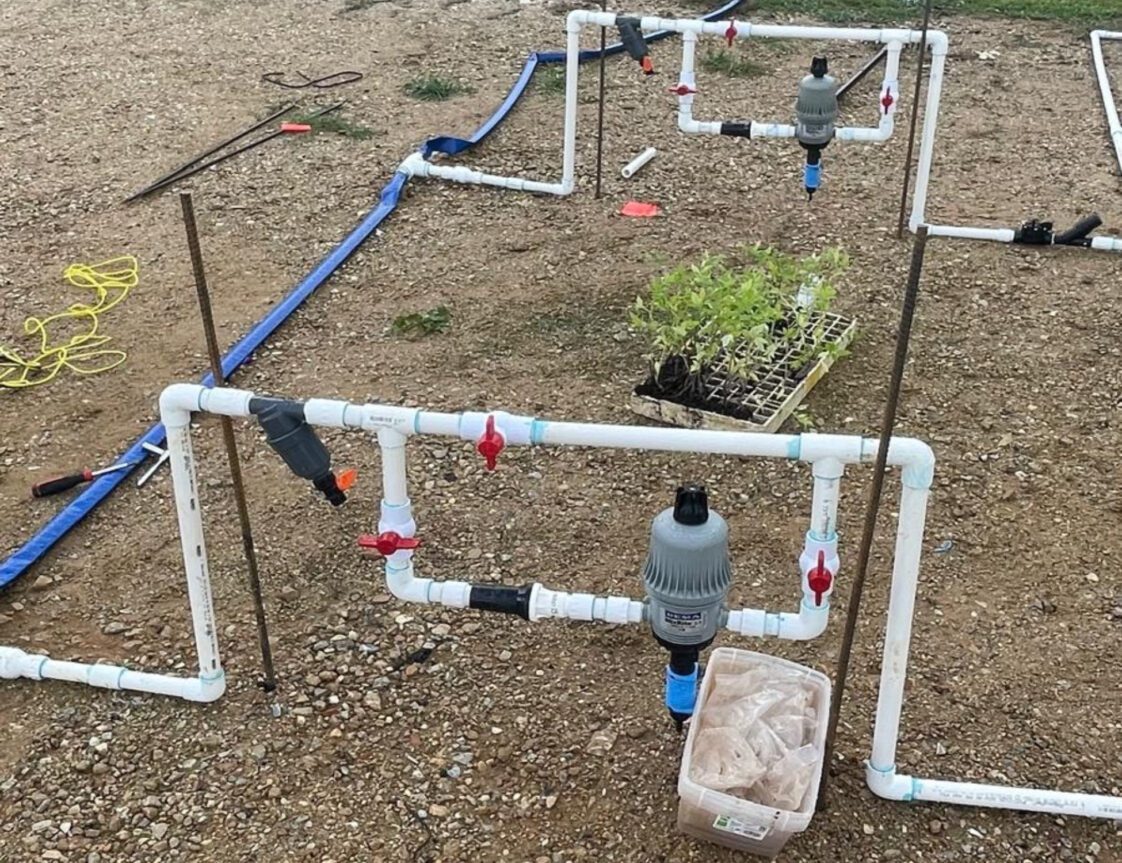
Drip irrigation systems allow for the application of systemic insecticides and bioinsecticides via chemigation. This practice reduces labor and minimizes canopy spraying, which can trigger fast pest dispersal and unintentionally harm pollinators and natural enemies. Chemigation can be an especially effective delivery method for products targeting leaf-feeding pests, such as whiteflies, aphids, or thrips. Refer to local regulations and consult Extension professionals to ensure proper product use and environmental safety.
System Selection & Implementation Tips
- Choose irrigation systems based on local conditions. Sandy soils with high infiltration rates, irregular topography, or high salinity may require pressurized, localized systems like drip or subsurface drip. Furrow systems are better suited for flat terrains and crops with wider row spacing. For areas where labor is limited or automation is feasible, pivot systems or fixed sprinklers with pressure regulators may be appropriate, particularly for large-scale fields.
- Efficiency matters. Drip irrigation typically achieves water use efficiencies of 85 to 95 percent, compared to 60 to 80 percent for sprinklers, and 40 to 70 percent for surface systems. These differences not only affect water bills but also influence nutrient leaching, disease incidence, and pesticide compatibility.
- Document and automate. Record your irrigation practices, pest and disease pressure, and pesticide use to identify patterns over time. Automated irrigation with soil moisture sensors and timers not only saves water and energy but also reduces pest risk by avoiding overwatering or inconsistent application. Refer to the “Irrigation Best Practices” for appropriate information on types of irrigation supplies and the amount of water per cycle.
In summary, irrigation must be viewed not just as a support practice but as a strategic tool of cultural control within the broader IPM framework. Choosing the right system, managing water carefully, and integrating irrigation with pest control tactics are essential for sustainable vegetable production. For tailored recommendations, contact your local Extension office and explore cost-share programs and technical resources available to support irrigation and water conservation practices.
Choose the Right System—There Is No One-Size-Fits-All
| System | Best for | Insect & Mite IPM Considerations |
|---|---|---|
| Drip irrigation | Most vegetables, especially fruiting crops | Keeps foliage dry. Enables use of systemic insecticides via chemigation. |
| Sprinkler (overhead) | Early stages or during heat stress | Can dislodge soft-bodied pests, such as whiteflies, aphids, and mites, but may also favor resurgence if not used strategically. |
| Furrow/flood | Flat fields, low-density crops | Can spread soilborne pest stages, such as root maggots. High humidity may support snail and slug buildup. |
| Subsurface drip | Areas with high salinity or frequent foliar diseases | High maintenance. Reduces aboveground pest habitat favorability and lowers risk of washing off biocontrol products. |
| Soaker hose | Home gardens or small plots | Low cost but low precision. May support pest harboring due to wet soil interfaces and poor uniformity. |
 Paulo Gimenez Cremonez, Extension Specialist, Assistant Professor, Entomology and Plant Pathology, and Andre Luiz Biscaia Ribeiro da Silva, Extension Specialist, Associate Professor, Horticulture, both with Auburn University
New January 2026, Smart Irrigation & Water Management: A Cornerstone of Sustainable IPM in Vegetable Production, ANR-3222