
Crop Production

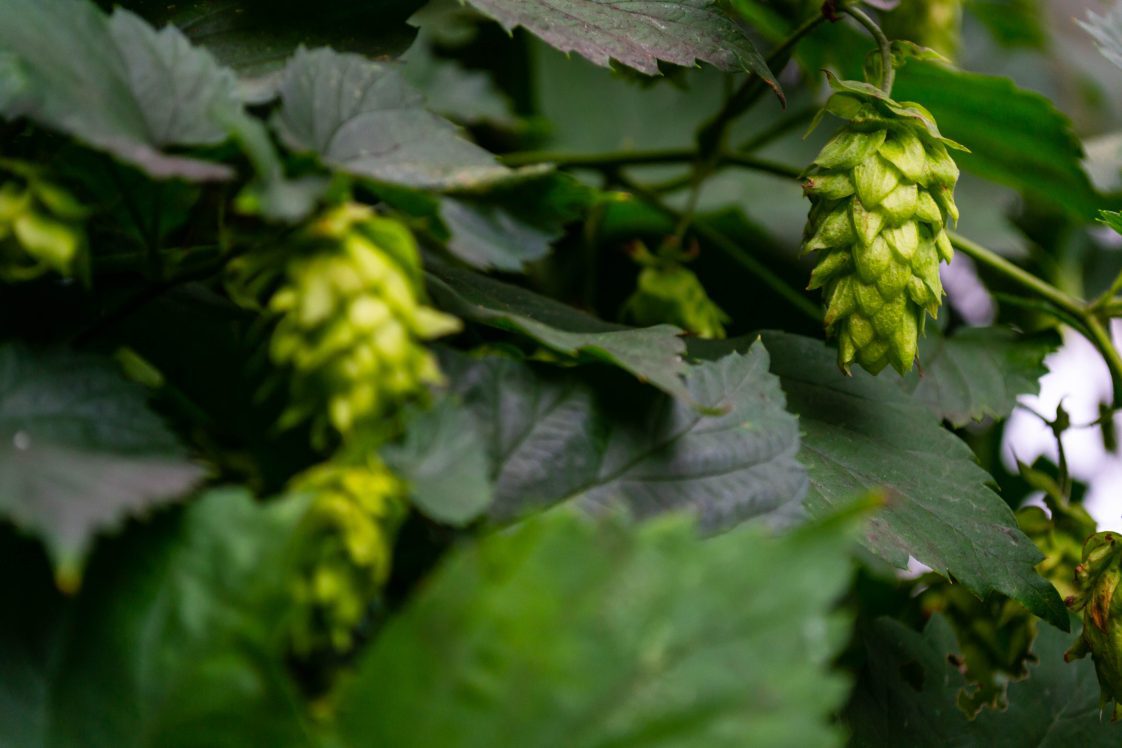
Hops (Humulus lupulus L.) are herbaceous climbing plants best known for their role in beer production, where they add bitterness, aroma, and distinctive flavor. The United States is one of the world’s top hop producers, with 98% of commercial production concentrated in the Northwest, particularly Washington, Idaho, and Oregon. In 2023, these three states produced 104 million pounds of hops, valued at approximately $562 million.
In recent years, the popularity of craft beer and the growth of local breweries have increased the demand for hops across the Southeastern United States, including Alabama. According to the Alabama Brewers Guild, most of this demand is currently met by hop producers in the Pacific Northwest, despite the geographic distance. This reliance on out-of-state suppliers presents a valuable opportunity for Alabama growers to produce and market hops locally to meet the needs of the state’s expanding brewing industry. Therefore, to better understand how different hop cultivars might perform in Alabama, this brief summarizes the results of a sensory public opinion conducted during Auburn’s 2024 Oktoberfest. Participants, comprising brewers, hop growers, and beer enthusiasts, tasted hop teas brewed with three popular hops: Chinook, Cascade, and Magnum.
Their feedback provides insight into the flavor and aroma contributions of these hops and can guide Alabama growers and brewers in future cultivar selection.
Hop Cultivars
Distinct flavors and aromas were associated with each hop cultivar, and they are listed in Tables 1 and 2.
Table 1. Flavor profile for hops cultivars Chinook, Cascade, and Magnum
| Flavor | Chinook (%) | Cascade (%) | Magnum % |
|---|---|---|---|
| Citrus | 18.1 | 16.2 | 10 |
| Earthy | 20.8 | 37.8 | 32.5 |
| Woody | 26.4 | 32.4 | 32.5 |
| Vanilla | 1.4 | 8.1 | 10 |
| Spicy | 31.9 | 5.4 | 15 |
| Other1 | 1.4 | 0 | 0 |
Table 2. Aroma profile for hops cultivars Chinook, Cascade, and Magnum
| Aroma | Chinook (%) | Cascade (%) | Magnum % |
|---|---|---|---|
| Citrus | 27.0 | 11.8 | 14.6 |
| Earthy | 22.2 | 32.4 | 24.4 |
| Woody | 22.2 | 35.3 | 34.1 |
| Vanilla | 3.2 | 17.6 | 17.1 |
| Spicy | 23.8 | 2.9 | 7.3 |
| Other1 | 1.6 | 0 | 2.4 |
Chinook
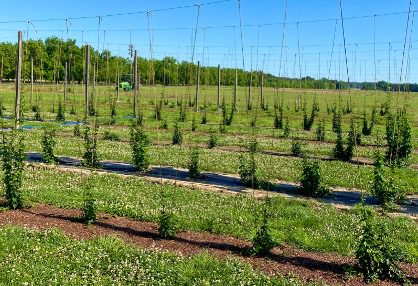
Figure 1. Hops planted in Alabama at the Auburn University – E.V. Smith Research and Extension Center.
Chinook hops were primarily described as having spicy (31.9%) and woody (26.4%) flavors. The aroma profile was more complex, with prominent aromas of citrus (27.0%), spice (23.8%), earth (22.2%), and wood (22.2%).
Group-Specific Observations
- Brewers most often noted spicy and woody flavors, as well as spicy, earthy, and citrus aromas.
- Growers identified earthy and woody flavors, and citrus aroma.
- Enthusiasts noted flavors and aromas of spicy, woody, earthy, and citrus notes.
These results suggest Chinook offers a complex and bold sensory profile that could appeal to a variety of brewers.
Cascade
Cascade is well-known for its citrus, spicy, and floral notes, but it was more perceived as having earthy (37.8%) and woody (32.4%) flavors. Aromas followed a similar trend, with woody (35.3%) and earthy (32.4%) dominating.
Group-Specific Observations
- Brewers noted earthy, woody, and citrus flavors, and earthy and vanilla aromas.
- Growers reported woody and earthy flavor notes and citrus and woody aromas.
- Enthusiasts most often identified earthy and woody flavor notes and aromas.
Results suggest Cascade hops grown and brewed in the region may express more subdued citrus characteristics than expected.
Magnum
Magnum hops are often used for their bittering potential but also provide citrus, earthy, and woody flavors and aromas. Magnum was primarily described as having an earthy (32.5%) and woody (32.5%) flavor, with woody (34.1%) and earthy (24.4%) aromas.
Group-Specific Observations
- Brewers reported a mix of earthy, citrus, woody, and vanilla flavors, and earthy and woody aromas.
- Growers strongly noted earthy aroma and flavor.
- Enthusiasts highlighted woody and earthy flavors and aromas.
Magnum offers a well-rounded flavor base and may be suitable for brewers seeking balance with moderate complexity.
Conclusion
This sensory evaluation highlights the flavor and aroma complexity of Chinook, Cascade, and Magnum hops grown in Alabama. Hops characteristics were perceived differently by brewers, growers, and consumers, highlighting the importance of collaborative tasting and cultivar selection. For growers considering hops as a specialty crop, these findings can inform variety choice, marketing strategies, and outreach to local craft brewers.
References
- Beer_Analytics. Hop Flavors and Aromas. 2020. https://www.beer-analytics.com/hops/flavors/ (accessed 2024 November 5).
- Dietz, C.; Cook, D.; Huismann, M.; Wilson, C.; Ford, R. The multisensory perception of hop essential oil: A review. Journal of the Institute of Brewing 2020, 126 (4), 320-342.
- Rodolfi, M.; Chiancone, B.; Liberatore, C. M.; Fabbri, A.; Cirlini, M.; Ganino, T. Changes in chemical profile of Cascade hop cones according to the growing area. Journal of the Science of Food and Agriculture 2019, 99 (13), 6011-6019.
- Silva, A. L. R. B. d.; Danderson, C. Hops: An Alternative Crop for Alabama Growers. 2022. https://www.aces.edu/blog/topics/crop-production/hops-an-alternative-crop-for-alabama-growers/ (accessed 2024 November 5).
- Ting, P. L.; Ryder, D. S. The bitter, twisted truth of the hop: 50 years of hop chemistry. Journal of the American Society of Brewing Chemists 2017, 75 (3), 161-180.
- USDA. National Hop Report. 2023 Hop Production Up 2 Percent From Last Year. 2023. https://www.nass.usda.gov/Statistics_by_State/Regional_Office/Northwest/includes/Publications/Hops/2023/hops1223.pdf (accessed 2024 November 5).