
Crop Production

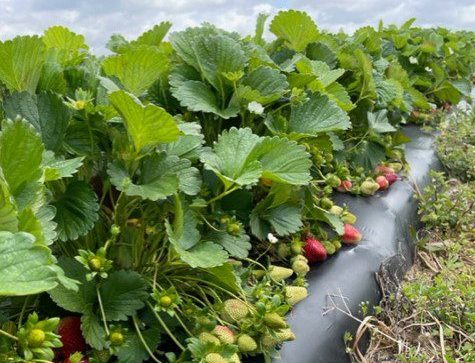
Phytophthora root and crown rot, caused primarily by Phytophthora cactorum, is among the most destructive soilborne diseases of strawberries in the southeastern United States. These pathogens thrive in wet, poorly drained soil and infect plants through the roots or crown tissue. Once established, the disease can lead to significant stand loss and yield reduction, making it a major threat to commercial strawberry production.
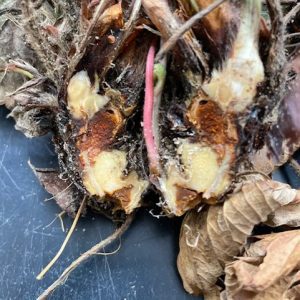
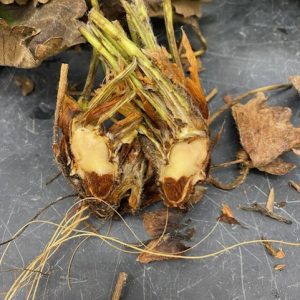
Symptoms of Phytophthora root and crown rot often begin as stunted or wilted plants, typically in low-lying or waterlogged areas of a field. Leaves may develop marginal scorch or turn reddish-brown as the crown and root system declines. In severe outbreaks, plants may collapse rapidly, particularly under warm, wet conditions that favor the development of the disease. When crowns are cut open, infected tissue shows a characteristic reddish-brown discoloration. This symptom can sometimes help distinguish Phytophthora crown rot from other crown disorders, particularly anthracnose crown rot, black root rot, or cold weather injury. Field observations combined with laboratory testing are often necessary for confirmation of the disease. It is best to have a plant diagnostic laboratory confirm the presence of Phytophthora as management options will vary depending on the cause of the damage.
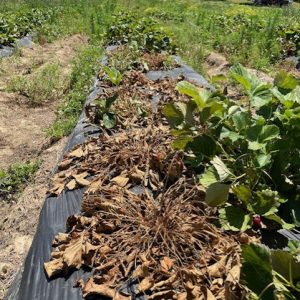
Phytophthora can survive in soil for years through long-lived structures called oospores. The pathogen spreads easily via contaminated transplants, surface water, or equipment, making prevention critical. Fields with heavy soils, poor drainage, or frequent flooding are especially at risk to the disease. Because curative options are limited once plants are infected, management relies heavily on preventive control strategies.
Cultural Control
Successful control of Phytophthora requires an integrated approach. Site selection is crucial. Avoid planting in poorly drained soils, low-lying areas, or fields with a history of the disease. Raised beds with plastic mulch and drip irrigation help reduce soil saturation around roots. Using certified disease-free transplants is essential to prevent introducing the pathogen into new plantings. Crop rotation with non-host crops and strict sanitation measures can further lower disease pressure.
Chemical Control
Chemical tools provide additional protection when combined with cultural practices. Fungicides containing mefenoxam, metalaxyl, oxathiapiprolin + mefenoxam, or phosphites are commonly applied preventively through drip irrigation. Careful product selection and rotation are important to prevent fungicide resistance. Soil fumigation prior to planting can also reduce pathogen populations, but it is expensive, requires specialized equipment, and may not be feasible for all operations. Additional information related to chemical selection can be found in the 2025 Southeast Regional Strawberry Integrated Pest Management Guide Focused on Plasticulture Production Integrated Management Guide.
Ultimately, effective Phytophthora management depends on prevention, early detection, and integration of cultural and chemical practices. Regular scouting, maintaining good drainage, and applying preventive treatments in high-risk fields can significantly reduce losses. By combining these strategies, growers can protect plant health, preserve yields, and prevent economic losses.